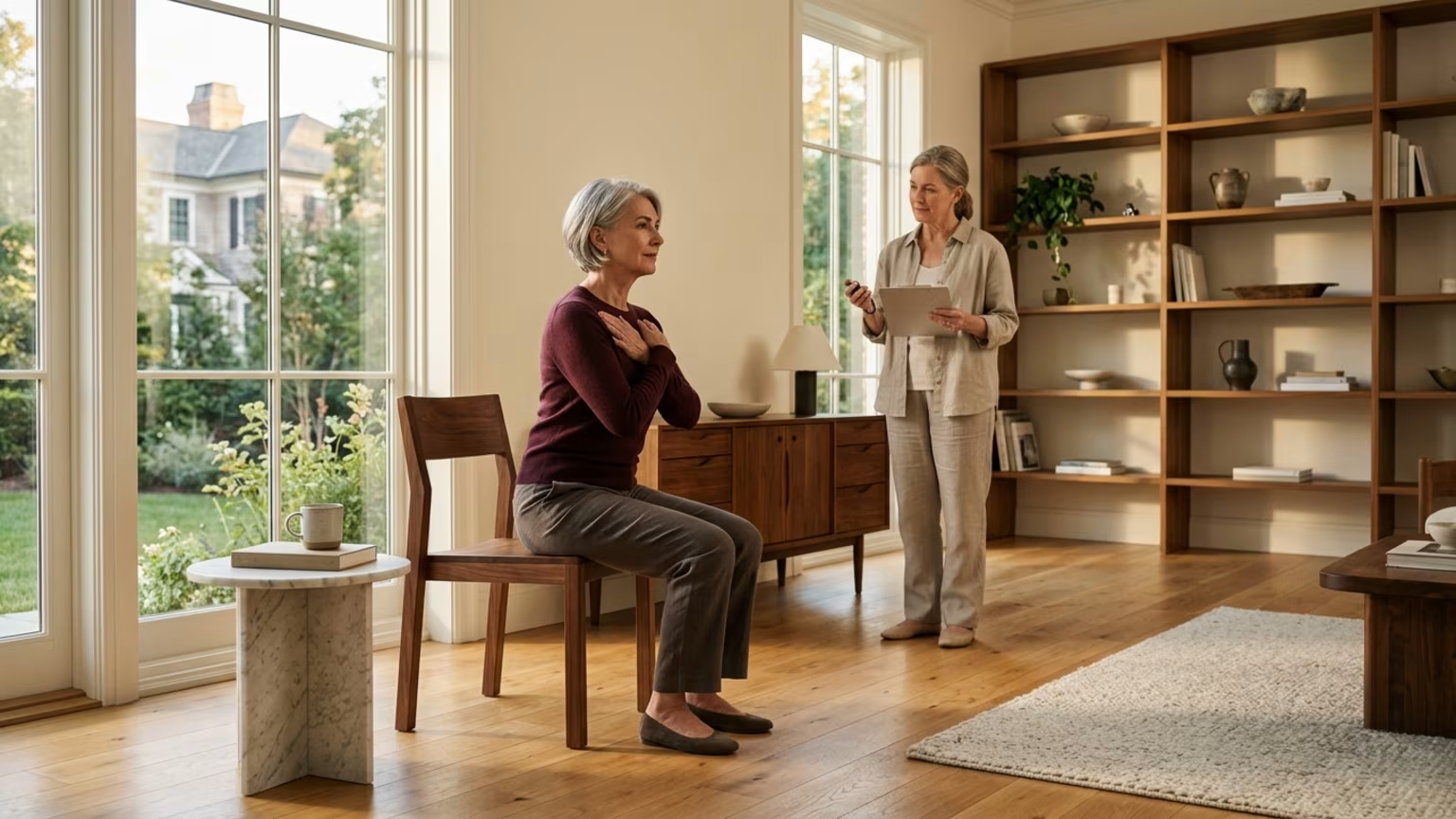

The 30-second chair-stand test offers active adults a practical home capability metric, using age-specific cutoffs to monitor lower-body strength and function.





On August 13, 2026, health coverage outlined evidence-based norms for a 30-second chair-stand test across older adult age bands. The reporting detailed how a repeated sit-to-stand assessment provides a reliable way to gauge lower-body strength and functional capability at home. For affluent adults who value regular travel and physical independence, maintaining baseline strength is an absolute necessity. Identifying a simple metric for capability helps active individuals stay prepared for demanding itineraries.
Physical decline often happens so gradually that it escapes daily notice. The newly highlighted screening framework offers a practical tool to monitor mobility changes before they limit lifestyle choices. Measuring performance against established data gives older adults a clear view of their physical standing. This simple assessment bridges the gap between clinical evaluation and everyday functional readiness.
The story fits a broader shift in healthy aging toward simple functional measures rather than relying solely on conventional gym metrics. Active individuals increasingly want clear indicators of how well they can navigate the physical world. Complex laboratory testing provides valuable data, but it lacks the immediate accessibility of a home assessment. The chair-stand screen delivers instant feedback about your physical readiness without requiring specialized equipment.
The news event centers squarely on the 30-second chair-stand test. This functional fitness screen is specifically designed for adults older than 60. The test counts how many times a person can stand fully and sit back down within a 30-second window. By measuring this repeated action, the assessment evaluates lower-body strength and muscular endurance.
This screening tool is included in the U.S. Centers for Disease Control and Prevention STEADI fall-prevention assessment framework. For a consistent home assessment, the protocol requires a straight-backed chair without armrests. The chair seat should be approximately 17 inches, or 43 centimetres, high. It must be placed securely against a wall to reduce the risk of sliding backward.
Proper technique ensures the test measures actual leg strength rather than momentum. Participants sit in the middle of the seat with both feet resting flat on the floor. They cross their wrists and place their hands on opposite shoulders. The participant must stand up completely and then sit down under control while keeping their back straight.
The timer runs for exactly 30 seconds while the participant counts complete stands. If a person is more than halfway up when time expires, that attempt counts as a completed repetition. Under the standard protocol, using the arms to push up means stopping the test and recording a score of zero. The movement requires coordinated work from the thighs, hips, and core muscles.
It simultaneously challenges balance and movement control in a dynamic way. These physical capacities directly support everyday tasks like climbing stairs or getting out of bed independently. This makes the chair stand a highly practical measure of daily functional ability. The referenced data provides specific screening cutoffs based on age and sex.
Men aged 60 to 64 have a below-average threshold of fewer than 14 repetitions. Women in that same 60 to 64 age bracket face a threshold of fewer than 12 repetitions. For men aged 65 to 69, the cutoff drops to fewer than 12 repetitions. Women aged 65 to 69 show a below-average threshold of fewer than 11 repetitions.
The thresholds decline steadily as age increases. Men aged 70 to 74 are considered below average if they complete fewer than 12 repetitions. Women aged 70 to 74 face a cutoff of fewer than 10 repetitions. For the 75 to 79 age group, the threshold is fewer than 11 for men and fewer than 10 for women.
Men aged 80 to 84 have a cutoff of fewer than 10 repetitions, while women face a threshold of fewer than nine. In the oldest brackets, the expectations continue to adjust. Men aged 85 to 89 have a threshold of fewer than eight repetitions, and women share that same threshold of eight. Finally, men aged 90 to 94 are considered below average if they complete fewer than seven repetitions.
Women aged 90 to 94 face a cutoff of fewer than four repetitions. These numbers represent age-specific screening cutoffs rather than universal pass or fail standards. A score below the relevant figure may indicate below-average lower-body performance. This result might warrant closer attention to mobility, balance, strength, and fall history.
However, it should not be interpreted as proof that an individual is frail. This functional fitness screen provides a practical tool, much like other simple fitness tests, to evaluate capability. A low score may reflect weakness, but it may also result from pain, limited joint range, or a fear of falling.
The News18 coverage specifically notes that chair height and personal height can affect performance. Activity level, past injuries, and existing medical conditions also influence the final result. Poor balance, recent illness, neurological impairment, or cardiovascular symptoms can limit repetitions. Therefore, a score below the threshold should be viewed as a signal rather than a definitive conclusion.
Repeated testing under the exact same conditions can help identify meaningful change over time. For accurate personal monitoring, consistency is absolutely essential. Use the exact same chair, footwear, and timer for every future assessment. You must also maintain the same floor surface and setup.
It is also wise to perform the test at a similar time of day to ensure accurate comparisons. The reference table is population-based and cannot account for every individual factor. An active senior recovering from knee surgery should not be judged identically to a healthy peer. Conversely, a score above the threshold does not guarantee a low fall risk.
Falls can result from vision problems, medication effects, environmental hazards, or reaction time deficits that the chair stand misses.
The strongest clinical message in the available coverage is that mobility tests should be treated as signals for investigation. Emily Nabors is a falls-prevention expert with the National Council on Aging. She noted that more than a quarter of older adults fall each year according to one estimate. She also explained that many older adults do not report falls to their doctors.
This communication gap makes a functional screen potentially useful as a conversation starter. A low score might prompt a health professional to investigate why function is changing. Medical providers can help identify possible causes like knee pain, poor balance, or slow reflexes. Dizziness and cardiovascular limitations are also critical factors to review.
Professionals might combine chair stands with other assessments. The Timed Up and Go test involves standing from a chair, walking 10 feet, returning, and sitting down. This protocol assesses balance, mobility, and lower-extremity function together. The National Institute on Aging also developed the Short Physical Performance Battery.
That specific tool provides a broader assessment involving gait, balance, and strength. Medical professionals frequently utilize additional functional tests to build a complete capability profile. One common tool is grip strength, which provides a useful but incomplete measure of overall conditioning. Walking speed and gait steadiness are also deployed to help clinicians assess mobility safely.
Another option is one-leg balance testing, which examines postural control, though it carries obvious safety concerns for people at risk of falling. The available coverage distinguishes the 30-second test from other sit-to-stand formats. A five-times sit-to-stand test measures the time required to complete five repetitions. A one-minute test counts repetitions over a longer duration.
Results from these different protocols should not be substituted for one another. The chair stand is especially attractive for health media because it reflects a movement people perform daily. Its sheer simplicity creates an immediate understanding of functional readiness. However, this simplicity also creates a risk that readers may mistake a screening score for an exact measure of biological age.
The Associated Press coverage specifically recommends keeping the broader picture in mind. Whole-body exercise and nutritious food are critical components of healthy aging. Stress management, sleep quality, and cardiovascular care all matter immensely.
Chair stands act as a highly practical proxy for repeatedly transferring the body between sitting and standing. This specific capability matters deeply for worldly adults managing unpredictable travel logistics. Rising from low hotel beds, navigating extensive airport lounges, and getting out of cramped vehicle seats all require reliable lower-body power. Travelers need substantial strength to adjust to new environments smoothly and confidently.
Sustained lower-body endurance plays a critical role in altitude adjustment and demanding physical activities. Managing physical fatigue at high elevations requires muscular efficiency and excellent movement control. Maintaining baseline strength helps active adults sustain energy during prolonged sports like skiing, tennis, or hiking. A strong lower body allows you to handle uneven terrain without experiencing rapid muscular exhaustion.
The test does not measure aerobic endurance, upper-body strength, agility, or sport-specific power. It also cannot assess your ability to walk safely on uneven outdoor ground. While the chair stand evaluates the lower body, upper-body strength remains equally important for overall capability. Carrying heavy luggage, lifting sports equipment, and pulling yourself up from the ground require strong arms and shoulders.
Affluent, active adults should therefore combine this assessment with comprehensive strength training across all major muscle groups. Adults under 60 can use the test as a repeatable personal baseline. Younger individuals should compare their own results over time rather than using the older-adult cutoffs. A declining score can identify a clear need to prioritize squats to a chair, step-ups, or calf raises.
Integrating these movements into a home gym strength program supports long-term physical resilience. Recognizing a decline in sit-to-stand capacity can signal the need for proactive joint recovery strategies. Active adults might need to implement specific active recovery methods to maintain performance. It is crucial to remember that more repetitions are not always the ultimate goal.
The primary objective is preserving your real-world function for travel and daily activities. A small difference between testing attempts may simply reflect fatigue or poor technique. A persistent downward trend or a new inability to complete the movement deserves much more attention. The News18 coverage advises stopping immediately for chest pain, severe breathlessness, dizziness, or unusual discomfort.
Professional advice is necessary before testing if you have an active injury, recent surgery, or frequent falls.
Use the age-specific screening figure as a personal baseline to monitor functional capability, adjusting your strength training to maintain the physical independence required for demanding travel and sport.
Stay connected for research and practical guidance on longevity, strength, recovery, energy and active living. New ideas to help you stay capable, curious and ready for more.



Explore practical guidance on strength, recovery, energy, travel and longevity for a life that stays active.
explore the Blog