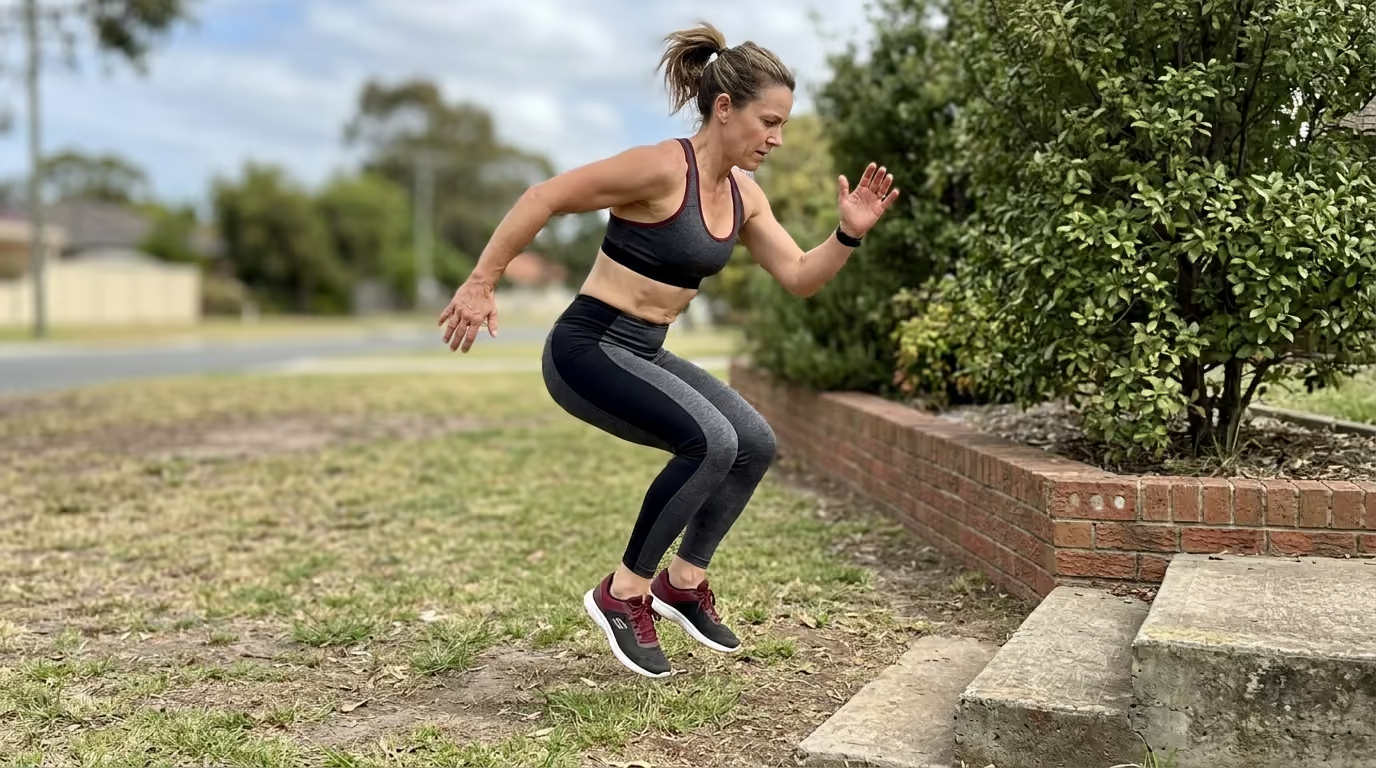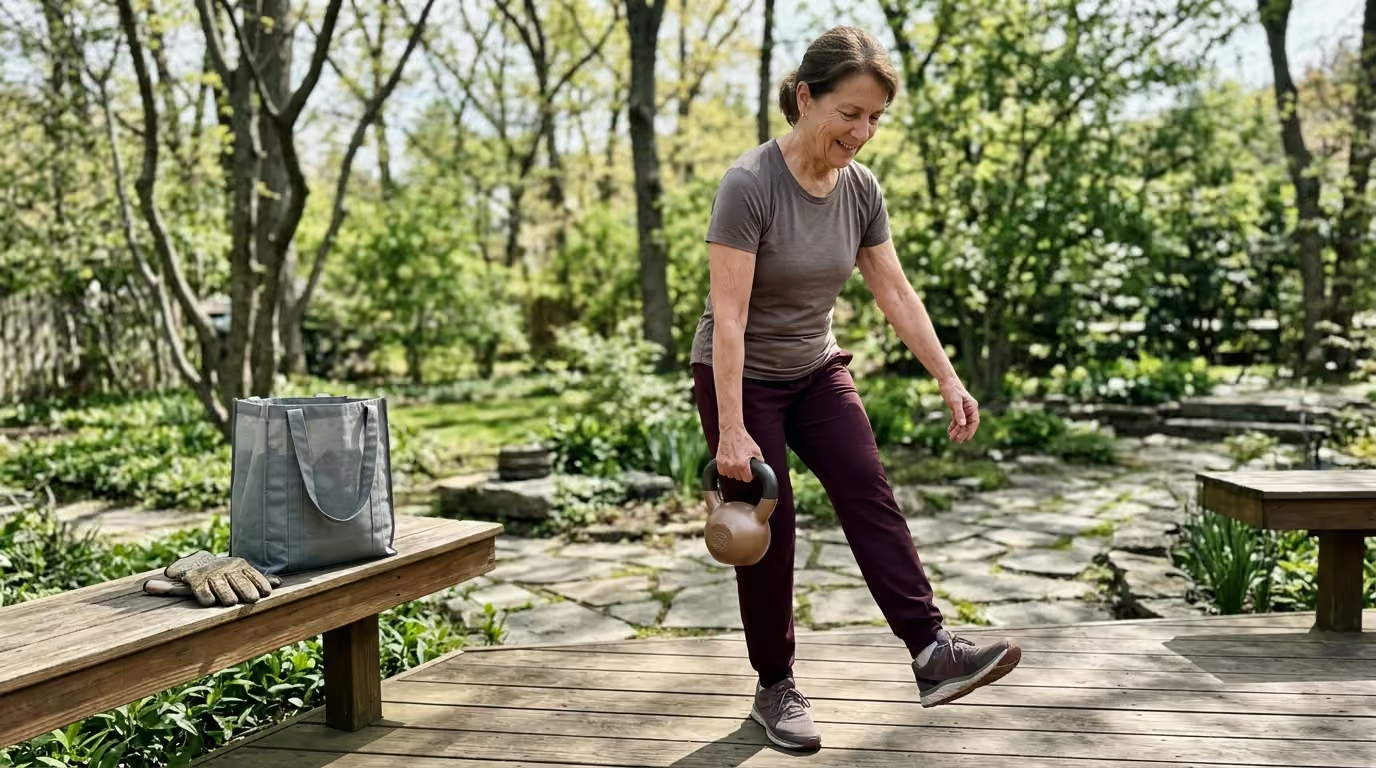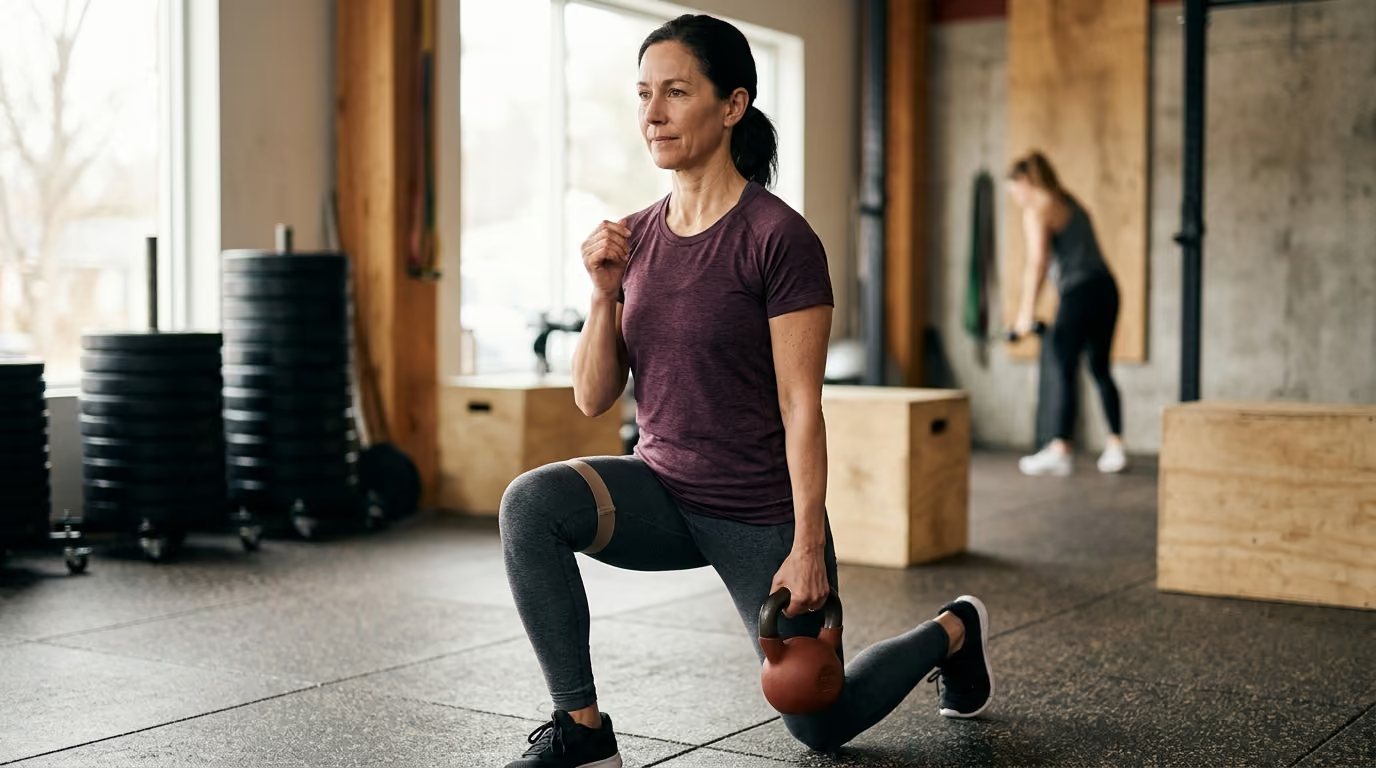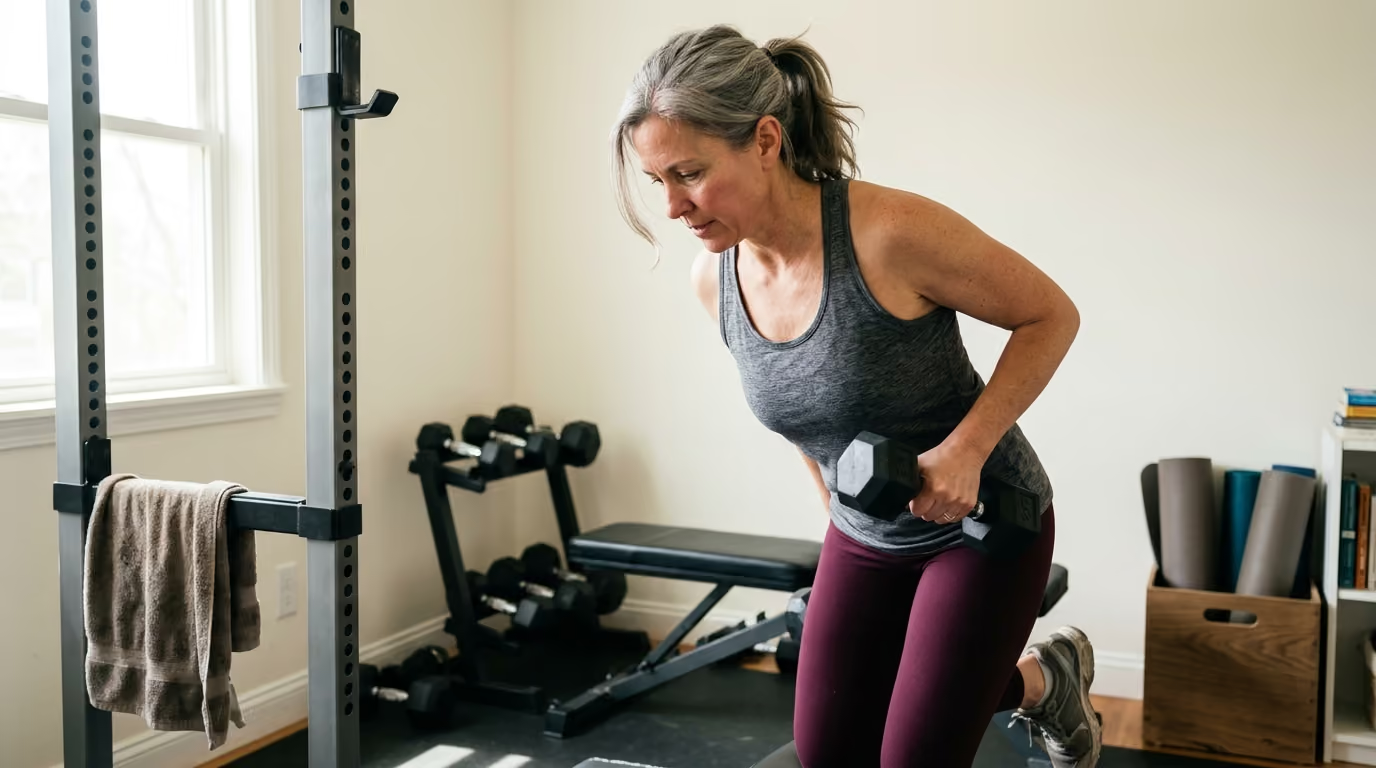

Durable muscle mass and reliable bone density develop through this progressive home workout blueprint designed to keep adults over forty strong and capable.





How do you build meaningful, durable strength at home after forty without cluttering your living space with heavy commercial equipment? If you have typed variations of that question into a search engine, you know the answers are usually polarized. You either find bodyweight circuits that lack progressive resistance or hardcore powerlifting routines that demand a dedicated garage rack.
This guide provides a definitive blueprint for home strength training. It shows you how to build real physical capability using compact tools such as adjustable dumbbells, kettlebells, bands, and suspension trainers. You will learn the exact movement frameworks, progression rules, and weekly templates needed to stay strong, mobile, and resilient for decades of active living.
Modern longevity science confirms that maintaining muscle mass, bone density, and neuromuscular power is the primary insurance policy for physical independence. You do not need a commercial gym membership to achieve these adaptations. With an intelligent progression model and a few square feet of floor space, you can build a body that excels on mountain trails, handles long travel days effortlessly, and resists age-related physical decline.
Adults lose roughly three to eight percent of their muscle mass per decade after age thirty, with the rate of loss accelerating after sixty. This involuntary loss of muscle mass and function, known clinically as sarcopenia, is accompanied by a decline in bone mineral density and tendon stiffness. Muscle tissue serves as our primary metabolic sink for glucose disposal, our structural armor against joint trauma, and our engine for physical independence.
The underlying biology is driven by two main factors: a reduction in motor unit recruitment and a gradual resistance to dietary protein stimulation. When we do not challenge our muscular system with sufficient mechanical tension, the central nervous system prunes inactive motor pathways. Fast-twitch muscle fibers, which provide the explosive power needed to catch yourself during a slip or surge up a steep incline, deteriorate faster than slow-twitch endurance fibers.
Progressive resistance training halts and reverses this trajectory. When a muscle contract against meaningful external resistance, mechanosensors inside the tissue initiate intracellular signaling cascades that stimulate muscle protein synthesis. At the same time, the mechanical load pulls on bony insertion points, stimulating osteoblasts to lay down new bone mineral.
The central problem with most home workouts is not the equipment itself. The issue is a failure to create progressive mechanical tension over time. Research published in systematic reviews shows that unsupervised home programs often produce modest results simply because trainees do not progress their exercise intensity. By understanding how to apply overload systematically with modest tools, you can stimulate muscle adaptation as effectively as you would with heavy barbells.
Maintaining muscular strength directly enhances physical resilience, but pairing your training with dedicated recovery and regeneration protocols ensures that joints and connective tissues adapt smoothly alongside your muscles.
Traditional bodybuilding programs organize workouts around isolated muscle groups such as chest, back, biceps, and shoulders. For adults over forty training at home, organizing workouts around fundamental human movement patterns is far more productive. Movement-based training builds functional capacity, enhances joint coordination, and delivers high training efficiency in limited time.
Every complete home routine must balance six primary movement patterns alongside trunk stability and loaded carries. This balance prevents muscular asymmetries, protects vulnerable joints, and ensures your physical capacity transfers directly to everyday life and outdoor sport.
The squat pattern trains knee extension, hip extension, and ankle mobility. It forms the foundation for rising from low surfaces, climbing steep steps, and absorbing impact during downhill movement.
Home variations range from basic bodyweight box squats to goblet squats, offset front squats, and split squats. By shifting load to a single leg, you can create intense muscular tension in the quadriceps and glutes without placing heavy compressive loads on the spine.
The hip hinge is the most important movement pattern for protecting the lower back and building a powerful posterior chain. It teaches you to fold at the hips while maintaining a neutral, braced spine, recruiting the glutes and hamstrings.
Key home exercises include dumbbell Romanian deadlifts, single-leg deadlifts, and kettlebell deadlifts. Mastering the hinge allows you to lift heavy luggage, garden, and perform rotational athletic movements without straining lumbar tissues.
Horizontal pushing develops the pectoral muscles, anterior deltoids, and triceps, while horizontal pulling strengthens the rhomboids, latissimus dorsi, and middle trapezius.
Push-ups, dumbbell floor presses, and suspension-trainer push-ups provide safe horizontal pressing options. One-arm dumbbell rows, resistance-band rows, and suspension rows build horizontal pulling strength, which counteracts prolonged seated posture and supports shoulder stability.
Vertical pushing drives load overhead, strengthening the shoulders, upper chest, and triceps while requiring active core integration. Vertical pulling works the lats, biceps, and upper back by pulling resistance down toward the collarbone or pulling the body upward.
Half-kneeling dumbbell presses and standing overhead presses are effective vertical pushing choices. For vertical pulling in a small space, high-anchor band pulldowns, suspension pull-up variations, and doorframe pull-ups build upper-body pulling strength without requiring bulky gym towers.
Loaded carries are the ultimate test of integrated, real-world strength. Walking while holding a weight on one side of the body forces the deep spinal stabilizers, obliques, and hip abductors to work as a unified unit.
Trunk stability exercises should emphasize resisting motion rather than creating spinal flexion. Movements like the Pallof press, side planks, and bird dogs train the core to transfer force efficiently between the lower and upper body.
To dive deeper into the relationship between balanced movement patterns and systemic durability, review our practical guides on strength and physical performance.
You do not need a commercial footprint to create an exceptional training environment. A thoughtfully curated set of compact tools can fit inside a closet, under a bed, or in the corner of an executive office. The key is selecting tools that offer wide adjustability, reliable safety, and multi-planar loading options.
A high-quality pair of adjustable dumbbells is the cornerstone of any compact home gym. Look for models that adjust in small increments of two to five pounds for upper-body work, while offering an upper limit of at least fifty pounds per hand for lower-body compound movements.
Select dumbbells with flat ends so you can rest them comfortably on your thighs before pressing sets. A knurled metal handle provides a secure grip when your hands become sweaty. If you split your time between two residences, a single adjustable dumbbell in your secondary home can handle virtually all unilateral strength requirements.
Kettlebells place the center of mass outside your grip, making them ideal for dynamic hinging, offset carries, and goblet squats. For most adults over forty, owning two kettlebells provides tremendous training versatility.
A lighter bell of sixteen kilograms works well for presses, get-ups, and single-leg work. A heavier bell of twenty-four or thirty-two kilograms serves as an excellent tool for deadlifts, two-handed swings, and heavy carries. Look for smooth, cast-iron construction with a broad, stable base.
Loop resistance bands and handled tube bands offer accommodating resistance, meaning the exercise becomes harder as the band stretches. They take up virtually zero storage space and represent the perfect travel kit.
Ensure your band set includes a secure, padded door anchor that locks on the opposite side of a closed door frame. Always inspect bands for micro-tears, thinning, or abrasions before each session. Bands excel at horizontal rows, face pulls, Pallof presses, and rotator cuff work.
Suspension strap systems leverage your body weight against gravity by changing your working angle. They allow you to instantly scale the difficulty of an exercise simply by stepping your feet closer to or further from the anchor point.
A suspension trainer excels at horizontal rows, assisted single-leg pistol squats, hamstring curls, and chest fallouts. Ensure your suspension system uses commercial-grade webbing and is anchored into a solid ceiling joist, structural wall stud, or secure door frame.
The fundamental law of resistance training is progressive overload. To force an adaptation in muscle size and strength, you must systematically increase the challenge placed upon your musculoskeletal system. When training at home without a thousand pounds of iron plates, you must use intelligent loading strategies to create this stimulus.
A systematic review published in Sports Medicine confirmed that progressive resistance training produces robust strength gains in older adults, showing a strong positive effect across multiple clinical trials. Progressive overload does not require adding external iron to a bar every single week. In a home gym, you can drive adaptation using five distinct progression mechanisms.
Double progression is the most reliable system for home trainees using fixed or adjustable dumbbells. Instead of trying to increase weight each session, you work within a target repetition bracket, such as eight to twelve repetitions.
Begin with a weight you can lift for three sets of eight repetitions with clean technique. Over subsequent workouts, keep the weight identical and add repetitions until you can perform three sets of twelve repetitions with two repetitions left in reserve. Once you hit that threshold, increase the external load by five to ten percent and reset your volume back to three sets of eight repetitions.
Training to complete muscular failure on every set is counterproductive for adults over forty. It generates excessive joint inflammation, taxes the central nervous system, and compromises technique on subsequent sets. Instead, gauge your intensity using Repetitions in Reserve (RIR).
For compound movements like squats, Romanian deadlifts, and overhead presses, keep your working sets between one and three RIR. Reserve zero RIR efforts for low-risk accessory movements such as band pull-aparts or suspension curls.
When you cannot increase the external load, you can change the mechanical leverage of the movement to make your body weight or light dumbbells feel significantly heavier.
For horizontal pressing, progress from an incline push-up against a counter to a flat floor push-up, then to a deficit push-up with hands elevated on books, and finally to a feet-elevated push-up. For lower-body movements, transition from a standard goblet squat to a split squat, then to a front-foot elevated split squat, and ultimately to a rear-foot-elevated split squat. By shifting load onto one limb, you multiply the effective tension without buying new weights.
Increasing your active range of motion places muscle fibers under tension at longer muscle lengths, which is a powerful driver of muscular hypertrophy and joint mobility. Lowering yourself an inch deeper in a split squat or touching your chest closer to the floor on a push-up creates a stronger training stimulus at the same weight.
Adding isometric pauses also removes momentum and increases time under tension. Try lowering for three seconds, holding the bottom stretched position for two seconds, and driving up smoothly. A forty-pound dumbbell used with this tempo feels as demanding as an eighty-pound dumbbell moved with sloppy bounce.
Managing your training stress through structured progression keeps your joints healthy while building long-term healthy aging and physical vitality.
To build a balanced, resilient body, your weekly schedule must provide enough training frequency to stimulate muscle protein synthesis while allowing adequate recovery time for connective tissues. World Health Organization guidelines recommend that adults perform muscle-strengthening activities involving all major muscle groups at least two days per week.
The following programming frameworks provide structured templates based on your weekly availability. Each workout should take between thirty-five and forty-five minutes, making them easy to maintain around demanding professional and travel schedules.
This template represents the minimum effective dose for preserving and building physical strength. It is ideal for busy executives, frequent travelers, or endurance athletes balancing strength with running or cycling.
If your schedule permits three sessions per week, alternate between Workout A and Workout B across non-consecutive days, such as Monday, Wednesday, and Friday.
This alternating structure increases your weekly training frequency for each movement pattern, accelerating motor learning and strength acquisition without lengthening your workouts.
For trainees who prefer shorter, highly focused sessions of twenty-five to thirty minutes, an upper and lower split offers outstanding density.
A successful strength program for adults over forty is measured not only by how much weight you can move, but by how good your joints feel outside the gym. Years of athletic activity, desk work, or old injuries often leave adults with localized joint sensitivities. A smart program adapts the exercise to fit your skeletal anatomy, rather than forcing your body into a rigid exercise template.
Lower back sensitivity is frequently triggered by loaded spinal flexion under fatigue. When performing deadlifts and rows, maintain an active, braced abdominal wall as if preparing to take a punch.
If conventional deadlifts from the floor irritate your lower back, elevate your dumbbells onto low blocks or perform Romanian deadlifts stopping just below the kneecaps. When rowing, switch from bent-over unsupported rows to chest-supported rows on an incline bench or use a single-arm row with your non-working hand braced firmly against a sturdy table.
Patellofemoral irritation during deep squatting is common in midlife. If deep bilateral squats cause anterior knee pain, replace them with box squats to a comfortable chair height, focusing on sitting the hips back and maintaining vertical shins.
Unilateral exercises like reverse lunges and step-ups are often far better tolerated by sensitive knees than forward lunges because they reduce forward shear forces on the patellar tendon. Slow down your eccentric descent to three full seconds and eliminate bouncy turnaround transitions at the bottom of the movement.
The shoulder is the most mobile joint in the human body, making it vulnerable to impingement and rotator cuff wear. Traditional barbell bench pressing locks the wrists and shoulders into an internally rotated position that can agitate the acromioclavicular joint.
Dumbbells allow your wrists to rotate naturally into a neutral or semi-neutral grip, where palms face each other. If standard pressing hurts your shoulders, switch to floor presses, where the ground naturally stops your elbows from dropping past the plane of your torso. When pressing overhead, use a half-kneeling position with a neutral dumbbell grip, which prevents lumbar hyperextension and provides a clean movement path for the scapula.
True physical strength is not an end in itself. It is the currency that buys you access to demanding outdoor pursuits, unhindered travel, and decades of energetic adventure. The physical demands of hiking across uneven alpine terrain, skiing deep snow, or navigating foreign transit hubs with heavy gear require balanced rotational power, single-leg stability, and postural endurance.
Last winter in Chamonix, I noticed something striking. It was not the altitude that forced my peers into the lodge by noon, it was a lack of rotational strength and poor recovery from the flight. We spend so much time debating the perfect supplement stack, yet we neglect the basic foundational strength required to actually enjoy our travels. That trip changed how I approach fitness. I stopped training for aesthetics and started training exclusively for capability.
When you ski, your body constantly absorbs high-velocity eccentric loads while turning and negotiating terrain changes. A home program rich in rear-foot-elevated split squats and offset carries builds the quad strength and core stiffness required to carve cleanly through heavy snow without blowing out a knee.
Similarly, mountain trekking requires the ability to step up and down thousands of vertical feet with a loaded pack. Step-ups, single-leg deadlifts, and suitcase carries build the hip abductor stability that prevents foot collapse, knee wobble, and lower back fatigue on technical trails.
To maintain your physical capacity while exploring the world, pack a portable travel kit consisting of two continuous-loop resistance bands, a light mini-band, and a door anchor. This entire kit weighs less than two pounds and fits inside a carry-on shoe bag. With this setup, you can perform full-body workouts in any hotel room, maintaining your strength baseline and preventing the physical stiffness associated with long international flights.
If you are planning challenging international trips, explore our dedicated strategies for travel and human performance to keep your energy and physical readiness high.
Navigating fitness advice after forty requires separating clinical evidence from commercial hype. Pervasive myths often lead active adults to abandon productive training or pursue programs that waste energy and increase injury risk.
A pervasive misconception is that lifting challenging resistance becomes dangerous once you pass forty. Many adults believe they must abandon heavy resistance in favor of gentle, low-load calisthenics or light aerobic exercise.
The opposite is true. While technique and recovery management become non-negotiable, the musculoskeletal system requires meaningful mechanical loads to maintain bone density and preserve fast-twitch motor units. Clinical position statements from the National Strength and Conditioning Association confirm that adults well into their seventies and eighties benefit safely from progressive resistance training when programs are appropriately scaled.
Many trainees evaluate the effectiveness of a home workout by how much they sweat, how breathless they feel, or how sore they are the following day. These metrics reflect cardiovascular stress and thermoregulation, not strength development.
Strength training is an exercise in neuromuscular quality, not metabolic exhaustion. If your rest periods are so short that your cardiovascular fatigue limits the weight you can lift or degrades your lifting mechanics, you are performing an inefficient cardio workout rather than building strength. High-quality strength work requires taking adequate rest between sets to ensure high force production.
Social media fitness culture frequently promotes changing exercises daily to confuse the muscles. In reality, constant exercise variety prevents you from developing motor efficiency and makes tracking progressive overload impossible.
Muscles adapt to tension, mechanical load, and progressive volume. Sticking with the same six to eight fundamental movement patterns for six to twelve weeks allows your nervous system to master the coordination of the lift. Once you own the movement pattern, you can progressively add load, repetitions, or tempo variations with precision.
You do not need to spend ten hours a week working out to build a powerful, functional body. For active adults managing demanding careers, families, and travel, understanding the minimal effective dose allows you to achieve maximum biological return on your time investment.
Research published in the American Heart Association scientific statements confirms that performing eight to ten multi-joint exercises for two to three sets per week at moderate-to-high intensity stimulates significant health and strength adaptations. Two focused sessions of thirty-five minutes each week represent the biological tipping point for retaining muscle mass and metabolic health.
To support these muscular adaptations, your nutritional foundation must provide sufficient building blocks. The International Society of Sports Nutrition recommends consuming between 1.4 and 2.0 grams of protein per kilogram of body weight daily for exercising individuals. Spreading this protein intake across three to four meals ensures a steady supply of essential amino acids to stimulate muscle protein synthesis throughout the day.
For comprehensive dietary strategies that complement your training schedule, explore our guides on nutrition and metabolism.
The global medical and sports science community is remarkably unified regarding the necessity of resistance training for healthy aging. Public health organizations no longer view lifting weights as an optional activity for athletes, but as an essential health practice for every adult.
The World Health Organization physical activity guidelines state clearly that adults should perform muscle-strengthening activities involving all major muscle groups at moderate or greater intensity on at least two days a week. For adults aged sixty-five and older, the WHO adds an explicit recommendation for multicomponent physical activity that emphasizes functional balance and strength training to improve capacity and reduce fall risk.
The American College of Sports Medicine progression model emphasizes that progressive overload, controlled movement velocity, and multi-joint movements form the foundation of lifelong muscular health. Their research underscores that strength adaptations occur across the entire lifespan, provided the training stimulus forces muscles to work near their current capacity.
The National Institute on Aging emphasizes that resistance training preserves functional mobility, supports joint integrity, and helps manage chronic conditions such as osteoarthritis, type 2 diabetes, and cardiovascular disease. The consensus across all major institutions is clear: progressive resistance training is the single most potent non-pharmacological intervention available for preserving human capability in midlife and beyond.
Building durable strength does not require an overhaul of your lifestyle. It begins with establishing a simple, repeatable routine using the equipment you already own. Follow this checklist to implement your home strength practice over the next seven days.
Stay connected for research and practical guidance on longevity, strength, recovery, energy and active living. New ideas to help you stay capable, curious and ready for more.


Explore practical guidance on strength, recovery, energy, travel and longevity for a life that stays active.
explore the Blog