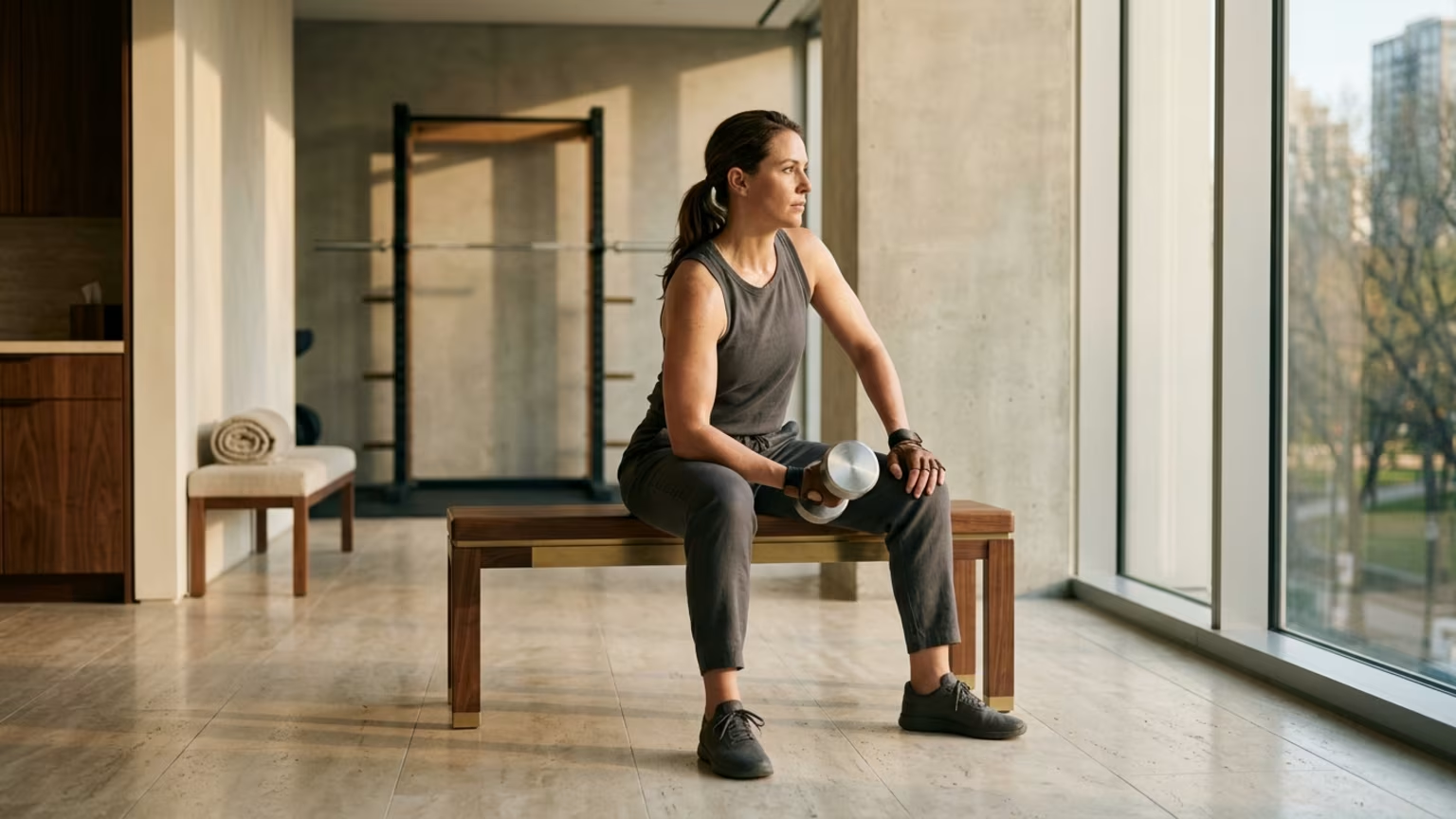
Discover why simple fitness tests of balance and strength strongly predict mortality risk in older adults, and how to train for long-term physical independence.





Objective physical fitness is not just an athletic metric; it is the absolute ceiling of your physical independence. Last winter in Chamonix, I noticed something striking. It was not the altitude that forced my peers into the lodge by noon, it was a lack of rotational strength and poor recovery from the flight.
We spend so much time debating the perfect supplement stack, yet we neglect the basic foundational strength required to actually enjoy our travels. That trip changed how I approach fitness. I stopped training for aesthetics and started training exclusively for capability. This mindset shift perfectly aligns with recent scientific literature on human aging.
A 2026 JAMA Network Open cohort study provides a powerful framework for this philosophy. The researchers analyzed 13,423 community-dwelling Taiwanese adults aged 65 and older. They evaluated seven distinct tests. These assessments measured balance, agility, muscular strength, cardiorespiratory fitness and general flexibility.
During a median follow-up of approximately seven years, 1,631 participants died. The broad pattern observed by researchers was highly graded. As physical performance improved across the cohort, overall mortality risk generally declined. This data firmly positions physical function as a measurable component of resilience and independence.
For active adults over 40, these functional tests represent the specific physical requirements of travel. Traveling frequently demands a hidden level of physical capacity that we rarely consider until it fails us. Walking across uneven cobblestone streets in historic cities challenges your ankle stability with every single step. Carrying heavy gear across an airport terminal requires significant core control and rotational strength.
A person might have entirely favorable blood pressure, cholesterol and glucose results on paper. However, that same person could simultaneously be losing the leg power and stamina required for a demanding ski trip. Midlife is the perfect time to recognize this discrepancy and change your training focus. Building these fitness foundations ensures you can adapt to unexpected terrain without exhaustion.
You do not need an extreme lifestyle overhaul to improve your long-term health trajectory. The most effective approach focuses on practicing simple, highly functional daily movements. The recent Taiwanese study measured how well participants performed very basic physical tasks. These included standing up from a chair, balancing on one leg and stepping in place.
The mortality associations for these basic movements were surprisingly strong. Participants who performed the most chair stands during the 30-second chair-stand test had a 45% lower mortality risk than those who performed the fewest. This specific test simply measures the lower-body strength required to rise from low seats. The movement replicates the exact strength required to get out of low car seats or deep hotel sofas.
Agility also demonstrated a massive impact on overall longevity outcomes. Participants in the highest performance group for the 8-foot up-and-go test had a 59% lower adjusted mortality risk than those in the lowest group. This assessment simply involved rising from a chair, walking approximately 2.44 meters around a cone, returning and sitting down again. Practicing controlled directional changes ensures you can navigate tight spaces safely.
The one-leg stance test was associated with a 50% lower mortality risk for the highest-performing group compared with the lowest-performing group. Single-leg stability is crucial for navigating uneven ground and preventing dangerous falls. Finally, cardiovascular stamina remains absolutely essential for active adults traversing different time zones.
Higher performance on the two-minute step test was associated with a 42% lower mortality risk in the highest versus lowest performance groups. Cardiorespiratory fitness adds the capacity to sustain activity during long travel days. Incorporating brisk walking or cycling builds the necessary aerobic tolerance for your next adventure. Your minimal effective dose is simply training these highly practical movements safely.
Many wellness enthusiasts overcomplicate the entire process of healthy aging. They obsess over complex lab results while completely ignoring their visibly declining physical stamina. Prioritizing real world capability provides far more practical value than endless biomarker tracking alone. The evidence supports adding functional measures to a broader health review.
The JAMA Network Open study proved that healthy aging is highly multidimensional. The composite measure produced an adjusted hazard ratio of approximately 0.39. Furthermore, participants in the highest overall fitness quintile had a 61% lower adjusted hazard of death than those in the lowest quintile. The composite index was more strongly associated with mortality than any single isolated assessment.
Another common mistake involves treating observational data as a personalized life-expectancy calculator. The study findings show an association rather than proof of direct causation. Reverse causation remains possible because people with undiagnosed illnesses might have simply performed poorly due to sickness. These measures should always complement standard medical evaluations rather than replace established clinical guidance.
The participants in this study may have been healthier and more mobile than the general older population. They were actively able to travel to a testing station and complete the required assessments. Additionally, the researchers did not formally test whether these fitness measures improved prediction beyond conventional comorbidity-based clinical models.
Finally, many exercise programs prioritize the wrong physical attributes for aging adults. Balance and agility, lower-body strength and cardiorespiratory fitness showed the strongest inverse associations with mortality in the study. Conversely, upper-body strength and flexibility were less strongly associated with survival. Focus your primary energy on leg power and cardiovascular health instead of basic stretching routines.
Adults in midlife should treat functional fitness as a recurring health metric alongside standard medical care. You can periodically test your single-leg balance duration and your 30-second chair stand capacity at home. A periodic fitness review can establish a vital baseline and identify important physical trends. Just ensure you perform balance and mobility assessments safely away from hard edges, clutter or unstable furniture.
If you notice a gradual decline in turning speed, chair-stand performance or overall balance, you can adjust your training accordingly. A qualified physical therapist or exercise professional can expertly guide this process for you. The true objective should be safe measurement and progressive training rather than proving fitness through maximal effort.
The team at WealthAtPlay highly recommends designing your fitness regimen around realistic travel readiness. You should ask yourself if you can repeatedly rise from a chair without using your arms. Test if you can walk uphill, climb stairs or move through an airport without excessive fatigue. Assess whether you can carry a moderate bag while maintaining perfect posture and physical balance.
Focus your training on one practical action at a time to build resilience naturally. Start by incorporating squats to a box, simple step-ups and calf raises into your weekly routine. These targeted movements translate basic fitness into concrete independence goals for your future adventures.
Preserving your ability to stand, balance and sustain physical activity is the absolute foundation of a capable life.
Stay connected for research and practical guidance on longevity, strength, recovery, energy and active living. New ideas to help you stay capable, curious and ready for more.



Explore practical guidance on strength, recovery, energy, travel and longevity for a life that stays active.
explore the Blog