

A fall-prevention workshop highlights deliberate exercise, strength and balance, with practical lessons for independence and active travel.





On November 17, 2026, The New Ulm Journal reported on “A Step Ahead: Fall Prevention,” a workshop about preserving physical independence. If you want to keep travelling and enjoying active days, its message offers a useful question: does your routine deliberately train the abilities you want to keep?
Held earlier that month at Vista Prairie at Ridgeway in New Ulm, Minnesota, the session was presented by physical therapists Alice Johnson and Shannon Barie of Courage Kenny Rehabilitation. The service is part of Allina Health. Their emphasis was purposeful exercise rather than relying on ordinary daily movement alone.
The therapists introduced “functional reserve” as the gap between what daily life requires and a person’s total physical capacity. In plain language, it is the margin between what you usually do and what you are capable of doing.
That distinction matters when thinking about independence. Managing a familiar routine and preparing for a more demanding day are different goals. The reserve concept encourages you to consider both rather than treating successful completion of everyday tasks as the whole picture.
According to the workshop report, the presenters distinguished exercise from routine movements such as walking from bed to a chair. They described exercise as planned, structured and repetitive activity intended to improve or preserve capacity. Their argument was that ordinary movement may not supply the deliberate challenge needed to build strength and address fall risk.
For an active adult, the practical interpretation is to look at the purpose of an activity rather than simply whether it involves movement. Walking around during a busy day is activity. A planned session directed at strength or balance has a more specific aim.
This is also the case for treating balance as a distinct training priority, rather than assuming that being generally active addresses every aspect of physical capability.
The workshop made independence concrete through three assessments. As reported by The New Ulm Journal, participants tried:
Together, these categories offered a practical vocabulary for discussing function. Chair-rise ability concerns getting up. Balance concerns maintaining a position. Walking speed describes another aspect of how someone moves.
Barie called walking speed the “sixth vital sign,” emphasizing the importance she places on it as a health indicator. That was her characterization as a practitioner, not a formal clinical designation established by the report.
The useful lesson is not to turn your living room into a testing station. It is to recognize that independence involves several abilities that deserve separate attention. A conversation about physical capability can be more specific than asking whether someone exercises or considers themselves fit.
No. The distinction between routine movement and deliberate exercise should not become an argument against walking.
The World Health Organization provides the broader context: all physical activity counts, and any amount is better than none. Its physical-activity fact sheet identifies reduced fall risk among the benefits associated with activity in older adults. It also states that muscle strengthening benefits everyone.
That supports an additive reading of the workshop’s message. Everyday movement remains worthwhile. Purposeful strength and balance work deserve consideration alongside it rather than being treated as interchangeable with it.
The relevant question is therefore not whether walking is good or bad. It is whether walking is being asked to stand in for every other physical priority. For someone who enjoys walking holidays, that is a more constructive question than deciding that a familiar activity no longer counts.
Barie described exercise as having a “dosage” intended to improve or preserve physical capacity. She also advised that it should be challenging but not painful, according to the newspaper’s account. Her emphasis was on purposeful effort rather than movement without a clear aim.
Johnson emphasized combining strength work with flexibility. Taken together, the presenters’ advice encouraged attendees to consider more than a single dimension of fitness. Strength was part of the discussion rather than a substitute for every other ability.
The evidence boundary is important here. This was an educational workshop, not a trial demonstrating that the session prevented falls. The report provided no participant results, benchmark scores or individualized exercise prescriptions. It also supplied no evidence of faster travel recovery, improved altitude adjustment or greater endurance during hiking and skiing.
Its value is therefore a clear way to think about capability, supported by WHO’s broader guidance on physical activity. It is not a newly validated training program.
For travel, the most useful application is to connect preparation with the abilities your plans involve. The workshop’s categories make that conversation more concrete: getting up from a seat, maintaining balance and walking are recognizable functions rather than abstract fitness ambitions.
A walking holiday gives walking an obvious place in preparation. The workshop adds a separate question: where do strength, balance and flexibility fit? This is a planning prompt drawn from the presenters’ teaching rather than a promise about how any particular trip will feel.
For a ski holiday, the same framework encourages a broader view than simply being active before departure. The point is to consider the different physical abilities you want to maintain. It is not to treat a chair-rise result or walking-speed measurement as a certificate of readiness for the mountain.
The distinction also changes how recovery fits into the conversation. Rather than searching this report for a way to recover after arrival, use its message to think about preparation beforehand. The practical emphasis is on strength in the context of independent travel, not on a special travel technique.
Your itinerary can provide context for a meaningful goal. “I want to remain comfortable with the everyday movements my trips involve” is a clearer starting point than “I should exercise more.” The next task is to identify which ability deserves deliberate attention.
The workshop offered a modest habit-building idea: connect exercise to something that already happens. The presenters’ example was doing sit-to-stands before an evening television show. Attendees also received exercise instruction sheets and fall-prevention information.
The transferable lesson is the familiar cue, not a universal chair-rise assignment. A routine can have a clear place in the day without becoming an elaborate project. The workshop’s example linked purposeful work to an existing habit rather than requiring a complete lifestyle overhaul.
The presenters also encouraged goals that were specific and measurable. They said goals should be achievable, relevant and time-bound. That approach directs attention toward a defined purpose instead of the vague ambition to become fitter.
A useful starting point is to identify one ability you want your routine to address. That might be chair-rise strength or balance, reflecting the functions discussed at the session. Where health or mobility concerns affect exercise choices, a qualified clinician can help translate that aim into suitable activity.
Only then does the habit-building question become useful: where could that agreed activity fit naturally? This keeps the focus on one practical change rather than adding an unsorted collection of exercises. It also preserves room for the walking and recreation you already value.
The broader perspective is to give different physical capacities a place in a realistic routine. The workshop’s contribution was to make those capacities tangible and to connect deliberate practice with a familiar daily cue.
Keep everyday movement, but make deliberate strength, balance and flexibility work an explicit part of preparing for the independent life and active travel you want to maintain.
Stay connected for research and practical guidance on longevity, strength, recovery, energy and active living. New ideas to help you stay capable, curious and ready for more.


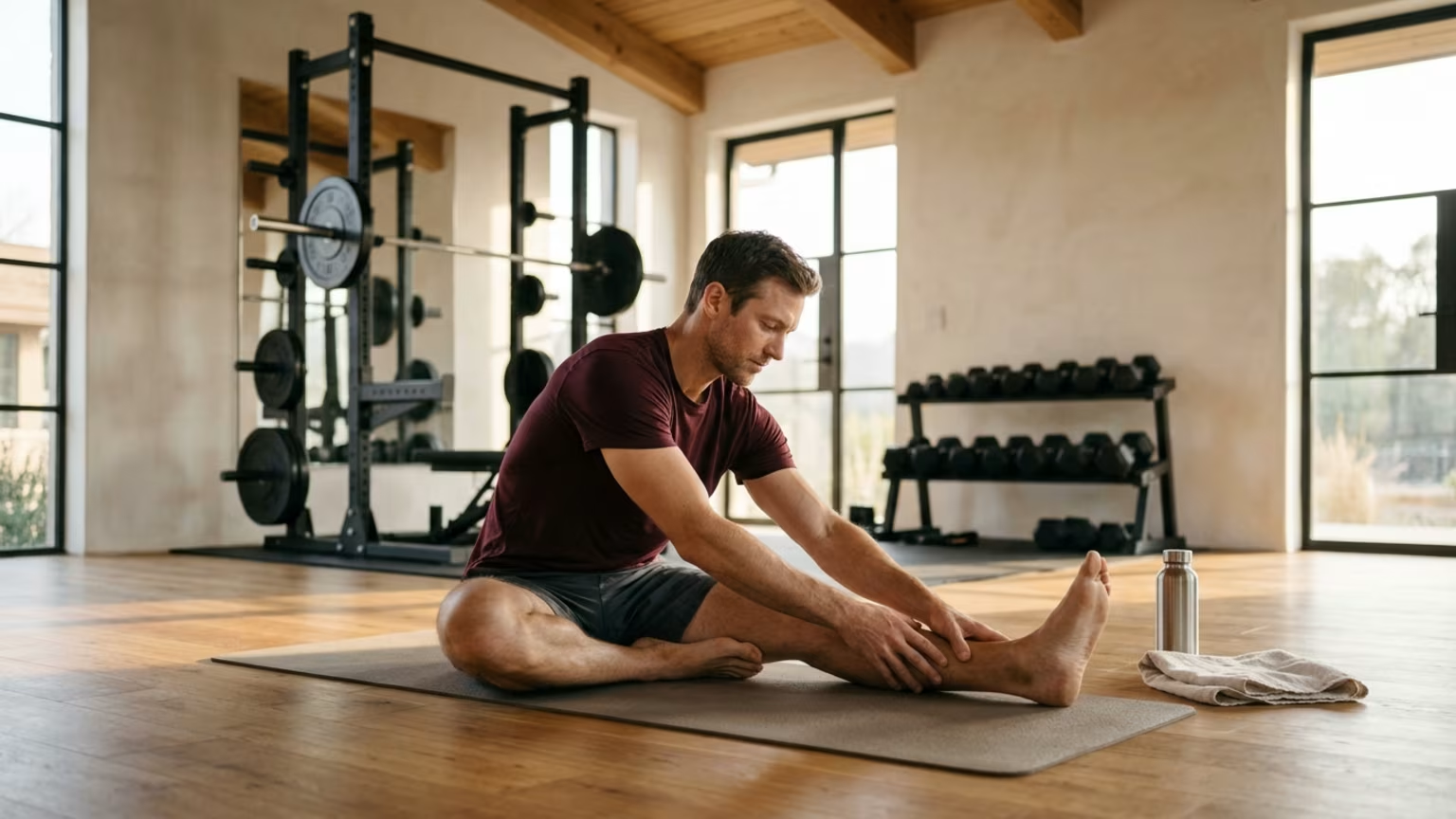

Explore practical guidance on strength, recovery, energy, travel and longevity for a life that stays active.
explore the Blog

