A research-grounded guide to strength, stamina, balance and mobility after 40, with realistic ways to plan around travel and busy weeks.





Functional capacity is your ability to handle the physical demands of independent life. Think of it as the practical side of fitness: walking through a new city, carrying luggage or getting out of a low seat without making the task the main event.
That definition changes the purpose of a fitness plan. The goal is not simply to improve the activity you already enjoy. It is to build a useful range of physical abilities around the life you want to keep living.
A systematic review summarized in PEDro included 66 studies and found that greater aerobic activity was associated with higher functional status in older adults. It also described aerobic and resistance exercise interventions as improving physiological and functional measures. That gives a broader plan a research foundation beyond the appeal of a particular workout.
For everyday planning, it helps to consider stamina, strength, balance and mobility. These are complementary questions about capability rather than interchangeable ways to fill an exercise calendar. The useful question is not which activity wins but which part of your intended life needs more attention.
For active adults over 40, independence often means more than managing daily necessities. It can mean keeping travel plans ambitious or continuing an outdoor sport without organizing every experience around physical limitations. A fitness plan becomes more relevant when it starts with those priorities.
A secondary summary of World Health Organization guidance describes aerobic activity and muscle strengthening as parts of adult recommendations. It also reports an additional emphasis on multicomponent balance-and-strength activity for older adults. That distinction supports thinking beyond a single exercise category.
Use stamina as the planning category for sustained activity. Walking around a city, cycling through the countryside and spending a long day on a trail are useful examples of the experiences this category represents.
The association between aerobic activity and functional status in the PEDro review makes this more than a sporting concern. For planning purposes, ask which sustained activities matter to you rather than treating endurance as something reserved for races. A holiday spent mostly on foot provides a different goal from improving a competitive result.
Strength belongs beside stamina rather than beneath it. Carrying a bag and rising from a low seat are practical ways to think about why resistance exercise deserves space in a broader plan.
These examples connect training choices to everyday priorities. They are not promises that a particular exercise will guarantee a particular task. Our guide to making strength training part of independent living develops that capability-focused perspective.
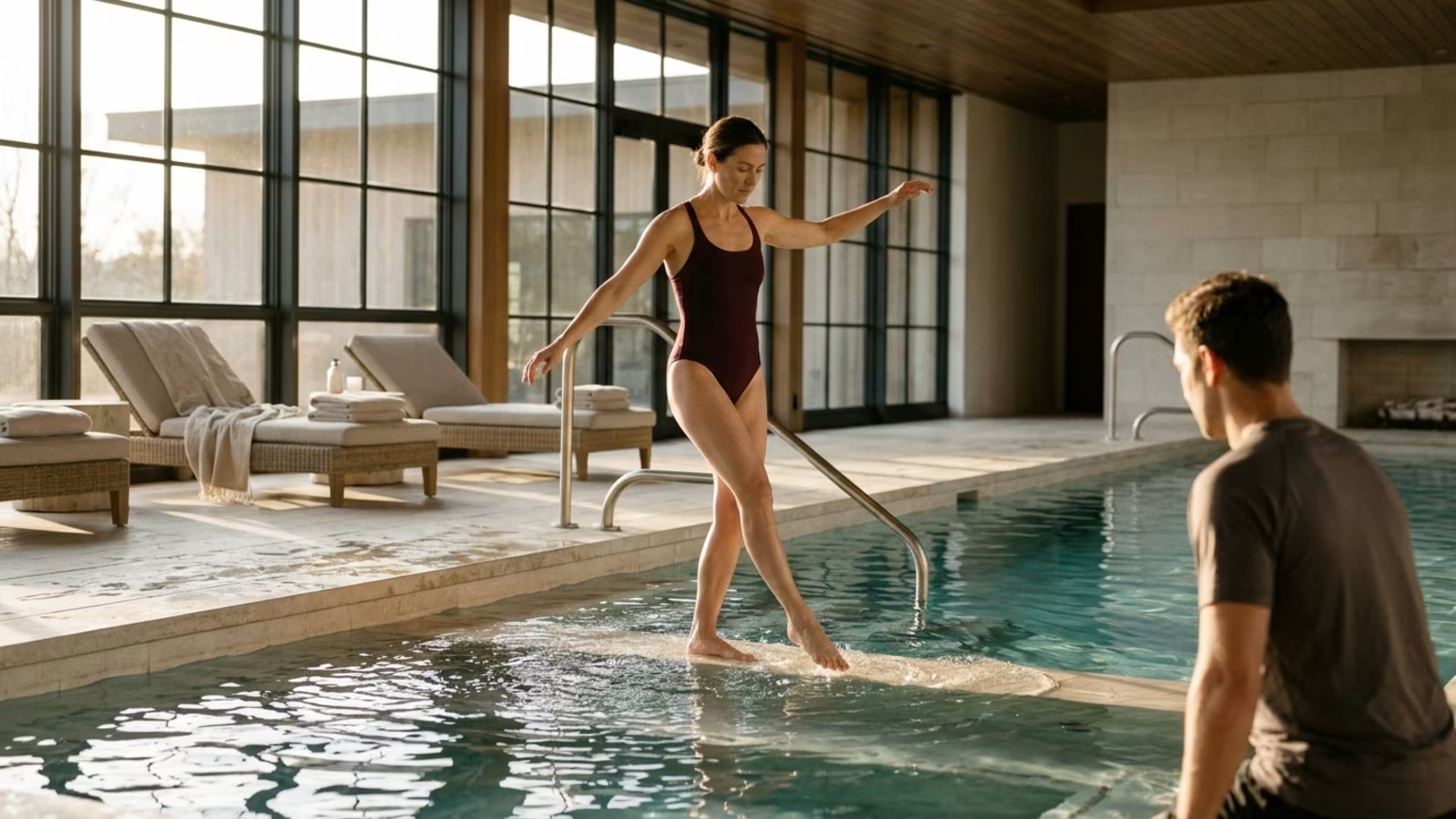
Balance brings steadiness into the conversation. Uneven ground is a useful real-life reference point when deciding whether a plan reflects the activities you value.
The reported older-adult guidance gives balance-and-strength activity a distinct place. As an editorial planning principle, that is a reason to keep steadiness visible rather than assume that a busy exercise schedule automatically addresses it. It does not mean adding difficult balance challenges without considering your circumstances.
Mobility and flexibility concern the movement available for the tasks you want to perform. They deserve consideration when a restricted movement makes an activity difficult or changes how you approach it.
The available research supports mobility less directly as a separate training category than it supports aerobic activity and strengthening. Keep it in the planning conversation without turning it into a universal stretching routine or a collection of flexibility targets. The practical question is which movements matter for your life.
There is no established universal minimum dose for preserving independence. The review summarized in PEDro specifically notes that a precise effective activity dose is difficult to characterize. Its findings do not justify promising that an exact exercise mix will preserve independence for every reader.
The practical response is to make the next planning decision smaller. Rather than redesigning your entire week, identify a capacity your current activities leave relatively unattended. Then make room for an accessible activity that addresses that gap.
Choose a valued task as your reference point. It might be sustained walking during a trip or carrying what you need for a day outdoors. Keep the task specific enough to make the purpose of your plan clear.
Next, look at what your current routine already emphasizes. A calendar full of aerobic activity raises a different planning question from one dominated by resistance exercise. This is an informal review of your choices rather than a diagnostic assessment.
The action is to give the overlooked area a place on the calendar. You do not need to introduce every possible activity at once. The broader plan can develop around a manageable change rather than a complete lifestyle overhaul.
For a crowded week, shorter opportunities are a practical way to organize activity. A walk that fits between commitments may be easier to arrange than a large block reserved for exercise. This is a scheduling suggestion rather than a validated minimum-dose protocol.
Keep the broader picture in view while simplifying the immediate choice. An available walk can serve the aerobic part of a plan without being treated as a replacement for every other capacity. The point is to make the next activity feasible while keeping neglected areas visible.
On a trip, begin with the activity the itinerary already involves. Consider what that contributes to your plan before deciding what else needs attention. A walking-heavy holiday can be an opportunity to review the balance of activities rather than reproduce your usual week exactly.
Travel substitutions should serve the same practical purpose without requiring identical equipment or surroundings. Familiar and accessible options are useful planning considerations. Our resource on conditioning around the demands of a trip offers a travel-focused starting point.
For pain, disability or a chronic condition, exercise selection and adaptation deserve individualized judgment. A qualified clinician or appropriately qualified exercise professional can help connect your goals with suitable options. A generic fitness framework is not a substitute for that decision.
Keep the goal in view even when the route changes. The planning question remains which valued activity you want to support. A well-rounded approach should leave room for an adapted version of that goal rather than make an idealized routine the price of participation.
Overcomplication often starts when a useful principle becomes a rigid rule. The corrective is not to abandon structure but to ask what each part of the plan is meant to support.
Reported activity guidelines provide a public-health reference point. They are not a personalized answer to exercise selection or a guarantee of future independence.
Use the categories to check the breadth of a plan. Do not use them to declare that everyone needs an identical week. The distinction matters particularly when translating older-adult recommendations into planning decisions for someone in midlife.
A secondary summary of a fall-prevention review reports lower fall rates with balance-and-functional programs and mixed-exercise programs. It found no clear effect for resistance training alone, although that evidence was rated very low certainty.
The appropriate lesson is specific: resistance exercise should not be presented as a proven standalone fall-prevention intervention. Strength still belongs in a well-rounded plan. Avoid asking one training category to carry claims that belong to a different kind of program.
A distance total or strength result describes part of a fitness plan. It should not become the entire definition of capability.
Keep the real-life task beside the measure. If the purpose is to enjoy demanding travel, the plan should remain connected to that experience. Our article on keeping real-world ability ahead of fitness tracking examines this distinction in more detail.
More equipment and more categories to monitor are not the editorial goal. Neither is a branded promise that makes a straightforward plan sound incomplete.
Ask what practical gap an addition is meant to address. If its purpose is unclear, there is little reason to make it the next priority. A useful plan should be understandable enough that you can explain how its activities relate to the life you want.
Today, schedule one manageable activity for the part of your fitness you usually neglect, because capability is broader than any single workout.
Stay connected for research and practical guidance on longevity, strength, recovery, energy and active living. New ideas to help you stay capable, curious and ready for more.


Explore practical guidance on strength, recovery, energy, travel and longevity for a life that stays active.
explore the Blog