
Learn why active adults over 40 should prioritize real-world physical capability and simple consistency over extreme fitness tracking and complex optimization.





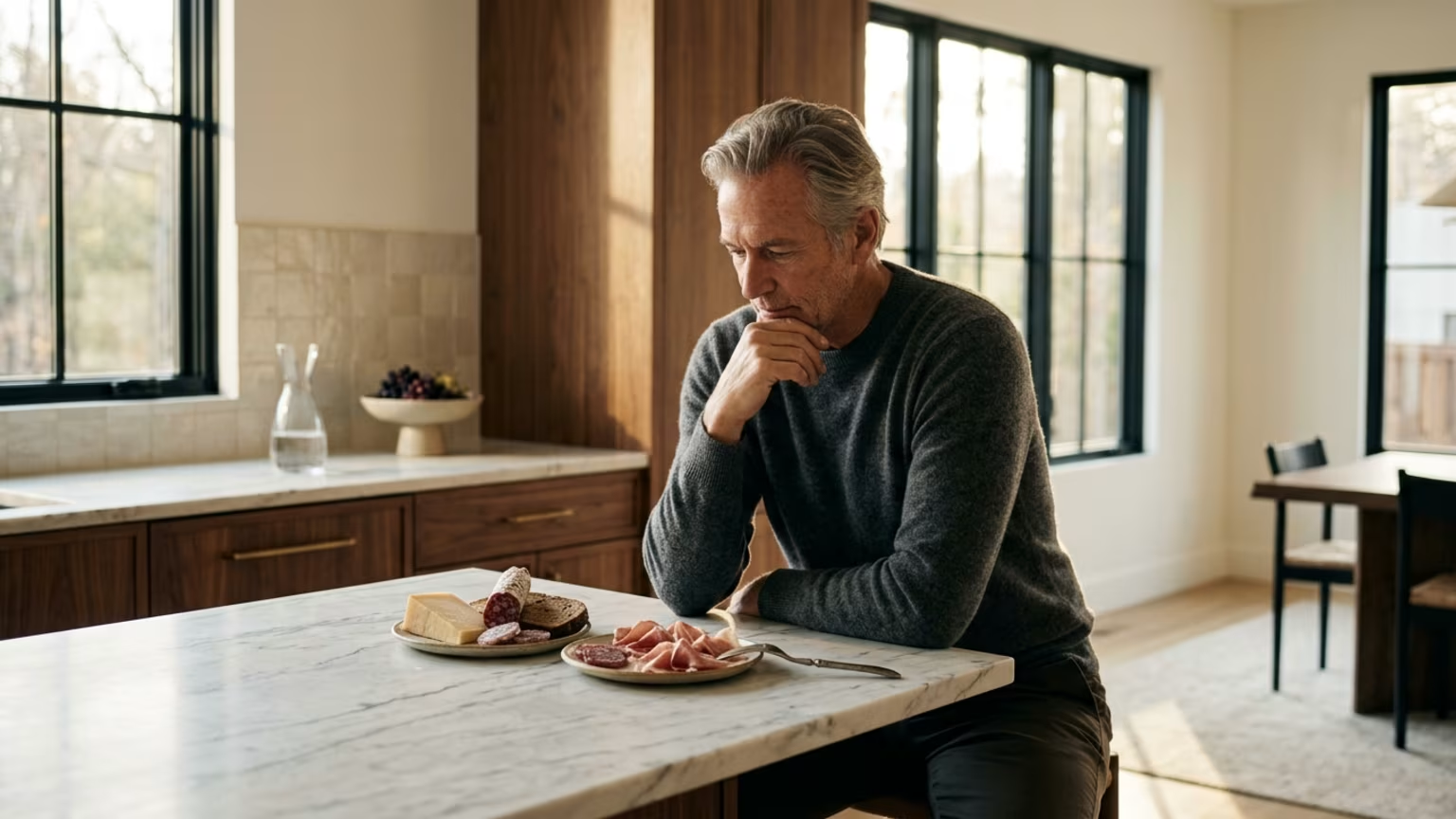
You pack your gym bag with heart rate monitors, specialized grips, and a notebook full of intricate phase-training cycles. The morning workout becomes a rigid mathematical exercise where missed targets ruin your entire day. Yet despite all this complex optimization, your knees still ache when hauling luggage through a busy terminal. Stop treating your exercise routine like an unpaid data entry job; you are sacrificing your actual physical freedom for numbers you cannot use.
San Francisco 49ers running back Christian McCaffrey recently shared his own evolution with Men’s Journal. He advises men over 40 to focus on sustainable movement, mobility, and consistent strength rather than extreme intensity alone. McCaffrey has become highly deliberate about movement quality, recovery, and training volume as he has aged. His philosophy shifts the focus from chasing aesthetic perfection to maintaining true physical capability.
The professional athlete mindset often gets poorly translated for the general public. We are sold the idea that more intensity and more data will automatically equal better health. McCaffrey’s approach demonstrates that even at the highest levels of sport, the emphasis eventually shifts to physical preservation. He recognizes that moving well and recovering properly are the true foundations of longevity.
The fitness industry constantly pushes active adults toward increasingly complicated regimens. We are told to emulate the brutal training camps of elite competitors or to track dozens of arbitrary recovery scores. This approach ignores the reality of managing demanding careers, families, and a desire to actually enjoy life. When we obsess over maximizing every single physiological metric, we lose sight of functional independence.
A 2026 nationwide cohort study published in JAMA Network Open illustrates this disconnect perfectly. Researchers evaluated 13,423 community-dwelling adults aged 65 and older in Taiwan. The group had a mean age of 72.9 years, and 8,394 participants were women. This means 62.5% of the cohort consisted of female participants. The comprehensive assessments took place between January 11, 2015, and November 25, 2016.
The scientific team measured physical fitness objectively rather than relying on complex digital tracking or self-reported exercise habits. Fitness was evaluated across four critical, real-world domains. These distinct categories included cardiorespiratory fitness, muscular strength, flexibility, and balance and agility. The researchers used highly practical assessments that perfectly mirror the physical demands of independent daily life.
These targeted tests included a 30-second chair-stand test, a one-leg stance test, and an eight-foot up-and-go test. The researchers also measured essential cardiorespiratory stamina with a structured two-minute step test. They tested flexibility using back-scratch and chair-sit-and-reach protocols. The focus remained entirely on tangible human performance and usable physical reserve.
The ability to stand up from a low chair easily matters far more than an arbitrary score on a wearable device. Real-world fitness is fundamentally about maintaining the physical reserve to handle unpredictable environments. Extreme protocols often leave busy adults too exhausted to actually utilize their hard-earned fitness. The Taiwanese cohort study reminds us that basic functional competence is the ultimate indicator of health.
Stressing over perfection often creates a massive capability cost for active adults. If your rigid workout program leaves you too fatigued for a spontaneous tennis match, it is highly counterproductive. Extreme tracking can make people unnecessarily fearful of their own bodies, limiting their daily experiences. You might skip a beautiful hike because your digital recovery app aggressively suggests total rest.
This modern anxiety directly detracts from the goal of enjoying travel, sports, and social connection. The JAMA Network Open study highlights exactly what is at stake when we ignore functional basics. The researchers tracked the large Taiwanese cohort over a median follow-up of 7.0 years. During this observation period, 1,631 participants, representing 12.2% of the cohort, unfortunately died.
The researchers created a composite fitness index by summing sex-specific percentile ranks across all seven functional assessments. The results strongly reinforce the immense value of practical physical capability over time. The composite fitness index had an adjusted hazard ratio of 0.39 for the highest versus lowest performance quintile. This means the highest-performing group showed a substantially lower observed risk of all-cause mortality.
The strongest survival associations involved balance and agility, lower-body strength, and cardiorespiratory fitness. When we neglect these basic capabilities to chase superficial metrics, we systematically lose our physical independence. Stiff joints and poor balance make simple tasks, like carrying a heavy duffel bag down a narrow airplane aisle, feel suddenly treacherous.
The eight-foot up-and-go test alone had an adjusted hazard ratio of 0.41 for the highest performance quintile. The one-leg stance test showed a ratio of 0.50, demonstrating the critical importance of bodily control. The 30-second chair stand registered a hazard ratio of 0.55, and the two-minute step test showed 0.58. Interestingly, the study noted that flexibility was less strongly associated with survival than these other major domains.
At WealthAtPlay, we advocate for a much simpler, highly practical alternative that achieves 80% of the results with 20% of the effort. You can achieve excellent functional outcomes with a fraction of the mental fatigue and joint stress. The primary goal is to build a durable physical foundation without letting complex exercise protocols consume your schedule. McCaffrey summarizes this elegant concept perfectly by describing progress as simply stacking quality days over and over.
The core of a sustainable midlife routine is regular, unforced movement throughout the day. McCaffrey tells Men’s Journal that his absolute central recommendation is simply to move every day. You do not need to spend exhaustive hours in the gym to remain athletic and highly capable. Regular walking, light cycling, or relaxed swimming can effectively build your cardiovascular baseline.
The CDC recommends at least 150 minutes of moderate-intensity aerobic activity per week. Meeting this established benchmark supports the exact cardiorespiratory fitness measured by the two-minute step test. This level of activity provides the sustained energy necessary for long travel days and recreational sports. It builds the strong foundation for progressive travel conditioning without requiring extreme physical exhaustion.
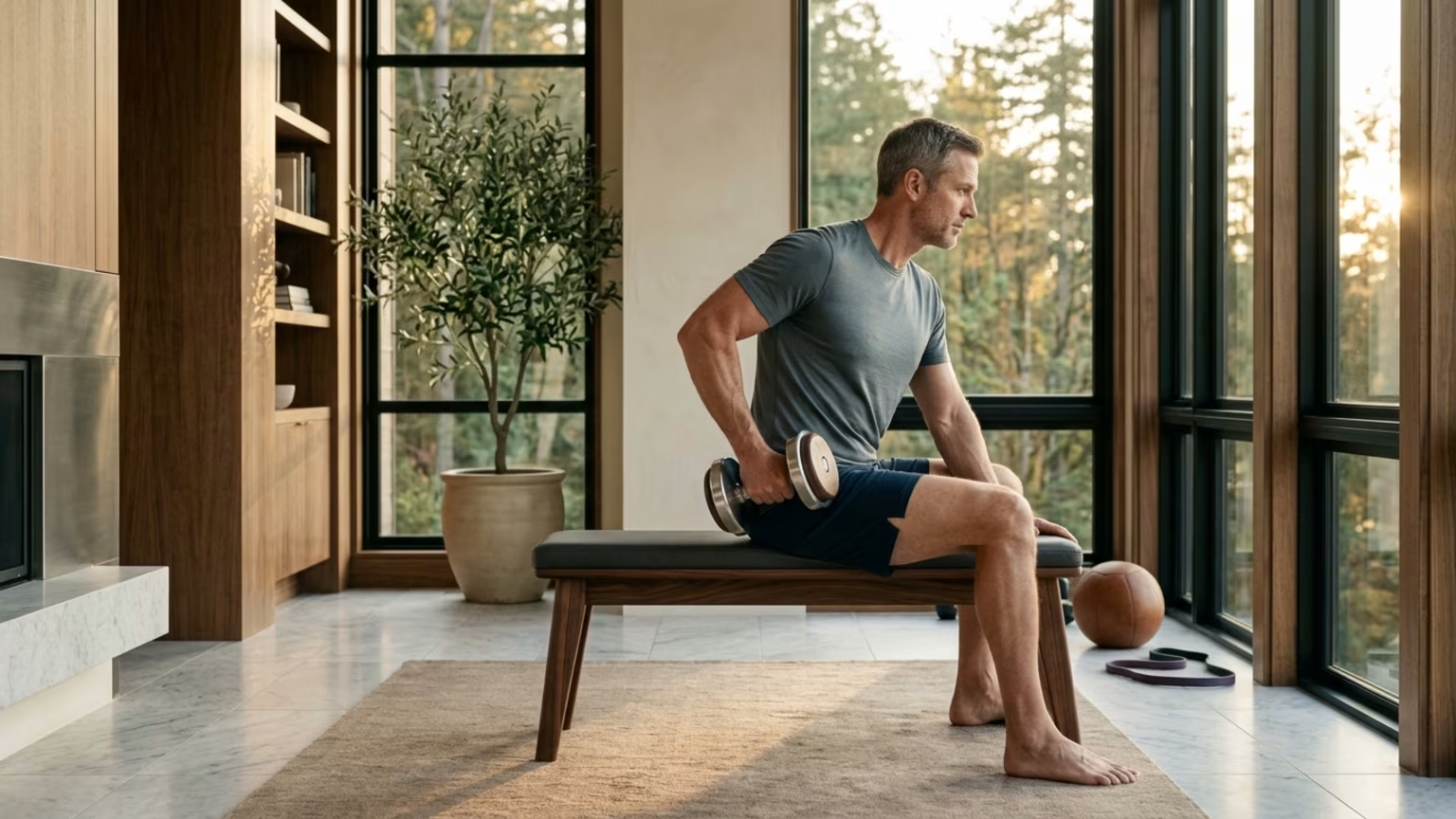
Strength training should consistently focus on functional capacity rather than isolated muscle size. McCaffrey practically advises lifting at least twice weekly as a reliable baseline for men over 40. The CDC also advises incorporating dedicated muscle-strengthening activity at least twice weekly into your routine. McCaffrey heavily shares this priority, viewing lean muscle mass as one of the biggest predictors of health as you age.
Lower-body strength and balance are absolutely critical for preserving your physical independence and overall movement quality. You should practice controlled patterns like squats, step-ups, and single-leg exercises regularly. These exercises directly support your performance on practical metrics like the 30-second chair-stand and one-leg stance tests. Maintaining this specific strength ensures you have the physical capacity to handle demanding schedules.
Moving well is just as important as moving heavy weights in your daily routine. McCaffrey heavily emphasizes landing mechanics and carefully controlled explosive movements in his training. He incorporates acceleration, deceleration, and specific footwork drills to maintain his profound athletic agility. While you may not need professional-level quickness, maintaining basic coordination prevents devastating trips and falls.
You can train agility simply by practicing quick direction changes on a local tennis court. Mobility work should focus on keeping your major joints comfortable through their full natural ranges. Doing this work consistently prepares your body for the unpredictable physical demands of adventurous global travel.
The most overlooked aspect of physical longevity is dedicated, uncompromising recovery. Professional athletes deeply understand that training without adequate rest simply leads to chronic injury and mental burnout. McCaffrey strategically incorporates deliberate soft-tissue work, precise nutrition management, and mobility practice into his weekly routine. He forcefully calls sleep his highest recovery priority, stating that it is not even close to the other factors.
Busy adults must immediately adopt this exact professional mindset regarding their own physical rest. You should view proper sleep and rest as strictly mandatory components of your fitness portfolio. Ignoring your body’s profound need to repair itself will only accelerate the loss of baseline capability. Prioritizing consistent recovery and sleep routines yields far better long-term results than sporadic, grueling workouts.
Will you continue letting complex algorithms and aesthetic pressures dictate your daily routine, or will you start training for the physical freedom to travel the world on your own terms? True vitality is measured by your ability to navigate uneven cobblestone streets, rise easily from low seats, and enthusiastically say yes to new physical adventures.
Stay strong, stay capable, and keep stacking those quality days.
Stay connected for research and practical guidance on longevity, strength, recovery, energy and active living. New ideas to help you stay capable, curious and ready for more.



Explore practical guidance on strength, recovery, energy, travel and longevity for a life that stays active.
explore the Blog