
A 24-week trial supports considering balance-focused or aquatic training, with practical context for active adults and clear limits on the findings.





On October 27, 2026, Woman & Home reported on a 2025 exercise trial comparing sensorimotor training, aqua aerobics and Pilates with a control group. If you want to keep choosing ambitious walking holidays and active days on your own terms, the useful question is not which class sounds most demanding. It is which kind of practice matches the capability you want to maintain.
This is a look back at an earlier trial, not a newly published study. Its results give balance-focused and water-based exercise a place in the conversation without declaring a universal winner.
According to the study summary covered by Woman & Home, researchers compared four groups over 24 weeks. The trial included 153 participants:
The useful distinction is the training emphasis. Sensorimotor training is the balance- and coordination-focused option described in the research coverage. Aqua aerobics is the water-based option. The researchers assessed physical function through several tests rather than treating fitness as one undivided ability.
For an active adult, that shifts the question from whether you exercise to which abilities your exercise choices address. A program can be worth considering because it focuses on a capability that matters to you, not because it promises to improve everything.
The study authors reported statistically significant improvements across all assessed tests in the sensorimotor group. In the aqua-aerobics group, they reported improvements on sit/stand and forearm-flexion tests as well as a reach-behind-back test. These were specific strength and flexibility findings.
In everyday language, the water-based findings concerned tasks involving standing up, moving the arm and reaching behind the back. That makes the result more concrete than a general claim about getting fitter. The sensorimotor finding covered a wider set of the assessments used in this trial.
The control and Pilates groups showed no statistically significant improvement in the assessed variables. The authors concluded that sensorimotor and aquatic training improved physical function, particularly balance, strength and mobility.
A separate study published on October 6, 2026 in BMC Geriatrics examined functional-fitness changes among community-dwelling adults aged 65 and older. It considered participation in 12- and 24-week multicomponent exercise programs.
Its relevance here is the setting: organized exercise within a community rather than a search for one ideal class format. It places the trial within a broader discussion about how structured programs relate to physical function.
The accessible trial abstract does not report participant ages or sex distribution. It also leaves out session frequency and length, training intensity, adherence and adverse events. Longer-term follow-up is not reported.
There are two different questions behind the results: whether people improved within a program and whether the groups changed differently from one another. The first describes progress. The second is more relevant to claims that one approach outperformed another.
Statistical significance also does not tell you how large a change was or how noticeable it felt. The authors reported differences in how groups changed over time for the assessed outcomes except the Timed Up and Go test, or TUG. That exception matters when interpreting claims that one approach was best for mobility.
The Pilates result applies to this trial's sample and program, not to every form of Pilates. The trial also did not establish fewer falls or lasting independence. Meanwhile, the BMC Geriatrics study was non-randomized and was not a direct replication of the sensorimotor-versus-aquatic comparison.
The trial did not measure travel recovery, altitude adjustment or sustained energy during skiing and hiking. Its practical relevance is therefore a training-choice question: which of the measured capabilities deserves more attention before your next active trip?
Start with one priority rather than a complete routine overhaul. A walking holiday might bring balance and coordinated movement to the front of your mind. A preference for water-based activity might make the reported strength and flexibility findings more relevant to your choice. These are ways to connect the evidence with your plans.
If balance and coordination are the abilities you want to give more attention, the sensorimotor option matches that interest. The useful question is what a class actually practices. Its name alone is less informative than whether its content reflects the balance-oriented approach described in the report.
That is consistent with giving balance a deliberate place in an active life. The aim is not to collect another fitness format. It is to make one considered choice around a capability you value.
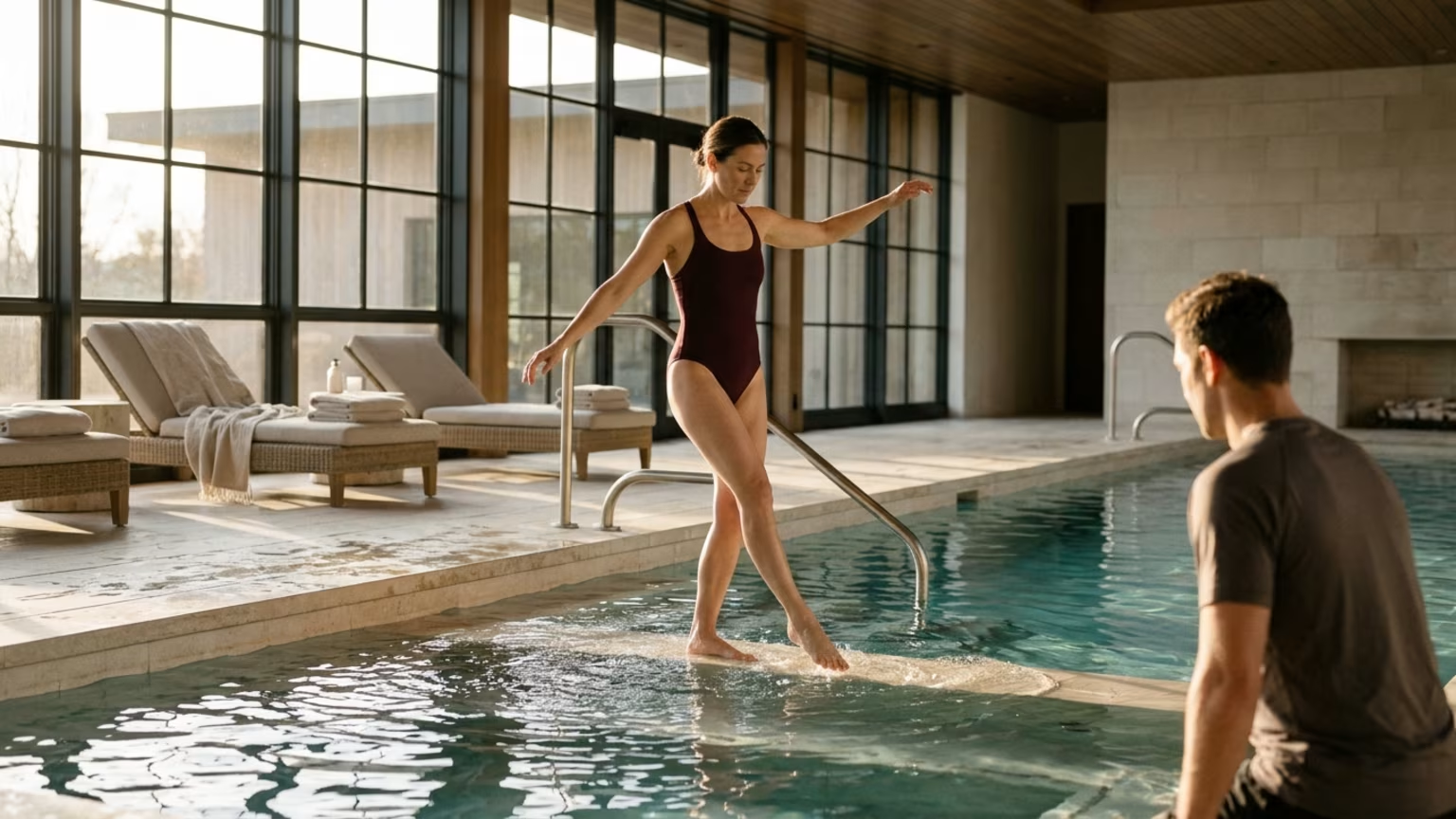
For someone drawn to a pool-based class, the findings offer a capability-focused reason to consider it. Water-based exercise does not need an adventurous image to be relevant to an adventurous life. In this trial, it earned attention through particular test results rather than through claims about a complete fitness solution.
Access and preference can help narrow the choice. An available aquatic class may fit your interests better than a balance-focused option, or the reverse may be true. The sensible comparison is between a program's emphasis and your goal, not between the perceived prestige of different activities.
An appropriately qualified health or exercise professional can help relate those options to your circumstances. That is particularly important when health conditions or mobility limitations influence what is suitable. Bring one clear question: does this program address the capability I want to work on?
There is no need to turn that discussion into a search for the hardest class. Ask about the program's focus rather than assuming a label tells the whole story. The immediate decision is whether one suitable addition makes sense alongside the activities already important to you.
The broader aim remains maintaining the abilities behind physical independence. A study like this is useful when it sharpens that decision. It is less useful when it becomes a reason to replace every familiar activity with whichever exercise received the latest headline.
The sensible adjustment is to consider one balance-focused or aquatic addition to your routine, chosen around your goals and qualified guidance when health or mobility affects the decision.
Stay connected for research and practical guidance on longevity, strength, recovery, energy and active living. New ideas to help you stay capable, curious and ready for more.





Explore practical guidance on strength, recovery, energy, travel and longevity for a life that stays active.
explore the Blog