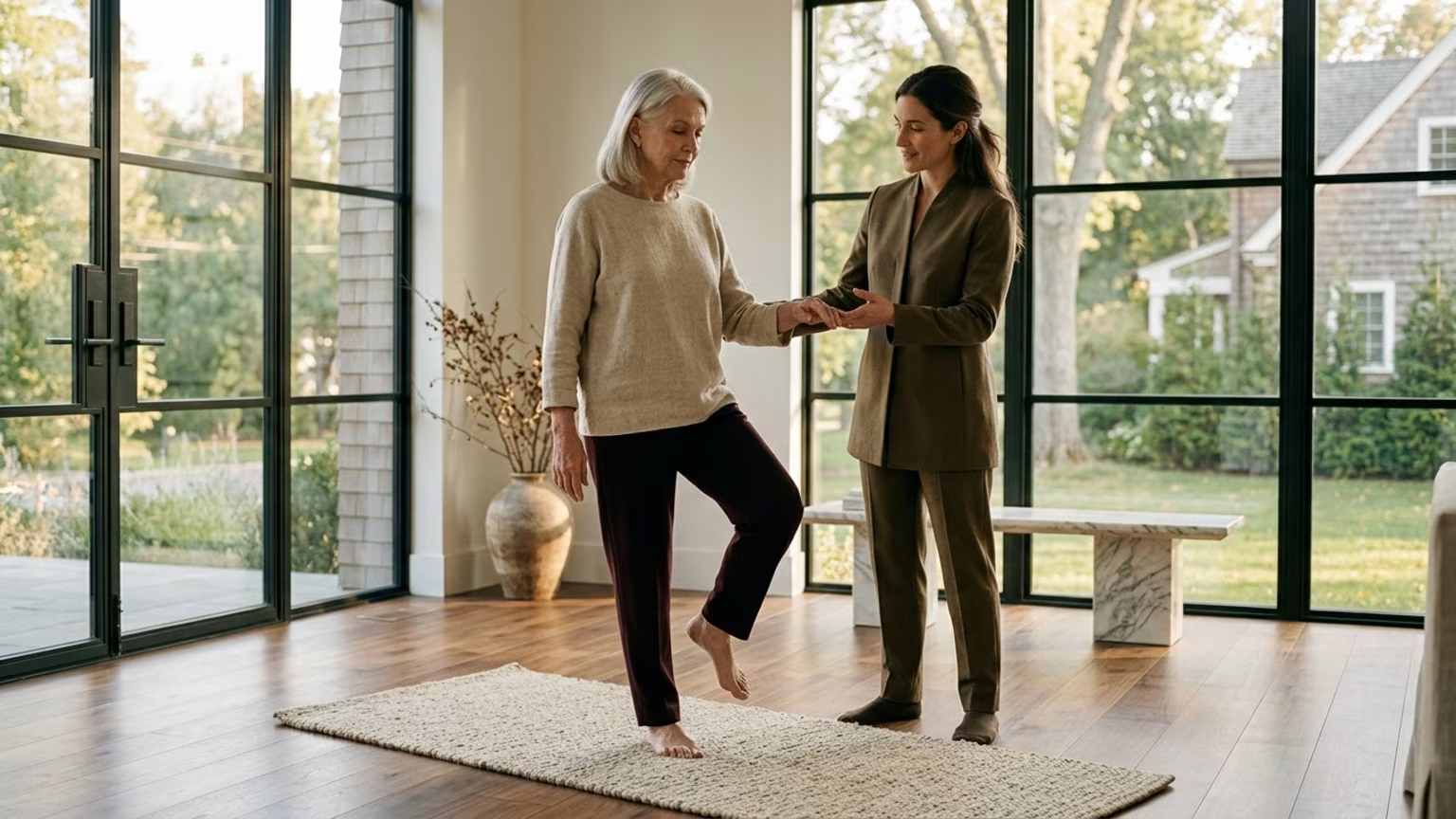

Balance is the absolute ceiling of physical independence. Learn how brief, simple balance training protects your ability to travel, ski, and age capably.





Cardiovascular endurance and muscular strength do not dictate your athletic lifespan, your nervous system's ability to keep you upright does. We meticulously track our resting heart rate and debate optimal protein intake. Yet we ignore the physical attribute that actually keeps us on our feet.
Balance is not simply a clinical measurement for older populations. It is the absolute ceiling of your physical independence. The ability to maintain equilibrium integrates visual input, the inner ear vestibular system, and proprioception. These systems must fire perfectly alongside muscular strength to navigate unpredictable environments.
If this network degrades over time, all other fitness markers lose their practical value. The medical community increasingly views spatial coordination as a primary biomarker. A 2024 Mayo Clinic study cited by The Business Standard illustrates this shift clearly. Researchers reportedly found single leg balance to be a strong indicator of neuromuscular aging.
This metric even outperformed measures such as strength and gait. This neuromuscular integration requires consistent practice to maintain its edge. We cannot expect optimal performance on uneven terrain if we only train in predictable environments. Structured balance and stability regimens provide a necessary countermeasure to a sedentary modern lifestyle.
Training the nervous system protects our capacity to move confidently through the world. Maintaining equilibrium becomes critically relevant for adults over 40 who travel. Navigating cobblestone streets, wet boat decks, and steep ski slopes demands rapid neuromuscular adjustments. Without adequate rotational control and joint stability, these environments become restrictive rather than enjoyable.
Capability in these settings relies entirely on an intact sensory and motor loop. My own realization of this necessity happened far from a sterile clinic. Last winter in Chamonix, I noticed something striking. It was not the altitude that forced my peers into the lodge by noon, it was a lack of rotational strength and poor recovery from the flight.
We spend so much time debating the perfect supplement stack, yet we neglect the basic foundational strength required to actually enjoy our travels. That trip changed how I approach fitness. I stopped training for aesthetics and started training exclusively for capability. The cost of ignoring this foundation is severe and statistically evident.
The Business Standard highlights CDC figures stating that one in four U.S. adults aged 65 and older falls each year. Furthermore, falls represent the leading cause of injury related death in that demographic. These statistics underscore the urgency of building neuromuscular resilience long before retirement age. The consequences of poor equilibrium extend into broader longevity metrics.
A 2022 study in the British Journal of Sports Medicine tracked adults aged 51 to 75. Participants unable to stand on one leg for at least 10 seconds faced an 84 percent higher risk of death during follow up. While this represents an association rather than causation, it highlights the importance of maintaining systemic coordination. Improving your coordination does not require hours of dedicated daily practice.
The most effective interventions layer small challenges over existing habits. A minimal effective dose relies on frequency rather than exhausting intensity. You can stimulate neuromuscular adaptations without overhauling your entire lifestyle. The foundation of a good routine begins with standard aerobic and strength benchmarks.
The Business Standard repeats familiar CDC targets for general health. These guidelines recommend 150 minutes of moderate intensity aerobic activity or 75 minutes of vigorous activity weekly. Following aerobic conditioning guidelines provides the stamina needed for all other physical pursuits. You must also include muscle strengthening work at least twice weekly.
Once that baseline is established, you should add short, repeatable balance practices three to four times per week. The Business Standard recommends standing on one leg for 30 seconds while watching television. You can also practice heel to toe walking while waiting for transportation. These brief sessions effectively challenge your coordination without causing significant fatigue.
Daily exposure forces the brain to continuously process spatial data and joint positioning. This subtle accumulation of practice translates directly to better stability on a hiking trail or surfboard. Consistency remains the ultimate driver of physiological adaptation. Many people make the mistake of separating coordination work entirely from strength training.
They stand on unstable surfaces in gyms but avoid heavy resistance exercises. This isolated approach fails to prepare the body for real world forces. True resilience requires muscles capable of producing force to correct a sudden stumble. Relying exclusively on wellness gadgets or digital alternatives also presents a risk.
A 2026 systematic review of exergame interventions found possible reductions in fall rates. However, the researchers concluded that exergames should not yet replace established exercise based fall prevention programs. Digital tools can supplement your routine, but they cannot replace the physical demands of lifting and walking. The most successful clinical models combine multiple modalities into one cohesive system.
The Business Standard identifies the Otago Exercise Program as a structured intervention for older adults. This proven framework successfully combines progressive lower body strength and balance exercises with walking. It recognizes that equilibrium requires strong legs and functional movement patterns. Applying strength principles properly ensures you have the power to stay upright.
A physiotherapy evidence summary examined the impact of these combined approaches. The review reported that both Otago and general strength and balance programs improved equilibrium and reduced the fear of falling. Notably, the Otago program appeared more effective in that specific analysis. Proper equilibrium requires continuous integration of several different biological systems.
Adding coordination work to your routine requires a logical and patient approach. You should never force your body into unstable positions without adequate muscular support. The nervous system adapts best to small, manageable increases in difficulty. Pushing past your point of control reinforces poor movement patterns and invites injury.
Begin by mastering static holds on a solid, predictable surface. Once you can hold a single leg stance easily, you can introduce slight visual challenges. Turning your head slowly from side to side dramatically increases the difficulty of the movement. This simple modification forces your inner ear to manage the spatial workload without visual anchors.
Only after mastering these basics should you consider dynamic movements. Controlled step downs from a small box build strength and stability simultaneously. They mimic the real world challenge of descending stairs or hiking down a steep incline. This practical application directly supports the activities that make travel and recreation enjoyable.
Professionals emphasize movement quality over the sheer quantity of exercises performed. A few perfectly executed repetitions yield better results than minutes of sloppy, unstructured swaying. The intention behind the movement dictates the quality of the physical adaptation. Focus entirely on the sensation of your foot interacting with the ground.
The most sustainable routines disappear seamlessly into your existing habits. You do not need to carve out a separate hour strictly for coordination drills. Simply performing bicep curls while standing on one leg changes the neuromuscular demand entirely. Walking backwards carefully down a clear hallway adds immediate spatial complexity.
Affluent adults often have access to top tier coaching and specialized equipment. While valuable, these resources are secondary to daily personal accountability. The 10 second single leg test costs nothing and requires zero equipment. It provides immediate feedback regarding your current state of neuromuscular readiness.
If you notice a decline in stability, address it calmly through progressive overload. Begin near a wall or sturdy chair to ensure safety during your practice. Increase the difficulty only when you can perform the movement with perfect control. Rushing into complex maneuvers increases injury risk and defeats the purpose of the training.
Taking ownership of this physical trait changes the trajectory of your active years. It allows you to commit to adventurous travel itineraries without hesitation. It ensures that a minor misstep on a trail does not become a major medical event. This proactive mindset transforms the aging process from a defensive retreat into a confident progression.
True capability requires a nervous system that responds instantly to environmental demands.
The quiet confidence of walking easily across a slippery deck tells the whole story of a well maintained body.
Stay connected for research and practical guidance on longevity, strength, recovery, energy and active living. New ideas to help you stay capable, curious and ready for more.



Explore practical guidance on strength, recovery, energy, travel and longevity for a life that stays active.
explore the Blog