
Cardiovascular endurance training optimizes cardiorespiratory physiology, metabolic health, and longevity through balanced aerobic zones.





Most fitness culture insists that endurance requires constant suffering, breathless exhaustion, and punishing high-intensity intervals. We are often told that unless a workout leaves us completely depleted, it does not count. Decades of cardiovascular research reveal the exact opposite. The most reliable foundation for lifelong stamina, metabolic health, and physical freedom is built at a conversational, sustainable pace.
Understanding how to train your aerobic base transforms how your body ages. It is not about chasing short-term fatigue or watching numbers on a screen. True aerobic development allows you to hike alpine passes, ski full days without joint pain, and recover rapidly from long flights. This guide provides a comprehensive, research-backed blueprint for building cardiovascular capacity that supports an active, adventurous life.
Physical activity, structured exercise, aerobic endurance, and cardiorespiratory fitness are related, but they are not the same thing. Physical activity includes any bodily movement that increases your daily energy expenditure. Exercise represents planned, repetitive movement designed to maintain or improve physical capacity. Aerobic endurance is your ability to sustain rhythmic activity using large muscle groups over extended periods.
Cardiorespiratory fitness, often abbreviated as CRF, reflects the integrated capacity of your heart, lungs, blood vessels, and skeletal muscles to intake, transport, and use oxygen. It is one of the most powerful markers of overall vitality and physical independence as the decades advance.
The core takeaway of modern longevity science is straightforward. You do not need to hunt for a single perfect exercise modality. Instead, establishing regular, sustainable aerobic activity that maintains or improves your cardiorespiratory fitness provides profound systemic protection.
Meta-analyses show that each one-MET increase in cardiorespiratory fitness is associated with an 11 to 17 percent reduction in all-cause mortality. Another comprehensive meta-analysis reported a pooled relative risk of 0.86 for all-cause mortality for each additional MET of capacity. This means that relatively modest improvements in your aerobic engine translate to meaningful gains in long-term health and functional capability.
Building cardiovascular capacity should never feel like an unmanageable burden. A well-designed routine balances sustainable base work with targeted quality sessions, supported by functional strength and mobility. The goal is to build physical resilience so you can participate fully in the sports, travels, and outdoor pursuits you love.
To build an effective training program, you must understand how your body produces energy during sustained movement. The human body does not switch abruptly between separate fuel tanks. Instead, it relies on three overlapping energy systems that work together based on the intensity and duration of the activity.
Aerobic metabolism supplies the vast majority of energy during low- and moderate-intensity efforts. Inside your muscle cells, mitochondria use oxygen to convert fatty acids and carbohydrates into adenosine triphosphate, the primary energy currency of the body.
Anaerobic glycolysis contributes more heavily as intensity rises and energy demands outpace the rate of aerobic oxygen delivery. This pathway breaks down glucose rapidly without oxygen, generating metabolic byproducts that eventually force you to slow down.
The phosphagen system provides immediate, explosive power for brief efforts lasting under ten seconds, such as sprinting up a steep boulder or pushing out of a deep squat.
Aerobic training does not mean easy or ineffective training. A steady aerobic effort can feel challenging and deeply productive while remaining fully fueled by oxygen. Cardiorespiratory fitness is commonly measured in metabolic equivalents or maximal oxygen uptake, known as VO2 max. One MET equals the amount of oxygen your body consumes at rest, roughly 3.5 milliliters of oxygen per kilogram of body weight per minute.
VO2 max represents the absolute ceiling of your body's ability to transport and utilize oxygen during maximal exertion. When clinical testing cannot push a person to an absolute maximum, clinicians record VO2 peak instead.
Observational data from the Journal of the American College of Cardiology indicates that accumulating at least 150 minutes weekly of moderate physical activity that improves cardiorespiratory fitness correlates with substantially lower mortality. These associations remain consistent across diverse age groups, sexes, and baseline fitness levels.
These findings from observational cohorts represent associations rather than absolute clinical guarantees for an individual. Nevertheless, the underlying physiological adaptations are unmistakable. Consistent aerobic exercise enlarges the left ventricle of the heart, stimulates new capillary growth within skeletal muscles, and increases mitochondrial density. These structural improvements make your daily movements feel effortless and preserve your stamina as you grow older.
Zone 2 has gained significant attention in recent years, but it is often presented with excessive hype. Some claim it is a magical fat-burning zone that solves every health challenge. In reality, Zone 2 is simply a practical training concept designed to target your fundamental aerobic base without generating excessive systemic fatigue.
Physiologically, Zone 2 occurs right below your first ventilatory threshold, often called VT1, or your first lactate threshold. At this pace, blood lactate levels remain near baseline, typically around 1.5 to 2.0 millimoles per liter. Your body relies primarily on fat oxidation and slow-twitch muscle fibers, producing very little metabolic byproduct. This allows you to sustain the effort for hours and recover quickly.
Perceptually, Zone 2 feels purposeful but fully controlled. On a standard rate of perceived exertion scale from 1 to 10, it sits comfortably around a 3 or 4. You are clearly working, but you are not straining.
Behaviorally, the defining characteristic of Zone 2 is the talk test. You should be able to speak in complete, comfortable sentences without gasping between words. If you can only speak in broken fragments of three or four words, you have crossed into higher intensity domains.
Relying entirely on wrist-worn wearables or standard age-based formulas can be misleading. The classic formula of subtracting your age from 220 often produces significant errors for active older adults. Factors like heat, dehydration, mental stress, poor sleep, travel, and caffeine can alter your heart rate on any given day.
The American College of Sports Medicine defines moderate exercise as roughly 40 to 59 percent of heart rate reserve or 64 to 76 percent of maximum heart rate. The American Heart Association outlines moderate activity as 50 to 70 percent of maximum heart rate. While these ranges provide general guardrails, subjective markers like breathing rate, perceived exertion, and next-day energy are far more reliable for daily training decisions.
Zone 2 is valuable because it is repeatable, places low stress on your nervous system, and can be integrated into diverse environments. However, it is not the only training that matters. World Health Organization guidelines emphasize that optimal cardiovascular health requires a balanced blend of moderate activity, occasional vigorous exertion, and regular resistance training. Zone 2 serves as the sturdy base of your training pyramid, not the entire structure.
Choosing the right endurance activity is critical for consistency. Each modality offers distinct physiological benefits and mechanical stresses. Reviewing how different exercises affect your cardiovascular system and joints will help you assemble the right personal blend.
Walking is the most accessible, low-friction endurance activity available. A comprehensive review published in healthy aging literature confirms that regular walking significantly lowers the risk of cardiovascular disease, type 2 diabetes, and high blood pressure. It imposes minimal orthopedic strain, making it ideal for daily movement, active recovery, and travel.
The primary limitation of walking on flat surfaces is intensity. A brisk flat walk may not elevate the heart rate enough to improve cardiorespiratory fitness in already active adults. You can easily progress the stimulus by finding hills, setting an indoor treadmill to a steep incline, increasing your pace, or carrying a light, supportive pack. Walking maintains your baseline movement capacity without draining recovery resources.
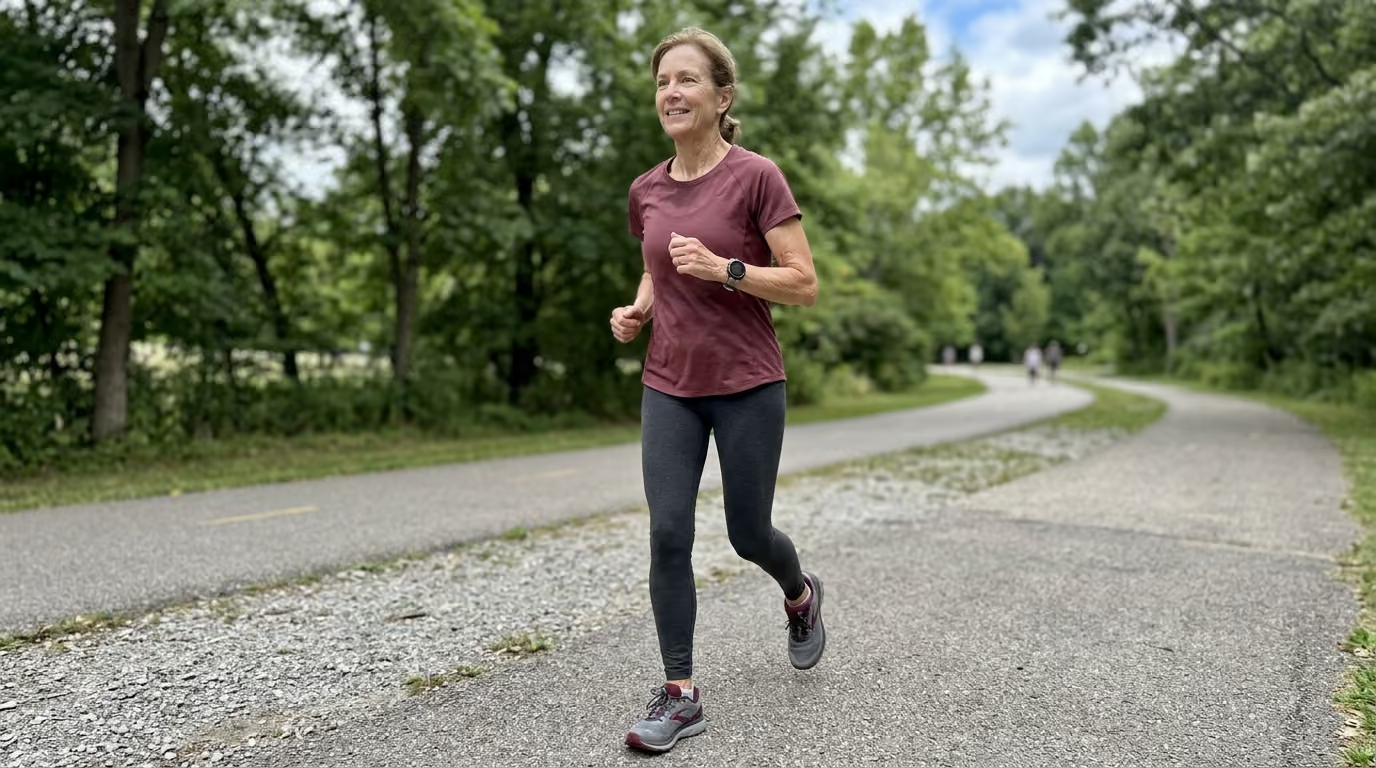
Running offers an exceptional cardiovascular return on time invested. A systematic review published in 2024 associated regular running with a 23 percent reduction in all-cause mortality. It stimulates bone mineral density through weight-bearing impact and requires minimal equipment.
The primary challenge with running is its repetitive ground reaction forces. Running exposes your lower extremities to forces two to three times your body weight with every stride. If your weekly mileage increases too quickly, your tendons and joints can become irritated. It is vital to separate cardiovascular capacity from tissue tolerance. Your heart and lungs may feel ready for five miles, but your Achilles tendons and knee cartilage might only be conditioned for two. Progress slowly by alternating running intervals with walking.
Cycling is a smooth, low-impact exercise that allows you to accumulate substantial aerobic volume. Research indicates that regular cycling correlates with a 21 percent lower risk of all-cause mortality and significant reductions in cardiovascular events. It is particularly gentle on arthritic knees because it eliminates ground impact forces.
The main limitation of cycling involves posture and bone loading. Poor bike fit can cause discomfort in your lower back, neck, or hands. Additionally, because cycling is entirely non-impact and non-weight-bearing, it does not stimulate bone mineral density as effectively as walking or running. Cyclists should always combine their saddle time with dedicated strength training and impact-tolerant movements to maintain robust bone structure.
Swimming provides rhythmic, whole-body cardiovascular conditioning with virtually zero joint impact. Cohort studies of British adults found that regular swimming was associated with a 28 percent lower risk of all-cause mortality. It is an outstanding choice for individuals managing severe joint discomfort, back stiffness, or excess body weight.
Swimming intensity is heavily dictated by your stroke mechanics. An inefficient swimmer may experience a very high heart rate and breathlessness at slow speeds, while a trained swimmer can cruise effortlessly in Zone 2. Swimming also requires access to a pool and upper-body mobility. Swimmers with a history of shoulder impingement should vary their strokes and maintain upper-back strength.
Indoor rowing engages nearly 85 percent of the muscle mass in your body, providing a superb cardiovascular and muscular endurance stimulus. It distributes effort across your legs, hips, core, and upper back while remaining completely low-impact. The resistance can be scaled precisely, making it effective for both long Zone 2 sessions and brief, vigorous intervals.
Rowing requires sound technical execution. Poor form, such as pulling with the arms too early or rounding the lumbar spine at the catch, can place excessive strain on the lower back. You must maintain proper sequencing: legs push first, hips swing open, and arms pull smoothly to the ribs. Rowing is an exceptional indoor training option once this movement sequence is mastered.
Hiking combines cardiovascular conditioning with terrain variability, elevation change, and natural outdoor environments. Ascending hills turns standard walking into a rigorous aerobic and muscular workout without requiring running speeds. It strengthens the stabilizer muscles of your ankles, knees, and hips while challenging balance and spatial awareness.
The main challenge in hiking is the downhill descent. Walking downhill creates significant eccentric loading on your quadriceps and patellar tendons, which can cause muscle soreness and joint irritation. Navigating uneven roots and loose rock also demands steady focus. Using trekking poles can reduce joint impact during steep descents by up to 20 percent, protecting your knees on long mountain days.
Relying entirely on a single exercise mode often creates repetitive stress, joint irritation, and mental burnout. Combining different activities distributes physical strain across different muscle groups and joint angles while consistently challenging your aerobic system.
A mixed-modality approach might look like this throughout the week:
Last winter in Chamonix, I noticed something striking. It was not the altitude that forced my peers into the lodge by noon, it was a lack of rotational strength and poor recovery from the flight. We spend so much time debating the perfect supplement stack, yet we neglect the basic foundational strength required to actually enjoy our travels.
That trip changed how I approach fitness. I stopped training for aesthetics and started training exclusively for capability. Integrating diverse cardiovascular training with purposeful strength work prepares your body for the unpredictable physical demands of real-world adventures.
Explore our dedicated resources on healthy aging and living well to learn how to structure your seasonal training cycles effectively.
Maintaining endurance while traveling does not require complex gym setups. A functional routine can be performed in standard hotel gyms, local parks, or coastal trails. You can perform 20 minutes of steady intervals on a stationary bicycle, complete a brisk uphill walk on a treadmill, or climb local stairs. Combining portable cardiovascular work with foundational body-weight movements ensures you stay energized and ready for adventure wherever you land.
To prepare for demanding mountain trips, explore our active travel and adventure preparation strategies for detailed field protocols.
Persistent misconceptions surrounding endurance training often hold active adults back from achieving their potential. Examining these myths with current scientific evidence allows you to train with clarity and confidence.
One of the most persistent fears is that running ruins cartilage and accelerates knee osteoarthritis. However, systematic reviews examining recreational runners over age 50 found that runners did not show greater clinical or radiological signs of osteoarthritis compared to sedentary non-runners. Recreational running stimulates synovial fluid circulation and conditions cartilage to tolerate cyclic compressive forces.
Issues arise primarily when training volume or intensity increases too quickly without adequate recovery. Running safely as you age is entirely feasible when you manage your volume sensibly and maintain strong surrounding musculature.
While Zone 2 provides an exceptional foundation, claiming it is the sole path to longevity misrepresents exercise science. Long-term health benefits require a broad spectrum of physical adaptations.
Public health data demonstrates that including brief bouts of vigorous intensity activity provides unique cardiovascular and neuromuscular benefits that moderate exercise alone cannot match. A balanced program includes comfortable base work alongside occasional threshold and high-intensity efforts.
Consumer fitness watches provide helpful estimates, but their pre-set zones are rarely exact. Smartwatches rely on photoplethysmography sensors on the wrist, which can easily lose accuracy due to sweat, motion artifacts, or cool skin temperatures.
Furthermore, algorithms calculate zones using generalized population formulas rather than your individual physiological thresholds. Use your smartwatch to identify broad trends, but always cross-reference its data with the talk test and your perceived exertion.
Cardiovascular conditioning strengthens your heart, lungs, and cellular metabolism, but it does not prevent age-related muscle loss or preserve bone density on its own. Sarcopenia, the gradual loss of muscle mass and functional power, requires direct mechanical loading through resistance exercise.
Building strong hips, a resilient posterior chain, and reliable grip strength is essential for staying agile and preventing falls. Aerobic conditioning and resistance training are complementary pillars of healthy aging, and neither should be ignored.
Learn more about pairing cardiovascular exercise with strength and physical performance research to maintain your functional capacity across decades.
You do not need to train like an elite marathoner to secure the cardiovascular and metabolic benefits of aerobic exercise. Understanding the minimal effective dose allows you to make consistent progress without overhauling your life or draining your energy reserves.
Public health organizations, including the World Health Organization and the American College of Sports Medicine, recommend a baseline of 150 to 300 minutes of moderate-intensity aerobic activity per week, or 75 to 150 minutes of vigorous activity, or an equivalent combination.
Research published in the Canadian Medical Association Journal indicates that accumulating as little as 80 to 160 minutes of moderate activity weekly yields a 22 percent reduction in mortality risks for older adults. Even modest investments in aerobic conditioning produce noticeable improvements in daily energy and long-term resilience.
To monitor your training dose without expensive laboratory testing, use the talk test combined with the next-day recovery test. During your workout, you should be able to speak comfortably in full sentences.
Immediately afterward, you should feel pleasantly exercised rather than completely exhausted. The following morning, your resting energy, joint comfort, and mood should be stable and near baseline. If you wake up with lingering fatigue, heavy limbs, or aching joints, your training volume or intensity was too high.
Prioritizing proper sleep and tissue regeneration is vital when increasing your weekly aerobic volume. Review our evidence-based recovery and sleep strategies to support your physical adaptation.
The broader scientific and medical community agrees on several foundational principles regarding endurance training and healthy aging. Large-scale epidemiological studies, clinical trials, and exercise physiology research show clear consensus across major health institutions.
Leading organizations emphasize that cardiorespiratory fitness is a vital sign of human health. The American Heart Association published a scientific statement advocating that cardiorespiratory fitness be routinely assessed in clinical practice alongside blood pressure and cholesterol.
Data confirms that individuals with higher cardiorespiratory capacity consistently demonstrate lower rates of coronary artery disease, stroke, metabolic dysfunction, cognitive decline, and depression.
Systematic reviews confirm a distinct dose-response relationship between weekly physical activity volume and mortality reductions. Accumulating roughly 7.5 to 15 MET-hours per week of moderate-to-vigorous activity reduces all-cause mortality by approximately 19 to 30 percent in older adults.
Increasing that volume to 15 to 22.5 MET-hours weekly yields estimated risk reductions of 35 to 37 percent. Beyond approximately 300 minutes of moderate activity per week, the risk reduction curve begins to plateau, demonstrating that extreme endurance volumes are not necessary for longevity.
The scientific consensus also highlights the importance of multicomponent training. Leading geriatric and sports medicine authorities agree that aerobic training must be accompanied by muscle-strengthening activities on at least two days per week. For adults over 65, incorporating balance training, agility drills, and rotational core stability is equally essential to prevent falls and maintain independence.
For actionable strategies on balancing intensity and longevity, consult our performance and physical fitness guidance.
Designing an effective weekly schedule requires balancing training stimulus with restorative rest. The goal is to establish a predictable rhythm that fits your work, family life, and travel commitments while steadily building physical capacity.
Below are three adaptable sample templates tailored to different fitness backgrounds and lifestyle demands.
This framework is ideal for individuals establishing a consistent endurance routine or returning after an extended break. It prioritizes low-impact volume and movement quality.
Designed for active adults who want to maintain high cardiovascular capacity for skiing, hiking, cycling, and travel.
A compact, highly effective schedule designed to be performed in hotel fitness centers or during demanding work weeks.
Building a powerful, resilient aerobic engine is the most effective way to ensure your body remains fully capable of enjoying every adventure the world has to offer.
Stay connected for research and practical guidance on longevity, strength, recovery, energy and active living. New ideas to help you stay capable, curious and ready for more.


Explore practical guidance on strength, recovery, energy, travel and longevity for a life that stays active.
explore the Blog