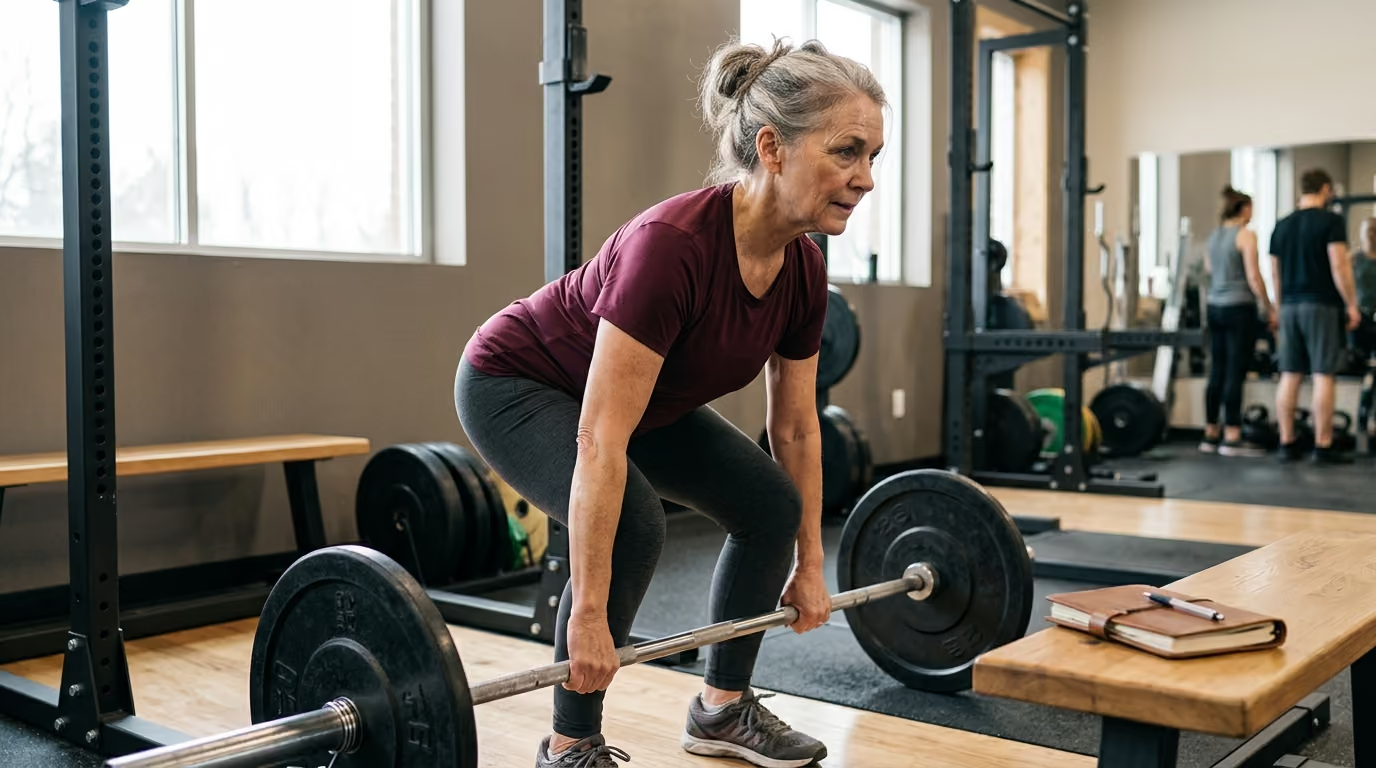

Progressive resistance training preserves functional reserve, enhances bone density, regulates metabolic health, and prevents age-related mobility decline.





Strength training for healthy aging is the systematic practice of challenging skeletal muscles against external resistance to preserve physical capability, metabolic resilience, and structural integrity. It is not an aesthetic vanity project, a competitive bodybuilding regimen, or a guarantee against biological aging. It does not make a person immune to injury or eliminate the physiological realities of getting older.
Instead, progressive resistance exercise acts as an insurance policy for your functional independence. As the decades advance, the human body naturally loses muscle mass, force production, and connective tissue elasticity. This guide offers a comprehensive look at how targeted resistance training alters that trajectory, detailing the physiological mechanisms, realistic outcomes, program designs, and safety guardrails required for lifelong capability.
The core takeaway is straightforward. Aging progressively reduces the physical reserve you need for daily life, active travel, and unexpected physical stress. Progressive resistance training rebuilds that reserve.
When you pair strength work with aerobic conditioning, balance training, proper nutrition, and adequate rest, you safeguard your ability to engage with the world on your own terms. Explore our targeted strength and physical performance resources to understand how these training principles integrate into a comprehensive fitness program.
For decades, fitness culture focused almost exclusively on muscle size. In the context of longevity and healthspan, however, force production and tissue quality matter far more than pure volume.
The European Working Group on Sarcopenia in Older People revised its clinical framework (EWGSOP2) to place low muscle strength at the very center of sarcopenia diagnosis. Research shows that muscle strength is a far more reliable predictor of adverse outcomes, hospitalization, and loss of independence than measured muscle mass alone.
Understanding the distinction between related physical qualities allows you to train with greater intent:
A person can significantly increase their strength through neural adaptations without adding visible muscle mass. Conversely, having large muscles does not guarantee that you can react quickly to a sudden stumble or lift a heavy bag into an overhead bin.
Functional reserve is the difference between your maximum physical capacity and the energy required for ordinary tasks. If rising from a deep armchair requires 90 percent of your maximum leg strength, you will find sitting down and standing up exhausting and precarious.
When you increase your squatting strength through resistance training, that same chair stand might only demand 40 percent of your capacity. You have expanded your functional reserve. This buffer protects you during moments of illness, sudden trips, long travel days, or periods of forced bed rest.
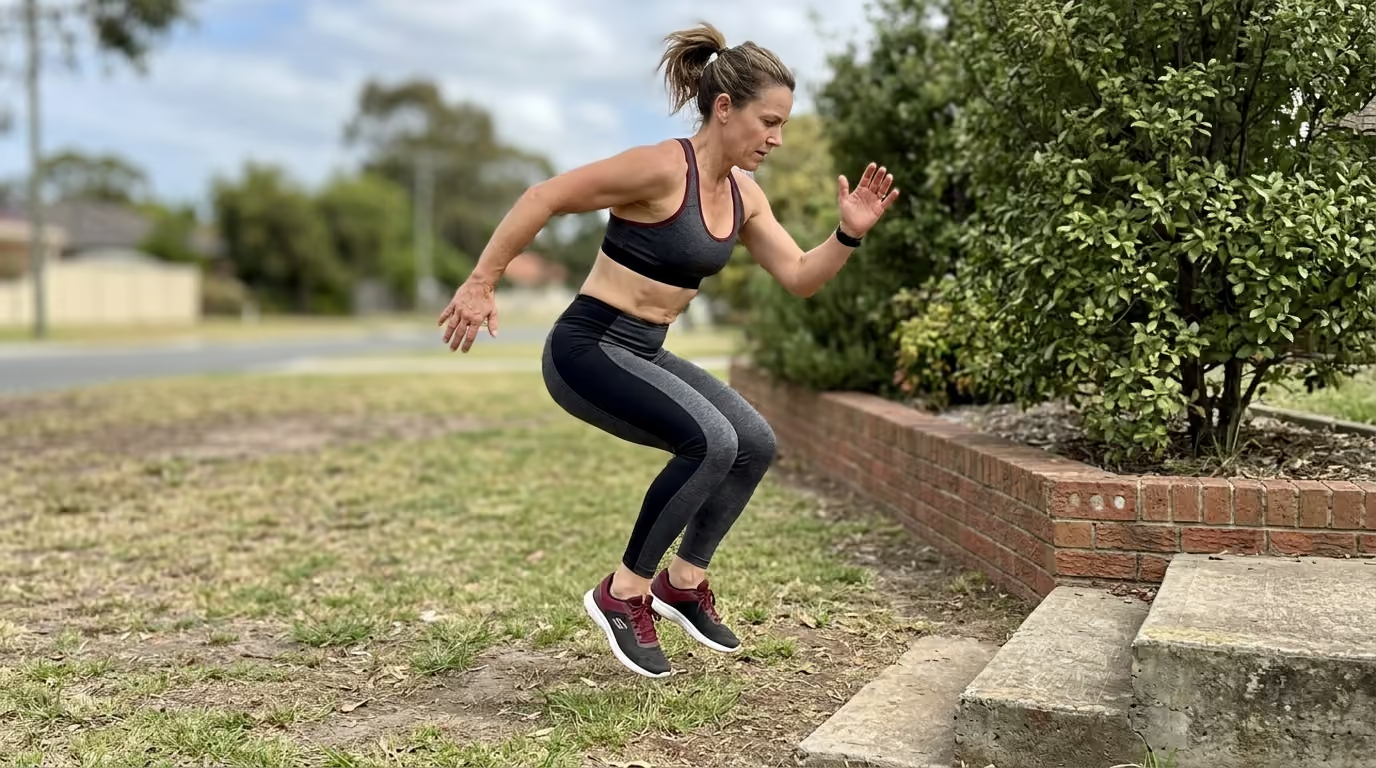
Muscle power deteriorates at roughly twice the rate of absolute muscle strength as we age. Power relies heavily on type II (fast-twitch) muscle fibers, which are the first to atrophy when unprompted by high-effort movement.
Loss of power affects everyday safety. You need raw strength to lift a heavy box, but you need power to catch your footing when your shoe catches on an uneven cobblestone. Strength training that includes controlled, intentful speed helps preserve these vital fast-twitch fibers.
Scientific literature provides clear data on what resistance exercise can achieve in older adults. It also highlights areas where outcomes are modest or dependent on other lifestyle factors.
The evidence supporting strength improvements is robust across all age groups, including nonagenarians. Systematic reviews examining resistance training interventions in older adults with sarcopenia show measurable improvements in handgrip strength, isometric leg force, and chair-stand performance.
A systematic review published in BMC Geriatrics evaluated adults over 70 with sarcopenia who completed resistance training protocols lasting longer than 10 weeks. The researchers observed a mean increase in handgrip strength of 1.67 kg, a standardized mean difference of 0.53 in isometric strength, and a 0.40 improvement in chair-stand performance. These adaptations translate directly to easier stair climbing, faster walking speeds, and better balance.
Resistance training applies mechanical tension to bones via muscular contraction, stimulating osteoblast activity. However, the resulting increases in bone mineral density are typically modest rather than transformative.
Meta-analyses demonstrate small positive changes in bone mineral density at the lumbar spine and total hip, often averaging between 0.60 percent and 0.65 percent. Changes at the femoral neck are frequently negligible.
Strength training helps slow age-related bone thinning and reinforces connective tissues. Yet it should not be viewed as a standalone replacement for comprehensive medical management in cases of severe osteoporosis.
Skeletal muscle acts as our largest metabolic reservoir, responsible for the vast majority of postprandial glucose clearance. As muscle tissue is replaced by intermuscular adipose tissue, systemic insulin sensitivity declines.
Resistance exercise improves insulin signaling pathways and enhances glucose transporter type 4 (GLUT4) translocation within muscle cells. These metabolic adaptations occur through improved muscle quality and mitochondrial function, even before substantial changes in body composition appear. Pairing resistance work with supportive nutrition and metabolism habits maximizes these metabolic benefits.
Strength training builds the lower-limb force required to maintain postural stability. Yet isolated lifting alone is not a guaranteed fall-prevention intervention.
A comprehensive Cochrane systematic review indicated that resistance training alone showed similar fall-reduction rates to other isolated exercise forms, with considerable heterogeneity in outcomes. In contrast, multi-component programs that blend resistance exercise with balance, gait, and reactive stepping drills consistently show fall reductions between 20 percent and 45 percent.
Strength forms the physical chassis. Balance and reactive drills train the control system that drives it.
Conflicting fitness marketing has created numerous myths regarding resistance training for mature adults. Clarifying these points prevents both injury and underwhelming results.
Many adults believe that aging joints require exclusively light weights or aerobic-only routines. In reality, cartilage and connective tissues require progressive mechanical loading to stay healthy and resilient.
According to a comprehensive position stand from the American College of Sports Medicine, resistance training is safe for healthy adults of all ages. In an analysis of more than 38,000 exercise participants, including over 11,000 older adults, resistance exercise did not increase the incidence of serious adverse events when performed with appropriate technique.
A common misconception born from bodybuilding culture is that every set must end in complete muscular failure. For older adults, training to absolute failure creates excessive central fatigue, compromises movement mechanics, and prolongs recovery periods.
Stopping a set one to three repetitions shy of technical breakdown delivers virtually identical strength adaptations with far lower joint stress. Consistency over months and years matters infinitely more than exhausting yourself in a single session.
Some purists argue that only heavy barbells and commercial gym machines produce results. While external iron offers straightforward progressive overload, your neuromuscular system responds simply to mechanical tension.
High-tension resistance bands, suspension trainers, and bodyweight progressions can build adequate strength for healthy aging. The key is applying sufficient resistance to make the final repetitions of a set genuinely challenging.
A growing trend suggests that lifting weights rapidly can replace traditional zone 2 aerobic exercise and cardiovascular conditioning. While circuit-style lifting increases heart rate, it does not elicit the same central cardiac remodeling or capillary bed expansion as dedicated aerobic exercise.
The World Health Organization explicitly advises combining weekly aerobic exercise with at least two days of muscle-strengthening activity. Each modality addresses distinct physiological systems.
True physical longevity is not measured by gym metrics. It is measured by your capacity to live an unconstrained life, participate in sports, navigate challenging environments, and travel across the globe without hesitation.
Last winter in Chamonix, I noticed something striking. It was not the altitude that forced my peers into the lodge by noon, it was a lack of rotational strength and poor recovery from the flight. We spend so much time debating the perfect supplement stack, yet we neglect the basic foundational strength required to actually enjoy our travels. That trip changed how I approach fitness. I stopped training for aesthetics and started training exclusively for capability.
When you view training through the lens of capability, exercise selection shifts from isolated muscle groups to fundamental movement patterns.
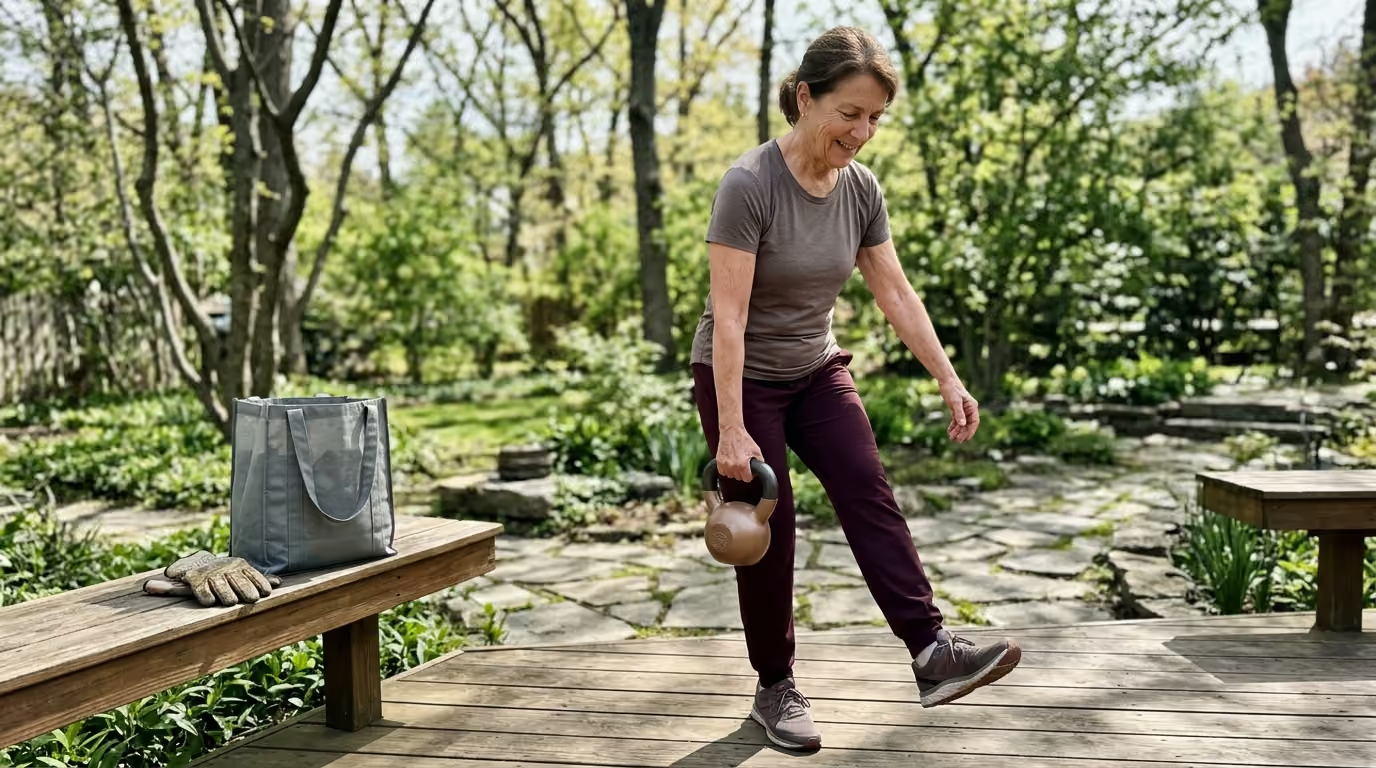
Traveling places unexpected physical loads on the body. Long flights cause fluid shifts and spinal stiffness. Navigating historic city centers requires walking thousands of steps over uneven cobblestones, often while carrying bags.
Strength training builds the connective tissue resilience required to absorb these sudden spikes in activity. When your legs and hips possess high functional capacity, a strenuous day of travel will not leave you bedridden for the rest of your trip. To read more about optimizing your physical capacity while away from home, review our guide to the demands of travel and adventure.
Whether your passion is alpine skiing, tennis, cycling, or sea kayaking, strength training acts as the foundation that keeps you in the game. Rotational power, single-leg stability, and eccentric braking control decline rapidly without direct stimulus.
By training these positions in a controlled gym setting, you prepare your joints for the chaotic forces encountered on the mountain, the court, or the trail.
You do not need to spend hours in the gym each day to achieve meaningful adaptations. Public health recommendations and sports science research demonstrate that a focused, low-frequency program can yield outstanding returns.
The World Health Organization (WHO) and the Centers for Disease Control and Prevention (CDC) outline clear, evidence-based physical activity standards for older adults:
For a busy individual, these standards represent the baseline target. Starting with just two 30-minute sessions per week produces dramatic improvements in novices.
An efficient routine selects exercises that recruit substantial muscle mass across multiple joints. Focus on these core patterns:
This beginner program is ideal for someone returning to exercise or building baseline competence. Perform on non-consecutive days, such as Tuesday and Friday.
This routine divides volume across three weekly sessions, allowing for higher loads and dedicated power development.
To accelerate physical adaptation between sessions, incorporate systematic recovery and sleep habits into your weekly routine.
Progress does not require adding heavy iron to the bar every week. Use these four progression levers systematically:
A thoughtful strength training program adapts to personal health profiles rather than forcing an individual into rigid protocols.
Joint pain is often a reason people avoid lifting, yet targeted loading is one of the most effective ways to nourish articular cartilage and reduce joint stiffness.
When bone mineral density is compromised, exercise selection should minimize extreme spinal flexion, forceful rotation, and high-impact falls.
Resistance exercise causes transient spikes in both systolic and diastolic blood pressure. Individuals with cardiovascular conditions must manage their breathing and intensity carefully.
An older clinical review notes that resistance exercise can produce marked blood-pressure rises and recommends controlling resting blood pressure before exercise when it sits at or above 160/100 mm Hg. High-intensity resistance training is also inappropriate for individuals with active proliferative diabetic retinopathy.
Avoid the Valsalva maneuver (prolonged breath-holding against a closed glottis). Exhale smoothly during the exertion phase of every lift, maintain continuous breathing, and keep rest intervals long enough for heart rate normalization.
For broader guidance on integrating exercise with long-term vitality, explore our practical longevity and living well strategies.
Despite debates regarding exact training splits and optimal supplements, global scientific and medical organizations share a solid consensus regarding strength training and healthy aging.
The medical and sports science communities agree on five core points:
First, resistance training is non-negotiable for preserving functional independence. Aerobic exercise alone cannot prevent the age-related loss of motor units and fast-twitch muscle fibers.
Second, the primary diagnostic criterion for physical decline is loss of force production, not simply muscle shrinkage. Programs must prioritize functional strength and power.
Third, progressive resistance exercise is remarkably safe for older adults when supervised, individualized, and progressed systematically.
Fourth, fall reduction requires a multi-component model. Strength training must be combined with balance challenges, agility drills, and environmental awareness to minimize fall risk.
Finally, training adherence matters more than program optimization. The best regimen is the one you can execute consistently, year after year, without provoking chronic pain or burnout.
It is never too late to start. Peer-reviewed studies demonstrate that individuals in their 80s and 90s can achieve significant strength gains, improve walking speed, and increase functional independence within 10 to 12 weeks of structured resistance training.
Pain during exercise is a signal to modify, not necessarily to quit. Adjust the movement by reducing the load, shortening the range of motion, switching to an isometric variation, or selecting a different tool, such as using dumbbells instead of a straight barbell.
To prevent interference and fatigue, perform strength training and high-intensity cardio on separate days. If you must combine them in a single workout, complete your strength training first while your neuromuscular system is fresh, followed by your aerobic work.
Protein supplements are convenient, but whole food sources work just as well. Active older adults benefit from consuming roughly 1.2 to 1.6 grams of protein per kilogram of body weight daily, distributed evenly across meals, to overcome age-related anabolic resistance.
Stay connected for research and practical guidance on longevity, strength, recovery, energy and active living. New ideas to help you stay capable, curious and ready for more.


Explore practical guidance on strength, recovery, energy, travel and longevity for a life that stays active.
explore the Blog