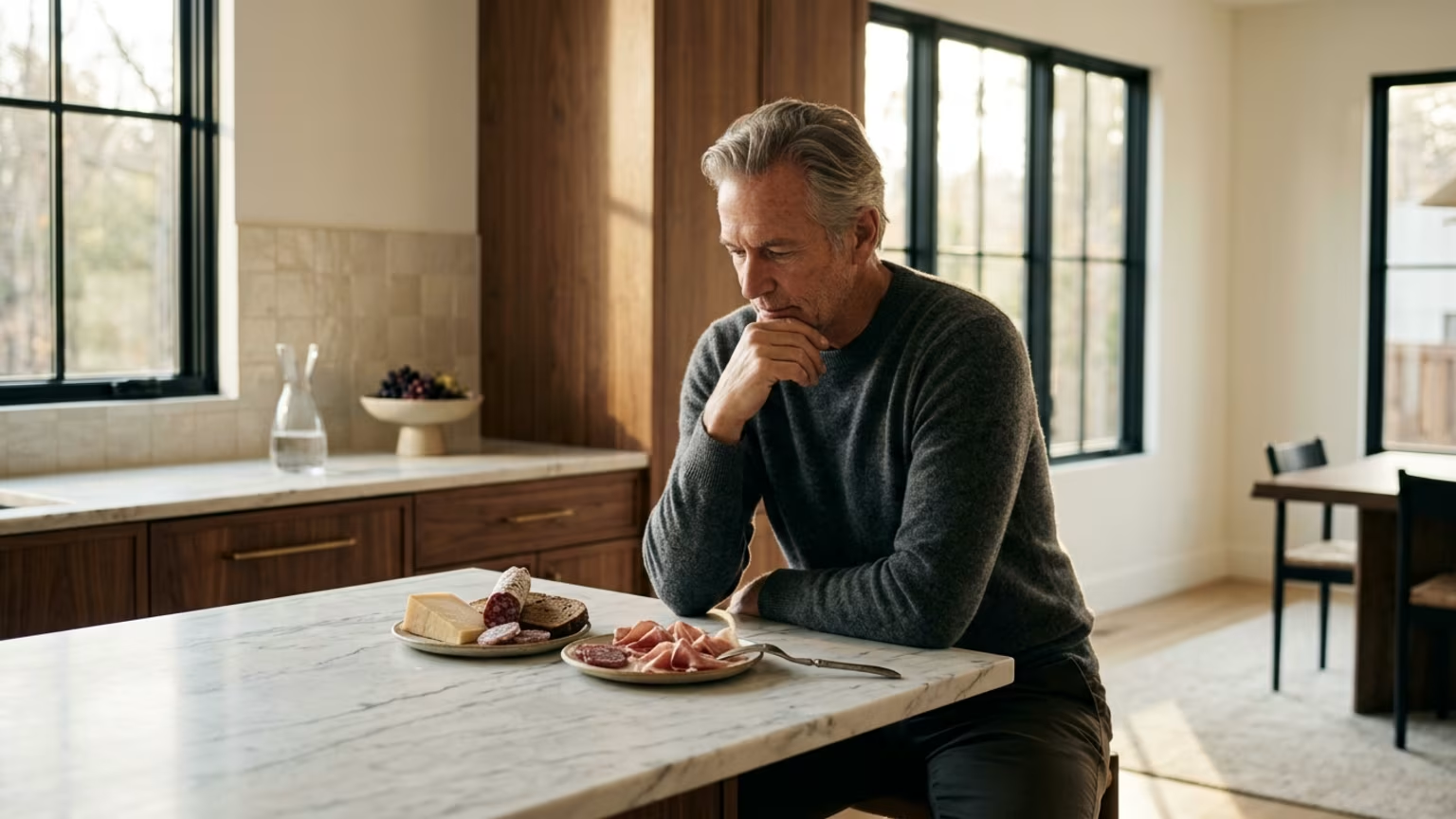
A 12-week trial reveals that self-selected vegan diets can cause muscle loss in adults over 65. Learn why active adults must pair plant protein with strength training.





Many active adults face a frustrating reality when adopting a plant-based lifestyle. They ask themselves why carrying luggage through an airport suddenly demands more effort, or why their legs feel heavy on a simple hike. Last winter in Chamonix, I noticed something striking. It was not the altitude that forced my peers into the lodge by noon, it was a lack of rotational strength and poor recovery from the flight.
We spend so much time debating the perfect supplement stack, yet we neglect the basic foundational strength required to actually enjoy our travels. That trip changed how I approach fitness. I stopped training for aesthetics and started training exclusively for capability. Maintaining that physical capability requires a deep understanding of how our dietary choices impact our aging bodies. Whether you are planning a trekking trip to Patagonia or just want to maintain your dominance on the tennis court, physical capability is the ultimate currency. Losing that edge due to an unplanned diet change is a completely avoidable mistake.
A recent study highlights a critical tension for older athletes who switch to plant-forward eating. The study was published in The American Journal of Clinical Nutrition, volume 124, issue 3, with publication listed as September 2026. Wageningen University researchers evaluated how a self-selected vegan diet affects physical capacity. The findings reinforce that we cannot rely on diet alone to keep us moving.
The Wageningen University trial provides a clear picture of the physical changes that occur during a dietary transition. The findings are especially relevant to adults over 60, because the participants were all at least 65 years old. The intervention lasted 12 weeks. Only 72 people were randomized across three study arms, which limits precision and makes it inappropriate to treat the findings as definitive for every older adult.
Despite the small sample size, the results for those who did not exercise were highly specific. Thigh-muscle volume in the vegan-only group declined by an estimated 0.61 liters over the intervention. This was compared with essentially no change, just 0.01 liters, in the omnivorous control group. Appendicular lean mass declined by 1.15 kilograms in the vegan-only group, compared with a 0.05-kilogram increase in the omnivorous group.
These rapid losses demonstrate what happens when active adults change their eating habits passively. Muscle tissue is highly sensitive to nutritional inputs, especially as we age. A sudden shift away from animal products can quickly erode the lean mass required for strenuous travel and outdoor sports. You must plan your nutrition carefully to preserve essential functional movement patterns.
The root cause of the muscle loss observed in the study was a massive drop in total protein consumption. Participants on the self-selected vegan diet reduced protein intake by roughly 19 to 28 grams per day during the study. Protein intake in the vegan group fell by 27.7 grams per day during week one, 22.0 grams per day at week six, and 19.3 grams per day at week 12, compared with participants’ baseline intake.
This kind of sustained deficit is detrimental for anyone focused on healthy aging. The trial’s vegan participants reduced protein intake by approximately 19 to 28 grams per day, a potentially meaningful change for older adults already facing age-related challenges in maintaining muscle. When you are traveling across time zones or tackling a mountain trail, your body needs consistent protein to repair micro-tears in the muscle. Dropping your intake by nearly 30 grams makes recovery significantly harder.
At WealthAtPlay, we constantly remind our readers that nutrition must support their active lifestyle. A casual approach to plant-based eating often fails to cross the necessary protein threshold. You must actively track your macronutrients to optimize plant protein for an active life. Deliberate planning is the only way to avoid the fatigue that plagues unprepared travelers.
Adding regular strength work to a plant-based diet provides a powerful protective effect for older adults. The vegan-plus-resistance-exercise group experienced smaller losses than the vegan-only group: thigh-muscle volume declined by 0.35 liters, and appendicular lean mass declined by 0.62 kilograms. Compared with the vegan-only group, the vegan-plus-exercise group had smaller declines, but it still showed estimated reductions of 0.35 liters in thigh-muscle volume and 0.62 kilograms in appendicular lean mass.
While lifting weights did not entirely erase the deficit, it drastically reduced the tissue damage. This finding highlights why strength training is an absolute necessity rather than an optional hobby. If you want to maintain your independence and carry your own gear, you must consistently challenge your muscles. Without a mechanical stimulus, your body has no reason to retain heavy, energy-demanding muscle tissue.
Active adults should focus on programs that prioritize progressive overload. Using flexible strength training routines can help you stay consistent even during busy travel periods. The goal is to signal your nervous system that your physical capacity is still required for daily survival.
Muscle protein synthesis is the biological process that dictates how well you repair and build new tissue. The researchers measured this critical metric to understand how the self-selected vegan diet affected recovery. Muscle-protein-synthesis rates were lower in the vegan-only group, at 1.09% per day, than in the omnivorous group, at 1.27% per day, and the vegan-plus-resistance-exercise group, at 1.24% per day.
A low synthesis rate means that your body struggles to rebuild after physical exertion. For a 55-year-old athlete, this translates to longer recovery times and persistent soreness after a weekend of hiking. However, the data clearly shows that lifting weights elevated the synthesis rate for the vegan participants almost back to the omnivorous baseline. This proves that mechanical tension can override some of the nutritional shortfalls of a self-selected diet.
Travel introduces massive variables into your daily routine, from erratic sleep schedules to unpredictable meal options. If your baseline diet at home already lacks sufficient protein, navigating a foreign food landscape will only compound the deficit. Your body requires a stable foundation of nutrients to handle the stress of changing time zones and demanding itineraries. By mastering your plant-based macros at home, you build physical resilience that travels with you anywhere.
The Wageningen University trial serves as a strict warning against passive dietary changes. You cannot simply remove animal products from your plate and expect your body to perform at its peak. Active adults must treat protein consumption as a serious logistical priority. Building your meals around dense plant proteins is essential for long-term capability.
Tofu, tempeh, lentils, and beans should form the foundation of your daily nutrition. You need to calculate your specific requirements and ensure every meal contributes to your daily goal. Proper nutritional planning keeps your body ready for your next major adventure.
Many worldly travelers rely heavily on endurance activities to stay fit as they age. While cycling and swimming build excellent cardiovascular health, they do not provide the necessary stimulus to protect skeletal muscle. Resistance exercise must become a non-negotiable part of your weekly routine, especially when transitioning to a plant-based diet. You need targeted mechanical tension to signal your body to retain lean tissue.
You do not need to become a competitive bodybuilder to see the benefits of lifting weights. Focus on fundamental movements like squats, hinges, pushes, and pulls. This approach is the most reliable way to build lasting muscle and power after 40. A strong body allows you to navigate crowded airports, carry heavy bags, and enjoy your travels without physical limitations.
When transitioning to a plant-forward lifestyle, you will hear a lot of advice that is simply ineffective for active aging. Focus on the data and explicitly ignore these outdated concepts:
Plant-based diets automatically cover your nutritional needs. The trial clearly shows that self-selected vegan diets cause a massive drop in total protein intake. Assuming that eating more vegetables will naturally preserve your muscle is a fast track to physical decline. You must measure and manage your protein intake to stay strong.
Walking and hiking are enough to maintain your strength. Endurance activities are fantastic for your heart and mind, but they do not stop age-related muscle loss. The data proves that you need dedicated resistance training to signal your body to retain its lean tissue. Relying on cardio alone will leave you weak and vulnerable to injury.
Muscle loss is an inevitable part of getting older. While aging certainly changes our physiology, we have immense control over the rate of our physical decline. Proper protein planning and consistent strength training can preserve your physical independence for decades. Do not accept weakness as a normal part of your biological timeline.
Maintaining your physical freedom requires active management of both your diet and your exercise routine. Here are the most critical takeaways from the recent Wageningen University research:
Train for capability, eat with clear intention, and stay strong for the road ahead.
Stay connected for research and practical guidance on longevity, strength, recovery, energy and active living. New ideas to help you stay capable, curious and ready for more.



Explore practical guidance on strength, recovery, energy, travel and longevity for a life that stays active.
explore the Blog