
Fundamental movement patterns build functional strength and lasting physical independence for adults over forty by training coordinated, real-world body mechanics.





Movement pattern training is not a collection of isolated muscle exercises designed for cosmetic sculpting. It is a systematic practice of preserving essential physical capabilities. These capabilities include standing up effortlessly, picking heavy objects off the floor, lunging forward to catch balance, and carrying loads across distance.
As we pass age 40, physical autonomy depends far less on the size of our biceps than on our competence across core movement mechanics. By organizing our physical preparation around movement categories rather than body parts, we build a resilient structure capable of meeting daily physical demands.
This playbook provides a comprehensive guide to mastering the seven fundamental human movement patterns. We will examine the physiological mechanics of each pattern, establish progressive exercise ladders, and build efficient weekly programs. Whether you want to hike rugged trails, handle heavy travel luggage, or maintain lifetime independence, this framework delivers the tools to stay capable for decades ahead.
Traditional fitness culture often divides the body into isolated muscle groups. Bodybuilding splits train the chest on Monday, the back on Tuesday, and the legs on Wednesday. While this approach can build muscle tissue, it frequently fails to teach the central nervous system how to coordinate complex, multi-joint actions under load.
A movement pattern represents a broad mechanical task rather than a single exercise. Real life rarely asks our quadriceps or shoulders to contract in absolute isolation. Instead, daily life demands that our hips, spine, core, and limbs work in fluid coordination.
According to a comprehensive Cochrane review of 121 randomized controlled trials involving 6,700 participants, progressive resistance training produces large improvements in physical function among adults. The most substantial gains occur in functional tasks such as rising from a chair and climbing stairs rather than simple walking speed. Training movement patterns directly conditions the exact neurological pathways required for these vital daily actions.
Furthermore, we must distinguish between strength and power. Strength is the absolute force your muscles can produce. Power is the speed at which you produce that force.
A systematic review of 44 studies published in sports medicine literature found that muscle power is a stronger predictor of everyday functional performance than maximal strength alone. The National Strength and Conditioning Association recommends combining slow, controlled strength work with light-to-moderate power training at 30 to 60 percent of your single-repetition maximum. This dual approach ensures you possess both the force capacity to lift a heavy trunk and the rapid reaction speed to catch your footing on uneven terrain.
Understanding this balance allows us to construct a training plan around three critical pillars: capacity, competency, and exposure. Capacity measures your raw force and endurance. Competency reflects how cleanly and efficiently you move. Exposure defines how frequently your joints and tissues experience these mechanical demands.
When you train patterns rather than isolated muscles, you develop robust physical competency. You can review our guide to healthy aging and physical performance to understand how these foundational adaptations preserve long-term joint health.
To build lifelong resilience, we utilize a seven-pattern framework adapted from modern athletic conditioning. This model treats bracing and rotation as two complementary sides of trunk control, while recognizing the lunge as a distinct unilateral challenge.
The squat is a bilateral movement where the hips and knees flex simultaneously to lower the center of mass, followed by extension to return to standing. It is the primary mechanical pattern used when sitting down, standing up, or stepping out of a low vehicle.
As adults age, squatting strength directly preserves knee joint integrity and lower-body force output. The goal is not to force every adult into a deep barbell back squat. The goal is to build comfortable, pain-free range of motion with sufficient force production.
Key coaching cues include keeping the entire foot connected to the floor. Spread your weight evenly between the big toe, little toe, and heel. Let your knees track naturally in line with your second and third toes, avoiding forced knee cave or exaggerated outward flare.
The hinge is a hip-dominant folding movement where the pelvis moves backward while the spine maintains a stable, neutral posture. Unlike the squat, the knees bend only minimally, shifting the primary workload to the glutes, hamstrings, and posterior chain.
The hinge is the foundation for lifting heavy items off the floor safely. It teaches you to absorb and produce force through your powerful hip extensors rather than overloading the lumbar spine.
Focus on pushing the floor away as you stand up. Keep the external load as close to your center of mass as possible. Finish each repetition by standing tall through active glute contraction rather than leaning backward into hyperextension.
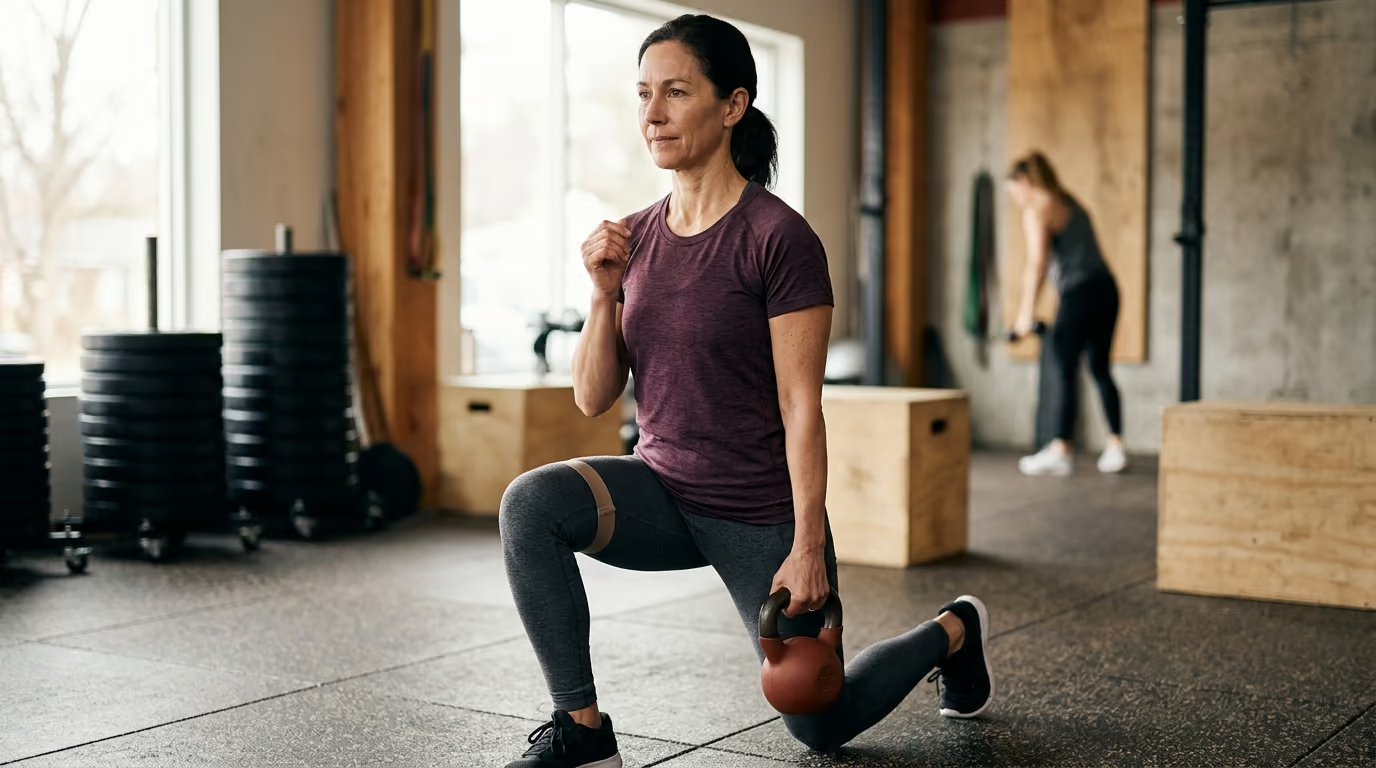
The lunge pattern involves staggered or single-leg loading. Walking, running, navigating uneven ground, and climbing steep steps are fundamentally unilateral tasks.
Training unilaterally eliminates side-to-side strength imbalances. It also challenges the stabilizing muscles of the hip, such as the gluteus medius, which prevent the pelvis from dropping during locomotion.
Keep your front heel glued to the floor throughout the movement. Descend under complete control until your back knee gently taps the floor or a small pad, avoiding any sudden impact.
Pushing movements require producing force to drive an external load away from the body or to move the body away from an immovable surface. This pattern divides into horizontal pressing and vertical pressing.
Pushing preserves upper-body bone density and shoulder girdle strength. It provides the capacity to push open heavy security doors, hoist luggage overhead, or rise up from the floor after a fall.
Allow your shoulder blades to move freely around your rib cage during push-ups. When pressing overhead, avoid arching your lower back to complete the lockout; keep your ribs drawn down toward your belt line.
The pull pattern brings an external object toward your torso or pulls your body toward a fixed anchor. Like pressing, it includes both horizontal rows and vertical pulling variations.
Decades of desk work and driving tend to encourage a rounded upper back and internally rotated shoulders. Pulling movements strengthen the rhomboids, middle trapezius, latissimus dorsi, and posterior rotator cuff, restoring posture and spinal stability.
Initiate every pull by retracting your shoulder blade before bending the elbow. Avoid using torso momentum or swinging your hips backward to yank the load into position.
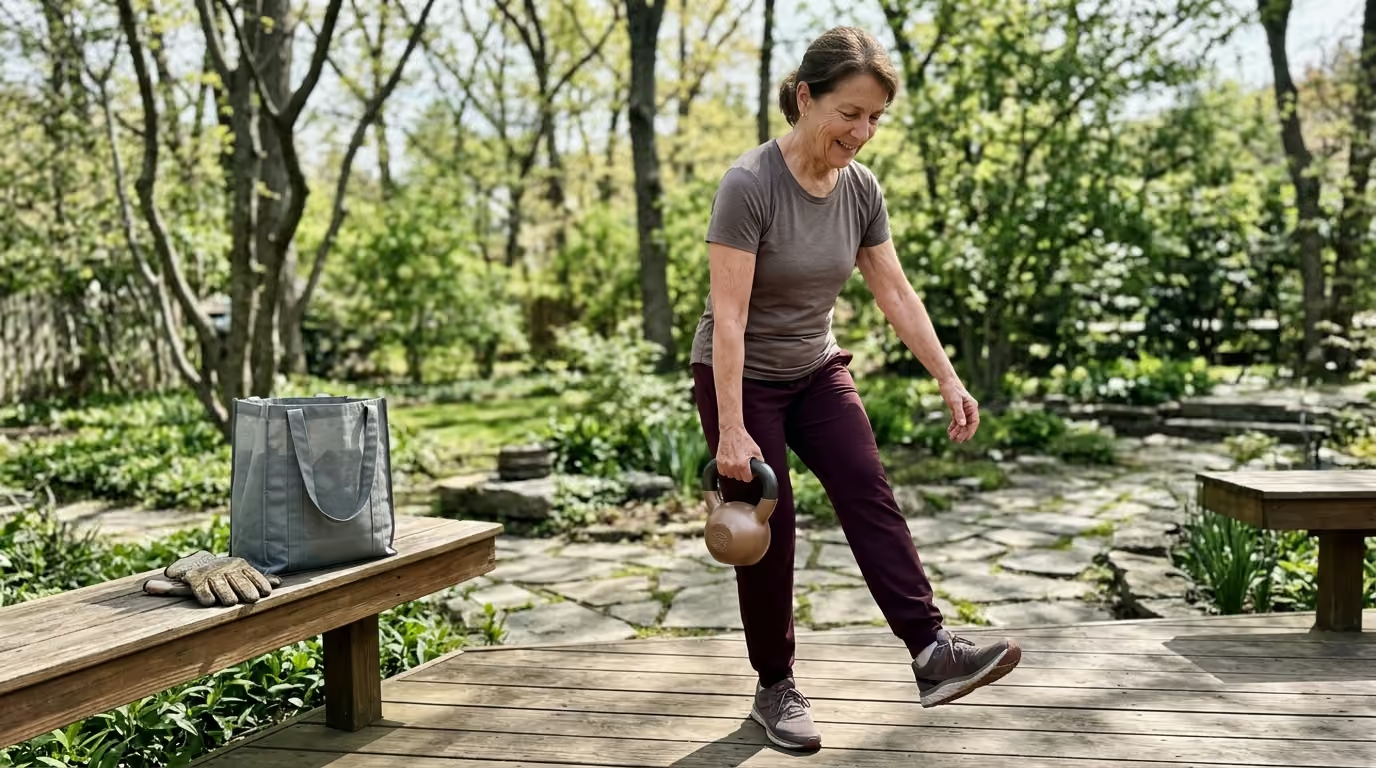
The carry is the ultimate expression of functional integration. It requires walking under control while supporting an external load in one or both hands, directly bridging the gap between gym strength and daily life.
Carries build incredible grip endurance, upper-back thickness, hip stability, and lateral core strength. A study published in clinical biomechanics highlighted that loaded carries produce profound abdominal wall activation while sparing the lumbar spine from compressive shear stresses.
Walk as if you have a book balanced on your head. Keep your steps measured and quiet, breathing rhythmically into your lower abdomen rather than taking shallow chest breaths.
The human trunk has two primary responsibilities that operate in complete harmony: bracing against unwanted spinal motion and producing controlled rotation through the hips and thoracic spine. We must train both stiffness and rotation.
Bracing creates a protective cylinder around your spinal column, transferring power between your lower and upper body. Controlled rotation allows you to swing a golf club, paddle a kayak, or step and reach without straining your lower back.
When rotating, ensure the movement originates from your hips and upper thoracic spine. Never force extreme rotation through a locked, flexed lower back.
To learn more about supporting physical recovery between demanding training days, read our overview of restorative health strategies and daily living.
Before loading any movement pattern with heavy resistance, you need a clear baseline of your current competency. You do not need expensive biomechanical testing labs to evaluate your readiness. A simple, self-administered movement inventory can identify mobility restrictions and stability deficits.
Perform this non-diagnostic assessment at home using body weight and a sturdy chair:
Use this assessment to select appropriate entry points on each progression ladder. The goal is to identify your current edge of competency so you can apply progressive overload safely.
Strength training over 40 is not an academic exercise conducted within the four walls of a gym. It is direct preparation for the demands of recreation, travel, and mountain environments.
Last winter in Chamonix, I noticed something striking. It was not the altitude that forced my peers into the lodge by noon, it was a lack of rotational strength and poor recovery from the flight. We spend so much time debating the perfect supplement stack, yet we neglect the basic foundational strength required to actually enjoy our travels.
That trip changed how I approach fitness. I stopped training for aesthetics and started training exclusively for capability.
Consider what happens dynamically during a long ski descent or a technical alpine hike. When you initiate a turn on a steep slope, your downhill leg enters a heavy unilateral eccentric contraction, mirroring a deep split squat.
Simultaneously, your upper body must remain disciplined while your hips and core manage intense rotational forces. If you lack rotational strength and single-leg deceleration capacity, your quadriceps fatigue rapidly. This fatigue leaves your knee ligaments vulnerable to torsional stress.
Similarly, navigating international transit hubs places unpredictable physical demands on the human frame. You must lift an unbalanced 50-pound duffel bag from the floor (a multi-planar hinge), pivot around a tight security line (a loaded rotation), carry it down a long terminal corridor (a suitcase carry), and hoist it into an overhead compartment (a vertical push).
If you have trained these exact patterns against progressive resistance, these tasks feel routine and effortless. If you have neglected them, a simple weekend trip can produce acute lower-back spasms or shoulder impingement.
For active adults, training these patterns ensures that physical capacity never becomes the limiting factor in your lifestyle. For additional insights on maintaining physical energy during active trips, review our strategies for optimizing travel performance and adventure capacity.
Midlife lifters often carry old training habits from their twenties that no longer serve their joint architecture. Avoiding these common pitfalls preserves progress and prevents unnecessary setbacks.
Social media frequently promotes circus-style balance drills, such as squatting on unstable wobble boards while curling dumbbells. These novelty exercises create artificial instability that drastically reduces the amount of force your muscles can produce.
True functional training builds significant force capacity, coordination, and control under stable, progressive conditions. Master the basic patterns on solid ground before adding arbitrary complexity.
Many adults who have experienced a minor lower-back strain develop kinesiophobia, the fear of movement. They attempt to keep their spine rigidly straight during every daily interaction, avoiding all bending and twisting.
This permanent avoidance leads to spinal stiffness and leaves the surrounding musculature deconditioned. The spine is designed to bend, extend, and rotate. The correct strategy is graded exposure: start with gentle, supported ranges of motion and gradually rebuild your tolerance for bending and rotation.
Adding weight to a compromised movement pattern merely accelerates joint wear. If your knees collapse inward during a heavy squat, or if your lower back rounds excessively during a deadlift, the weight on the bar is feeding dysfunction.
Leave one to two repetitions in technical reserve on almost every working set. This means you conclude the set when your movement quality begins to degrade, well before complete muscular failure occurs.
Many lifters over 40 assume that power training is only for competitive young athletes. Consequently, they train exclusively with slow, grinding tempos.
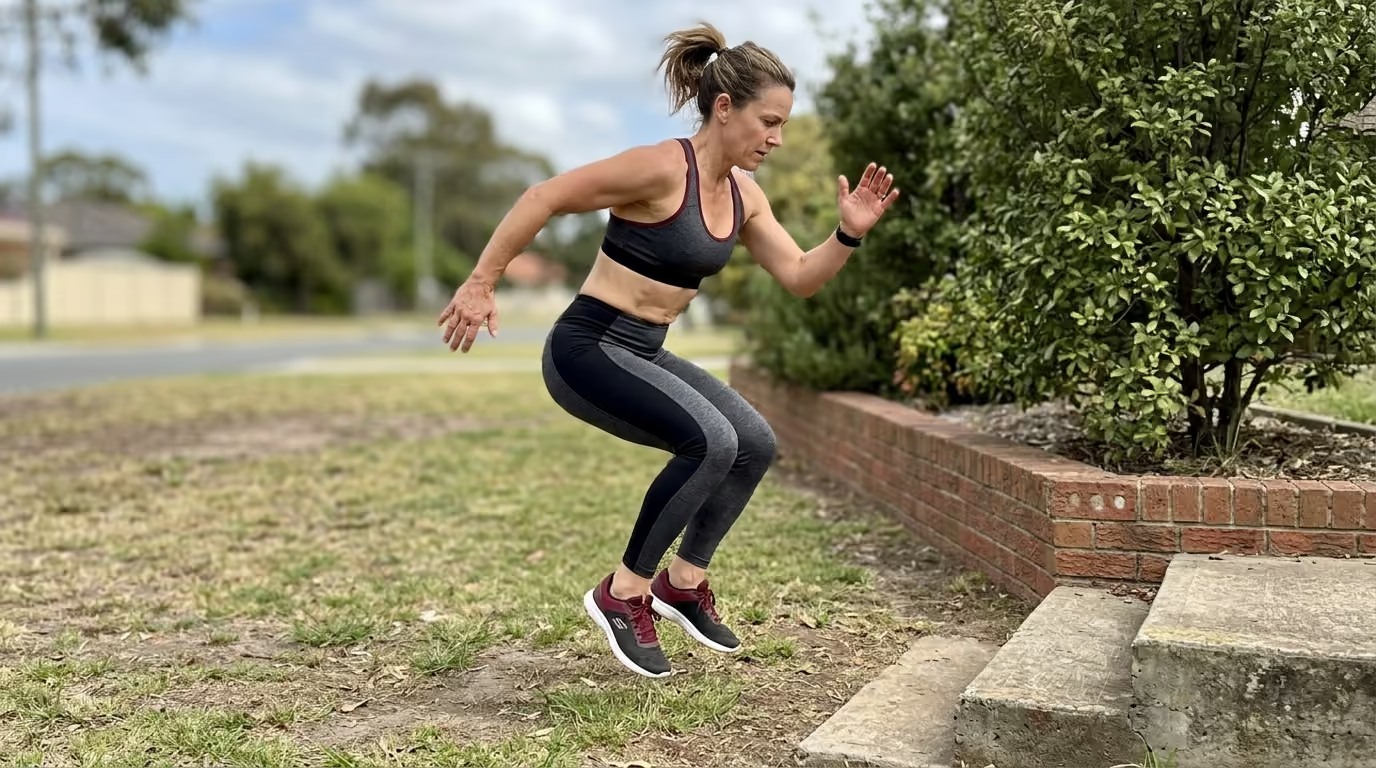
However, type-II fast-twitch muscle fibers atrophy at more than double the rate of slow-twitch fibers as we age. Neglecting power training compromises your ability to react rapidly to stumbles. Incorporating low-load, explosive movements like medicine-ball chest passes, kettlebell swings, and brisk step-ups preserves these critical neurological pathways.
You do not need to spend ten hours a week in the gym to build and maintain exceptional physical capacity. The minimal effective dose is the smallest amount of structured training required to produce meaningful, lasting physiological adaptations.
According to physical activity guidelines from the American College of Sports Medicine, performing resistance training involving all major muscle groups at least two days per week produces substantial improvements in muscular strength and physical longevity. For busy professionals, a condensed two-day or three-day full-body framework delivers maximum return on time invested.
To ensure your weekly training remains balanced, conduct a quick inventory at the end of each week. Ask yourself these seven simple diagnostic questions:
If any single pattern is consistently missing from your weekly routine, adjust your exercise selection to restore balance. You can explore our comprehensive collection of longevity and active living resources to integrate this audit into your broader lifestyle.
Travel frequently disrupts standard gym routines. Long flights, hotel rooms without fitness centers, and demanding meeting schedules can cause your training momentum to stall.
However, maintaining your movement exposure does not require a full commercial gym. A portable suspension trainer or a single heavy resistance band packed in your suitcase allows you to train all seven patterns anywhere in the world.
This 20-minute hotel room session requires zero specialized machinery. It exposes your joints, connective tissues, and nervous system to the exact movement patterns you train at home.
By maintaining this baseline exposure, you eliminate the severe muscle soreness that often occurs when returning to heavy gym training after weeks of travel. For deeper insights on optimizing your circadian rhythm and rest during international transit, explore our guide to rest, recovery, and sleep hygiene.
The global scientific consensus regarding resistance training in adults over 40 is remarkably unified. Major health organizations agree that progressive physical loading is essential for long-term health span.
The World Health Organization physical activity guidelines state that all adults should perform muscle-strengthening activities involving major muscle groups on two or more days per week. For older adults, the WHO recommends multicomponent physical activity that emphasizes functional balance and strength training on three or more days per week. A pooled evidence synthesis from the WHO indicates that structured exercise programs reduce fall rates by approximately 23 percent. When programs combine balance, functional movement, and resistance training, the reduction in fall rates reaches 28 percent.
The National Strength and Conditioning Association position statement on resistance training for older adults reinforces this multi-faceted model. The NSCA recommends an individualized, periodized approach incorporating two to three sets of multi-joint exercises per major muscle group at 70 to 85 percent of one-repetition maximum. Critically, the NSCA emphasizes including high concentric velocity power exercises performed at moderate loads without training to failure. Fatigue severely degrades power output and increases injury risk.
Medical screening guidelines from the American College of Sports Medicine emphasize that adults with known cardiovascular, metabolic, or renal disease should seek professional guidance before initiating high-intensity regimens. A clinical review in the journal Circulation notes that uncontrolled hypertension should be medically managed before starting strenuous lifting. For healthy adults over 40, progressive resistance training across fundamental movement patterns remains the most effective intervention for preserving physical independence.
To learn more about our philosophy on health span and performance, read about the WealthAtPlay mission and editorial principles. You can also discover more insights on our main health and performance publication.
Yes, provided you scale the exercise variation to your current joint tolerance. Osteoarthritis does not mean your cartilage is completely fragile. Cartilage requires the mechanical pumping action of movement and light compression to receive nutrients.
Start with partial-range box squats, step-ups to a low platform, or supported split squats where you control the depth. Avoid pushing through sharp, localized joint pain, but do not abandon lower-body movement patterns entirely.
Both variations belong in a well-rounded program. Bilateral movements, such as goblet squats and Romanian deadlifts, allow you to safely produce higher levels of absolute force to build bone density and raw strength.
Unilateral movements, such as reverse lunges and single-arm suitcase carries, challenge your dynamic balance, hip stabilizers, and core coordination. Incorporating one primary bilateral lift and one unilateral support exercise within the same workout provides the ideal balance.
Power training is completely safe when programmed with appropriate volume, light-to-moderate loads, and strict technical control. Power work does not require maximal vertical jumping or dangerous barbell snatches.
Safe power exercises include medicine-ball chest passes against a wall, brisk step-ups onto a low box, and explosive sit-to-stands from a sturdy chair. The key rule from the NSCA is to stop every power set well before technical fatigue sets in.
First, verify that you are performing a true hip hinge rather than squatting your deadlift or initiating the lift by pulling with your lumbar spine. Second, elevate the starting position of the weight by using blocks or a sturdy rack so you do not have to reach all the way to the floor.
Finally, substitute conventional deadlifts with dumbbell Romanian deadlifts or single-leg hinge variations. These alternatives place significantly less compressive shear force on the lumbar vertebrae while providing an excellent training stimulus for the hamstrings and glutes.
Stay connected for research and practical guidance on longevity, strength, recovery, energy and active living. New ideas to help you stay capable, curious and ready for more.


Explore practical guidance on strength, recovery, energy, travel and longevity for a life that stays active.
explore the Blog