
Learn how the latest reported ACSM guidelines validate bodyweight training for adults over 40. Maintain strength and capability anywhere you travel.





On September 13, 2026, a new report from NaturalNews detailed the first major resistance training guideline update from the American College of Sports Medicine in 17 years. The sheer scale of this reported update makes it highly relevant for the health and wellness community. The inclusion of 137 systematic reviews represents a massive aggregation of fitness data. Combining this with data from more than 30,000 participants gives the recommendations substantial weight.
For the active adult, this means the guidance is rooted in broad observation rather than isolated trends. According to the available coverage, the updated guidance concludes that resistance training can reliably improve muscle strength. The findings confirm that bodyweight movements effectively increase muscle size and overall power. The report noted that healthy adults should train each major muscle group at least twice per week.
This practical twice-weekly benchmark gives older adults the flexibility they need to fit training around busy lives. Active individuals often struggle to find consistent gym access during demanding travel seasons or remote trips. These updated guidelines offer reassurance that a lack of heavy equipment does not stall your progress. The reported guidance treats free weights, resistance bands, and bodyweight exercises as completely viable options when performed regularly.
Many fitness enthusiasts assume that heavy iron is an absolute requirement for serious physical development. However, the new report shows that bodyweight routines provide ample resistance when programmed correctly. This is highly relevant for anyone evaluating different resistance training methods for long-term health. You can build a robust foundation simply by mastering fundamental movement patterns.
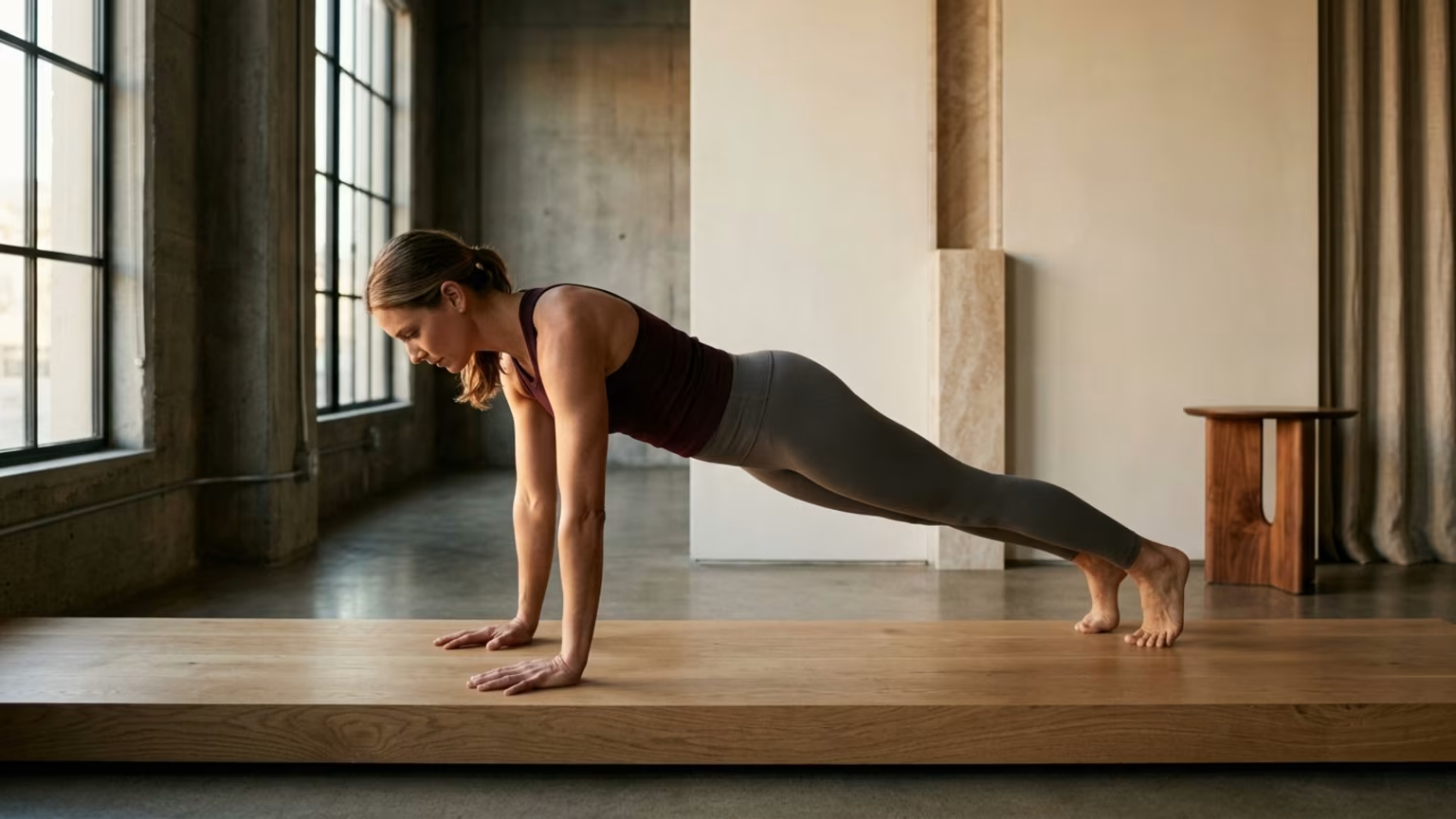
The coverage highlights several equipment-free movements capable of addressing the chest, back, legs, and glutes. You can target these areas comprehensively using just push-ups, pull-ups, and squats. Adding lunges and glute bridges completes a full body routine that requires zero external load. These five specific movements form a highly scalable foundation for ongoing physical adaptation.
Push-ups remain a cornerstone for chest development when performed with strict form. Pull-ups demand significant effort from the back muscles and can be modified as needed. Squats and lunges effectively target the complex musculature of the legs to preserve essential mobility. Finally, glute bridges isolate the posterior chain to help offset the stiffness of long flights.
To achieve continuous improvement without weights, you must implement progressive overload. The article reports that progressive overload can be created by increasing your total repetitions over time. You can also increase the intensity by noticeably reducing your rest periods between sets. These simple pacing adjustments force your muscles to work harder without requiring a heavier dumbbell.
Bodyweight training offers incredible versatility because every movement can be made more or less difficult. The article says bodyweight training utilizes specific exercise regressions and progressions to match your current ability. For example, incline push-ups provide an accessible starting point for those building upper body strength. Assisted pull-ups offer a manageable way to develop essential back muscles without forcing a strict bodyweight repetition.
Progressing an exercise often requires nothing more than a change in body angle or tempo. As your capability increases, you can shift to more demanding variations to maintain the growth stimulus. The report suggests advancing to single-leg bridge variations instead of standard glute bridges. This gradual escalation is vital for adults returning to strength training safely.
The coverage notes that the traditional eight to 12 repetition range remains highly effective for muscle growth. Staying within this specific range ensures a solid balance of volume and intensity for most adults. However, the article adds that higher repetitions may be useful at more advanced fitness levels. Moving beyond 12 repetitions can help highly conditioned individuals continue driving muscular fatigue and adaptation.
The reported emphasis on consistency and practicality is a major theme throughout the updated guidelines. This practical mindset focuses on regular execution rather than pursuing a flawlessly perfect workout program. The article included advice from a quoted spokesperson for a national fitness organization. They advised people to switch to an easier variation when an exercise becomes difficult to control instead of forcing the movement.
Struggling through a deteriorating movement pattern introduces unnecessary risk for older adults. Dropping to a lighter regression allows you to maintain tension without compromising your structural integrity. The report clearly distinguishes the expected muscle fatigue of a good workout from actual warning symptoms. You should expect your muscles to burn, but joints should never hurt during the movement.
Sharp or persistent joint pain is a definitive signal to stop exercising immediately. The article says dizziness or other concerning symptoms also warrant halting your session without hesitation. Anyone experiencing these specific warning signs should seek appropriate medical evaluation right away. You must never treat acute discomfort or dizziness as evidence that your training is effective.
The practical implications of these guidelines perfectly align with the demands of an active travel lifestyle. After a grueling thirty hour transit to Tokyo, I realized my old strategy of just powering through was no longer working. I felt foggy for three days. I started digging into circadian biology and realized that timing my light exposure and fasting during the flight could completely shift my recovery.
Now, I never board a long haul flight without a precise schedule for when to eat and when to put on an eye mask. It is the difference between losing a week of your trip and hitting the ground running. Once that initial jet lag is managed, preserving your physical readiness becomes the next operational priority. Travelers can view bodyweight routines as a legitimate way to maintain continuity when a hotel gym is unavailable.
A practical travel routine could rotate pushing, pulling, and squatting patterns using the article's provided examples. You can pair push-ups and squats on one day, then focus on lunges and glute bridges the next. This regular maintenance work ensures your legs stay conditioned for altitude adjustments or long hikes. Sustaining this baseline strength directly translates into better sustained energy during demanding sports like skiing.
The reported twice-weekly frequency recommendation supports scheduling resistance work smoothly around your actual travel plans. Hitting each major muscle group twice a week strikes an ideal balance between stimulus and recovery. This schedule leaves ample time for your primary passions and outdoor adventures. You can easily fit these sessions around golf, cycling, tennis, or demanding hiking excursions.
Treating strength training as a flexible tool prevents it from feeling like an overwhelming chore. You can leave your portable strength training equipment at home and simply use the space in your room. Adults over 40 should understand that a lack of gym access does not require abandoning your regimen. This interpretation aligns perfectly with the article's strong emphasis on practicality and regularity over perfection.
You can stay physically capable across all environments by employing scalable movements that require zero gear. Consistency with a simple equipment-free program ultimately beats an inconsistent obsession with ideal gym conditions.
Worldly adults should adjust their routines by utilizing scaled bodyweight movements twice a week to maintain physical capability when traveling or away from the gym.
Stay connected for research and practical guidance on longevity, strength, recovery, energy and active living. New ideas to help you stay capable, curious and ready for more.



Explore practical guidance on strength, recovery, energy, travel and longevity for a life that stays active.
explore the Blog