
Different resistance training modalities offer distinct physiological adaptations, joint demands, and functional benefits across free weights, machines.





Resistance training is not defined by iron plates or gym memberships. At its core, resistance training is simply any structured physical work where your skeletal muscles contract against an opposing force. That force can come from gravity acting on a barbell, a selectorized weight stack, an elastic loop, or your own body mass.
Choosing the right tool is not a matter of dogma. It is about matching the physical stimulus to your current joints, your schedule, and your functional goals. For active adults pursuing physical longevity, no single piece of equipment holds a monopoly on building strength.
The primary biological drivers of muscular adaptation are mechanical tension, volume, and progressive overload. When those conditions are met, your neuromuscular system adapts regardless of whether the load originated from a high-end machine or a rubber strip.
Understanding the unique trade-offs of each modality allows you to design a resilient, flexible routine. This comprehensive guide evaluates free weights, fixed machines, cable pulleys, elastic bands, bodyweight movements, and suspension trainers across every major performance metric.
To evaluate different training tools, we must first understand how skeletal muscle responds to external stress. Muscular hypertrophy and strength gains are initiated by mechanical tension. When muscle fibers produce force while lengthening or shortening under load, mechanosensors inside the cells trigger biochemical cascades. These cascades stimulate muscle protein synthesis, remodeling muscle tissue to handle future demands.
Strength, however, is not purely a muscle measurement. Maximal force production depends heavily on the central nervous system. Your brain must recruit motor units, fire them rapidly, and synchronize muscle contractions across joint complexes.
This neural coordination explains why strength adaptations are highly specific to the movement pattern practiced. When you train on a specific apparatus, your nervous system learns the exact balance, bracing, and firing sequence required for that apparatus.
A landmark 2025 network meta-analysis evaluated 102 randomized controlled trials involving 4,754 older adults. The researchers compared traditional weight machines, free weights, elastic resistance bands, bodyweight training, and mixed methods. Every single modality generated moderate to large improvements in muscular strength compared with inactive controls.
Machine training demonstrated the largest average strength gain on standardized tests, followed closely by free weights and elastic bands. However, the researchers noted that machine training also had the lowest outcome variance across clinical settings.
The key scientific takeaway is that the tool matters less than the mechanical stimulus delivered to the target tissue. If a training method allows you to train close to muscular fatigue with good form and progressive overload, the muscle tissue will adapt.
The differences between tools emerge when we examine secondary variables. These include stability requirements, joint wear, movement freedom, and motor transfer to outdoor pursuits. Exploring our dedicated resources on strength and physical performance reveals how these underlying biological principles drive functional capability across midlife and beyond.
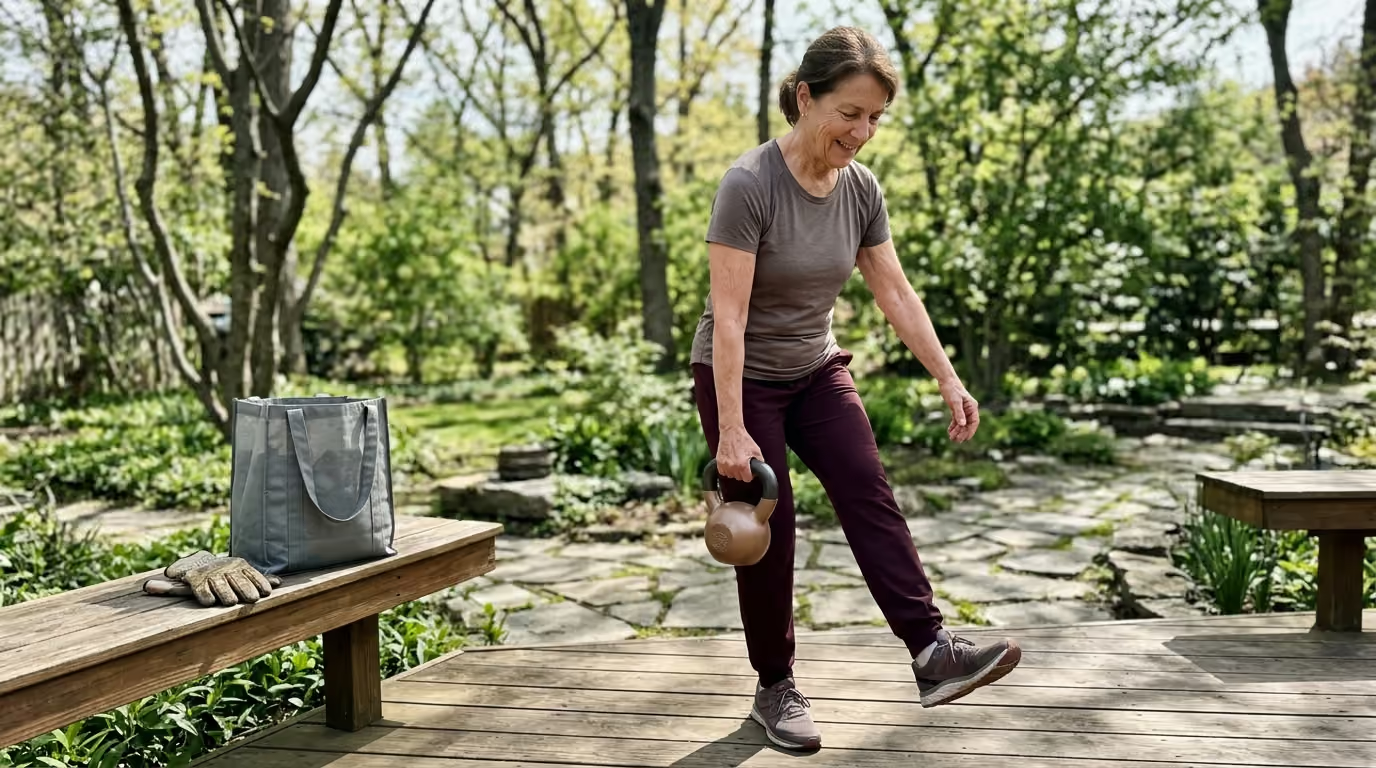
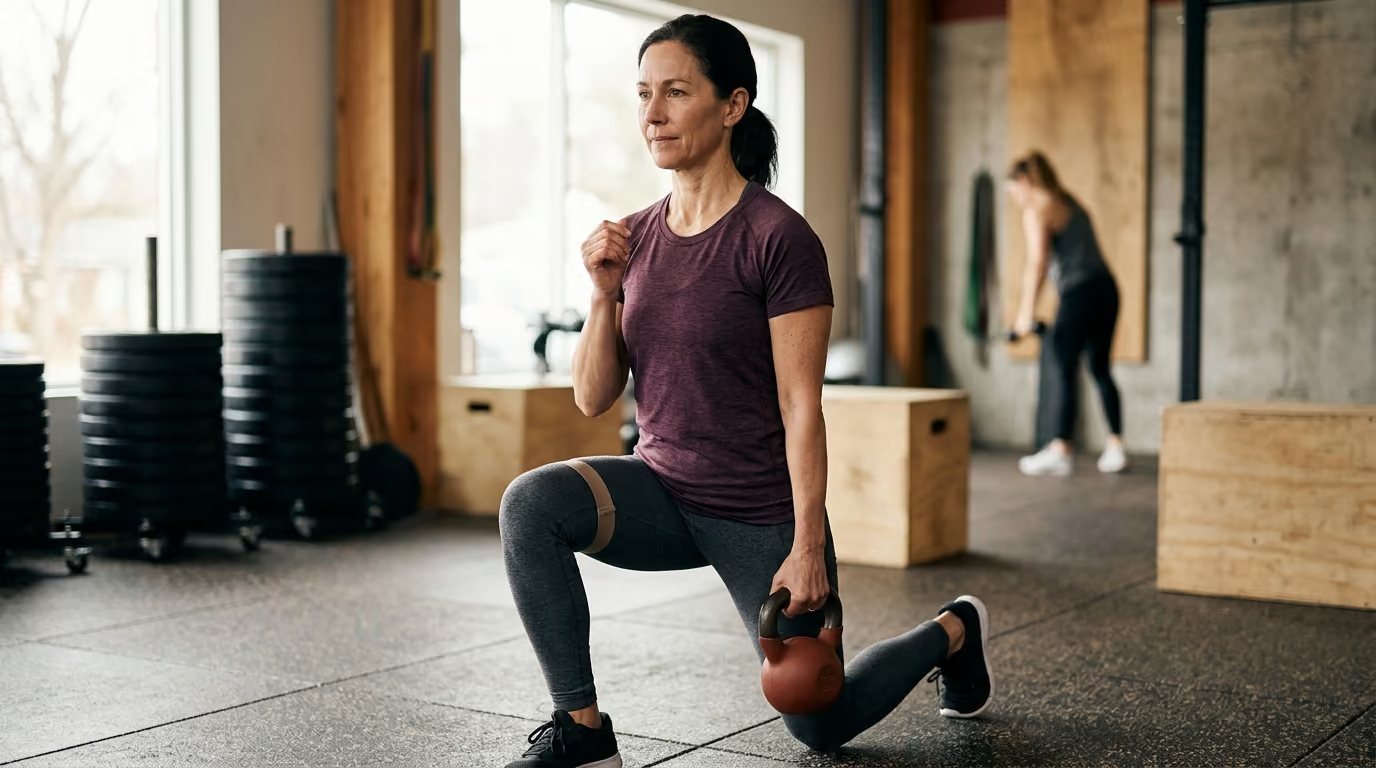
Free weights include barbells, dumbbells, kettlebells, and weight plates. Fixed machines encompass selectorized weight stacks and plate-loaded leverage units with dedicated seats and rigid movement tracks. These two categories represent the traditional divide in gym-based strength programming.
Free weights provide an unconstrained three-dimensional path of motion. This freedom allows your wrists, elbows, and shoulders to travel through trajectories dictated by your unique skeletal anatomy.
Because the barbell or dumbbell is free to drift, your neuromuscular system must supply internal stability. You must actively engage deep rotators, core musculature, and secondary synergists to keep the load on track.
This high stability demand makes free weights effective for building whole-body coordination. A heavy dumbbell Romanian deadlift or a standing overhead press trains your feet, hips, trunk, and upper limbs to operate as an integrated unit.
However, this requirement for internal stability is also the primary drawback of free weights. As you approach muscular failure, your stabilizing muscles often fatigue before the prime mover. This breakdown can compromise lifting mechanics and increase the likelihood of acute joint strain.
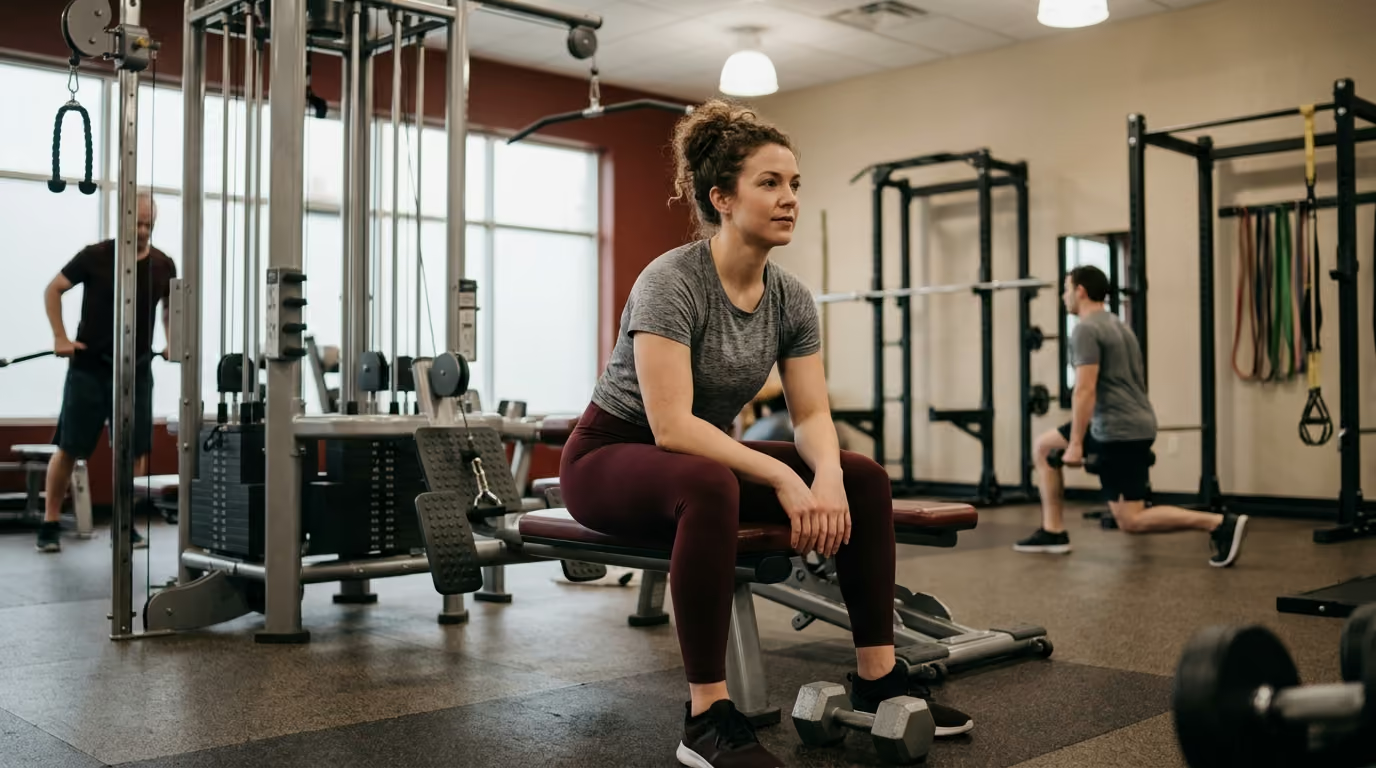
Fixed machines solve the stability problem by externalizing it. A leg press, chest press, or seated cable row provides a rigid track, a back pad, and a predetermined axis of rotation.
Because balance is handled by the machine, you can safely direct maximum effort into the targeted muscle group. You can train to true muscular fatigue without worrying about dropping a heavy weight or losing your balance.
For older trainees rebuilding strength after an injury or a long hiatus, machines offer a controlled, low-anxiety environment. The 2025 network meta-analysis highlighted this reliability, showing that machine training produced predictable, robust strength increases in older populations.
The primary limitation of fixed machines is their rigid movement path. If a machine's pivot point does not align with your joint axis, it can force your joints through unnatural shearing angles.
A lifter with shoulder impingement may find a fixed chest press machine painful, whereas independent dumbbells allow subtle wrist rotations that eliminate discomfort. Research confirms that when volume and effort are equated, free weights and machines produce identical muscle hypertrophy.
Strength increases, however, are test-specific. Lifters who train on machines see their greatest strength gains on machines, while those who train with barbells gain the most strength on barbells.
Cable stations and functional trainers occupy a valuable middle ground between fixed machines and free weights. A cable system uses a steel wire running through adjustable pulleys connected to a selectorized weight stack. Unlike free weights, which rely entirely on gravity pulling downward, cables allow you to manipulate the direction of resistance.
Cables provide continuous mechanical tension throughout the entire range of motion. When you perform a dumbbell chest fly, the mechanical tension on the pectoral muscles drops to near zero at the top of the movement because gravity pulls the weight directly down through your locked joints.
A cable fly, by contrast, maintains continuous horizontal tension on the chest even at full contraction. This continuous tension can create strong metabolic stress and mechanical stimulus with comparatively lighter loads.
Adjustable pulleys also allow you to train multiplanar movements from standing or half-kneeling positions. You can perform horizontal presses, diagonal chops, rotational pulls, and lateral hip work.
These movements require active core bracing, foot pressure, and hip stability while providing a smooth, guided resistance source. For active adults who want to train rotational power for golf, tennis, or skiing, cables offer practical loading options without the joint impact of heavy free weights.
The main limitation of cable systems is their reliance on dedicated gym machinery. Portable alternatives exist in the form of resistance bands, but they do not match the smooth, constant load profile of a counterweighted steel cable.
When using cables, proper stance and postural control are critical. Because you are standing in open space, poor abdominal bracing can lead to unwanted lumbar extension during heavy presses or pulls.
Elastic resistance bands are frequently misunderstood as tools reserved exclusively for warm-ups or clinical physical therapy. Modern exercise science tells a very different story. Systematic reviews evaluating elastic resistance across diverse adult demographics show that bands can produce strength and muscle gains comparable to conventional gym equipment when exercises are performed with high effort and appropriate progression.
The biomechanics of elastic resistance differ fundamentally from free weights and machines. Free weights provide a constant gravitational mass, but the mechanical torque on your joint changes as your limb angles shift.
Elastic bands provide ascending resistance. As the band stretches, its internal elastic tension increases linearly. This means the movement becomes progressively heavier toward the end-range of the contraction.
This ascending resistance curve offers unique joint-friendly benefits. In many multi-joint exercises, such as squats or presses, your muscles are mechanically weakest in the deep, stretched position where joint angles are acute.
With a barbell, this deep position is where the joint experiences the greatest stress. With an elastic band, the tension is lowest in that vulnerable deep position and peaks as you reach full extension, where your skeletal frame is mechanically strongest.
A systematic review examining functional outcomes in older adults found that elastic band training drove notable improvements in sit-to-stand speed, Timed Up and Go scores, dynamic balance, and handgrip strength. The major challenge with bands is tracking progressive overload.
Unlike a barbell where you can add a precise two-pound plate, progressing a band requires measuring stretch distance, adding secondary bands, or switching to higher-gauge rubber loops. Band color is not standardized across manufacturers, making objective load tracking essential for continued progress.
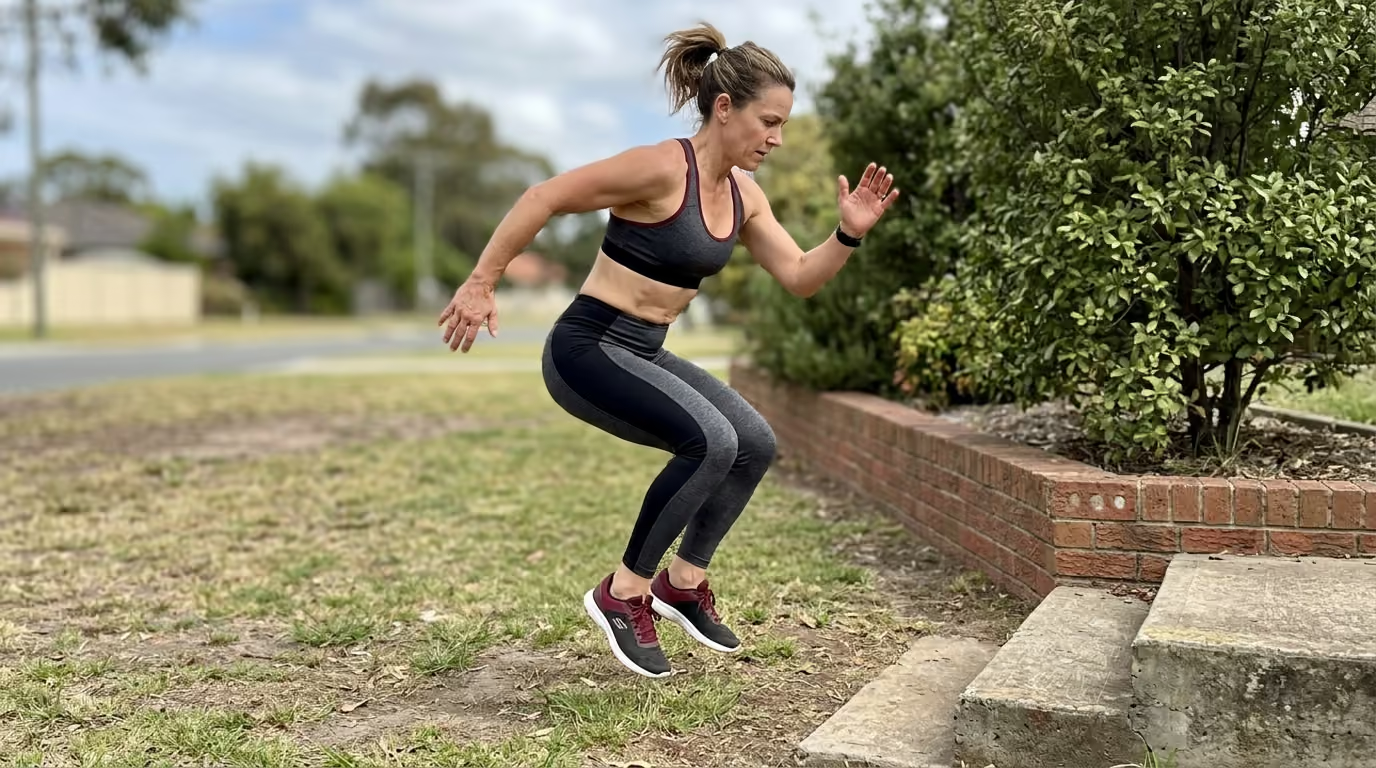
Calisthenics and suspension systems rely on your own body mass acting against gravity. Bodyweight exercises include squats, lunges, push-ups, inverted rows, step-ups, and planks. Suspension trainers, such as heavy-duty adjustable strap systems with handles and foot cradles, anchor to a door, beam, or outdoor frame, allowing you to manipulate body angles to scale difficulty.
The greatest advantage of bodyweight training is its direct functional relevance. The ability to control, stabilize, and lift your own body is the foundation of physical independence.
Movements like the sit-to-stand, floor transfer, and single-leg step-up directly replicate daily physical requirements. Suspension systems enhance these movements by providing adjustable assistance or resistance.
A lifter with sensitive knees can use suspension straps to offload bodyweight during a deep squat, gradually building cartilage and tendon tolerance. Conversely, an advanced trainee can elevate their feet in the straps to perform demanding suspended push-ups and single-leg lunges.
A clinical trial in older adults demonstrated that suspension training generated improvements in muscle mass, raw strength, and balance comparable to traditional gym machines. The dynamic instability of the straps activates trunk stabilizers and joint-centering muscles without requiring heavy external loads.
However, suspension and bodyweight training have a clear ceiling for maximal lower-body strength. While you can easily challenge your upper body by changing your leverage on a suspension row, loading the large muscle groups of the hips and thighs is constrained by your body mass.
Once you can perform twenty clean bodyweight squats, further strength gains require transitioning to unilateral variations like pistol squats, adding explosive tempo, or incorporating external resistance. You can learn more about managing joint comfort during these demanding movements by reading our guide to exercise modifications for joint sensitivity.
True functional capacity is the ability to express physical strength, agility, and balance in unpredictable environments. Whether you are navigating scree on a mountain trail, heliskiing, or carrying heavy luggage through an international terminal, your body must generate force across multiple planes while maintaining balance.
Transfer from the gym to real-world capability follows a four-layer framework:
Last winter in Chamonix, I noticed something striking among a group of experienced mountain skiers. It was not the high altitude or a lack of aerobic conditioning that forced several peers into the lodge by noon. It was a lack of rotational trunk strength, weak deceleration capacity in the quadriceps, and poor physical recovery after the transatlantic flight.
We spend so much time debating the perfect supplement stack, yet we neglect the foundational strength required to actually enjoy our travels. That trip reinforced a vital principle: we must stop training purely for gym metrics and train deliberately for real-world capability.
If your goal is skiing resilience, fixed machines can safely build raw quadricep mass (Layer 1). However, you must pair them with free-weight split squats (Layer 2) and cable rotational woodchops (Layer 3) to prepare your body for the dynamic forces of high-speed turns.
For additional strategies on preserving energy and physical stamina during demanding trips, review our insights on travel and adventure performance.
Conflicting fitness advice often leads active adults to abandon productive training methods in favor of overly restrictive or ineffective routines. Clearing away common misconceptions makes it easier to select the right tools with confidence.
A barbell squat is not inherently more functional than a leg press. Function is defined by the outcome, not the implement. If a lifter with chronic lumbar irritation uses a leg press to safely overload their hip and knee extensors without spinal compression, that machine has delivered a highly functional result.
Free weights build whole-body balance, but machines allow targeted overload without excessive systemic fatigue. Both tools serve functional programming when applied correctly.
Many lifters assume bands cannot stimulate true muscle growth or maximal force production. High-level clinical research disproves this assumption. When elastic bands are stretched to create high mechanical tension near muscular failure, they trigger muscular adaptations comparable to iron weights.
Bands are simply a lightweight, portable delivery mechanism for mechanical tension.
Experiencing mild joint discomfort does not mean you must stop strength training entirely. In fact, total rest often accelerates muscle loss and reduces tendon tolerance. Controlled trials demonstrate that structured resistance training reduces chronic joint pain and improves physical function over time.
The correct response to joint sensitivity is modifying the exercise tool, adjusting the range of motion, reducing velocity, or switching from free weights to cables or bands.
Standing on wobble boards or performing exercises on highly unstable surfaces decreases your force output. When balance demands are excessively high, your nervous system limits the neural drive sent to your prime movers to protect against falling.
Instability drills are useful for ankle rehab and balance awareness, but they are inefficient for building raw muscular strength. Use stable platforms when the goal is mechanical overload.
Building a strong, resilient body does not require hours in the gym every day. The World Health Organization and the American College of Sports Medicine recommend that adults engage in muscle-strengthening activities involving all major muscle groups at least two days per week.
For older adults, incorporating varied multi-component training that combines strength, balance, and motor control on three or more days per week significantly improves functional longevity and helps prevent accidental falls.
A time-efficient routine focuses on fundamental movement patterns rather than isolated muscle groups. By selecting one compound exercise for each major pattern, you can complete a highly effective full-body workout in thirty to forty minutes.
To maximize adaptation while managing fatigue, aim to leave one to three repetitions in reserve on most working sets. This approach stimulates robust muscle growth and strength adaptations without the excessive muscle damage and joint strain associated with training to absolute failure.
To learn more about optimizing your post-workout physical recovery, review our comprehensive resource on recovery and regeneration principles.
A hybrid training approach uses each modality where it performs best. Rather than restricting yourself to one tool, you can sequence your workout to maximize performance while minimizing joint strain.
Use lightweight mini-bands and bodyweight movements to warm up target joints and activate deep stabilizers. Examples include lateral band walks, glute bridges, and shoulder external rotations.
Perform your most technically demanding free-weight or bodyweight movements early in the session when your nervous system is fresh. Examples include dumbbell goblet squats, Romanian deadlifts, or step-ups onto an elevated box.
Transition to fixed machines or cable stations to accumulate training volume on prime movers with minimal balance demands. Examples include seated cable rows, chest press machines, or leg curls.
Conclude the workout with rotational core bracing and unilateral carries. Examples include cable Pallof presses, suspension planks, or single-arm farmer carries.
Maintaining consistent physical capacity while traveling requires a shift in mindset. You do not need a commercial gym to maintain your hard-earned muscle and strength. Elastic bands and suspension straps pack flat into a carry-on bag, weighing less than three pounds combined, and transform any hotel room or mountain cabin into an effective training space.
Long flights and extended transit compress the spine, tighten hip flexors, and impair peripheral circulation. A brief, twenty-minute hotel-room circuit using bands and bodyweight can restore mobility, activate the nervous system, and offset the physical fatigue of travel.
When traveling, prioritize consistency over extreme volume. Performing two brief twenty-minute full-body sessions per week while on the road preserves over ninety percent of your muscular strength and work capacity for weeks at a time.
This minimal maintenance dose keeps you physically prepared for strenuous hikes, ski runs, and urban exploration without interrupting your travel schedule. For additional guidance on structuring physical routines around demanding schedules, explore our dedicated materials on healthy aging and longevity.
Bone mineral density increases in response to axial loading, muscular tension, and ground impact forces. While elastic bands and bodyweight exercises provide moderate skeletal stress, heavy free-weight loading and impact-based exercises generate significantly higher bone remodeling stimuli. If osteoporosis or osteopenia is a primary concern, combining bodyweight and band exercises with heavier loaded carries or machine leg presses provides optimal skeletal protection.
To stimulate muscle hypertrophy with elastic resistance, your working sets must be performed with high effort, ending within one to three repetitions of technical failure. If you complete twenty repetitions with a band and feel you could easily perform ten more, the band tension is too light. Increase tension by doubling the band, taking a wider stance to pre-stretch the rubber, or stepping up to a thicker resistance loop.
Combining modalities within a single session is not only safe, but it is also often the most biomechanically sound way to train. Starting with free weights or bodyweight movements when your nervous system is fresh allows you to train balance and coordination safely. Finishing your session with machines, cables, or bands allows you to thoroughly fatigue target muscles without worrying about balance breakdowns or joint injuries.
Overhead pressing with free weights requires adequate thoracic spine extension, scapular upward rotation, and rotator cuff stability. If an individual lacks full shoulder mobility, forcing a heavy barbell overhead can cause subacromial impingement or lower back hyperextension. In such cases, substituting neutral-grip dumbbell presses, angled landmine presses, or seated incline cable presses allows safe overhead strength development without aggravating sensitive shoulder joints.
Stay connected for research and practical guidance on longevity, strength, recovery, energy and active living. New ideas to help you stay capable, curious and ready for more.


Explore practical guidance on strength, recovery, energy, travel and longevity for a life that stays active.
explore the Blog