
Learn how active adults over 40 can build functional strength for travel using a minimalist, research-backed training routine from People's Daily guidance.





Last winter in Chamonix, I noticed something striking. It was not the altitude that forced my peers into the lodge by noon, it was a lack of rotational strength and poor recovery from the flight. We spend so much time debating the perfect supplement stack, yet we neglect the basic foundational strength required to actually enjoy our travels. That trip changed how I approach fitness.
I stopped training for aesthetics and started training exclusively for capability. This personal shift aligns perfectly with a practical muscle building guide published recently by People's Daily. The publication emphasized that true physical capability requires balanced training, adequate nutrition, and sufficient sleep. Their guidance provides a rational framework for anyone who wants to stay resilient on the road.
The biological reality of human aging introduces predictable friction into our daily lives. According to the People's Daily report, muscle mass generally peaks around age 30. Following this peak, muscle tissue declines progressively with age. This gradual reduction increases the risk of sarcopenia and falls for older adults.
This physical decline is not a sudden disease, but rather a slow erosion of our capability reserves. When these physical reserves drop, lifting heavy luggage or recovering from a long hike becomes increasingly difficult. We begin to feel exhausted by activities that used to feel effortless. Recognizing this friction is the first step toward building a sustainable defense against it.
To combat this decline, the World Health Organization guidance calls for varied multicomponent activity. For older adults, this means emphasizing functional balance and strength on at least three days per week. A 2026 systematic review of 41 randomized controlled trials involving 3,141 participants supports this exact approach. The researchers found that resistance exercise significantly improved muscle specific strength, even though the studies were highly heterogeneous.
Preserving functional independence relies heavily on maintaining foundational strength markers. Another 2026 review examined 19 randomized controlled trials involving 1,267 participants. The authors found that moderate intensity resistance training produced the clearest improvement in handgrip strength among older adults with sarcopenia. Maintaining a strong grip dictates whether you can confidently navigate a bustling airport with your own gear.
Many travelers incorrectly assume their cardiovascular system is to blame when they fatigue early on a hike. However, local muscular endurance often fails long before the heart and lungs reach their absolute capacity. A separate 2026 analysis of older adult exercise interventions concluded that resistance exercise was the most effective intervention among the categories studied for improving muscle specific strength. The effects of aerobic exercise and nutritional supplementation alone remained inconclusive for this specific functional outcome.
Developing a practical capability reserve does not require a grueling daily gym schedule. Sina Finance recently reported that an American College of Sports Medicine update synthesized 137 systematic reviews and more than 30,000 participants. The comprehensive findings emphasized that ordinary adults can benefit from at least two weekly sessions covering the major muscle groups. Furthermore, ScienceDaily reported 2026 research suggesting that two short weekly sessions covering all major muscle groups may be sufficient to improve overall health and longevity when combined with aerobic activity.
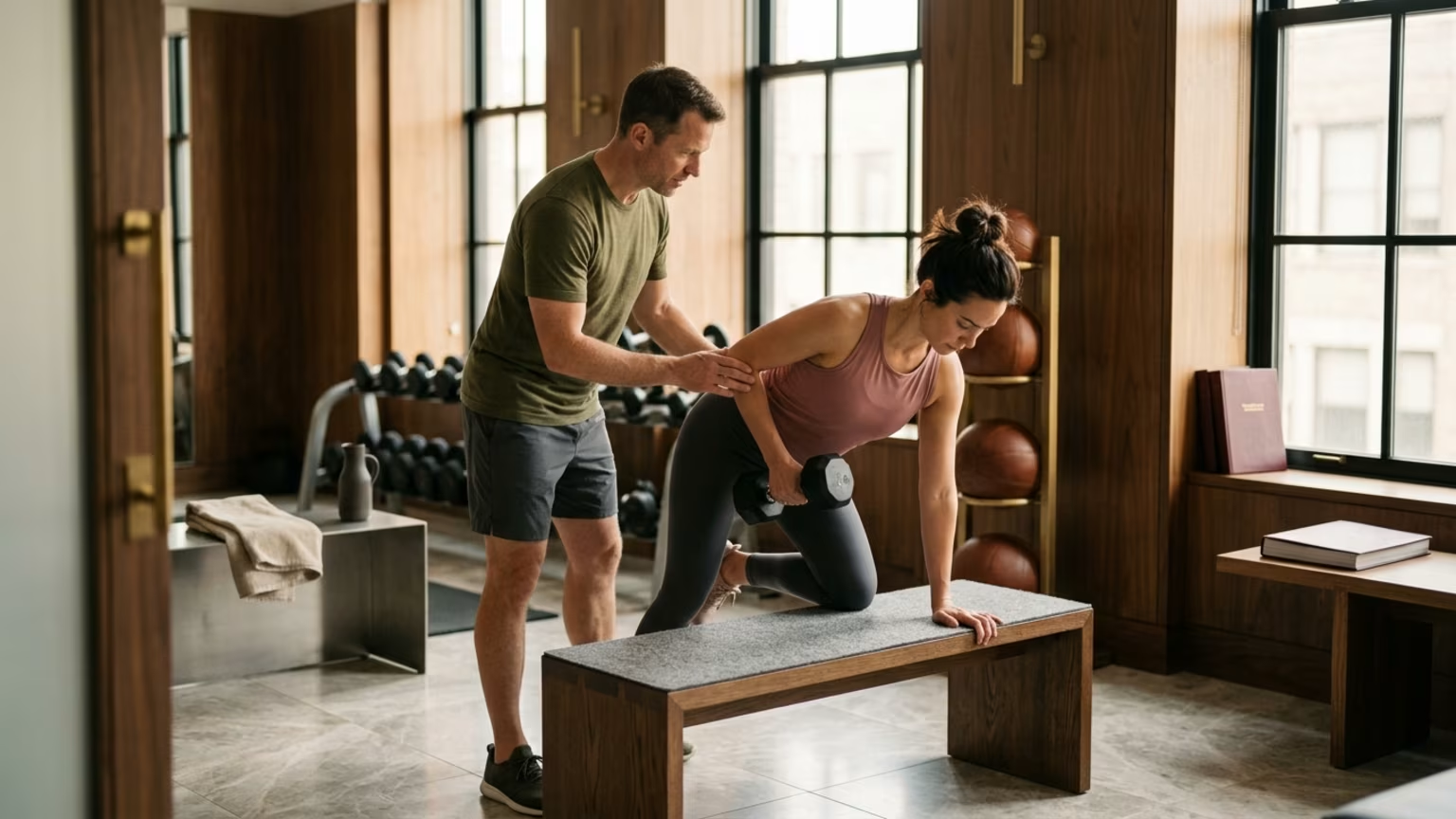
The People's Daily guide details a highly structured yet accessible routine for safe muscle growth. The core of their recommended framework suggests using approximately 60 to 80 percent of your one repetition maximum as a general loading range. Trainees should complete 2 to 3 sets of 8 to 12 repetitions per exercise. This structured minimalist strength training routine allows active adults to stimulate muscle fibers effectively without overwhelming their recovery capacity.
You must also allow your body adequate time to repair and rebuild the disrupted muscle tissue. The People's Daily guide states that trainees must allow at least 48 hours of recovery before training the same muscle group again. The article specifically emphasizes progressive overload as the primary mechanism for long term growth. Trainees should first adapt to a workload and then increase the stimulus in a controlled manner rather than making abrupt jumps in weight or volume.
For adults managing joint discomfort, heavier weights are absolutely not the only path to productive training. A 2026 study of older women found that both 10 repetition maximum and 15 repetition maximum resistance training protocols increased estimated skeletal muscle mass. The researchers found no significant difference between the loading conditions. This means you can implement smart modifications for joint sensitivity by choosing lighter loads and higher repetitions while still achieving exceptional results.
Finally, a well rounded longevity plan must include dedicated balance work. People's Daily recommends lower load strength exercises, brisk walking, tai chi and Baduanjin style exercises for older adults. A massive 2026 review covering 423 trials and 33,901 participants aged 60 and older found that exercise improved balance across most of the modalities examined. By combining traditional resistance exercises with varied balance practices, you build a versatile body capable of handling unpredictable environments.
The time you spend lifting weights simply creates the necessary stimulus for muscle adaptation. The actual muscle growth occurs during your recovery hours. To support this critical repair process, People's Daily recommends a daily protein intake of 1.6 to 2.2 grams per kilogram of body weight for people seeking muscle gain. The publication also suggests consuming this protein within 30 to 60 minutes after strength training.
You do not need to rely on highly processed products to hit these specific nutritional targets. The guidance lists chicken breast, fish, eggs and dairy products as excellent sources of dietary protein. However, it is important to note that individual protein needs may differ according to body size, age, kidney function and overall medical status. People with kidney disease should obtain individualized medical advice before substantially increasing their daily protein intake.
If you are looking for modest additions to your nutrition plan, certain compounds show verified promise. A 2026 review published in Frontiers in Nutrition concluded that creatine may provide modest additional improvements in muscle strength. This specific benefit was observed when creatine was combined with resistance training in healthy older adults. Supplements should always be viewed as optional adjuncts rather than replacements for whole foods and dedicated training.
Consistent rest is the final mandatory pillar of optimizing muscle strength and power after 40. The People's Daily guidelines recommend securing 7 to 9 hours of high quality sleep per night to maximize tissue recovery. Furthermore, readers must understand that visible muscle changes represent a long term biological process. The article suggests that consistent training and nutrition for three to six months may be needed before significant physical changes become apparent.
The guidance provided by these global health institutions serves as a broad framework rather than an individualized prescription. The People's Daily article actively advises beginners to train under professional supervision. Older adults are encouraged to consult a physician before choosing an appropriate exercise intensity. That caution is particularly relevant for people with cardiovascular disease, osteoporosis, balance impairment or a long period of inactivity.
Building a reliable foundation of strength gives you the freedom to say yes to demanding experiences. You can confidently book the remote walking tour, carry your own heavy bags, and wake up feeling capable the next morning. For the WealthAtPlay community, the primary objective is simply to build a repeatable weekly routine rather than chasing extreme athletic records.
As you review your upcoming travel schedule, consider how you might integrate two short strength sessions into your week. Which two days will you dedicate to protecting your physical independence and functional capacity?
Stay connected for research and practical guidance on longevity, strength, recovery, energy and active living. New ideas to help you stay capable, curious and ready for more.



Explore practical guidance on strength, recovery, energy, travel and longevity for a life that stays active.
explore the Blog