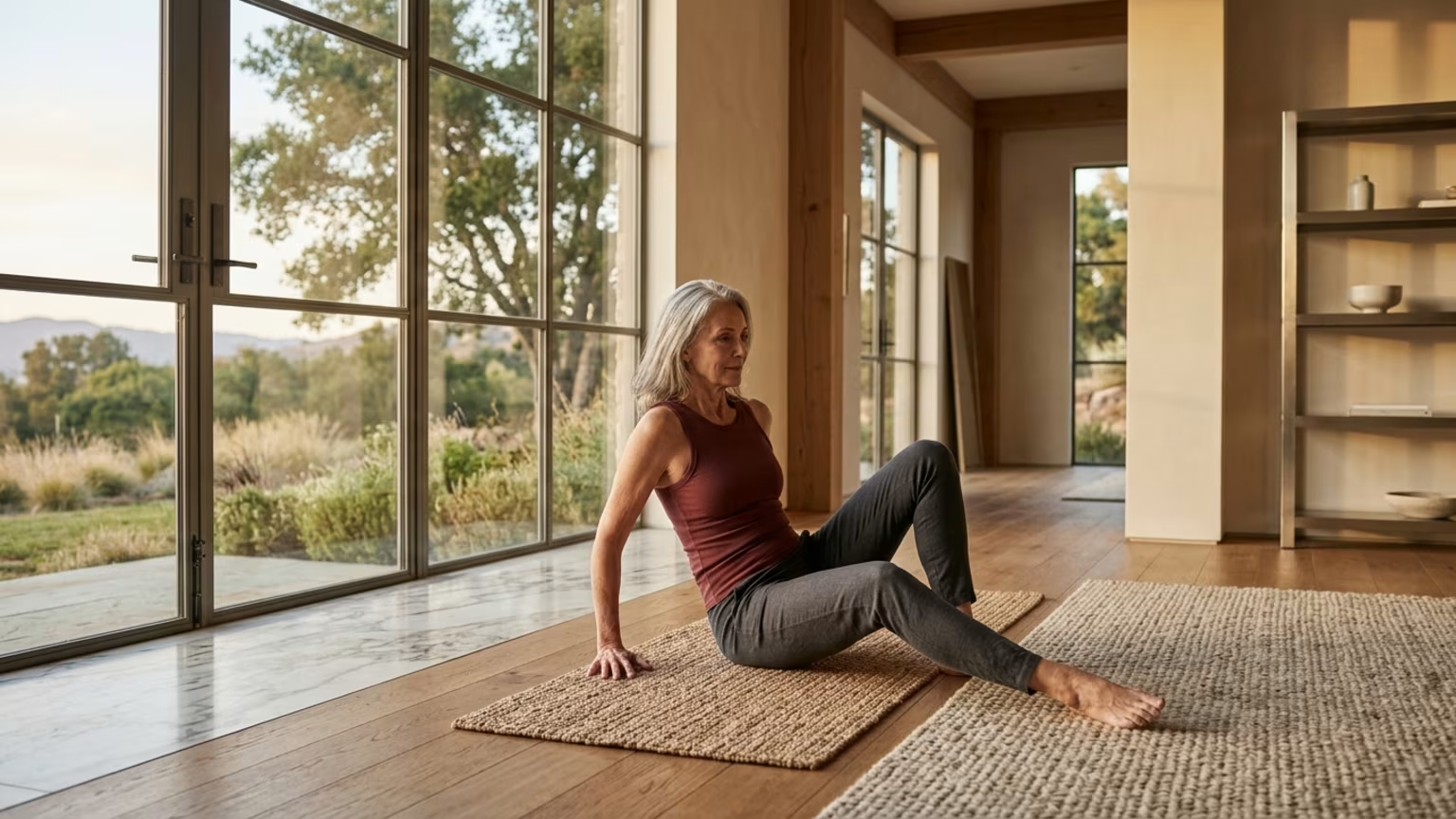

Learn how a 20-minute floor transfer routine builds functional mobility and preserves physical independence for active adults traveling and aging well.





On September 9, 2026, The New York Times published “A 20-Minute Workout for Aging Well” to outline a practical approach to longevity. The featured routine centers entirely on moving from a standing position to the floor and returning to standing. This moderate-intensity workout offers affluent, active adults a highly effective method for preserving physical independence. By rehearsing an essential functional skill, the program demonstrates how targeted daily movements keep you strong and capable.
Getting down to the floor and back up demands a complex coordination of physical traits. Executing a smooth transfer combines lower-body strength, dynamic balance, flexibility and a precise movement strategy. The medical community increasingly views this ability as a practical marker of overall musculoskeletal health. To investigate this connection, a 2025 study discussed in the European Journal of Preventive Cardiology examined a sitting-rising test in 4,282 men and women.
Researchers followed these individuals, aged 46 to 75, for more than 12 years to monitor long-term health. During the follow-up period, 665 participants died from natural causes. The results revealed a stark connection between physical capability and longevity. Participants who achieved the maximum 10-point score on the sitting-rising test had a reported natural-death rate of just 3.7 percent.
In contrast, those scoring eight points saw an 11.1 percent mortality rate. The group scoring between zero and four points experienced a 42.1 percent natural-death rate. Researchers adjusted the data to account for age, sex, body-mass index and medical conditions. After this adjustment the lowest-scoring group faced approximately 3.8 times the risk of natural death compared with those achieving a full score.
The academic commentary describes the sitting-rising test as a simple floor-based functional assessment associated with natural and cardiovascular mortality. This data provides an observational association rather than a literal life-expectancy calculation. Measuring your ability provides valuable feedback, much like checking evidence-based chair-stand test norms to assess functional aging. Using your performance changes as a personal baseline offers a highly pragmatic perspective.
A smoother, more controlled transfer may indicate improved physical function over time. However, the available evidence does not establish that this specific 20-minute routine directly extends life. Building functional fitness is about consistent capability rather than just trying to pass a clinical assessment. The 2025 research has helped popularize floor-transfer ability specifically because it requires no specialized equipment.
Fall prevention remains a major focus for active adults seeking to protect their independence. Falls are a major source of injury among older adults, according to the Centers for Disease Control and Prevention. The agency currently provides detailed fall-prevention resources through its STEADI program. To address this risk, a 2026 review evaluated several progressive and individualized exercise routines.
The review concluded that programs combining balance, functional movement and strengthening exercises successfully improve functional mobility. These routines also successfully enhance lower-limb strength, postural control, gait and fall-prevention confidence. However, improving a test score does not automatically guarantee fewer injuries. Functional-test improvements should not automatically be treated as proof that a program reduces falls.
A 2026 randomized trial of a separate four-minute daily home-strength program tested 97 inactive adults aged 65 and older with walking difficulty. After 12 weeks, the participants showed improvements in chair-stand, one-leg-stance and five-times-sit-to-stand measures. That trial did not measure actual falls, fractures or cardiovascular health. It should be viewed as part of a broader strategy to protect mobility, metabolism, and independence.
The 20-minute workout was developed with physical therapist Ashley Katzenback and coach Fuhrmann. Their professional work focuses specifically on functional aging among women in their 60s and 80s. Katzenback argues that the ability to get up from the floor is particularly important for older adults. This capability proves critical for individuals who live alone or want to preserve their independence at home.
Katzenback recommends practicing the floor-transfer movement at least once a day. Crucially, she advises using whatever method is necessary to get safely back up. Readers should not treat an unassisted rise as an all-or-nothing test. Instead, the focus should be on safely rehearsing the movement using accessible modifications.
Fuhrmann connects these floor transfers directly with ordinary, joyful activities. Being able to rise from the ground easily makes gardening, playing with grandchildren and retrieving objects much simpler. The underlying logic from these experts is deliberately task-specific. Strength and flexibility exercises are utilized to build the component abilities required for a complete floor-to-standing transfer.
Anyone who cannot get up safely, experiences pain or dizziness, or has a history of falls should exercise caution. They should seek an individualized assessment from a physical therapist before practicing unsupported floor transfers. Always prioritize safety and progressive adaptation over rushed results. Taking a measured approach ensures you build capability without risking unnecessary setbacks.
Maintaining the ability to confidently lower yourself to the ground and stand back up transforms how you travel. For affluent adults who prioritize demanding environments, physical independence is non-negotiable. Whether you are adjusting your boots on a snowy incline, setting up a campsite, or recovering from a slip, floor transfers are a daily reality. The functional logic behind the new workout applies directly to these active scenarios.
Periodically rehearsing getting down and up in controlled conditions ensures the movement remains familiar. Recreational athletes gain immense value from mastering these ground-to-standing transitions. Consider the mechanics required for skiing, hiking steep gradients or participating in water sports. These dynamic activities demand a high degree of core stability and hip mobility.
When you occasionally lose your footing on a hiking trail, your body must quickly coordinate a recovery sequence. If you have systematically practiced floor transfers, your muscles and nervous system already know the pattern. You can rise calmly and efficiently without overstraining your joints. This physical literacy prevents a minor trip from ruining an entire vacation.
Treat the floor transfer as a vital capability to maintain, much like carrying heavy luggage or stepping over obstacles. Start your practice with a fully supported version to build initial confidence. Use a stable chair, a heavy bench, a sturdy countertop or a nearby person for assistance. Always practice on a padded, uncluttered surface to minimize any risk of injury.
Practice the phases separately before attempting a continuous floor-to-standing transfer. Balance, functional mobility and strength are increasingly treated as complementary components of fall prevention. You can seamlessly combine floor-transfer practice with progressive lower-body strength work. Incorporate dedicated balance training to round out your physical portfolio.
Staying capable ensures you can confidently book your next adventure, knowing your body is thoroughly prepared for the journey. Preparation provides peace of mind when navigating crowded airports or unpredictable weather conditions. It allows you to focus on the experience rather than worrying about physical limitations. Active aging requires proactive maintenance of the fundamental skills that support your freedom.
Treat the ability to get up from the floor as a crucial daily practice by integrating supported, progressive transfer movements into your regular training routine.
Stay connected for research and practical guidance on longevity, strength, recovery, energy and active living. New ideas to help you stay capable, curious and ready for more.



Explore practical guidance on strength, recovery, energy, travel and longevity for a life that stays active.
explore the Blog