

Recent research reveals that strength training generates stronger early bone-related biological signals than interval running in postmenopausal women.





Dragging a heavy duffel up the steep, uneven steps of a Santorini villa requires a skeletal system built for sudden force, not just endurance. Yet, common wisdom insists that logging daily cardiovascular miles is the ultimate defense against an aging frame. Recent biological evidence suggests that assumption might be fundamentally flawed.
The underlying mechanism of bone retention changes significantly as active adults progress through life. Menopause is closely associated with declining estradiol levels, which naturally accelerates a gradual loss of bone mass. This biological shift creates a distinct friction point where the skeleton becomes increasingly vulnerable to mechanical stress. Active individuals often prioritize cardiovascular exercise during this phase, hoping to preserve their physical capacity.
However, endurance work alone may not provide sufficient mechanical stimulus for optimal bone remodeling. Bone is a living tissue that constantly responds to the specific types of stress placed upon it. An international research team involving Spain’s Polytechnic University of Madrid recently evaluated this precise physiological tension. Their findings challenge an overly narrow view of how we should train for structural longevity.
Published in the peer-reviewed journal Bone, the experiment assessed 13 physically active postmenopausal women. The participants completed two very different exercise sessions on separate days to compare the biological outcomes. One session featured high-intensity interval running, representing a demanding cardiovascular stimulus. The other session focused on strength training centered around squats, with a particular emphasis on the eccentric phase of the movement.
Researchers used blood samples to track changes in molecules associated with bone remodeling, regulation, and formation. Samples collected exactly 24 hours after exercise showed a significantly stronger bone-related metabolic response following the strength session. This indicates that postmenopausal bone tissue successfully retains the ability to respond biologically to heavy mechanical loading. The skeleton remains highly sensitive to forceful input, despite the lower estrogen levels associated with menopause.
It is crucial to understand that these central results concern early molecular signaling rather than immediate structural change. The study authors explicitly cautioned that these biomarker findings do not represent an instant increase in bone mineral density. The measured regulatory activity happens during recovery, and it does not guarantee immediate fracture protection. Longer-term studies are still required to determine whether this acute response produces lasting skeletal benefits.
The broader implication of this research is a necessary shift in how we approach healthy aging. Exercise programming for postmenopausal women must consider more than just whether a workout is cardiovascular or weight-bearing. The specific type, overall intensity, and mechanical character of the load applied to the skeleton matter immensely. A generalized approach to fitness often falls short of producing the targeted adaptations required for lasting skeletal health.
Addressing this capability gap requires a deliberate sequence of progressive mechanical stress. The first step involves treating resistance training as a mandatory anchor for your weekly fitness programming. The recent study demonstrated that one squat-based strength session generated stronger early biological signals than interval running. To mimic this stimulus, you must select compound movements that load the legs, hips, spine, and trunk.
The second step is transitioning from random workouts to documented, progressive intensity. A separate systematic review and meta-analysis analyzed the effects of dynamic resistance exercise in postmenopausal women. The researchers reported statistically significant bone-density improvements at the lumbar spine, recording a standardized mean difference of 0.54. This finding, which included a 95% confidence interval of 0.22 to 0.87, highlights the importance of consistent weightlifting.
That same meta-analysis revealed positive adaptations across other major skeletal regions. The reported femoral-neck effect was 0.22, with a 95% confidence interval ranging from 0.07 to 0.38. Furthermore, the total-hip effect was 0.48, accompanied by a 95% confidence interval of 0.22 to 0.75. Achieving these types of long-term adaptations requires properly structured resistance training that challenges the body continuously.
The third step is matching your training intensity to the goal of structural adaptation. Another reported meta-analysis found that higher-intensity exercise produced greater lumbar-spine bone-mineral-density gains than moderate-intensity or low-intensity exercise. The high-intensity programs yielded a mean difference of 0.031 g/cm², with a 95% confidence interval of 0.012 to 0.049. Pushing your physical limits safely is often necessary to trigger the desired biological response.
To apply these insights effectively, you must focus on the eccentric phase of your lifting movements. The referenced study deliberately utilized a squat-focused session that emphasized the lowering portion of the exercise. Eccentric loading generates significant muscular tension, which translates into a potent mechanical signal for the underlying bone. Lowering a weight slowly and with complete control is just as important as the lifting phase.
You also need to broaden your focus beyond simply preventing osteoporosis. For active adults over 40, skeletal robustness supports continued participation in skiing, hiking, racquet sports, and demanding travel. While the cited study did not measure performance or independence directly, the biological connection is clear. Building strength and power ensures that your skeleton can handle the unexpected forces encountered during athletic pursuits.
The final practical step is maintaining cardiovascular fitness without letting it cannibalize your strength work. The study does not suggest that endurance exercise is harmful, unnecessary, or detrimental to health. Running and cycling provide immense cardiovascular benefits that support overall stamina during travel and daily life. You should structure your weekly schedule to accommodate both heavy lifting and dedicated aerobic conditioning.
Implementing this type of loading protocol requires specific equipment and a realistic mindset regarding progress. The typical bone-density improvements reported in rigorous trials and meta-analyses are generally quite modest. Clinical evidence summaries caution that these gains typically range from 1% to 3% at commonly measured skeletal sites. Exercise cannot restore osteoporotic bone to normal reference ranges in a single, rapid step.
Because structural adaptation is a slow process, professional assessment is a highly recommended preparation phase. People with osteoporosis, previous spinal fractures, or an elevated fall risk should obtain individualized professional guidance. A qualified physical therapist or strength coach can help you determine which movements are safe for your current capability. Modifying exercises is often necessary before progressing to heavy barbell lifting or dynamic impact work.
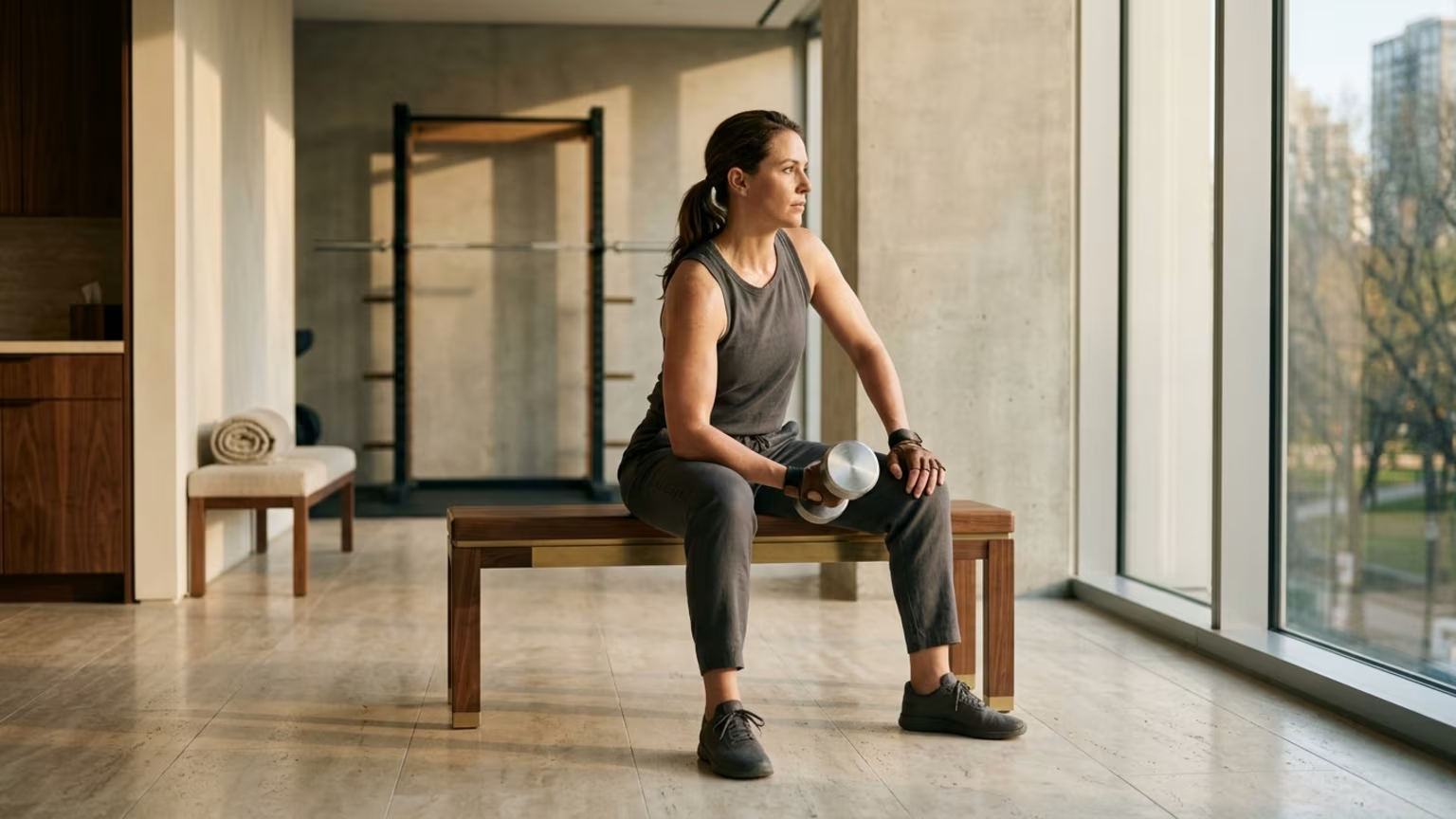
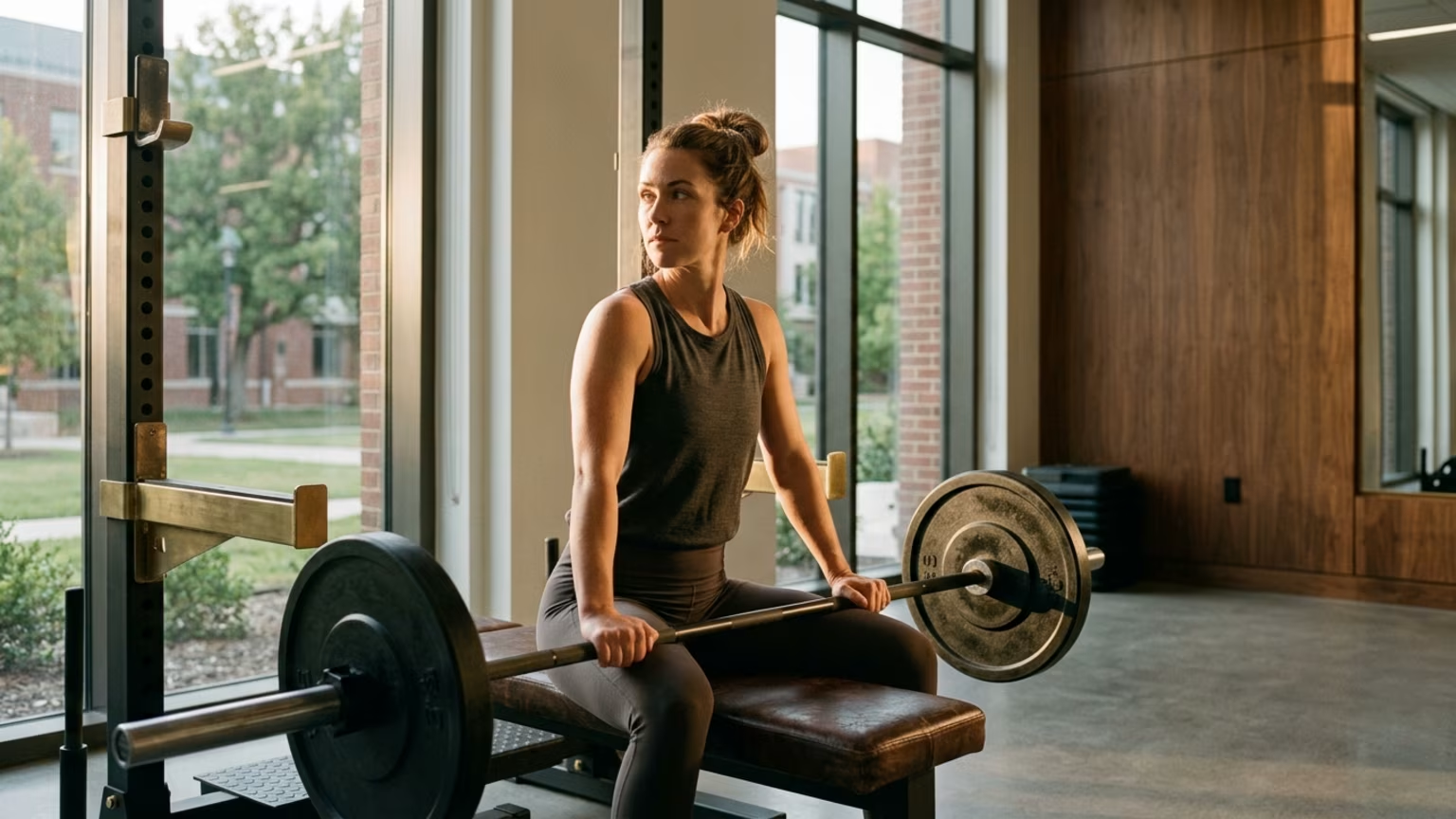
You will also need consistent access to external weights to maintain the necessary mechanical stimulus. While bodyweight exercises build excellent baseline stability, they eventually fail to challenge the skeleton sufficiently. Dumbbells, kettlebells, and barbell setups are essential tools for applying progressive overload over a timeline of several months. Investing in the right home equipment or gym access is a non-negotiable part of this preparation.
Proper recovery protocols are another vital component of your preparation and ongoing routine. Bone remodeling is a metabolically demanding process that requires adequate nutrition, sufficient protein intake, and high-quality sleep. The early biological signals measured 24 hours post-exercise highlight the critical importance of a complete approach to recovery. Without proper rest, the body cannot effectively convert a mechanical stimulus into structural adaptation.
Finally, preparing your body for impact loading requires a careful, highly individualized approach. The Royal Osteoporosis Society advises combining strength and impact exercise to fully support long-term bone health. However, activities like jumping and jogging must be scaled appropriately to your specific joint tolerance. Building a resilient frame is a long game that demands patience, precision, and consistent execution.
As you organize your itinerary for your next demanding adventure, how will you ensure your skeleton is truly prepared for the physical toll? The ability to hoist a backpack, navigate steep cobblestone streets, and recover quickly relies on structural resilience. Depending solely on aerobic conditioning leaves crucial mechanical pathways completely untested. True physical capability requires a foundation built on deliberate, forceful resistance.
Building that resilience transforms how you experience the physical demands of the world. The quiet confidence of a capable body is earned one focused repetition at a time. Strength simply remains the firmest anchor for an active, unhindered life.
Stay connected for research and practical guidance on longevity, strength, recovery, energy and active living. New ideas to help you stay capable, curious and ready for more.



Explore practical guidance on strength, recovery, energy, travel and longevity for a life that stays active.
explore the Blog