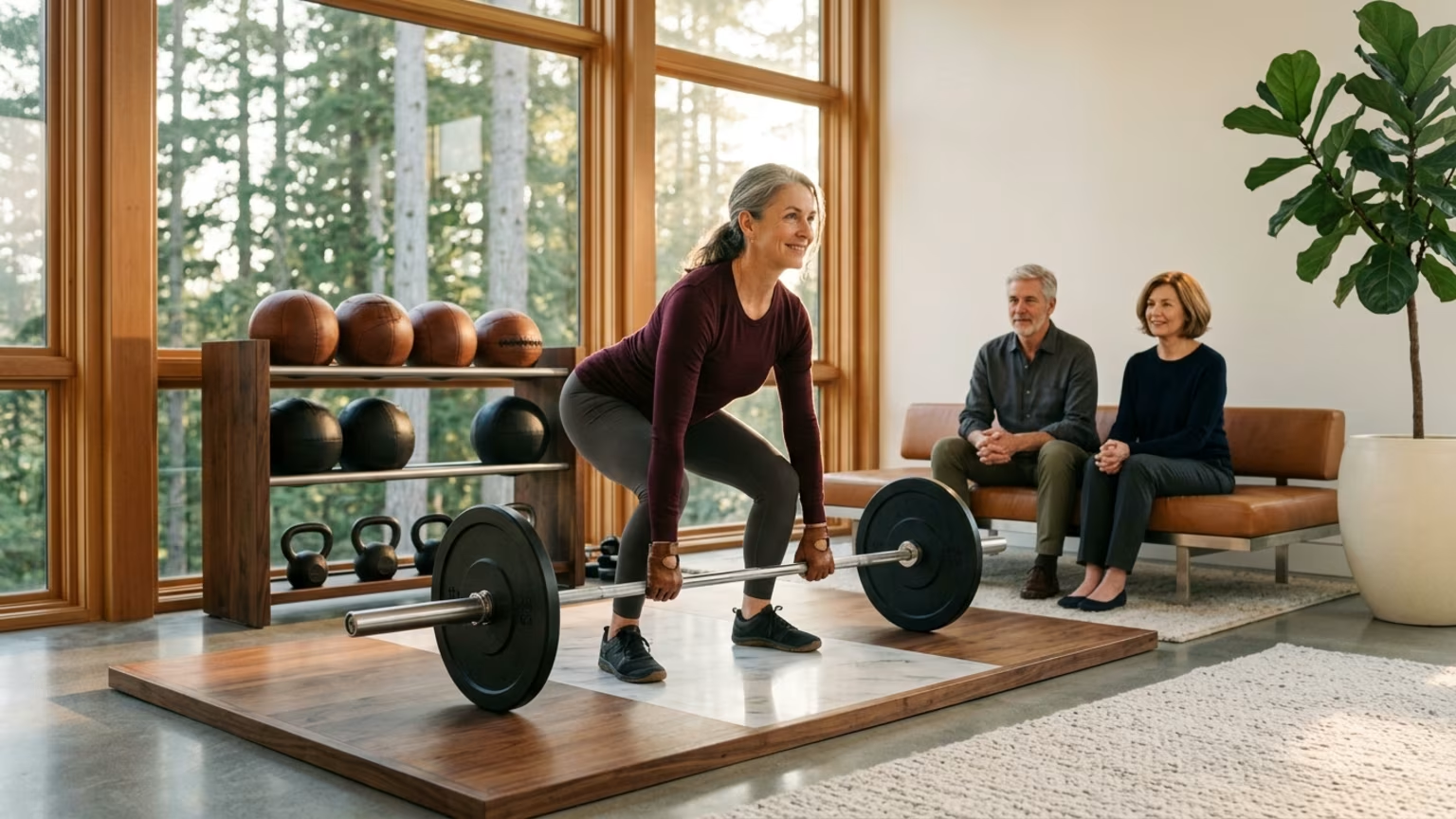

A 2026 WFMD report identifies resistance training as the most important habit for adults over 50 who want to maintain physical independence and capability.





On September 7, 2026, WFMD published a report identifying a clear priority for adults entering their later decades. Dr. Annu Navani, chief medical officer at Le Reve Wellness in San Jose, California, named high-intensity resistance training as the most important habit for people in their 50s and beyond. As the founder of the World Institute of Regenerative Medicine, Navani emphasized this accessible approach over speculative longevity products. For active adults who want to maintain physical independence, this expert recommendation shifts the focus from chasing trends to building foundational capability.
Navani based her recommendation on the physiological changes that occur as we age. She cited resistance training’s potential role in supporting bone health and maintaining adequate musculoskeletal blood flow. The practice also actively builds muscle strength and enhances overall muscle resilience. By focusing on these adaptations, adults can directly link physical capability with an extended health span.
The overall message is that strength provides a vital buffer against age-related decline. This emphasis on lifting fits perfectly within established federal guidelines for healthy aging. The article places Navani's recommendation directly within the standard CDC framework for weekly activity. That framework calls for at least 150 minutes of moderate aerobic activity or 75 minutes of vigorous activity per week.
Crucially, the CDC guidelines also require muscle-strengthening activity on at least two days per week. Combining these two elements provides a complete approach to longevity. Recent clinical data strongly supports the measurable benefits of structured lifting for older populations. A 2026 supervised-exercise study involving older adults reported clear functional improvements across multiple metrics.
Participants improved their Short Physical Performance Battery score from 9.1 to 10.1 over the course of the intervention. Their gait speed also improved from 0.78 to 0.85 m/s. The researchers noted that these outcomes are essential markers of physical independence. That same 2026 supervised-exercise study reported impressive gains in foundational strength.
Participants increased their grip strength from 16.9 to 18.3 kg. The researchers reported statistically significant differences for the Short Physical Performance Battery with P = 0.04. They also found a highly significant difference for grip-strength outcomes with P < 0.005. Furthermore, the study noted positive changes in sarcopenia-related measures among older participants.
Recent research is increasingly measuring aging-related exercise outcomes through highly specific functional tests. Scientists now track gait speed, grip strength, frailty status, and performance batteries rather than relying only on body weight. These specific metrics offer a much clearer picture of how well an older adult can function independently. The 2026 supervised-exercise findings are especially relevant because they connect training with these exact functional capabilities.
Additional research highlights how strength training works alongside other health interventions. A randomized study in 2026 looked at older adults managing type 2 diabetes. The trial found physical performance improvements across the study groups. More importantly, protein supplementation combined with resistance training was associated with specific targeted improvements.
These included better muscle strength, improved physical performance, decreased insulin resistance, and favorable changes in selected oxidative-stress biomarkers. Research involving older adults with type 2 diabetes also illustrates a growing interest in combining different habits. Scientists are studying how resistance training works alongside nutrition and metabolic-health interventions. However, researchers still carefully distinguish the effects of training from those of supplementation. This methodical approach ensures that patients understand exactly which habits provide the most reliable benefits.
Despite the clear benefits of lifting heavy weights, the approach must be scaled properly. The WFMD article explicitly notes that lower-intensity or supervised strength training may be more appropriate for some. Older adults and people with existing health conditions should prioritize safety and consistent technique over maximum loads. A supervised program helps ensure that the stimulus improves function without causing excessive joint strain.
While the clinical data is highly encouraging, responsible implementation is crucial. High-intensity training does not mean attempting maximum lifts without proper preparation. Adults who pursue demanding sports must distinguish productive training stress from excessive loading, because poor recovery actively increases injury risk. The available sources support individualized progression rather than a universal prescription for extreme exertion.
Navani makes a compelling case for practical wellness habits over highly engineered solutions. Her broader message is that longevity medicine should focus on "adding life to those years," rather than promoting unlikely extremes. She actively pushes back against promising extreme lifespan extension beyond 120 or 130 years. This realistic perspective resonates with adults who want to travel and stay active rather than live forever in a compromised state.
To achieve this sustained capability, she detailed four low-cost foundations of healthy aging. These pillars include adequate sleep, careful stress management, proper nutrition, and consistent physical activity. Resistance training receives special emphasis within this framework for adults in their 50s and beyond. The approach suggests that expensive medical technologies cannot replace the fundamental work of lifting weights.
Eating well is equally critical, though it requires practical execution rather than extreme tracking. Maintaining a simple approach to nutrition is highly effective, which explains why obsessing over minute protein timing details often frustrates active adults. Furthermore, this expert perspective does not dismiss cardiovascular health. Navani also described VO₂ max as an important biomarker associated with health and longer lifespan.
This specific metric reinforces that resistance training should complement aerobic conditioning rather than replace it. An effective program requires a balance of heavy lifting to preserve muscle and cardiovascular work to maintain heart function. The federal healthy-aging message emphasizes staying active in ways that work for the individual while maintaining independence. This broader guidance also highlights the critical importance of reducing fall risk through better balance and coordination.
Furthermore, it advocates for eating a nutrient-dense diet and participating actively in personal healthcare decisions. A comprehensive lifestyle plan integrates all of these elements to support lasting physical resilience. Strength training serves as the mechanical engine that makes many of these other healthy choices possible.
For the worldly adult, maintaining muscle strength directly translates to how you experience demanding travel. Physical capability dictates whether you can comfortably lift heavy luggage into overhead bins or navigate crowded train stations. It also plays a vital role in travel recovery and managing rigorous transit schedules. Relying on an aging body without a foundation of strength makes every long journey feel significantly more punishing.
The goal is to arrive at your destination ready to perform. After a grueling thirty hour transit to Tokyo, I realized my old strategy of just powering through was no longer working. I felt foggy for three days. I started digging into circadian biology and realized that timing my light exposure and fasting during the flight could completely shift my recovery. Now, I never board a long haul flight without a precise schedule for when to eat and when to put on an eye mask. It is the difference between losing a week of your trip and hitting the ground running.
Building a resilient body through consistent resistance training gives these travel strategies a much stronger foundation. Handling the physical stress of international transit requires a robust metabolic system and durable joints. Getting up from the floor, carrying a heavy duffel bag, and standing in long customs lines all demand measurable strength. When you lose that baseline capability, travel stops feeling like an adventure and becomes an exhausting chore. A proactive strength protocol keeps you firmly in the capable category.
When your muscles are conditioned to handle physical stress, adapting to high altitude becomes significantly easier. Your body can also recover faster from a massive time zone shift when your metabolic health is optimized through strength work. Adults over 40 who adopt a recovery-first training schedule often find they have more stamina for demanding trips. Consistent lifting translates to sustained energy on the mountain or the trail.
This functional capability is especially important for sustained outdoor sports like skiing and hiking. Navigating steep terrain requires immense eccentric strength and joint stability to protect your knees and lower back. Incorporating heavy resistance work during the week ensures your muscles can absorb those repeated impacts safely. This aligns perfectly with training for specific athletic hobbies.
If you already train consistently, consider evaluating whether your program develops truly usable strength. A capable adult needs proficiency across the major movement patterns rather than just isolated muscle work. Pushing, pulling, hinging, squatting, and carrying heavy loads translate directly to everyday physical independence. Tracking your ability to climb stairs or carry bags provides much better feedback than a single physical measurement.
However, the WFMD report emphasizes matching your training intensity to your health status and experience level. You do not necessarily need to push to absolute exhaustion during every gym session. Updated research confirms that lifting to complete failure is unnecessary for making solid strength gains. Instead, treating strength work as a non-negotiable weekly practice keeps your physical reserves full. Consistently moving moderate weights with excellent form is a highly effective strategy for longevity.
Active adults should prioritize progressive resistance training at least twice a week alongside their aerobic routines to maintain the physical strength required for a highly independent lifestyle.
Stay connected for research and practical guidance on longevity, strength, recovery, energy and active living. New ideas to help you stay capable, curious and ready for more.



Explore practical guidance on strength, recovery, energy, travel and longevity for a life that stays active.
explore the Blog