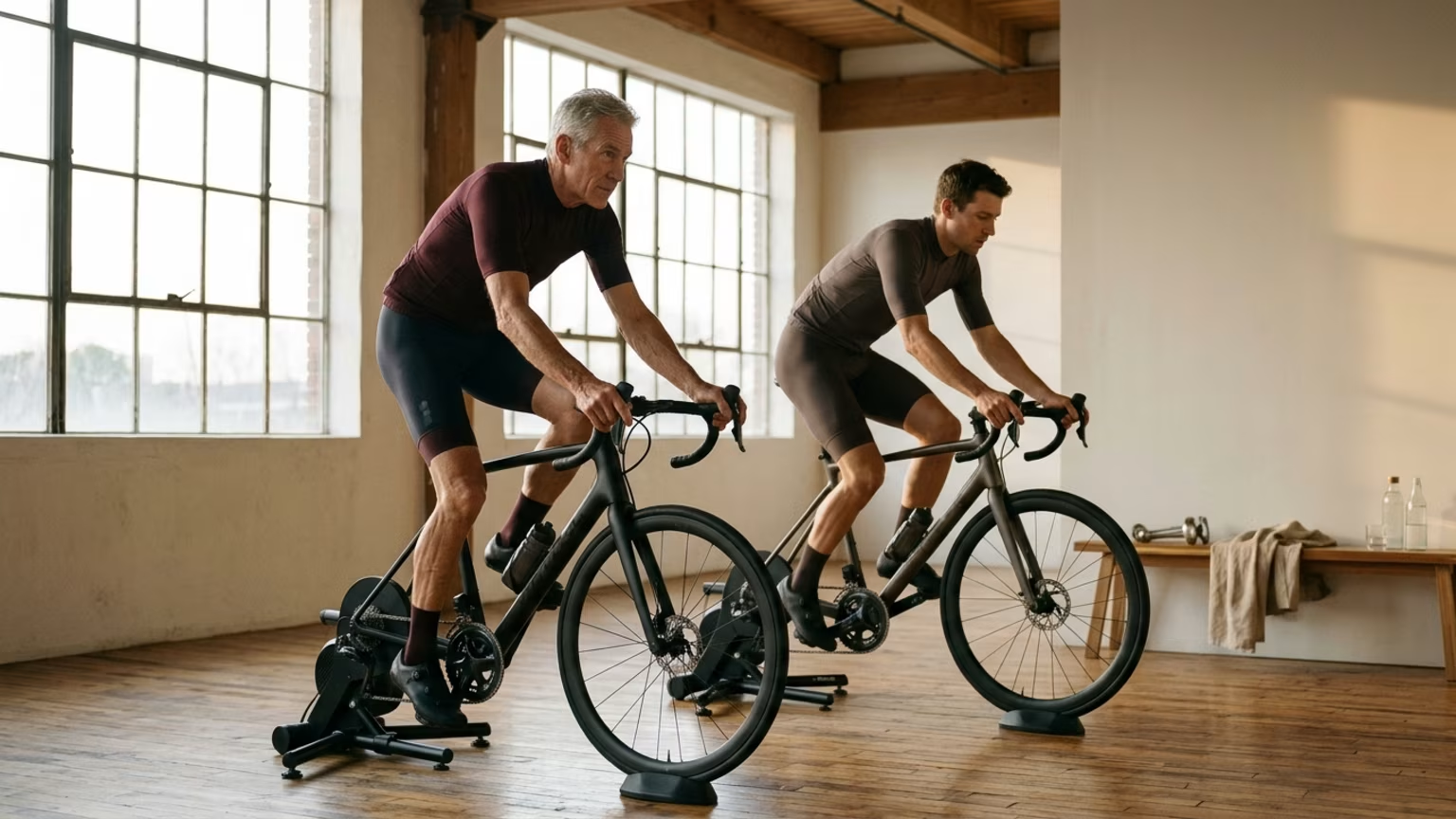

Older trained men performed comparably with younger trained men in a small cycling study. Here is how to interpret the result for active travel.





On 2026-11-19, a study indexed in PubMed reported that older trained men performed comparably with young trained men during a self-paced cycling test. For an active adult who values travel and physical independence, the result offers a welcome reason to think about capability in terms broader than age.
The authors also reported that the older trained men performed better than young untrained men. Their findings offer a focused look at performance across age and training groups, with practical relevance for how you think about familiar exercise and future adventures.
The useful message is measured optimism: the older trained participants remained competitive in this particular cycling challenge.
According to the study abstract, researchers compared 28 healthy men across three groups: young trained men, older trained men and young untrained men. Participants completed a 25-minute self-paced cycling test that included five repeated lower-intensity sections and maximal sprints.
Self-paced is an important part of that description. The question concerned performance when participants could distribute their own effort, rather than simply follow an externally fixed pace throughout. That makes effort management part of the result alongside the physical work itself.
The authors concluded that the older trained men’s overall performance was comparable with that of the young trained men. They also described more stable sprint output and a lower peak heart rate in the older trained group.
These are related observations, but they describe different parts of the test:
The central finding is therefore about the combination of performance and physiological response. Comparable performance appeared alongside differences in how the groups responded during the effort.
For readers interested in staying capable, that is more useful than a simple contest between younger and older bodies. It puts attention on what participants actually accomplished during a defined task. Age was part of the comparison, but so was whether the men were trained.
The result also gives self-selected effort a place in the conversation. A test that includes both lower-intensity riding and maximal sprints asks a different question from one uninterrupted maximal effort. Here the authors examined how performance unfolded across that mixed challenge.
The most important design limitation was the absence of an older untrained group. As coverage of the trial notes, that missing comparison means the study cannot independently separate the effects of age from those of training.
The study also did not test what happens when someone starts a training program. It therefore does not prove that training eliminates age-related change or guarantees a particular performance level. Those are different questions from comparing people who already belong to different age and training groups.
The sample was small and consisted of healthy men. Its scope was a short cycling test, not the full range of people or activities relevant to active aging. It did not establish recovery after travel or adjustment to altitude, and it did not measure sustained performance across a day of hiking or skiing.
Those boundaries define the practical reading of the result: encouraging evidence about the participants’ demonstrated cycling capability, rather than a forecast for an individual reader’s next trip.
The clearest practical action is to use familiar activity as the reference point for planning. Instead of deciding what belongs on your itinerary from age alone, compare the proposed activity with what you currently do.
For a cycling holiday, that means bringing your recent riding experience into the decision. Consider how the planned riding relates to the rides already in your routine. Keep the question concrete: does this trip reflect your present capability and the experience you want to have?
That approach fits naturally with planning travel around physical capability. It gives your current experience a meaningful role without turning every holiday into a fitness assessment.
For hiking or skiing, frame the same planning question around that activity. What does your recent experience of walking trails or skiing suggest about the itinerary under consideration? The aim is to connect the holiday you want with the capability you can presently describe.
This keeps ambition specific. Wanting to remain active is a broad goal; deciding whether a particular walking route belongs in your plans is a practical decision. The study’s emphasis on an actual performance task makes that distinction especially relevant.
An informed reader can take encouragement from the older cyclists while keeping attention on their own chosen sport. There is no need to turn younger participants into the standard against which every future adventure must be judged.
When a trip involves altitude or demanding travel, give those considerations their own place in the plan. The encouraging cycling result belongs in the conversation about capability. Personal decisions about health concerns or altitude-related precautions belong with qualified care.
That separation makes the research easier to use. You can appreciate the performance finding while addressing the other demands of the itinerary on their own terms.
For sustained energy during a sporting trip, a useful planning question is how the proposed schedule compares with your familiar activity. This is an assessment of the itinerary, not a request to recreate the study’s maximal sprints before departure.
The appeal of an age comparison is understandable. Seeing older trained participants perform comparably with younger trained participants challenges a narrowly pessimistic picture of later-life sport.
Yet the more useful personal question is quieter: what does your present activity tell you about the experiences you want to preserve? That question keeps the focus on independence and enjoyment rather than on winning an argument about age.
It also provides a sensible starting point for thinking about individual response in cycling. Your goals might centre on enjoying a cycling holiday or remaining comfortable with an active itinerary. They need not depend on matching someone else’s laboratory result.
At WealthAtPlay, the priority is staying strong and capable for longer. Read through that lens, this study is valuable because it documents older trained men performing well in a defined challenge. The practical emphasis remains on familiar activity and realistic plans for the experiences that matter to you.
Keep familiar endurance activity in your routine and let demonstrated capability, rather than age alone, help shape the ambitions of your next active trip.
Stay connected for research and practical guidance on longevity, strength, recovery, energy and active living. New ideas to help you stay capable, curious and ready for more.



Explore practical guidance on strength, recovery, energy, travel and longevity for a life that stays active.
explore the Blog
