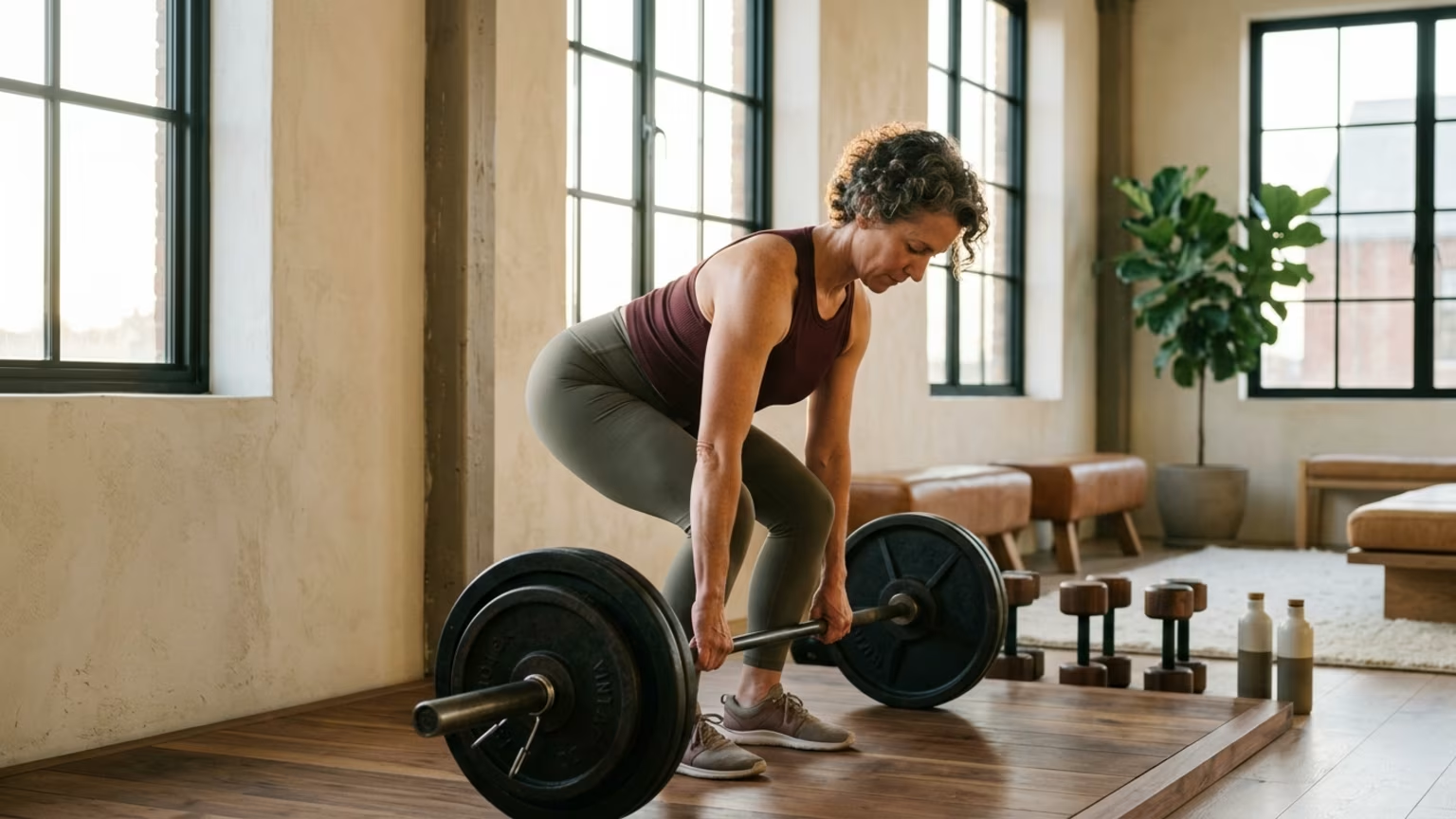

A September 2026 meta-analysis of over 4,000 women confirms that structured resistance training significantly improves strength in both pre- and postmenopausal groups.





On September 16, 2026, a feature published by the New York Post highlighted new research proving that midlife should not signal a decline in physical capability. The coverage detailed a 2026 meta-analysis covering 126 studies and more than 4,000 women, finding that resistance training significantly improved strength across both premenopausal and postmenopausal groups. For active adults who prioritize physical independence, this data reinforces the value of consistent strength work. It confirms that biological changes do not remove your ability to build functional capacity.
The primary study driving these headlines is a systematic review published in the Journal of Science and Medicine in Sport in 2026. Researchers Isenmann and colleagues set out to measure the impact of resistance training on strength and body composition in females across the lifespan. A secondary summary of their work details an analysis of 126 intervention studies involving 4,019 healthy women with an average age of 50.9 years. Approximately 66.2 percent of these individuals were postmenopausal.
The core finding strips away the dense clinical jargon to reveal a very reassuring reality. The reported strength effect sizes were remarkably similar between the two primary groups. Premenopausal women showed a standardized effect size of 1.50 for strength gains, while postmenopausal women saw a nearly identical response with a standardized effect size of 1.46. The difference in strength response between premenopausal and postmenopausal participants was not statistically significant, with a p-value of 0.520.
This analysis proves that menopausal status did not eliminate the observed strength response to resistance training in the included studies. The summary also reports significant improvements in functional muscle mass and reductions in fat mass for these participants. Once again, researchers found no significant difference in these body composition changes between the premenopausal and postmenopausal groups. The data firmly challenges the outdated assumption that aging naturally makes it substantially harder for women to gain strength.
These metrics are crucial because functional muscle mass dictates how well your body moves through the world. Losing fat mass while gaining strength creates a healthier metabolic profile and reduces the stress placed on your joints. This dual benefit is exactly why the findings from Isenmann and colleagues are generating so much attention in the human performance space. It offers a clear message that the effort you put into the gym will translate directly into measurable physiological improvements.
Interestingly, the Isenmann analysis found no significant relationship between outcomes and age, training frequency, training duration, or the total number of sessions. This suggests that adherence to any progressive program yields benefits, regardless of a rigid schedule. However, an additional 2026 systematic review and meta-analysis offers more context on how often you might want to train. That separate frequency analysis examined 22 studies and reported that training frequency did have a significant overall association with strength gains.
It reported effect sizes of 0.74 for one session per week, 0.82 for two sessions, 0.93 for three sessions, and 1.08 for four or more sessions. This secondary evidence varied by exercise type, body region, age group, and sex. It was not specific to midlife women and should not be used to prescribe a precise schedule for this audience. Still, it highlights that regular training stimuli generally correlate with better physical outcomes.
We often hear concerns that starting a training program later in life yields diminishing returns. This comprehensive data clearly contradicts that narrative. When you realize that early bone adaptation responds more robustly to lifting weights than it does to endurance work, knowing your muscular system also responds favorably is highly reassuring. You do not need to assume your strongest years are behind you. The practical interpretation is that structured resistance work should remain a priority rather than an optional routine.
Midlife brings shifts in physiology that understandably prompt a review of daily habits. Many women notice changes in how their bodies handle physical stress, demanding new approaches to training and recovery. This is precisely why adjusting your nutrition to support lean tissue retention becomes so crucial during this transition. Combining adequate protein intake with progressive resistance training creates a powerful environment for muscle retention. The latest meta-analysis confirms that the muscle building machinery still works exceptionally well for healthy women.
For anyone returning after a long break, the focus must remain on consistent mechanics rather than immediate intensity. A practical starting point is to master controlled versions of fundamental human movements. Basic movements like the squat, hinge, push, and pull build a base of functional capability. You can then increase the resistance or difficulty gradually as your technique and recovery allow.
It is important to remember that this data comes from controlled intervention studies, meaning the participants were following structured plans. Haphazardly lifting weights without a clear progression model will likely not yield the same magnitude of improvement. Your routine should be designed to consistently challenge your current capabilities without exceeding your capacity to recover.
The evidence strongly supports treating structured resistance training as a core component of your physical preparation. Someone who has trained inconsistently should not interpret menopause as a reason to avoid starting. The reported premenopausal and postmenopausal strength responses were similar in the meta-analysis, meaning the effort yields real results. Beginners and anyone managing medical conditions should seek proper coaching so exercise selection and progression remain individualized.
This research directly impacts how you prepare for demanding travel and high altitude environments. Building functional muscle mass translates directly to sustained energy during alpine skiing trips or long days of hiking. When your legs and core are strong, your body handles the physical stress of uneven terrain with much less effort. You recover faster between active excursions because your tissues are conditioned to handle heavier loads.
Our team frequently navigates demanding global travel schedules. After a grueling thirty hour transit to Tokyo, I realized my old strategy of just powering through was no longer working. I felt foggy for three days and lacked the physical energy to hike the mountain routes I had originally planned. I started digging into circadian biology and realized that timing my light exposure and fasting during the flight could completely shift my recovery.
Now, I never board a long haul flight without a precise schedule for when to eat and when to put on an eye mask. That circadian strategy works perfectly alongside a solid foundation of physical strength. When you eliminate jet lag and arrive with a highly capable muscular system, you are ready for immediate activity. You can carry heavy luggage through sprawling train stations, adjust to high altitude quicker, and enjoy long days of continuous movement without joint fatigue.
The recent data shows that women over 40 have every physiological tool necessary to build and maintain this high level of travel readiness. Strength work acts as a buffer against the general physical fatigue that accompanies long transit days. The reason many health professionals now prioritize lifting over pure cardiovascular work for older adults is largely due to this systemic resilience. Stronger muscles store more glycogen and improve overall metabolic health.
This gives you a deeper well of physical energy to draw from when navigating stressful environments or delayed flights. It is the difference between losing a week of your trip to exhaustion and hitting the ground running. Furthermore, possessing functional strength expands the types of destinations you can comfortably visit. Navigating the steep steps of ancient cities or managing a rigid small boat excursion demands balance and power.
The 2026 meta-analysis validates that the time invested in the gym directly preserves these travel capabilities. You are actively securing your physical independence for decades of future itineraries. When you can trust your body to perform under pressure, travel becomes far more enjoyable and significantly less stressful.
For the worldly and informed adult navigating midlife, this robust data confirms that structured resistance training remains the most reliable strategy for preserving the strength necessary to travel and live independently.
Stay connected for research and practical guidance on longevity, strength, recovery, energy and active living. New ideas to help you stay capable, curious and ready for more.



Explore practical guidance on strength, recovery, energy, travel and longevity for a life that stays active.
explore the Blog