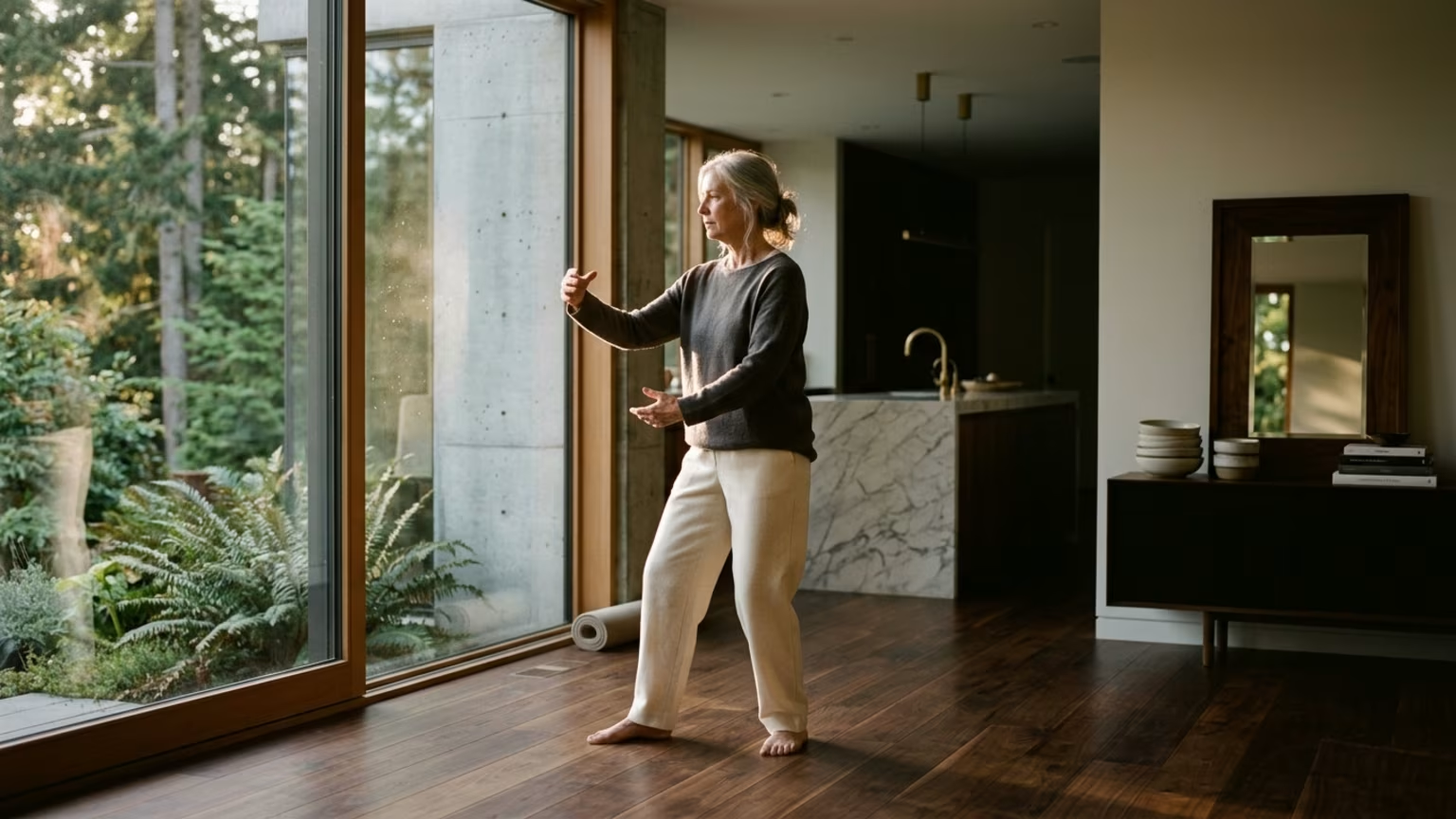

New research shows how decades of consistent aerobic exercise build the physiological resilience active adults need to sustain lifelong travel and capability.





On September 22, 2026, new research published in GeroScience revealed how decades of consistent aerobic movement translate into measurable physiological resilience. For active adults who value their physical independence, the findings reinforce a crucial concept about staying capable over time. Maintaining your physical capacity is less about intense short-term training and more about building a sustainable, lifelong habit. This study measured a concept called vitality capacity, which reflects the body's ability to handle stress and keep functioning well as the years pass.
The study examined 39 healthy adults from the Nice area of France. These participants had an average age of approximately 64, providing a useful look at health outcomes in later adulthood. Researchers wanted to understand if maintaining aerobic activity across adulthood builds a larger physiological reserve. They defined this reserve as vitality capacity, which represents how well the body remains resilient under various physical and environmental stresses.
Nineteen of the participants had performed aerobic exercise at least three times weekly for 30 years. This lifelong-active group completed at least 2.5 hours of moderate exercise per week, or roughly half that amount at a vigorous intensity. The remaining participants were either completely inactive or engaged in no more than 75 minutes of physical activity each week. To assess the impact of these different lifestyles, researchers combined 12 separate physiological measurements into a single vitality score.
The composite vitality score covered three broad physiological areas. These domains included immune and stress response, energy and metabolism, and nerve and muscle function. The most significant differences between the active and inactive groups appeared in heart-rate variability and resting blood-oxygen saturation. Average blood-oxygen saturation reached 96.8 percent in the active group, compared with 94.8 percent in the inactive group.
Average heart-rate variability was 49.9 milliseconds among the active participants. In contrast, the inactive participants averaged a heart-rate variability of just 27.2 milliseconds. Higher heart-rate variability generally indicates a more adaptable and resilient nervous system. Understanding these metrics is important for anyone looking to monitor four fitness measures that predict lifelong capability.
The findings also highlighted areas where aerobic exercise alone may not create a stark contrast between individuals. The study found no marked difference between the two groups in energy and metabolism. It also found no stark differences in grip strength, knee strength, lung function, or inflammatory molecules. This specific finding underscores why relying on a single type of exercise is rarely enough to support total body capability.
The research team offered a specific, measured conclusion regarding their findings. They stated, "Lifelong aerobic physical activity is associated with higher vitality capacity in older adults, particularly within the immune and stress response domain." Because the work was a preliminary study on a small group, the scientists emphasized that the results are strictly associative. The findings support a strong relationship between sustained aerobic activity and physiological reserve, but they do not establish direct causation.
The study authors noted that their vitality score requires validation in further clinical studies before broader application. They also clarified that they could not identify the absolute best type or amount of exercise needed to produce these results. Furthermore, the participants were a predominantly healthy, older, and white group from a specific region in France. Therefore, the results may not universally apply to people with chronic diseases or substantially different exercise histories.
Recent scientific literature increasingly examines healthspan-oriented measures rather than focusing solely on mortality risk. For instance, the Generation 100 study followed 1,500 adults aged 70 to 77 to track their long-term health outcomes. That study reported no difference in all-cause mortality after five years of supervised moderate or high-intensity exercise compared with general advice to remain physically active. This illustrates why one single study of vitality capacity should not be interpreted as a guaranteed method for lifespan extension.
Despite those nuances, broader data strongly supports the functional benefits of consistent movement. A massive study of 147,414 adults provided concrete data on the value of regular moderate activity. It reported that 150 minutes of moderate-intensity activity per week was associated with a lower mortality risk than no activity. The hazard ratio for this active group was 0.70, with a 95 percent confidence interval of 0.67 to 0.72.
The exercise and longevity field is steadily moving toward multidimensional assessments rather than single-metric tracking. A recent review in the European Journal of Preventive Cardiology argued for a complete, multifaceted prevention strategy. This strategy assesses muscle health and functional capacity alongside traditional cardiovascular fitness. It explicitly recommends combining resistance training with aerobic exercise to ensure that consistent strength training secures lifelong independence.
The same European Journal of Preventive Cardiology review emphasizes that exercise intensity must be personalized to individual risk. It also strongly advises limiting prolonged sitting to maintain overall physiological health. A separate review of high-intensity interval training in older adults found possible improvements in cardiorespiratory fitness. However, it noted that confidence in these improvements was limited by inconsistent populations and heterogeneous testing protocols.
The most successful approach to physical maintenance requires shifting your perspective from seasonal fitness to permanent habits. You should treat aerobic exercise as a long-term capability-building habit rather than a short pre-holiday or pre-event training block. The study’s active participants had maintained their aerobic routines for approximately 30 years. This long-term data clearly shows that the central message of the research concerns consistency across the entirety of adulthood.
A successful long-term exercise habit must be flexible enough to survive your inevitable life changes. You need to build a routine that can withstand frequent travel, demanding work changes, minor injuries, and seasonal disruptions. Activities like brisk walking, cycling, or swimming can be organized around the goal of maintaining regular aerobic movement. The study itself does not establish that one specific mode is inherently better than another.
It is important to use the reported 2.5-hour weekly level as a description of the study group, not as a guaranteed medical prescription. Participants in the active group performed at least 2.5 hours of moderate exercise weekly, but the researchers noted the optimal amount remains unknown. You should increase your training gradually and personalize your intensity over time. This measured approach is particularly crucial when returning after a long inactive period or when managing specific musculoskeletal conditions.
For active adults, this research directly impacts how you experience demanding travel and sport. The physical resilience indicated by higher heart-rate variability can significantly aid your ability to handle demanding schedules. A robust nervous system helps you bounce back faster from long-haul flights, disrupted sleep, and shifting time zones. Similarly, higher resting blood-oxygen saturation is a massive asset when you are adjusting to high altitudes during a ski trip or a mountainous hike.
Having a strong vitality capacity means your body has a deeper well to draw from when placed under environmental stress. Whether you are trekking across uneven terrain or navigating a stressful travel delay, a high physiological reserve keeps you moving forward comfortably. It means you can sustain your energy levels throughout a demanding day of adventure without experiencing the slower workout recovery after 40 that often plagues inactive adults. The ultimate goal is to ensure your physical capacity never limits your worldly experiences.
It is incredibly tempting to look at a fitness wearable and assume it tells the whole story about your health. However, you should avoid interpreting a simple heart-rate variability or oxygen saturation reading as a complete vitality assessment. The researchers in the Nice study combined 12 different measures into their composite score, and even they called for further clinical validation. True vitality is reflected in your real-world function, such as how easily you carry luggage, climb a steep hill, or maintain your energy on a long trip.
To build the physiological resilience required for lifelong travel and sport, commit to a consistent, sustainable aerobic routine that seamlessly fits your schedule across the decades.
Stay connected for research and practical guidance on longevity, strength, recovery, energy and active living. New ideas to help you stay capable, curious and ready for more.



Explore practical guidance on strength, recovery, energy, travel and longevity for a life that stays active.
explore the Blog