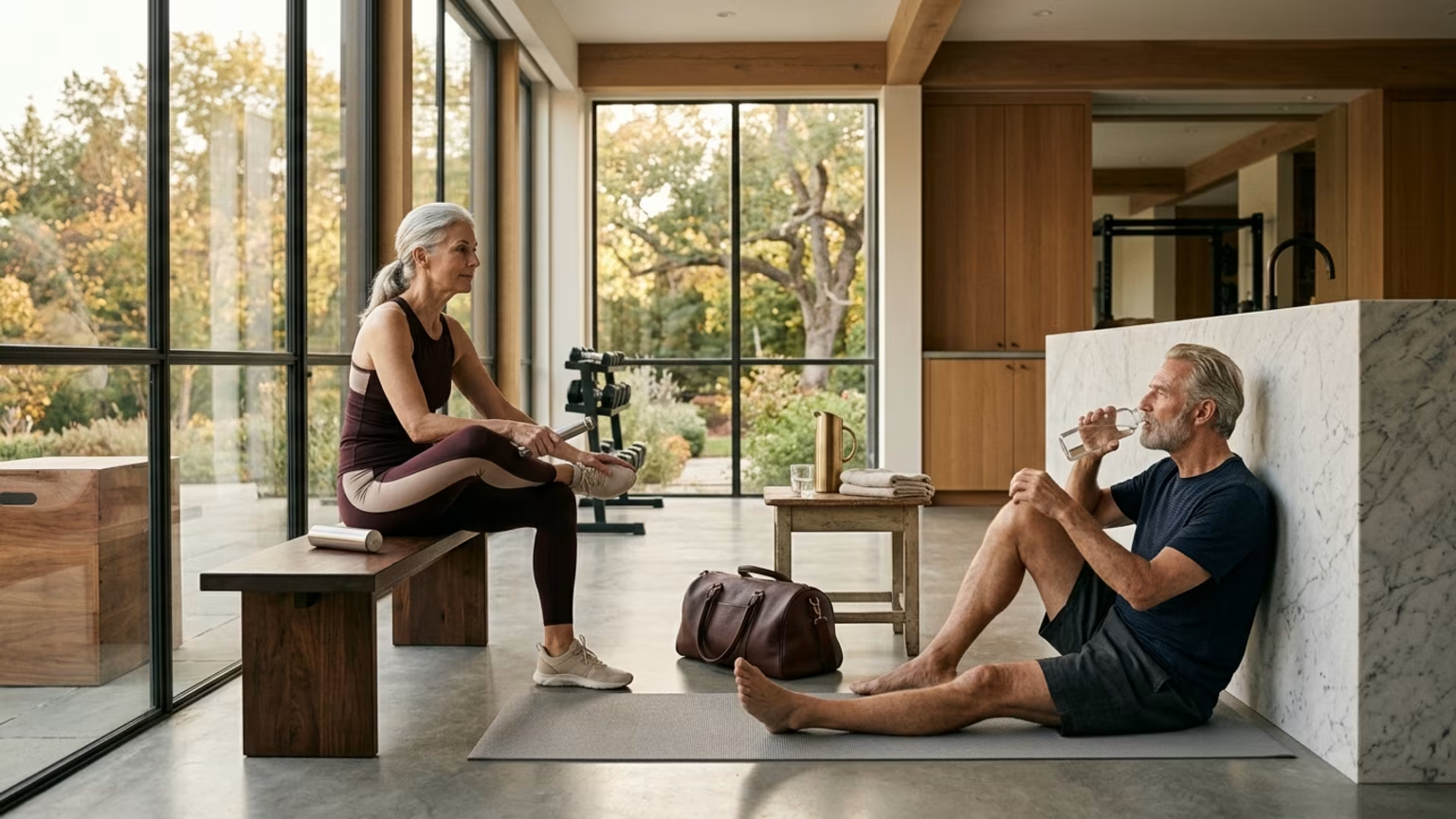

A new analysis explains why workout recovery slows with age. Read how active adults over 40 can adjust their training routines, nutrition, and travel plans.





On September 15, 2026, The New York Times published a comprehensive feature examining why post exercise recovery becomes slower and more demanding with age. This new analysis confirms what many experienced athletes already feel after a heavy training block or a challenging weekend on the mountain. For the active adult who values physical independence, understanding this shift is absolutely crucial. We can no longer rely on youthful resilience to erase the physical cost of demanding sports or rigorous travel schedules. Instead, we must adapt our routines to match our current biology.
The traditional timeline for workout stiffness and ordinary soreness to fade is roughly 24 to 72 hours. However, discomfort and recovery demands often become more pronounced as we get older. The central explanation from the recent reporting is that older adults may sustain more exercise related muscle damage while simultaneously experiencing slower muscle regeneration. This combination means your body simply requires more time, energy, and resources to rebuild tissue after a heavy physical session.
This slower repair process is tied to several physiological changes that begin decades earlier. Research reviewed by The New York Times indicates that muscle mass generally begins declining in our 30s. Aging is also associated with a relative loss of fast twitch fibers, which are the fibers that power explosive strength and quick reactions. Concurrently, there is a shift toward a greater relative proportion of slow twitch fibers that handle sustained endurance. This shift explains why you might still run long distances easily but feel significantly more sore after a heavy lifting session.
Furthermore, age related chronic inflammation can severely interfere with how efficiently muscles regenerate. Medical professionals frequently refer to this low grade inflammatory state as inflammaging. When background inflammation remains consistently elevated, it disrupts the signaling pathways that normally tell your body to repair damaged muscle fibers. This means the mechanical stress of a heavy lift or a steep hike creates cellular damage that lingers much longer than it used to.
Dr. Asad Siddiqi, head of rehabilitation medicine at NewYork-Presbyterian Brooklyn Methodist Hospital, offered valuable perspective in the recent feature. He told The New York Times that older exercisers must be far more deliberate about preparation and ongoing maintenance than younger athletes. The goal is not to stop training hard or abandon your favorite activities. Instead, the objective is to ensure your training schedule leaves enough total capacity for tissue remodeling and regeneration.
This deliberate approach aligns perfectly with our philosophy at WealthAtPlay. The most successful older athletes do not ignore their body's signals. They actively manage their recovery so they can keep training consistently without undermining their long term performance.
Slower muscle regeneration becomes especially apparent when we combine intense physical activity with demanding travel schedules. If you stack a heavy lower body workout with a cross country flight and poor sleep, your recovery capacity can easily be overwhelmed. We have experienced this exact compounding stress firsthand during international business and leisure travel. After a grueling thirty hour transit to Tokyo, I realized my old strategy of just powering through was actively destroying my physical readiness.
During that trip, the physical stiffness from sitting compounded with the travel fatigue, and I felt completely foggy for three full days. I had failed to account for how extreme travel stress slows down physical recovery. To fix this, I started digging deeply into circadian biology and adjusting my routines to protect my body during long transits. Now, I never board a long flight without a precise schedule for when to eat and when to wear an eye mask.
This level of deliberate planning is the difference between losing a week of your trip and hitting the ground running. When your baseline muscle regeneration is already slower, you cannot afford to compound the problem with jet lag and dehydration. Active adults who want to hike or ski immediately after arriving must treat travel as a major physiological stressor. Timing your light exposure and fasting during the flight can completely shift your recovery trajectory. Incorporating clinical sleep strategies to conquer extreme jet lag is essential for maintaining your capabilities abroad.
Beyond managing travel stress, recent clinical trials highlight the profound importance of proper nutrition and varied training stimuli. An NIH hosted review concludes that appropriately designed exercise can significantly improve strength and endurance in healthy older adults. However, the review also emphasizes that exercise programming must be highly individualized as physical impairment increases. You cannot simply apply a generic template and expect optimal results without risking injury.
A 2026 randomized clinical trial examined protein supplementation and resistance training in older men with Type 2 diabetes. The researchers found that combining protein with resistance training was associated with improvements in muscle strength, physical performance, and insulin resistance. The same trial found that all groups experienced increases in the muscle damage markers lactate dehydrogenase and creatine kinase. This illustrates that biomarker changes after exercise do not automatically mean that training has caused clinically meaningful harm. Maintaining daily protein adequacy remains a central requirement for any active adult hoping to preserve physical capability over time.
Many affluent adults favor endurance sports like cycling or marathon running, but endurance activity alone may not protect your muscular power. A 2026 study of older physically active men found that greater lifetime endurance activity improved cardiometabolic health. However, this lifelong endurance habit did not significantly preserve muscle strength and power. For adults who want to maintain athletic power for demanding sports, cardiovascular fitness and muscular strength are complementary targets rather than interchangeable ones.
Emerging research also points to the potential benefits of targeted supplementation for preserving lean mass. A 2026 study of creatine supplementation reported favorable changes in lean tissue mass, strength, and muscular endurance among middle aged and older adults. The authors described some of their cognitive and biomarker findings as exploratory, meaning these results are study specific rather than universal guarantees. Still, this research reinforces the importance of maintaining resistance training alongside adequate nutrition. Supplements cannot replace the foundational need for appropriate recovery time between heavy sessions, but they may offer incremental support for those already managing their training loads correctly.
The core lesson from this recent data is that aging does not erase your ability to adapt and grow stronger. It simply means that your margin for error is significantly smaller. You must place your hardest strength sessions or intense hill sprints far enough apart to allow for complete tissue repair. Using a structured recovery management framework can help you track readiness signals and avoid overtraining.
If your warm ups feel unusually heavy or soreness persists well beyond the standard window, you should temporarily reduce your volume. Persistent or unusually severe soreness, progressive weakness, or sustained declines in performance warrant medical evaluation rather than simply adding more rest. We highly recommend tracking personal biometric trends to help you manage travel and training loads effectively. Protect your sleep around demanding training blocks, and make daily protein adequacy a strict priority. It is always wise to prioritize sustainable training volume over excess intensity.
To maintain your physical independence and performance, treat your recovery capacity as a hard constraint and prioritize adequate rest between intense sessions.
Stay connected for research and practical guidance on longevity, strength, recovery, energy and active living. New ideas to help you stay capable, curious and ready for more.



Explore practical guidance on strength, recovery, energy, travel and longevity for a life that stays active.
explore the Blog