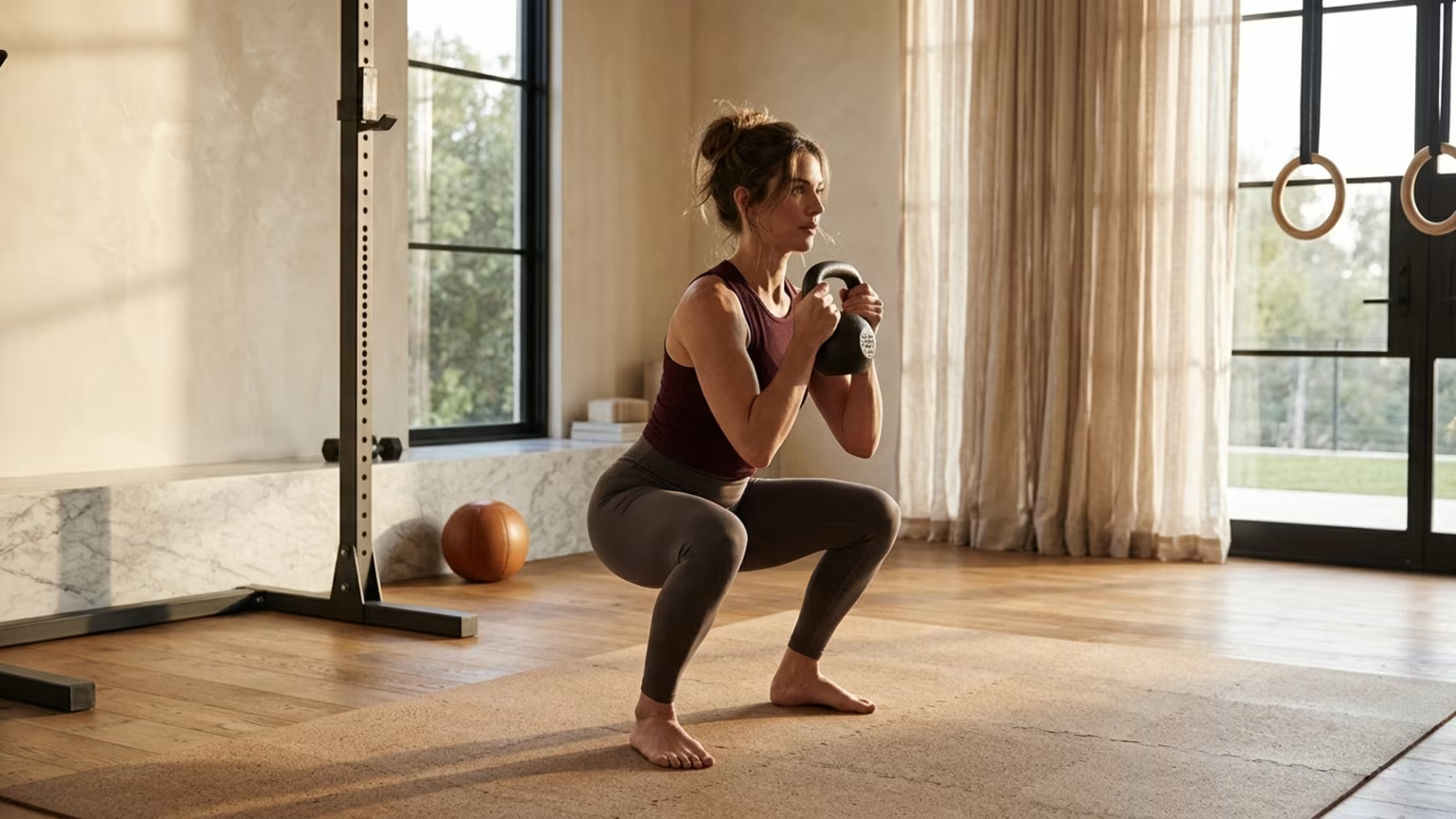

An October 2026 feature makes the case for combining strength and mobility through comfortable, controlled movement, with context for travel and sport.





On October 24, 2026, The Independent published a feature presenting full-range strength training as a practical way to work on mobility. For active adults who want to keep travelling and enjoying sport, its useful message is not that flexibility should replace strength. It is that the movements you already train may offer a place to work on both.
The feature centres on coach Darren Ellis, who says he works with people aged 40 and above. His advice is to use the widest movement range you can currently control comfortably. That gives the story a clear relevance to physical independence: pay attention to how you move, not just how much you lift.
Ellis presents mobility as bringing strength and flexibility together. Rather than treating movement range as something reserved for a separate stretching session, he argues that well-performed resistance exercise can also serve as movement practice.
The distinction is practical. A squat is not only an opportunity to work against resistance. In Ellis’s framing, it is also an opportunity to practise moving through a range you can manage with control. The same principle applies to the other patterns he names: lunging, bending and pulling, alongside pressing overhead.
Here, full range should not be read as the deepest position someone else can reach. Ellis’s recommendation is personal to current ability: the broadest range that remains comfortable and controlled. The emphasis is on the quality of the movement rather than pursuing an impressive-looking endpoint.
There is related research behind the broader idea. A secondary research summary reports that a 2021 systematic review and meta-analysis found no significant difference between strength training and stretching for improving range of motion. It covered 11 randomized trials involving 452 participants. That finding gives some support to considering strength work as a way to practise movement range rather than automatically assigning that task to stretching alone.
The evidence has clear limits. The trials were heterogeneous, so the result does not establish that every strength programme improves every joint equally well. The Independent feature is coaching advice rather than a trial of Ellis’s exercises or morning routine. Its suggestion that mobility matters more than strength is his perspective rather than a demonstrated ranking for longevity.
Neither the feature nor the related findings establish faster travel recovery, better altitude adjustment or more sustained energy during sport. Those are separate outcomes from range of motion. The useful conclusion here is narrower: strength training and mobility practice need not always be separate activities.
The Independent quotes Ellis describing mobility as “physical freedom.” He illustrates that idea with ordinary tasks such as bending to pick something up, lifting a child or reaching into a cramped space. His focus is a body that can perform the movements a person wants without discomfort.
For an active reader, that is a more useful ambition than collecting difficult exercise positions. It puts the purpose of training back into view: retaining access to the activities and everyday movements that matter to you. A movement does not have to look athletic to be worth practising.
Ellis’s examples also make the discussion less abstract. Standing from a chair and getting down to the floor are recognisable tasks. They offer a practical way to think about capability without turning every training session into a test of flexibility.
The simplest application is to review the movements already present in your routine. Ellis’s advice does not require every reader to adopt an entirely new exercise system. It asks for attention to comfortable range and control within movements suited to current ability.
Ellis offers a chair sit-to-stand as an accessible example. The important point is not that a chair exercise is a lesser version of training. It is that a familiar movement can provide a suitable starting place for practising both strength and movement range.
His advice also includes moving regularly and gently approaching the edge of a comfortable range. Controlled breathing is part of his approach. None of those ideas requires treating discomfort as proof that an exercise is working.
For readers whose movement choices involve joint sensitivity, adapting strength work to the movements available is the relevant planning question. When pain or an existing condition makes exercise selection a personal health decision, qualified guidance is the appropriate place to individualise it.
The feature names lunging, squatting and bending. Pulling and pressing overhead complete Ellis’s examples. These patterns describe the kinds of movement he wants people to retain rather than a mandatory collection of exercises.
That distinction leaves room for adaptation. The aim is not to reproduce someone else’s depth or reach. It is to choose a version of a movement that matches the comfortable control Ellis describes.
For someone already strength training, the practical question is straightforward: does the chosen exercise allow useful movement practice as well as effort? That is a question about execution and suitability rather than a reason to replace an entire programme.
The Independent also describes Ellis’s 10-minute morning routine. It contains 10 bodyweight movements performed for one minute each, including cat/cow and squat rotation. He says the sequence can be repeated once or twice if time allows.
That is one way he organises movement practice. It need not become another obligation layered onto an already busy training week. The broader idea is to give comfortable movement a regular place in your day, whether through his sequence or within suitable strength exercises.
The useful choice is where that attention fits naturally. A separate morning session and a more movement-conscious strength session are different ways of applying the feature’s central coaching idea. The routine itself is not the main news; the overlap between strength work and movement practice is.
For travel, the most relevant application is maintaining a manageable approach to movement. Bending towards a bag or standing from a chair gives the discussion a practical reference point. These are everyday versions of the capability Ellis is describing, not reasons to chase an extreme range in the gym.
A travel schedule also creates a useful test of simplicity. A familiar movement that can be adapted to present ability may be easier to accommodate than a complicated collection of unfamiliar exercises. Treat that as a planning principle rather than a claim that a brief routine offsets the demands of a long journey.
For skiing or hiking, place this advice within the whole preparation picture. Comfortable movement is a worthwhile focus, but it should not take over the conversation about fitness. A demanding day outdoors is a reason to consider the broader activity mix rather than choose between strength and mobility as competing priorities.
A published summary of the World Health Organization’s 2020 physical-activity recommendations provides that wider context. The guidance combines aerobic activity with muscle-strengthening activity on at least two days weekly. For adults 65 and older, it also includes multicomponent activity emphasising balance and strength on three or more days weekly.
The practical implication is to give each element its place. Use the feature’s movement advice within strength work while retaining the wider perspective of planning strength and endurance together. Mobility is part of that picture rather than a replacement for it.
For an active holiday, the most useful question is therefore not whether you need to become more flexible at any cost. It is whether your preparation reflects the movements and broader fitness you want to retain. That keeps the focus on capability rather than on adding another elaborate routine.
Make comfortable, controlled range a priority within suitable strength exercises while keeping aerobic activity and age-appropriate balance work in the wider routine.
Stay connected for research and practical guidance on longevity, strength, recovery, energy and active living. New ideas to help you stay capable, curious and ready for more.



Explore practical guidance on strength, recovery, energy, travel and longevity for a life that stays active.
explore the Blog