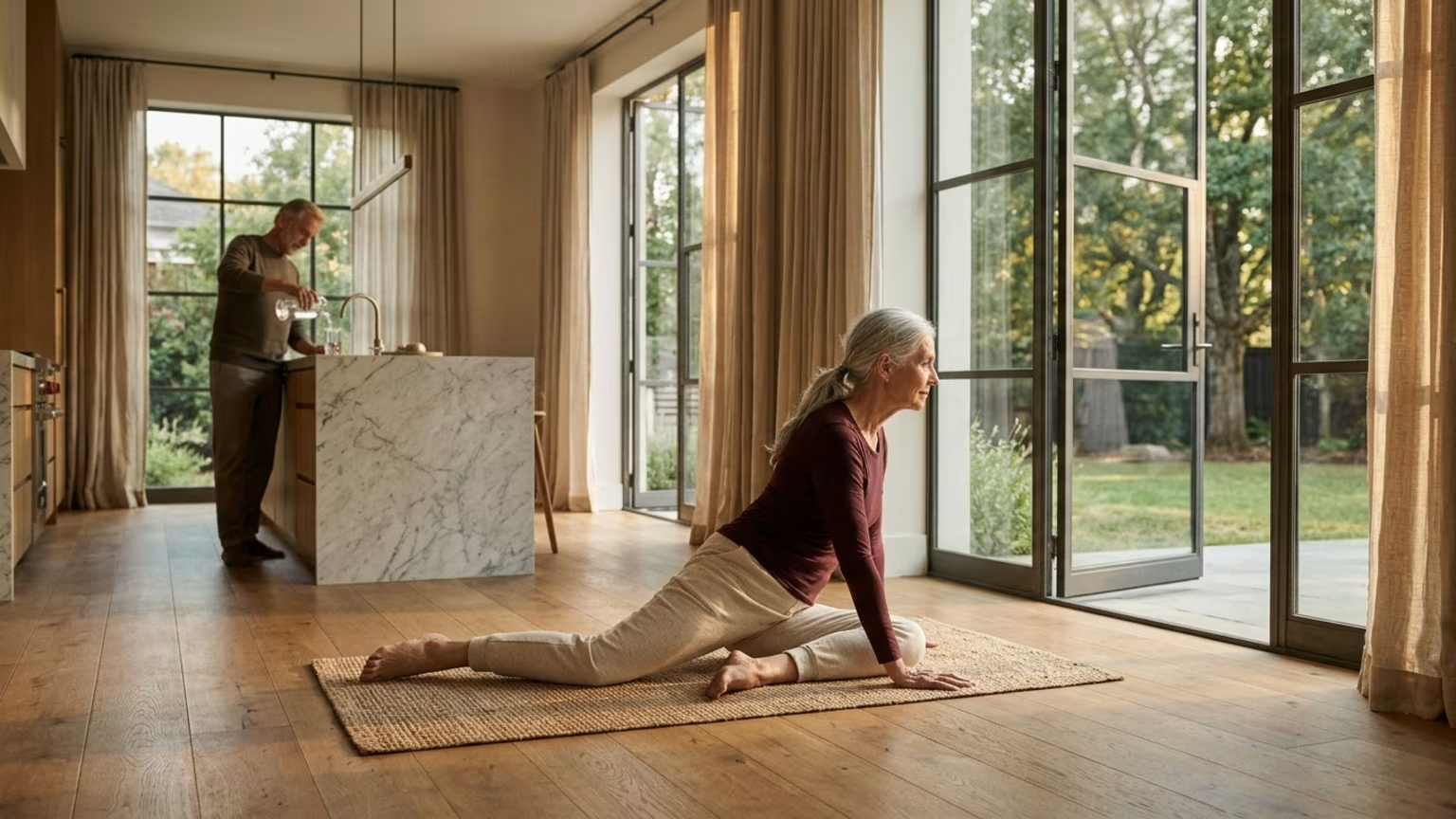
A new HealthDay report reinforces strength training alongside cardio, with gradual-start advice and practical context for active adults and travelers.





On October 26, 2026, a HealthDay report carried by U.S. News reinforced a practical message for later life: keep strength training alongside aerobic activity. If your idea of aging well includes walking a new city or enjoying a mountain holiday under your own steam, the relevant story is capability rather than simply weight loss.
The report’s headline focuses on weight management. Its broader value for active adults is a reminder that a well-rounded routine makes room for resistance exercise as well as aerobic activity. That distinction matters when your goal is to keep doing the things you enjoy.
The central message is straightforward: aerobic activity and strength training belong in the same conversation. According to the HealthDay report, U.S. Department of Health and Human Services guidance calls for at least 150 minutes of moderate aerobic activity each week. It also calls for two weekly strength-training sessions covering all major muscle groups.
Those recommendations describe complementary activities rather than competing options. An active week does not have to become a contest between time spent walking and time spent using resistance. The planning question is how to fit cardio and weights together, not which one to declare the winner.
For the capability connection, the report turns to Dr. Russell Camhi. He is identified as a primary-care sports-medicine physician at Northwell Health’s Orthopedic Institute. Camhi says strength training later in life can improve strength and balance, which he connects with decreased fall risk.
Camhi also discusses benefits for bone density specifically in women. Taken together, his comments shift attention beyond the bathroom scale toward physical qualities relevant to independence. That is the useful perspective for someone whose priorities include remaining mobile and participating in an active life.
Separately, HHS says it is developing a supplement to the current Physical Activity Guidelines for Americans. The supplement is planned for release in 2027 and will address steps and muscle-strengthening activity. HHS is seeking public comments to inform that work.
The agency says the supplement will build on the existing second edition of the guidelines. It is guidance under development, not a replacement already in force. The announcement therefore does not establish a change to the recommendations described in the HealthDay report.
For now, the practical interpretation remains uncomplicated: strength work belongs beside aerobic activity. Future guidance may add detail, but its development is not a reason to put the current message on hold.
This is a news report built around expert advice, not a new clinical trial. Its strength, balance and bone-density comments are not accompanied by effect sizes or detailed findings for particular medical conditions. It also does not establish how much weight an individual would lose through strength training alone.
The report does not measure travel recovery, altitude adjustment or sustained energy during sport. Its exercise suggestions are general rather than a personalized program. People with chronic conditions or safety concerns are advised in the report to consult a health-care provider before starting a new exercise program.
Read within those boundaries, the article offers a useful reminder rather than a dramatic new discovery: preserve a place for strength work without displacing aerobic activity.
Camhi’s clearest practical advice is to “start low and go slow.” He warns that moving too quickly into weight training can lead to injury. His emphasis is on manageable resistance and simple movements rather than an ambitious restart.
That is a reassuring approach for someone returning after time away. The first task is not to recreate a former training session or match somebody else’s workout. The report’s message favors a gradual return over a rapid jump in difficulty.
Camhi names several movements as examples:
The practical point is the simplicity of the starting approach. A return to strength work does not need to begin with an elaborate exercise collection or an unfamiliar training system. It can remain focused on manageable movements while personal decisions are addressed with qualified care where needed.
The HealthDay article also relays Mayo Clinic advice on session preparation and recovery. That reported advice includes warming up before training, avoiding painful exercises and allowing a muscle group a full day of rest before working it again.
These suggestions put preparation and recovery inside the routine rather than treating them as optional extras. For an active adult, that is a more useful emphasis than trying to make every session impressive. The aim is to give strength training a workable place in ordinary life.
This fits a flexible approach to training around a busy schedule. The relevant adjustment is modest: make the return manageable before making it more demanding.
For someone planning a hiking holiday or a ski trip, the report offers a preparation principle rather than a destination-specific workout: keep strength work in the broader activity routine. It need not become a separate project that takes over the calendar.
That changes the question from “Which exercise is best?” to “Where does resistance training fit alongside the activity I already do?” A familiar walking routine can remain part of the picture. The report’s emphasis is on including strength work rather than exchanging one form of activity for another.
The same perspective supports a more grounded discussion of walking, strength and travel independence. The objective is not a gym performance detached from the rest of life. It is a routine organized around the activities that make staying capable worthwhile.
The HealthDay report lists several ways to perform resistance exercise. These include free weights and machines as well as resistance tubing. It also names cable-suspension equipment and body-weight movements.
That range matters when considering how training fits around travel. A conventional gym is not presented as necessary, so access to a familiar weight room need not be the only question. The more useful starting point is which available form of resistance exercise fits an established routine.
For someone who travels regularly, that is a planning issue rather than a reason to seek a new program for every destination. The report supports thinking broadly about equipment while keeping the approach simple. It does not make one setting the defining feature of strength training.
A forthcoming trip can provide a reason to review the routine, but it should not turn a return to weights into a race. Camhi’s warning about advancing too quickly is especially relevant to the temptation to make up for missed training all at once.
The useful adjustment is to consider strength work as part of ongoing preparation. A mountain holiday does not make the article’s gradual-start message less important. Nor does an appealing hotel gym create an obligation to attempt more than a manageable session.
Recovery also deserves a place in the schedule. The Mayo Clinic advice reported by HealthDay includes time between sessions for the same muscle group. In practical planning terms, that means considering the spaces between workouts as well as the workouts themselves.
For an active traveler, the most grounded reading of this news is therefore about continuity. Keep aerobic activity in view, give resistance exercise a realistic place and resist turning preparation into a last-minute overhaul. The routine should serve the trip and the life around it.
The sensible adjustment is to preserve a place for strength alongside aerobic activity, return gradually when needed and organize the routine around the active life you want to maintain.
Stay connected for research and practical guidance on longevity, strength, recovery, energy and active living. New ideas to help you stay capable, curious and ready for more.



Explore practical guidance on strength, recovery, energy, travel and longevity for a life that stays active.
explore the Blog