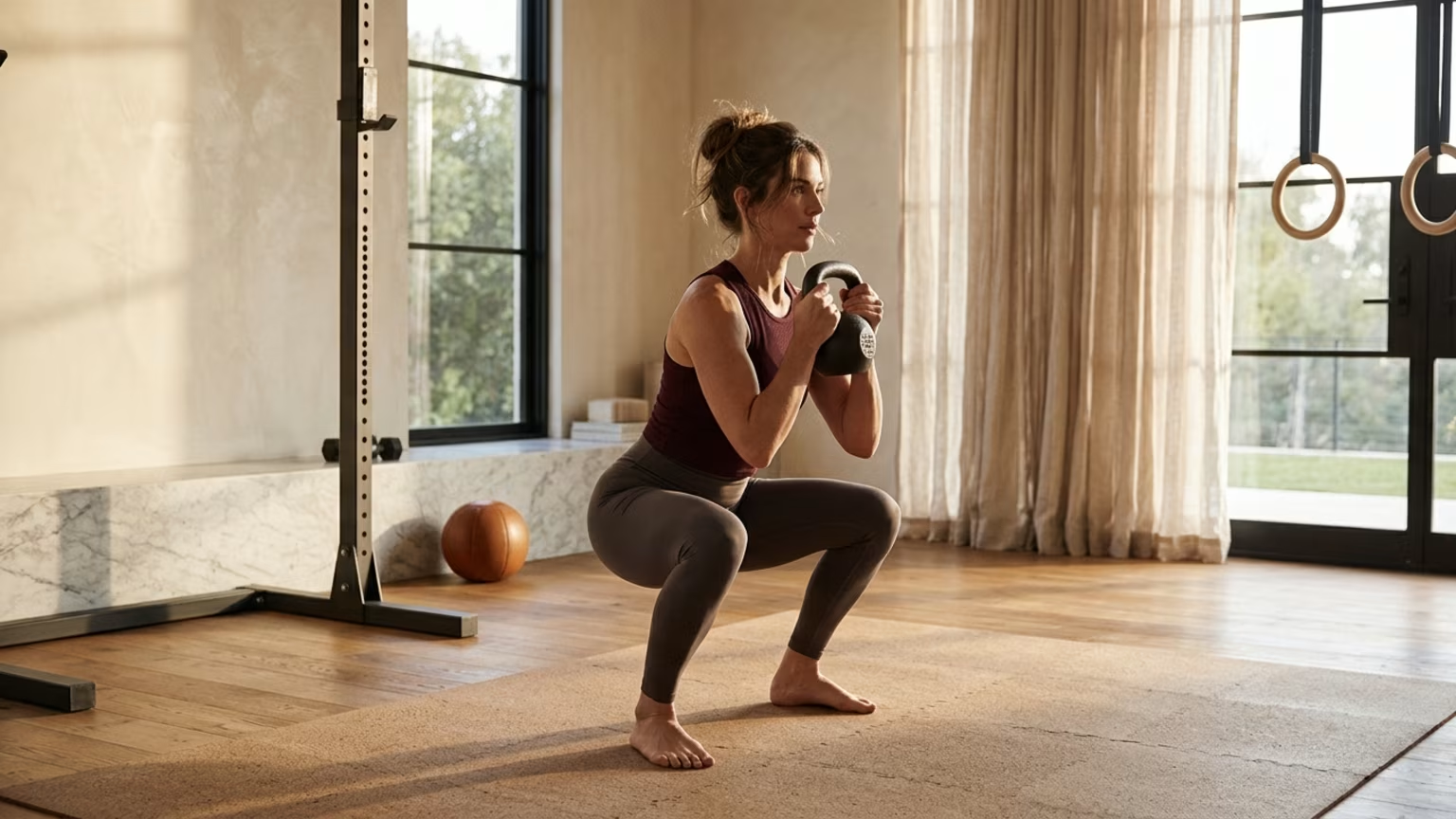
Why balance deserves attention after 40, with simple practice examples and a clear look at the evidence behind steadiness and independence.





Balance is the ability to stay steady while standing and moving, making it a practical part of physical independence rather than an optional fitness extra. It deserves attention alongside how far you can walk and how much you can lift.
For an active adult, that definition brings the subject out of the clinic and into everyday life. Steadiness belongs in the conversation about the places you want to visit and the activities you want to keep enjoying. It need not become another score to chase.
Penn State Extension presents aerobic activity, muscle strengthening and balance practice as complementary parts of an active life. Its examples of balance activity are straightforward: standing on one leg, walking backward and side-stepping. The starting point is ordinary movement rather than an elaborate training system.
The useful question is therefore not whether balance should replace anything. It is whether your current movement routine gives steadiness any deliberate attention at all.
A walking total describes one aspect of an active day. A strength session addresses another. Neither is a reason to leave balance out of the wider picture presented by Penn State Extension.
For someone interested in global travel and outdoor sport, the appeal is easy to understand. Uneven trails, crowded streets and moving boats are settings where steadiness feels relevant. They give the subject a purpose beyond completing an exercise correctly.
After 40, the editorial case is about planning for the life you value rather than assuming that a birthday signals a problem. Maintaining energy for long days remains part of that goal. Balance deserves a place beside aerobic and strength activity, not a new role as a substitute for either.
This is also a useful way to think about the physical abilities you want to retain. Start with the experiences that matter to you. Then consider whether your training gives attention to more than the easiest qualities to count.
A City of Albuquerque fall-prevention screening report offers a concrete example of why several aspects of physical function deserve attention. Among participating older adults, 75% could not complete all four stages of a balance test. The report also found that 47% performed below the expected range on a chair-stand test. A further 39% took at least 12 seconds on a timed walking-and-mobility test.
Those findings concern the people who attended that local screening program. They are not prevalence estimates for all older adults or a diagnosis for anyone reading this article. Their practical value is the reminder that a screening can examine balance, strength and mobility rather than treating physical capability as a single quality.
The broader exercise evidence also matters. Medical Guardian’s summary of a Cochrane review reports that exercise reduced fall rates by about 23% across 108 trials involving more than 23,000 community-dwelling participants. That is a secondary account of an overall exercise finding, not a result established for the particular practice ideas below.
The evidence here chiefly concerns older adults and fall prevention. It does not directly establish improved travel confidence or better performance on boats and trails for healthy adults in their 40s and 50s. Those settings are motivations for paying attention, not proven outcomes or promises that a person will avoid falling.
The simplest approach is to consider one manageable balance activity alongside the exercise already in your life. There is no need to turn the subject into a separate athletic identity. Penn State Extension’s examples provide a modest place to start that conversation.
A minimum effective balance-training dose for healthy adventure-oriented adults over 40 is not established by this evidence. Here, “minimal” means keeping the addition uncomplicated rather than claiming a precise threshold for benefit. Penn State Extension’s general approach is to begin manageably and progress gradually.
The practical choice is one activity at a time. That keeps the focus on giving steadiness some attention instead of assembling a demanding circuit before the habit has a place in your schedule.
Standing on one leg is one of the examples highlighted by Penn State Extension. A supported version offers an approachable way to consider that movement without making unsupported performance the goal.
The editorial emphasis is on practice rather than proving something. There is no need to turn the activity into a contest over how impressive it looks. The relevant question is whether it is a manageable form of balance work for the person doing it.
Penn State Extension also includes backward walking among its balance examples. It is an option within general exercise guidance, not a recommendation to practise in a busy street or on an unfamiliar trail.
Keep the exercise idea separate from the destination that motivates you. Wanting to feel capable while travelling does not mean that practice should recreate every complication of travel. A demanding environment is not automatically a better training setting.
Side-stepping is another example in the Extension guidance. It gives lateral movement a place in the discussion without requiring an elaborate sequence or a named training method.
It need not be combined with every other example at once. The practical principle is to choose a manageable activity and allow gradual progression rather than collecting exercises for their own sake. More variety is not the immediate objective.
Keep existing exercise in view while considering that addition. The aim is to make room beside strength work that fits a busy life, not to create another routine competing for attention. Aerobic activity belongs in that same wider picture.
For anyone with recent falls, symptoms or a health condition affecting balance, the appropriate next step is advice from a qualified healthcare professional. General exercise examples are not a personal assessment or treatment plan.
The common mistakes are often mistakes of interpretation. A useful movement skill becomes a test of toughness, a universal prescription or a reason to buy something. None of those changes is necessary to take balance seriously.
A busy training week can still prompt a useful question: does it include deliberate balance practice? Penn State Extension’s framework treats balance as complementary to aerobic and muscle-strengthening activity. The point is not to downgrade the work you already enjoy.
A more useful response than replacing that work is to examine the mix. Keep the question specific. Balance deserves consideration on its own terms rather than being assumed to be covered by a step total or a successful lifting session.
The purpose of an approachable exercise example is not to create a pass-or-fail judgment about independence. Nor should a difficult version become the standard simply because it looks more athletic.
The same editorial principle applies to keeping biological-age scores in perspective: a measurement should serve your life rather than take it over. For balance, that means keeping attention on useful practice instead of attaching your identity to a result.
Before paying for a device or a branded routine, ask what practical need it addresses. Does it make an appropriate activity easier to accommodate? Or does it mainly add another layer of measurement and administration?
Penn State Extension’s examples offer a useful counterweight to elaborate presentation. They describe recognizable movements. WealthAtPlay’s view is that practical relevance should come before the appeal of a more sophisticated-looking system.
Penn State Extension also recommends recognizing personal fall risks and considering hazards at home. Exercise is one part of that picture. A training routine should not become a reason to overlook the setting in which someone moves.
That broader perspective keeps the subject grounded. It leaves room for exercise, attention to surroundings and qualified guidance when decisions are personal. Balance deserves attention without being asked to solve every problem associated with falling.
Give balance a deliberate place beside strength and aerobic activity, with physical independence rather than an impressive exercise as the standard that matters.
Keep your next adventure in view.
Stay connected for research and practical guidance on longevity, strength, recovery, energy and active living. New ideas to help you stay capable, curious and ready for more.


Explore practical guidance on strength, recovery, energy, travel and longevity for a life that stays active.
explore the Blog