
Lifelong physical freedom and resilience result from balancing strength, aerobic capacity, mobility, power, and balance to preserve vital functional reserves.





You arrive at a mountain lodge in the Swiss Alps after a full day of transit. You step off the train, lift a heavy suitcase onto the platform, and navigate uneven cobblestones toward your hotel. You want to spend the next five days hiking alpine trails without crippling soreness, joint stiffness, or physical hesitation. In that moment, your physical independence is tested across multiple domains at once.
Many training philosophies encourage people to specialize in a single discipline. Some athletes focus entirely on aerobic volume, while others spend all their time lifting heavy weights or stretching on a mat. For long-term health and physical independence, extreme specialization creates blind spots. True physical resilience requires a balanced portfolio of distinct physical attributes that protect you against injury, fatigue, and physical decline.
A successful longevity training program does not optimize for a single athletic metric. It builds a broad foundation of functional capabilities that preserve your independence and physical freedom. The World Health Organization recommends that adults accumulate 150 to 300 minutes of moderate aerobic activity or 75 to 150 minutes of vigorous aerobic work each week. Adults also need muscle-strengthening sessions on at least two days per week, along with balance and functional training.
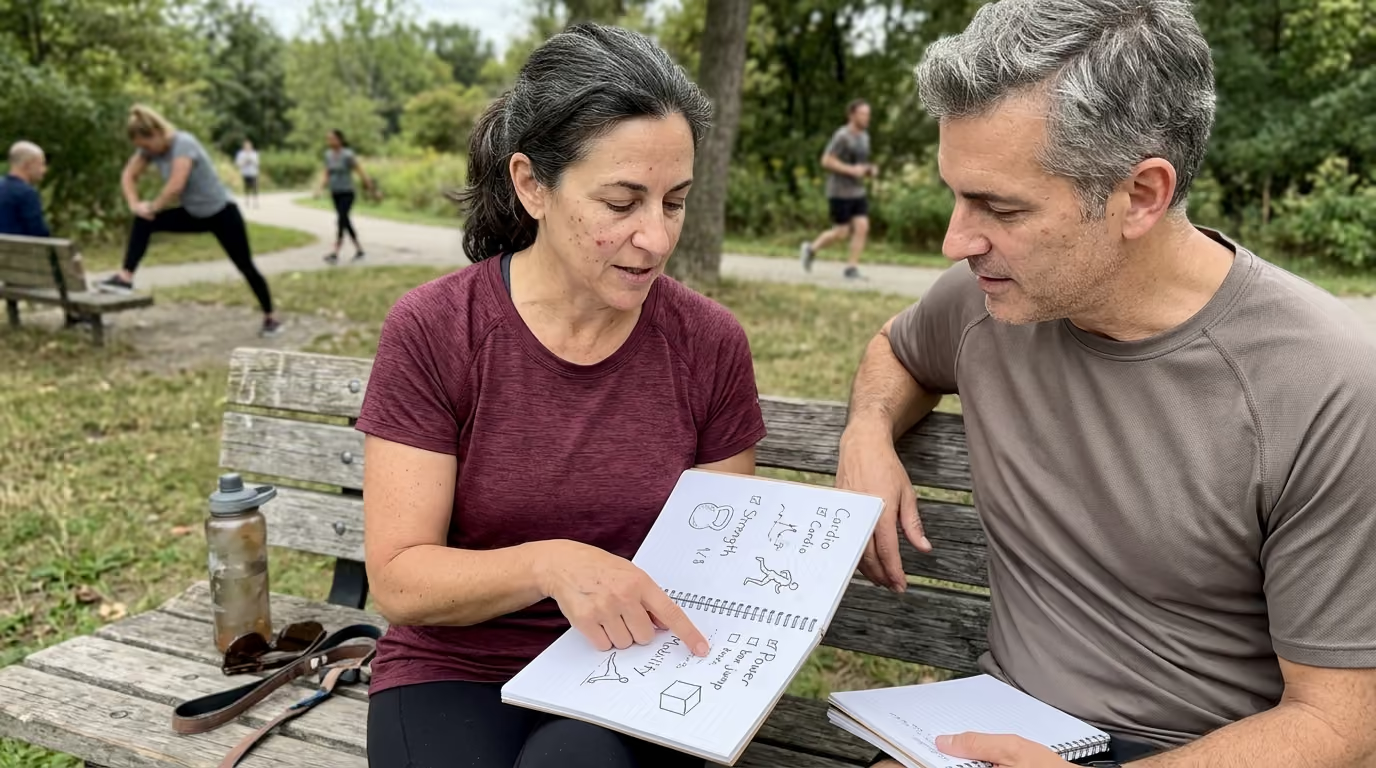
To maintain physical freedom throughout your life, you need seven distinct physical qualities working together:
Developing these qualities does not require exhausting daily workouts. Instead, you can distribute them across a sustainable weekly schedule. By building capacity across all seven domains, you create a buffer against illness, injury, and age-related physical decline.
To understand how exercise supports healthy aging, it helps to distinguish between capacity, capability, and reserve. Capacity represents what your body can achieve under ideal circumstances in a controlled setting. Capability represents what you can reliably accomplish during normal daily life. Physical reserve is the safety margin between the demands of your daily environment and your maximum physical limit.
When you are young, your physical reserve is naturally large. Daily tasks like climbing three flights of stairs or carrying luggage consume only a small fraction of your maximum capacity. As the decades pass, natural declines in muscle mass, mitochondrial function, and joint mobility shrink that safety margin. When your physical reserve drops too low, ordinary activities begin to push you near your maximum effort.
This decline creates physical vulnerability. If climbing a single flight of stairs demands eighty percent of your aerobic capacity, an afternoon of walking through an unfamiliar city becomes exhausting. If standing up from a low chair requires almost all your leg strength, a mild illness or temporary injury can strip away your independence. A primary objective of healthy aging and living well is expanding your physical reserve so that daily tasks remain effortless.
Physical reserve is built upon distinct physiological systems. Your cardiovascular system transports oxygen to working tissues, while your mitochondria convert fuel into usable cellular energy. Your neuromuscular system recruits motor units to generate force, and your skeletal structures bear compressive loads. Power decline often happens faster than strength loss because fast-twitch motor units atrophy earlier without deliberate high-velocity training. Maintaining each physiological system ensures that your physical reserve remains robust across your lifespan.
A balanced physical portfolio treats exercise disciplines as complementary assets. Each training quality addresses a specific biological requirement for long-term health and functional performance.
Strength is your neuromuscular system's ability to produce force against an external resistance. It serves as the foundation for physical independence. Stronger muscles and tendons protect joints from excessive stress, preserve bone mineral density, and make everyday physical tasks feel manageable.
For healthy aging, functional force matters more than setting personal records in a gym. Key expressions of longevity-focused strength include:
Research shows that adults should perform resistance training targeting major muscle groups at least two days per week. A traditional framework includes eight to ten exercises performed for eight to twelve repetitions per set. Investing in strength and physical performance ensures that your muscular system retains its ability to generate force under load.
Hypertrophy refers to an increase in the cross-sectional size of muscle fibers. While strength depends heavily on neural coordination and motor skill, hypertrophy provides the physical contractile tissue that generates force. Muscle tissue also acts as an essential metabolic sink for glucose disposal and a reservoir of amino acids during periods of illness or physical stress.
Hypertrophy differs from maximal strength in several key ways:
Pursuing hypertrophy for longevity does not mean training like a competitive bodybuilder. Excessive isolation work can consume recovery resources without improving real-world movement skills. The goal is maintaining sufficient lean tissue mass to support metabolic health and provide a durable structural reserve.
Power is the capacity to produce force quickly. In biomechanical terms, power represents work divided by time. While traditional strength training focuses on how much load you can move, power training focuses on how rapidly you can produce force against a given resistance.
Power declines roughly twice as fast as maximal strength as we age. This rapid loss has serious consequences for functional independence. You rarely need maximal strength to avoid an accident in daily life. Instead, you need rapid force production to plant your foot quickly when you trip on an uneven sidewalk.
A systematic review published in JAMA Network Open evaluated twenty randomized trials involving older adults. The authors found that power-oriented training produced meaningful improvements in physical function compared to traditional, slow-speed strength training. Another meta-analysis of fifteen trials confirmed significant benefits of power training for muscle power and activity-based functional tests.
You do not need high-impact plyometrics or complex Olympic lifts to develop power safely. You can train power through controlled, intentional velocity:
Aerobic conditioning reflects the ability of your heart, lungs, blood vessels, and working muscles to transport and use oxygen over extended periods. It supports everyday endurance, enhances sleep quality, and accelerates recovery between bouts of physical exertion.
Cardiorespiratory fitness is measured clinically as VO2 max or peak oxygen uptake. Extensive epidemiological research demonstrates a powerful relationship between cardiorespiratory fitness and lifespan. Dose-response meta-analyses show that every one-MET increase in cardiorespiratory fitness is associated with an 11 to 17 percent reduction in all-cause mortality. A higher aerobic capacity also correlates with substantial reductions in cardiovascular disease and cancer mortality.
Moderate-intensity continuous training forms the backbone of a resilient cardiovascular system. Activities like brisk walking, road cycling, lap swimming, and cross-country skiing can be sustained for long periods with minimal joint trauma. Maintaining consistent aerobic volume expands your capillary density, increases mitochondrial volume, and builds systemic endurance.
High-intensity interval training alternates short periods of challenging work with structured recovery intervals. It challenges your cardiovascular system near its maximum output, stimulating improvements in stroke volume, mitochondrial capacity, and peak aerobic power.
While continuous moderate exercise builds a broad aerobic base, high-intensity intervals provide distinct physiological adaptations:
High-intensity training is a potent tool, but it carries a higher recovery cost than steady-state aerobic work. It should be treated as an occasional training stimulus rather than the primary foundation of your exercise program. One structured session per week is generally sufficient for active adults.
Mobility is the ability to actively control your joints through a full, usable range of motion. It differs fundamentally from passive flexibility. Flexibility is the passive extensibility of a muscle tissue when pulled by an external force. Mobility requires strength, motor control, and joint stability at the outer limits of your movement.
Having passive flexibility without muscular control leaves joints vulnerable to strain and injury. Conversely, stiff joints with limited ranges force neighboring joints to compensate, creating chronic movement dysfunctions. Crucial mobility ranges for active adults include:
Regular stretching improves range of motion over three to four weeks, but active mobility drills produce longer-lasting functional adaptations. Combining end-range strength with controlled joint movements ensures that you can use your mobility safely in unpredictable environments.
Balance is the complex neurological process of maintaining your body's center of mass over its base of support. It relies on real-time integration from your visual system, your vestibular system in the inner ear, and proprioceptive sensors in your joints and feet.
Falls represent one of the greatest threats to long-term independence. A comprehensive Cochrane review showed that structured exercise programs reduce fall rates by 23 percent among community-dwelling older adults. A meta-analysis published in the British Journal of Sports Medicine found that programs incorporating challenging balance exercises for more than three hours per week reduced falls by 21 percent.
Effective neuromotor training challenges your stability in progressive, controlled stages:
The real value of physical training appears outside the gymnasium. Whether navigating foreign cities, exploring backcountry trails, or skiing through changing snow conditions, your physical qualities work as an integrated unit.
Everyday activities require multiple physical systems to fire simultaneously. Understanding how daily movements map to specific training qualities helps you identify gaps in your physical preparation.
When you train these capacities in isolation, you build the raw materials for movement. When you combine them, you gain the functional capability to move through life with complete confidence.
Consider a five-day ski trip in the Canadian Rockies. Skiing demands sustained quadriceps endurance, explosive lateral power to react to icy patches, and excellent ankle and knee mobility. It also requires cardiovascular fitness to handle altitude and cold weather without severe fatigue.
If you possess strength but lack power, your legs will feel sluggish when navigating uneven moguls. If you have aerobic endurance but poor mobility, your hips and lower back will ache after the first afternoon. A balanced training framework prepares your body for the physical unpredictability of outdoor sports and active travel.
Reviewing practical guides across our healthy aging resources can help you match specific training protocols to the unique physical requirements of your favorite adventures.
Active adults over forty often find that demanding travel schedules expose physical limitations faster than normal daily routines. Long international flights, abrupt time zone shifts, and prolonged sitting challenge your joints, circulation, and energy levels.
After a grueling thirty hour transit to Tokyo, I realized my old strategy of just powering through was no longer working. I felt foggy for three days. I started digging into circadian biology and realized that timing my light exposure and fasting during the flight could completely shift my recovery. Now, I never board a long haul flight without a precise schedule for when to eat and when to put on an eye mask. It is the difference between losing a week of your trip and hitting the ground running.
Extended transit places specific physical stresses on your body:
To maintain physical capability during demanding journeys, integrate brief movement sequences into your transit days. Simple bodyweight squats, calf raises, and standing hip openers performed during layovers restore blood flow and reduce joint stiffness. Maintaining physical conditioning ensures that travel remains an enjoyable adventure rather than an exhausting ordeal. Explore our dedicated travel and adventure guidance for detailed strategies on staying capable on the road.
Navigating fitness advice can be confusing. Popular media often amplifies extreme routines, promoting single-modality extremes that fail to serve long-term health.
A common belief among endurance enthusiasts is that running, cycling, or swimming provides all the exercise needed for healthy aging. While aerobic work supports heart health and mitochondrial function, it does not prevent the age-related loss of muscle mass, bone density, or rapid power. An individual can possess exceptional aerobic endurance while lacking the leg power to catch a sudden stumble or the upper-body strength to lift a heavy bag overhead.
Conversely, some strength advocates claim that lifting heavy barbells is the only exercise required for longevity. Heavy resistance training builds exceptional force production and bone density, but slow lifting does not train rapid reactive speed or high-volume aerobic capacity. Relying entirely on heavy lifting can leave you with elevated blood pressure risks and poor cardiovascular endurance.
Many people believe that explosive or high-velocity movements are inherently dangerous for mature joints. In reality, power training is safe and essential when loads and movements are scaled properly. Power training does not require maximal box jumps or heavy snatches. It simply requires the intent to move a light or moderate resistance quickly with strict technical control.
Passive stretching can temporarily increase muscle tolerance to a stretch, but it rarely produces lasting changes in active movement patterns. True mobility requires neurological control and strength throughout your available joint range. Without active stabilization training, stretched joints remain prone to instability under real-world loads.
High-intensity intervals are an efficient tool, but they are not mandatory for achieving excellent health. You can meet all international cardiovascular guidelines through consistent, moderate-intensity aerobic exercise. For individuals managing high stress, joint inflammation, or poor sleep, excessive interval training can elevate systemic fatigue and impair recovery.
Combining strength, power, aerobic conditioning, mobility, and balance into a weekly schedule can seem daunting. However, you do not need to train every quality in every session. A well-designed training architecture distributes these demands across the week, allowing adequate time for tissue recovery and adaptation.
A balanced five-day training framework distributes physical stress across alternating energy systems and movement patterns:
This structure meets all World Health Organization physical activity recommendations while preventing accumulated physical exhaustion. Prioritizing structured recovery and sleep practices ensures that your tissues adapt effectively between demanding training days.
Your training structure should adapt to your personal background, joint health, and current physical condition.
You do not need to spend ten hours a week in a fitness facility to achieve significant longevity benefits. Understanding the minimal effective dose allows you to maintain physical capability even during busy work periods or extended travel.
When time or energy is constrained, adjust your training variables in a structured sequence rather than abandoning your routine entirely:
This minimalist approach maintains roughly eighty percent of your functional adaptations with a fraction of the time commitment.
A longevity program must accommodate the realities of daily life, including poor sleep, travel fatigue, illness, and professional stress. Autoregulation is the practice of adjusting your workout intensity based on real-time physiological readiness.
If you wake up feeling exhausted or sore:
Autoregulation prevents the common cycle of overexertion followed by burnout or overuse injuries. Continuity over months and years produces far greater longevity adaptations than occasional heroic workouts followed by extended periods of inactivity.
Major global health organizations and exercise science researchers agree on the core components of healthy aging. The scientific consensus emphasizes that regular physical activity is one of the most powerful tools available for extending functional independence and healthspan.
International guidelines, including recommendations from the World Health Organization and the American Heart Association, highlight several key benchmarks:
While observational studies linking high cardiorespiratory fitness and muscle strength to lower mortality do not guarantee a specific lifespan extension, they establish that physical capability directly influences healthspan. Maintaining strength, power, mobility, balance, and endurance gives you the physiological foundation to live actively, independently, and adventurously throughout your life.
When your daily schedule changes, when preparing for an adventurous trip, or when recovering from an unexpected injury, revisit this resource to recalibrate your training portfolio. Maintaining your physical capabilities is an ongoing practice that rewards you with lifelong freedom of movement.
Stay connected for research and practical guidance on longevity, strength, recovery, energy and active living. New ideas to help you stay capable, curious and ready for more.


Explore practical guidance on strength, recovery, energy, travel and longevity for a life that stays active.
explore the Blog