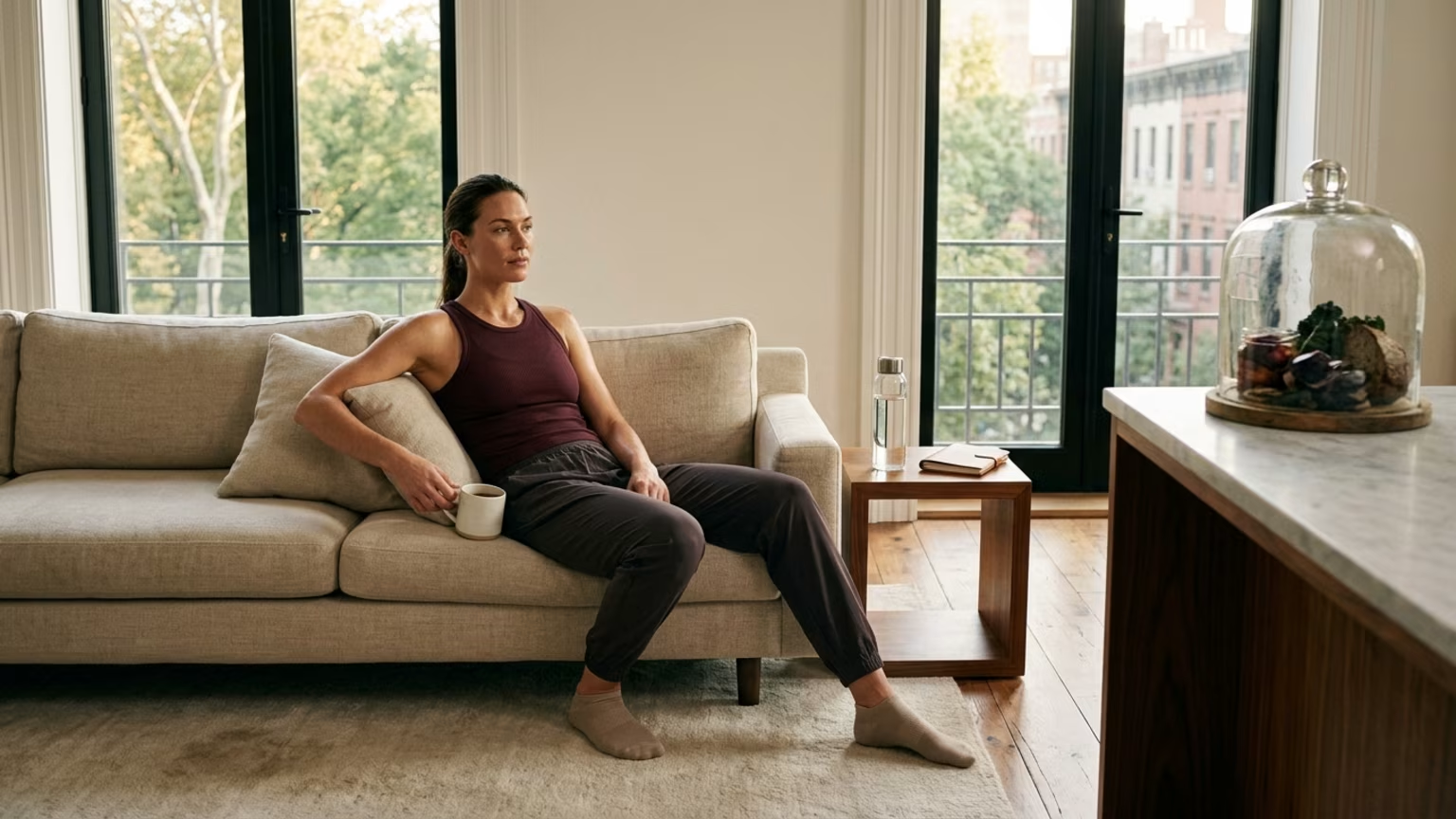

A recent review explores how exercise may reshape the gut microbiome to support musculoskeletal recovery. Learn what this means for your daily training and travel.





On September 29, 2026, a new report published by News-Medical covered an emerging intersection between physical movement and internal health. The report detailed a literature review in NPJ Biofilms and Microbiomes titled “The role of gut microbiome in exercise rehabilitation: current status and perspective.” Authored by Zhong and colleagues, the paper examines how exercise rehabilitation influences the gut microbiome. This research addresses a vital priority for active adults over forty who want to maintain their physical independence.
Understanding the biological mechanisms of recovery helps us make informed decisions about our health. The review connects structured exercise with specific shifts in gut bacteria. These internal changes could theoretically support long-term capability and musculoskeletal function. However, the researchers emphasize that this is a proposed framework rather than a definitive clinical treatment.
The review looks at exercise as a powerful catalyst for internal biological shifts. Researchers associate regular physical activity with an increase in specific beneficial bacteria. These bacteria are responsible for producing short-chain fatty acids. Movement also appears to increase overall microbial diversity in the digestive tract.
Short-chain fatty acids are critical metabolic byproducts created when beneficial gut bacteria ferment dietary fiber. The review highlights that structured exercise encourages the proliferation of the specific bacteria responsible for this process. These fatty acids play a role in regulating inflammation, providing energy to cellular linings, and communicating with the nervous system. By increasing microbial diversity, exercise creates a more robust and resilient internal environment.
This resilient environment is what researchers believe might facilitate improved musculoskeletal function. Beyond general musculoskeletal health, the paper examines mobility in various neurological conditions. The researchers note that exercise rehabilitation supports cognition and physical mobility for people managing severe challenges. This includes conditions like spinal cord injuries, stroke, multiple sclerosis, and Parkinson’s disease.
Despite these positive associations, the exact mechanisms connecting microbiome shifts to direct clinical benefits remain unclear. To harness these potential benefits, the authors propose a personalized framework called intestinal rehabilitation. This approach would thoughtfully combine structured exercise with targeted dietary or microbiome strategies. The framework even includes possible adaptations for individuals with limited exercise capacity.
The report presents this concept as a promising model for future individualized care. It is not currently a validated clinical program that you can request from a physician today. The evidence summarized in the news report spans observational human research, clinical studies, and animal trials. The report explicitly cautions that current research is constrained by observational evidence and methodological differences.
Confounding factors make it difficult to prove that microbiome changes directly cause recovery improvements. Methodological differences between studies make it incredibly challenging to compare results directly. Some studies track moderate aerobic exercise, while others focus on high-intensity interval training or resistance work. Furthermore, diets vary wildly among study participants, introducing another massive variable into the data.
Because diet and exercise both profoundly influence the gut, separating their individual effects requires meticulously designed trials. The researchers state that controlled longitudinal studies with standardized protocols are necessary. These future studies must establish clear causality before microbiome strategies become standard care.
The relationship between physical exertion and gut health is also not strictly linear. The News-Medical report notes that very intense exercise may temporarily disrupt gut-barrier function. High intensity efforts can also increase internal inflammation in the short term. This finding simply suggests that pushing harder does not automatically equal better microbiome-related recovery.
The evidence base currently has limited data on people with chronic conditions or mobility impairments. Extrapolating results from generally healthy populations to those with impaired mobility requires extreme caution. The review supports individualized rehabilitation guidance rather than broad prescriptions. Microbiome-based personalization is a promising research direction, but it remains under rigorous evaluation.
Understanding this emerging science changes how we approach recovery after strenuous physical activities. When you travel to a demanding environment, your body faces compounded stressors. Altitude changes, shifting time zones, and unfamiliar foods all place unique demands on your physical reserves. An active adult looking to sustain energy during a week-long hiking trip needs reliable recovery protocols.
The findings reinforce that consistent movement is a non-negotiable foundation for maintaining your capability. The microbiome acts as a possible contributor to these recovery benefits, rather than a stand-alone cure for muscle fatigue. The idea that gut microbes might accelerate muscle repair is highly appealing for adventurous travelers. However, waiting for a specialized recovery probiotic is not a practical strategy for your next trip.
Active adults should focus on established training habits before seeking specialized microbiome interventions. The review does not establish a specific training dose or probiotic product for faster recovery. You should continue to rely on proven, fundamental methods for restoring energy after demanding days. Structured routines are essential when managing long transit periods or crossing multiple time zones.
For example, those who adapt clinical sleep strategies to manage long transit periods know that consistent routines outperform unproven supplements. Instead, prepare your body by adhering to a consistent, well-rounded training program at home. The physical adaptations you build through regular exercise will support you far more than any current microbiome supplement. By maintaining your fitness, you ensure that your body can handle the unexpected physical challenges of travel.
The established benefits of physical conditioning are already proven to help mitigate travel fatigue and improve performance. This research highlights the importance of matching your physical routine to your current capacity. If you are returning from an injury or a long layoff, you must prioritize individualized guidance. Dietary and probiotic approaches might become valuable components for future consideration.
For now, they remain topics to discuss with a qualified clinician rather than proven protocols. Your daily movement habits remain your most reliable tool for staying physically strong. Building a strong baseline of physical activity prepares your body for the rigors of adventurous travel. A well-conditioned body processes physical stress more efficiently during active vacations.
Continuing to build a lifelong foundation of aerobic exercise is the best way to secure your physical resilience. Researchers prioritize foundational activity precisely because it consistently delivers measurable health outcomes. You can learn more about why researchers prioritize activity, nutrition, and sleep for healthy aging to structure your own comprehensive routine. The science of the gut microbiome will continue to evolve over the coming years.
We will likely see more targeted therapies that blend nutrition, targeted probiotics, and specific exercise protocols. Until those therapies are rigorously validated, the best approach is a balanced, consistent active lifestyle. Focus on the proven benefits of regular movement to keep your body capable, mobile, and ready for adventure.
Worldly, informed adults should continue to prioritize structured, individualized exercise as the primary driver of recovery, viewing emerging gut microbiome science as a fascinating, but still unproven, complementary benefit.
Stay connected for research and practical guidance on longevity, strength, recovery, energy and active living. New ideas to help you stay capable, curious and ready for more.



Explore practical guidance on strength, recovery, energy, travel and longevity for a life that stays active.
explore the Blog