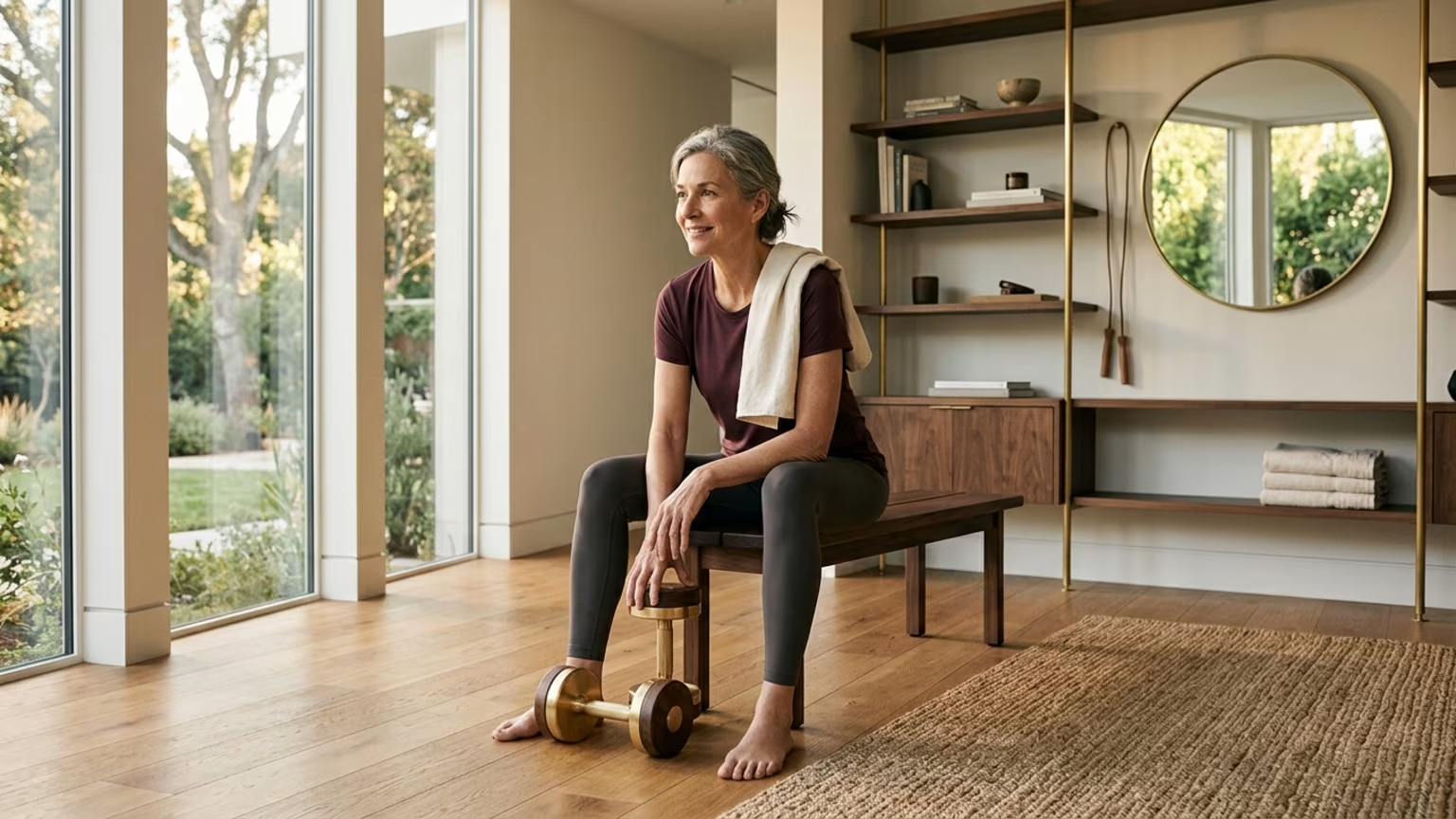

A 2026 study reveals 10 grams of daily creatine helps adults 45–65 preserve lean tissue and strength, offering a practical buffer during busy travel periods.





On August 11, 2026, new research published online in the Journal of the International Society of Sports Nutrition revealed an important finding for physical capability. A randomized trial of healthy sedentary adults aged 45 to 65 found that 12 weeks of daily creatine monohydrate increased lean tissue and strength. Remarkably, these improvements occurred even in participants who did not participate in the study's structured exercise program. For affluent adults who value their physical independence, this study highlights a highly practical strategy for maintaining strength when life disrupts your routine.
MedicalXpress notes that creatine is a naturally occurring compound involved in replenishing cellular energy. This recent 12 week trial set out to examine how this compound impacts body composition and performance in adults over 45. Sixty four participants ultimately completed the intervention and were included in the primary repeated measures analysis. The group had an average age of 54.5 years and an average body mass of 84.5 kilograms.
Participants were assigned to consume either a maltodextrin placebo or 10 grams of creatine monohydrate per day. The research team instructed participants to divide the daily total into two separate 5 gram servings. The study also evaluated two different lifestyle conditions alongside the supplementation. Participants self selected into either a non exercise group or a supervised exercise and diet program.
The structured exercise program was comprehensive and involved supervised training three times weekly for 12 weeks. Participants completed:
Among participants who did not follow this structured program, the creatine group still saw measurable changes. They gained approximately 1.1 kilograms, or 2.4 pounds, of DXA measured lean tissue over 12 weeks. The placebo group showed little change over the same period. It is worth noting that DXA derived lean tissue includes non fat mass and fluid.
While the non exercise findings are fascinating, the additive effects of training proved far superior. The strongest practical pattern in the trial showed that creatine combined with regular exercise produced the largest body composition changes. Participants who combined the supplement with the supervised workout and weight loss diet gained approximately 1.27 kilograms of lean tissue.
The active group also experienced more favorable changes in total fat mass. The exercise and creatine cohort reduced their body fat percentage by approximately 3.24 percentage points over 12 weeks. In comparison, the exercise and placebo group saw a reduction of approximately 1.87 percentage points. The interaction for body fat percentage reached statistical significance.
Performance metrics demonstrated a similarly strong response to the combined protocol. The exercise and creatine group saw approximate improvements of 30 percent for their leg press one repetition maximum. Their bench press one repetition maximum improved by approximately 25 percent. These figures represent the approximate study reported changes rather than a universal expectation for every adult.
Endurance outcomes also showed interesting shifts during the trial. The researchers reported an approximate 25 percent improvement in treadmill time to exhaustion for the active creatine group. However, creatine did not produce a statistically significant added benefit in aerobic capacity itself. The compound appears to support sustained effort without directly altering cardiovascular fitness.
This study reflects a broader shift in creatine research toward healthy aging and the preservation of functional capacity. Richard Kreider, the study's principal investigator at Texas A&M, has studied the supplement for more than 30 years. MedicalXpress reports that a 2025 analysis by Kreider and colleagues reviewed 685 clinical trials. That massive review found no significant difference in the rate of reported side effects between creatine and placebo participants.
In the 2026 trial, the supplementation was described as well tolerated over the 12 weeks. The researchers observed no between group differences in reported complaints like dizziness, headaches, or palpitations. Furthermore, no participant withdrew from the study because of a supplement related issue.
Kidney markers require specific attention when discussing this compound. The trial noted that serum creatinine increased in the creatine groups. Consequently, creatinine based estimated glomerular filtration rate declined within those groups but remained above 60 mL/min/1.73 m². The researchers noted that creatinine based kidney estimates can be influenced by creatine intake and total muscle mass.
Because the study did not measure cystatin C or directly measured glomerular filtration rate, these kidney findings require cautious interpretation. Anyone with abnormal kidney function tests should discuss use with a qualified clinician. The individual cognitive and biomarker findings were also explicitly characterized as exploratory by the authors.
The landscape of sports nutrition science is evolving rapidly. For decades, the majority of research focused on short term athletic performance and bodybuilding applications. However, this 2026 trial reflects a meaningful shift in scientific priorities. Researchers are increasingly investigating how established compounds impact healthy aging, weight management, and cognition.
Maintaining functional capacity becomes a primary objective for adults over forty. The natural decline in muscle mass over time presents a challenge to physical independence. By studying healthy sedentary adults aged 45 to 65, the Texas A&M team provided highly relevant data. The focus is no longer solely on elite athletes chasing marginal improvements.
Instead, the scientific community is recognizing the needs of active adults managing real world demands. The preservation of strength translates directly into the ability to ski, hike, and navigate demanding travel itineraries. This study contributes to a growing body of evidence supporting proactive strategies for longevity. It empowers individuals to take actionable steps toward lifelong physical resilience.
In our experience, managing physical routines on the road is always challenging. After a grueling thirty hour transit to Tokyo, I realized my old strategy of just powering through was no longer working. I felt foggy for three days. I started digging into circadian biology and realized that timing my light exposure and fasting during the flight could completely shift my recovery. Now, I never board a long haul flight without a precise schedule for when to eat and when to put on an eye mask. It is the difference between losing a week of your trip and hitting the ground running.
That exact requirement for intelligent biological support applies to maintaining our physical capacity on the road. Travel inevitably disrupts even the most disciplined workout routines. When flights and time zones force a pause in regular resistance training, maintaining physical capability requires smart planning. Finding ways to modify your routine for busy seasons is essential for active adults.
The Texas A&M trial provides a reasonable basis for viewing daily creatine as a valuable tool during these gaps. The study suggests that the compound can act as a partial buffer for muscle tissue. For travelers, the twice daily five gram protocol is operationally simple. The trial utilized portable sachets that did not require specific timing around a workout.
However, this tool is an adjunct rather than a complete replacement for physical effort. The study clearly showed that the most substantial gains occur when supplementation pairs with a training stimulus. Continuing to prioritize concurrent endurance and strength routines yields the best long term capability. When access to a gym is limited, maintaining some form of resistance work is still highly beneficial.
The compound is unlikely to compensate entirely for prolonged inactivity or inadequate protein intake. However, it provides a measurable advantage when your routine is compromised. For those who experience periodic reductions in training volume because of work demands or lifestyle disruptions, this data is highly encouraging. It offers a research backed method to help secure your hard earned physical progress.
Active adults over 40 should focus on consistency rather than perfect optimization. Packing portable sachets of creatine offers a low friction way to support your physical foundation. If you combine that with portable resistance options in your hotel room, you can mitigate the detraining effects of travel.
Ultimately, the findings validate a pragmatic approach to healthy aging. We cannot always maintain peak training volumes during demanding travel or busy professional periods. Having an evidence based tool to help preserve lean tissue provides valuable peace of mind. It allows worldly adults to focus on their adventures rather than worrying about lost progress.
For the active adult navigating an unpredictable schedule, daily creatine supplementation serves as a practical tool to support physical capacity and preserve strength when regular training is temporarily disrupted.
Stay connected for research and practical guidance on longevity, strength, recovery, energy and active living. New ideas to help you stay capable, curious and ready for more.



Explore practical guidance on strength, recovery, energy, travel and longevity for a life that stays active.
explore the Blog