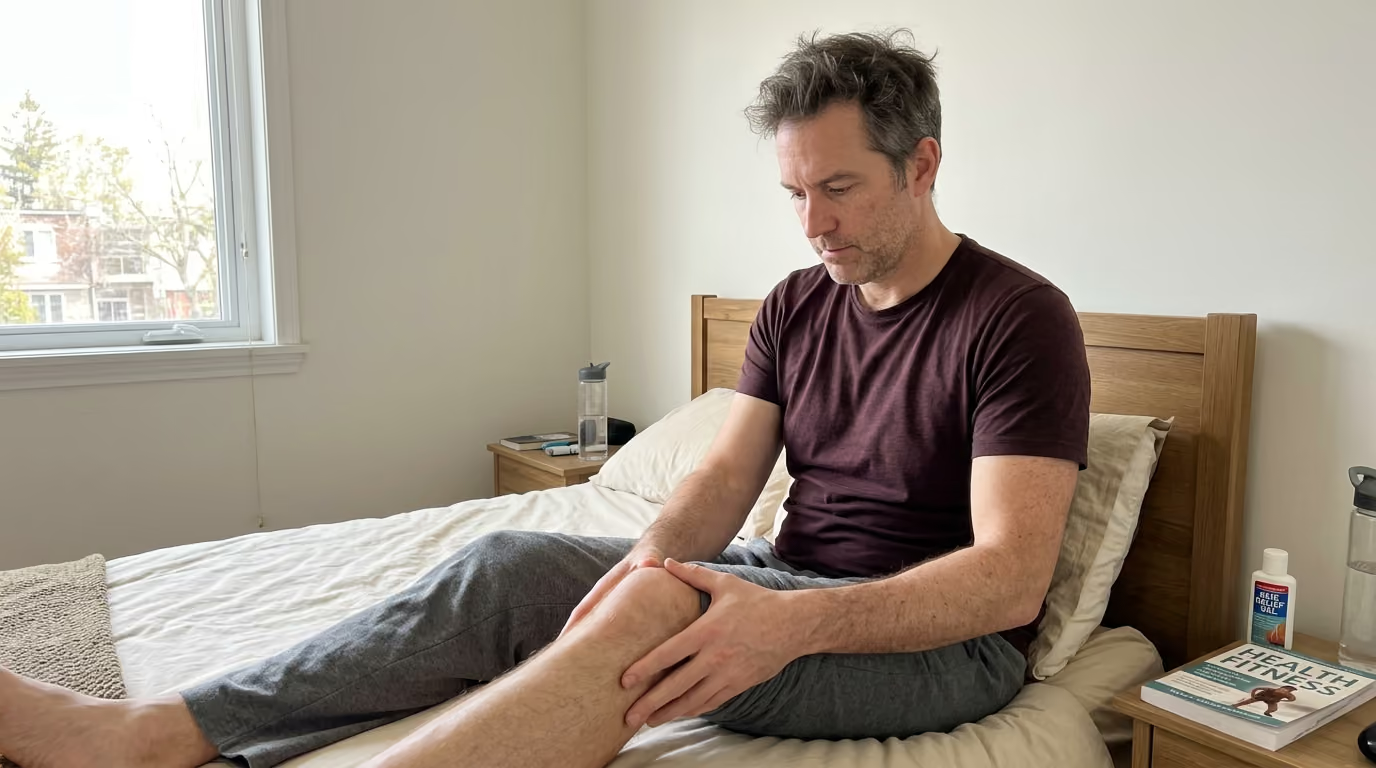

Optimal athletic recovery requires strategic workout sequencing, targeted fueling, and smart scheduling when balancing heavy lifting with demanding cardiovascular sports.





You finish a ninety-minute morning tennis match, spend the afternoon on the golf course, and still have a heavy lower-body lifting session written into your calendar for the evening. By the time you walk into the gym, your legs feel heavy, your rotational power is depleted, and your mental focus is slipping. You might wonder whether the gym session will build strength or simply create exhaustion.
This dilemma defines concurrent training. When active adults combine resistance work, cardiovascular endurance, and seasonal sports like skiing or tennis, their training sessions inevitably overlap. Managing these competing demands requires a clear operational framework.
Concurrent training refers to the deliberate combination of resistance training and endurance exercise within a single program. A broader, real-world definition also includes multi-sport training, where activities like cycling, trail running, alpine skiing, tennis, and golf compete for the same physical recovery reserves.
The primary challenge of multi-sport training is not that cardiovascular work erases muscle tissue. The real obstacle is overlapping fatigue. Local muscle damage, glycogen depletion, nervous system strain, and joint stress accumulate across activities. When two workouts demand high output from the same tissues or energy systems, you must separate them strategically, sequence them properly, fuel them deliberately, or reduce supplemental volume.
To optimize recovery while pursuing multiple sports, follow these core operational principles:
First, establish a primary adaptation for each training block. Allocate your freshest physical state and highest training volume to your top priority.
Second, separate demanding same-day sessions by at least four to eight hours when possible. If you must train back-to-back, place the highest-priority quality first.
Third, distinguish between local tissue fatigue and systemic cardiovascular fatigue. Running creates substantial eccentric muscle damage and joint impact, whereas cycling and swimming provide aerobic stimuli with lower mechanical impact on lower-body tissues.
Fourth, align your nutrition with your total output. Ingest 1.4 to 2.0 grams of protein per kilogram of body weight daily. Consume 30 to 60 grams of carbohydrates per hour during demanding sessions lasting longer than 70 minutes to protect glycogen reserves.
Fifth, treat sleep as your primary physiological baseline. No recovery tool can compensate for sustained sleep restriction or excessive weekly training volume.
The interference effect describes a scenario where training for strength and endurance simultaneously produces smaller adaptations than training either quality in isolation. Understanding the biological mechanisms behind this response helps you organize your schedule intelligently.
At the cellular level, different forms of exercise activate distinct molecular pathways. Prolonged endurance exercise stimulates adenosine monophosphate-activated protein kinase, commonly known as AMPK. This enzyme responds to cellular energy depletion and promotes mitochondrial biogenesis.
Conversely, heavy resistance training stimulates the mechanistic target of rapamycin, known as mTOR. The mTOR pathway governs muscle protein synthesis and tissue hypertrophy.
Early laboratory models suggested that high AMPK activity directly suppressed mTOR signaling, leading researchers to believe that endurance work blocked muscle growth. Modern human trials present a more nuanced picture.
While acute cellular interference can occur, whole-body adaptation is primarily dictated by total training volume, exercise modality, caloric intake, and tissue recovery. AMPK and mTOR can co-exist successfully when total physiological stress remains within an individual's recovery capacity.
To program effectively, you must distinguish between acute and chronic interference.
Acute interference is short-term performance decline caused by residual fatigue from a recent workout. For example, running five miles in the morning will temporarily reduce your force production during evening squats. This happens because of local muscle fatigue, nervous system drainage, and substrate depletion.
Chronic interference is the long-term reduction in physical adaptation over months of conflicting training. Chronic interference occurs when repeated acute fatigue prevents progressive overload, leading to stalled strength progress, persistent muscle soreness, or stagnation in aerobic markers.
Preventing acute fatigue from turning into chronic interference is the fundamental goal of concurrent programming. Explore our comprehensive guides on healthy aging and physical performance to understand how these long-term adaptations support lifelong vitality.
The interference effect does not impact all physical qualities equally. Research shows that explosive power, sprint speed, and rate of force development are significantly more sensitive to concurrent training than maximal strength or muscle hypertrophy.
A major meta-analysis evaluated the differences in adaptation across training styles. Resistance training alone produced an effect size of 0.91 for explosive power development. When resistance training was combined with endurance work, the effect size for power development dropped to 0.55.
Maximal single-rep strength and muscle size were far more resilient. Combining strength and endurance still produced significant gains in maximal force, easily outperforming endurance-only protocols.
If your goals include jumping higher, sprinting faster, or executing rapid rotational sport movements, you must protect your nervous system. Place power and speed work at the start of your training week when you are fully rested.
Fatigue operates on two distinct levels during multi-sport training:
Local fatigue is concentrated within the specific muscles, tendons, and joints recruited during an activity. Running and back squats share overlapping local demands on the quadriceps, calves, patellar tendons, and Achilles tendons. Swimming and bench pressing share local demands on the shoulders and upper-body musculature.
Systemic fatigue involves your central nervous system, endocrine system, glycogen stores, and overall energy balance. A grueling two-hour mountain bike ride generates substantial systemic fatigue even if it produces minimal upper-body muscle damage.
Acute interference literature demonstrates that strength reductions occur primarily in the specific muscle groups shared between two exercises. Choosing complementary exercise modalities allows you to train your cardiovascular system while sparing overworked muscle groups.
Managing a multi-sport schedule requires strategic organization throughout the week. Rather than randomly inserting workouts into open calendar slots, use structured scheduling models to keep fatigue manageable.
To avoid physical exhaustion, categorize every weekly session into one of three distinct tiers:
These workouts directly drive your primary goal for the current training block. Examples include heavy deadlifts for strength development, interval running for a half-marathon, or high-intensity match play for a tennis tournament. These sessions receive your highest physical readiness, ideal scheduling slots, and full nutritional support.
These workouts develop secondary qualities that support your primary goal or maintain general athleticism. Examples include aerobic zone 2 cycling, accessory lifting, mobility work, and steady swimming. Support sessions can be adjusted, shortened, or rescheduled based on daily recovery markers.
These sessions provide supplemental volume but are not essential for your core goals. Examples include high-intensity conditioning finishers, extra abdominal circuits, or casual recreational games. Tier 3 workouts are the first elements removed whenever fatigue accumulates or schedules tighten.
When your weekly schedule requires two training sessions in a single day, separation and sequencing determine your success.
Research reviewing recovery intervals suggests that separating strength and endurance sessions by four to eight hours prevents measurable reductions in strength-endurance performance. After twenty-four hours, performance markers return completely to baseline.
When organizing a double-training day, follow these proven sequencing guidelines:
First, place your highest-priority quality in the morning session when your nervous system is fresh. If building lower-body strength is your main goal, lift in the morning and perform your aerobic conditioning in the late afternoon.
Second, if your sport requires technical skill and rapid decision-making, schedule sport practice before exhausting conditioning work. Practicing complex skills under extreme fatigue degrades movement mechanics and increases injury risk.
Third, if you must perform endurance and strength back-to-back without a rest window, keep the endurance component short and low-intensity. Low-intensity, non-depleting aerobic exercise can precede lifting without significantly blunting the strength response.
A common mistake among active adults is making every day moderately difficult. This creates continuous mid-level fatigue that blunts top-end adaptations and prevents deep recovery.
Instead, organize your week around the "hard days hard, easy days easy" principle. Group your demanding sessions on specific days, leaving subsequent days open for genuine physiological restoration.
Consider this balanced weekly distribution for an active adult balancing strength, running, and tennis:
By clustering high-intensity efforts, you provide your muscular and nervous systems with forty-eight hours of relative recovery before the next intense stimulus. For more insights on designing restorative weekly routines, review our resources on recovery and sleep strategies.
Different sports place unique mechanical and metabolic demands on the body. Effective concurrent training requires tailoring your strength and recovery strategies to match your specific athletic pursuits.
Alpine skiing imposes massive eccentric loading on the quadriceps and glutes. Absorbing turn forces, navigating variable snow conditions, and stabilizing the pelvis on steep terrain create significant muscle breakdown and joint strain.
If you are preparing for a ski trip, emphasize eccentric strength, unilateral stability, and lateral movement in the gym. Bulgarian split squats, Romanian deadlifts, and lateral bounds build the physical resilience required for the slopes.
During an active ski week, your time on the mountain serves as your primary lower-body stimulus. Eliminate heavy leg workouts entirely while skiing daily. Limit your gym sessions to upper-body pulling, core stability, and gentle spinal decompression to offset the compressive forces of skiing.
Court sports like tennis, pickleball, and squash demand rapid acceleration, abrupt braking, multi-directional agility, and high-velocity rotational power. These movements place repetitive stress on the calf complex, patellar tendons, hips, and rotator cuff.
To balance court play with resistance training, avoid high-volume lower-body lifting within twenty-four hours of competitive matches. Excessive leg soreness impairs court movement and increases the risk of tendon strain.
Focus your gym work on rotational core strength, posterior chain power, and upper-body pulling to balance repetitive forward-hitting mechanics. During competitive tournament weeks, shift your strength work into a low-volume maintenance phase to keep your legs springy on court.
Golf is often viewed as a low-intensity sport, but the golf swing generates high rotational velocity, substantial shear forces on the lumbar spine, and asymmetrical loading on the lead hip and shoulders. Walking eighteen holes adds four to six miles of low-grade mechanical loading.
When combining golf with strength training, monitor cumulative stress on the lower back, hips, and lead forearm. Do not schedule heavy spinal loading exercises, such as maximal deadlifts or heavy barbell squats, immediately before an important round.
Use your strength training to build rotational power, thoracic mobility, and hip internal rotation. Cable chops, medicine ball throws, and single-leg deadlifts improve clubhead speed while protecting the spine from rotational wear.
Endurance athletes often struggle with gym integration because they fear added bulk or residual leg soreness. However, resistance training significantly improves running economy, cycling power output, and tendon durability.
To minimize interference, runners should perform strength work on their hard running days rather than their easy days. Complete your key interval run in the morning, rest for four to six hours, and perform your strength session in the late afternoon. This keeps your designated rest days completely free of high-intensity stress.
Cyclists benefit from heavy, low-repetition strength work that builds maximal motor unit recruitment without adding unwanted muscle mass. Focus on squats, hip thrusts, and calf raises with low volume and complete rest between sets.
Backcountry hiking, mountaineering, and multi-day trekking combine long durations, substantial elevation change, pack carriage, and unpredictable terrain. Downhill descents with a weighted pack generate extreme eccentric stress on the knees and quadriceps.
Prepare for adventure events by gradually building pack weight and vertical descent over several months. Do not increase pack weight, route distance, and elevation gain simultaneously in a single week.
When training for long mountain days, replace high-volume barbell training with single-leg step-downs, loaded carries, and isometric trunk training. These functional patterns directly translate to stability on uneven trails. Dive deeper into training setups through our dedicated strength and human performance library.
Athletes often run into performance plateaus or overuse injuries when combining sports. Avoiding these common programming errors will keep your development on track.
The persistent fitness myth that any cardiovascular work destroys muscle gains is unsupported by scientific evidence. A comprehensive meta-analysis demonstrated that concurrent strength and endurance training produces robust muscle hypertrophy and strength gains that far exceed endurance training alone.
Interference is not an inevitable physiological switch. It is a dosage and scheduling issue. Moderate aerobic training enhances capillarization, improves mitochondrial density, and speeds up recovery between heavy sets in the gym. Interference only becomes an issue when endurance volume is excessively high or scheduled without adequate recovery intervals.
Many athletes assume that running, cycling, rowing, and swimming place identical recovery demands on the body simply because they all raise the heart rate. This assumption overlooks mechanical tissue stress.
Running involves ground reaction forces equal to two to three times body weight with every stride. This repetitive impact creates muscle damage and tendon stress that directly conflicts with heavy lower-body lifting.
Cycling and rowing provide intense cardiovascular work without ground impact, while swimming unloads the joints entirely. If your heavy leg training is suffering, swap some of your running sessions for stationary cycling or swimming to preserve your aerobic base without overloading your legs.
Some athletes believe that lifting before cardio completely shields them from overtraining. While research indicates that lifting first slightly favors lower-body strength development over five-week periods, sequencing cannot fix an overloaded schedule.
If your total weekly volume exceeds your capacity to recover, no clever ordering of exercises will prevent burnout. Workload management, adequate sleep, and caloric intake matter far more than intra-day exercise order.
Sports like golf, downhill hiking, and technical skiing often produce moderate average heart rates. Athletes frequently misclassify these activities as light recovery sessions.
A low cardiovascular output does not mean your tissues are resting. Eccentric muscle contractions, joint compression, rotational torque, and prolonged standing create significant local fatigue. Always account for sport-specific mechanical loading when planning your weekly resistance training.
The acute-to-chronic workload ratio, which compares your current week of training to your previous three to six weeks, is a popular tool for monitoring athletic stress. A ratio between 0.80 and 1.30 is traditionally considered a balanced training zone.
However, recent sports science research confirms that workload ratios should not be used as standalone mathematical tools to predict injuries. A randomized controlled trial in competitive athletes found that managing workloads via rigid ratio formulas failed to reduce health problems.
Use workload ratios as a broad contextual guide alongside your daily sleep quality, muscle soreness, joint symptoms, and performance readiness.
Active adults often respond to persistent fatigue by purchasing massage guns, compression boots, ice baths, and specialized supplements. While these passive tools can temporarily reduce the sensation of soreness, they cannot counteract chronic overtraining.
Passive modalities cannot replace basic training fundamentals. When fatigue persists for more than two consecutive weeks, your first response must be adjusting training volume, improving sleep duration, or increasing carbohydrate and caloric intake.
You do not need to spend twenty hours each week in the gym or on the track to maintain exceptional physical conditioning. Applying the minimal effective dose preserves strength, cardiovascular capacity, and movement skill with minimal time investment.
Strength is a resilient physical quality. Research shows that intermediate and advanced lifters can maintain their strength and muscle mass for up to thirty-two weeks on just two brief resistance sessions per week, provided training intensity remains high.
A minimalist strength maintenance routine requires only three to four compound multi-joint movements per session:
Perform two to three working sets per exercise in the six to eight repetition range. Take these sets to within two repetitions of technical failure. This minimalist approach maintains your physical foundation while leaving ample energy for sport-specific pursuits.
Aerobic adaptations can also be sustained with surprisingly low volume if you train at the proper intensity. Two forty-minute sessions per week in cardiovascular zone 2 maintain your mitochondrial density, capillarization, and stroke volume.
Zone 2 exercise is performed at an intensity where you can comfortably sustain a conversation without gasping for breath. This pace corresponds to roughly 65 to 75 percent of your maximum heart rate.
Zone 2 work stimulates aerobic adaptations without generating heavy nervous system fatigue or significant muscle damage. It serves as an ideal cardiovascular baseline for multi-sport athletes.
Your concurrent training balance should shift naturally throughout the calendar year based on your seasonal priorities:
During months with minimal outdoor sport commitments, prioritize strength development and hypertrophy. Dedicate three or four days per week to resistance training, reducing sport-specific conditioning to two low-volume maintenance sessions.
Six to eight weeks before your primary sport season begins, shift your strength training toward explosive power, movement speed, and sport-specific durability. Transition resistance training to two or three sessions per week while increasing your sport-specific conditioning.
When skiing, competitive tennis, or frequent golf dominates your calendar, reduce gym work to two focused maintenance sessions per week. Your primary goal is staying healthy, protecting joint integrity, and performing well on the mountain or court.
Active travel, mountain expeditions, and sports trips introduce additional environmental and physiological stressors that alter your recovery capacity. Adapting your training plan to these changes prevents travel fatigue from derailing your performance.
High altitude, cold mountain air, heat, humidity, and time zone shifts impose a hidden tax on your physiology.
At elevations above 5,000 feet, lower atmospheric pressure reduces oxygen delivery to working muscles. Your breathing rate and heart rate increase at any given movement pace. Furthermore, dry alpine air accelerates respiratory fluid loss, while cold environments blunt your natural thirst mechanism.
When traveling to altitude or challenging climates, reduce your training volume by twenty to thirty percent for the first three to five days. Focus on active hydration by consuming water with balanced electrolytes throughout the day, even if you do not feel thirsty.
Circadian disruption from transmeridian travel impairs carbohydrate metabolism, slows protein synthesis, alters hormone regulation, and compromises muscle repair.
To accelerate recovery when crossing time zones, follow these practical steps:
First, shift your meal timing to match your destination's local clock immediately upon departure. Food intake serves as a powerful secondary cue for peripheral cellular clocks in the liver and gut.
Second, seek bright natural sunlight immediately upon waking in your new time zone to reset your central circadian rhythm.
Third, perform a light twenty-minute movement and mobility session upon arrival at your destination. A light session promotes circulation, relieves spinal stiffness from flying, and signals wakefulness to your nervous system without creating training fatigue. Read our specialized resources on travel and human performance for detailed jet lag mitigation protocols.
When traveling without access to a fully equipped gym, do not abandon strength work entirely. A high-quality resistance band and your own body weight are sufficient to maintain motor unit recruitment and joint stability.
Use this efficient twenty-minute hotel room routine twice weekly while traveling:
This compact routine maintains muscular tension and postural control, ensuring a smooth transition back to heavy gym training when you return home.
Proper nutrition and restorative sleep are the ultimate biological engines of recovery. Without adequate nutritional substrates, even the most sophisticated training schedule will eventually lead to physical breakdown.
Protein provides the essential amino acids required to repair exercise-induced muscle damage and support connective tissue remodeling.
The International Society of Sports Nutrition recommends an overall daily protein intake of 1.4 to 2.0 grams per kilogram of body weight for exercising individuals. For an 80-kilogram individual, this equates to roughly 112 to 160 grams of high-quality protein per day.
Protein pacing is just as important as your total daily intake. Distribute your protein evenly across three to four meals, aiming for 0.25 to 0.40 grams per kilogram of body weight per feeding. This translates to roughly 20 to 40 grams of protein every three to four hours, which repeatedly stimulates muscle protein synthesis throughout the day.
For multi-sport athletes, consuming 30 to 40 grams of slow-digesting protein, such as casein or Greek yogurt, thirty minutes before sleep provides a steady stream of amino acids to support overnight tissue repair.
Carbohydrates are the primary fuel source for high-intensity lifting, sprint efforts, mountain descents, and competitive sport play. High-volume concurrent training rapidly depletes intramuscular glycogen stores.
When glycogen stores drop too low, training intensity suffers, movement mechanics deteriorate, and muscle breakdown increases. Follow these targeted fueling strategies based on your daily output:
For single training days with moderate volume, consume 3 to 5 grams of carbohydrates per kilogram of body weight daily.
For heavy multi-session days or endurance bouts lasting longer than 70 minutes, consume 30 to 60 grams of carbohydrates per hour of activity. Use a 6 to 8 percent carbohydrate-electrolyte solution, energy chews, or easily digestible whole foods.
When you must perform two demanding sessions within four hours of each other, rapid glycogen resynthesis becomes essential. Consume 1.2 grams of fast-acting carbohydrates per kilogram of body weight per hour for the first two hours following the initial session.
Combining carbohydrates with 20 to 30 grams of protein during this rapid refueling window optimizes recovery, speeds up glycogen storage, and prepares your muscles for the second workout.
Dehydration compromising as little as two percent of your body weight impairs aerobic endurance, reduces muscular strength, blunts cognitive focus, and increases perceived effort.
Rather than following generic fluid recommendations, monitor your hydration status using simple daily markers:
Check your morning body weight after voiding. Sudden drops from the previous day often indicate fluid deficits.
Observe your urine color throughout the day. Aim for a pale straw color. Dark amber urine indicates that your tissues need fluid.
During intense training sessions lasting longer than an hour, determine your approximate sweat rate. Weigh yourself in minimal clothing before and after your workout. Every pound of body weight lost during exercise represents approximately sixteen ounces of fluid deficit. Replace 125 to 150 percent of that lost fluid volume over the following two to four hours, including electrolytes to ensure fluid retention.
Sleep is the ultimate physiological performance enhancer. During deep slow-wave sleep, your body releases growth hormone, initiates cellular protein synthesis, restores central nervous system neurotransmitters, and clears metabolic waste from the brain.
Chronic sleep restriction below seven hours per night alters glucose metabolism, elevates systemic inflammation, blunts muscle recovery, and impairs athletic reaction time.
Build a consistent evening routine to optimize your sleep quality:
Keep your bedroom temperature cool, ideally between 65 and 68 degrees Fahrenheit.
Eliminate blue-spectrum light from digital screens at least sixty minutes before bed to allow natural melatonin production.
Maintain consistent sleep and wake times seven days a week to anchor your circadian rhythm.
If a busy schedule forces you to choose between waking up early for an optional Tier 3 workout or getting eight full hours of sleep, choose sleep. Sleep will always do more for your performance and longevity than an extra workout performed under chronic exhaustion.
The scientific consensus regarding concurrent training has evolved significantly over the last four decades. Modern exercise physiology views concurrent training not as an inherent barrier to progress, but as an optimization challenge.
Comprehensive systematic reviews across hundreds of athletic studies highlight several consistent physiological realities:
First, concurrent resistance and endurance training does not eliminate maximal strength gains or muscle hypertrophy in healthy adults. Athletes combining both modalities consistently achieve significant increases in force production compared to non-lifting controls.
Second, running combined with heavy lifting is more likely to create lower-body interference than cycling combined with heavy lifting. This difference stems from running's repetitive eccentric impact and high ground reaction forces.
Third, explosive power and high-velocity force development are the qualities most sensitive to interference. If maximal jumping, sprinting, or throwing performance is your primary objective, you must limit supplemental endurance volume and ensure long rest intervals between sessions.
Fourth, sex-specific differences in concurrent training adaptation remain an active area of investigation. While some studies report that male athletes experience slightly greater lower-body strength interference than female athletes during high-volume concurrent blocks, individual training status, nutrition, and recovery habits remain the primary drivers of success for all athletes.
Exercise physiologists and sports performance specialists broadly agree on several foundational programming principles:
Keep session volume focused. Choose high-yield compound exercises in the gym rather than high-volume isolation routines that generate excessive muscle damage.
Separate conflicting demands by four to eight hours when your daily schedule allows.
Perform your primary adaptation first when combining modalities in a single workout.
Adjust supplemental training based on seasonal sport demands rather than attempting to maximize every physical quality at the same time. Check our complete collection of longevity and living well resources for more science-backed performance strategies.
Revisit this framework whenever you prepare for a seasonal transition, such as the start of ski season, when planning an adventure travel trip, or if you experience persistent physical fatigue lasting longer than two weeks.
Balancing multiple sports with strength and endurance training is entirely achievable when you manage fatigue systematically, fuel your output properly, and prioritize your goals with clarity.
Stay connected for research and practical guidance on longevity, strength, recovery, energy and active living. New ideas to help you stay capable, curious and ready for more.


Explore practical guidance on strength, recovery, energy, travel and longevity for a life that stays active.
explore the Blog