
The Quest Diagnostics and Humanity Health biological age test offers new longevity data, but chasing perfect lab scores can ruin your active lifestyle.





Mark sat in a quiet hotel room staring at a colorful application on his phone. His newly calculated biological age was suddenly three years older than it had been last month. When Quest Diagnostics and Humanity Health launched their new biological age analysis, they promised clarity, but they often deliver pure anxiety. Let us stop treating these algorithms like absolute truth.
Tracking every cellular fluctuation is ruining your peace of mind for data you cannot fully use. The medical industry is rapidly commercializing longevity metrics for everyday consumers. These companies are offering affluent adults a new way to measure their internal aging process. However, letting a single composite score dictate your daily life is a massive mistake.
Active adults over 40 do not need another abstract metric to worry about. They need practical stamina to enjoy their hard-earned independence and pursue worldly interests. Replacing the joy of movement with a clinical obsession over laboratory numbers will only make you miserable. True health is about capability, rather than possessing a perfect digital dashboard.
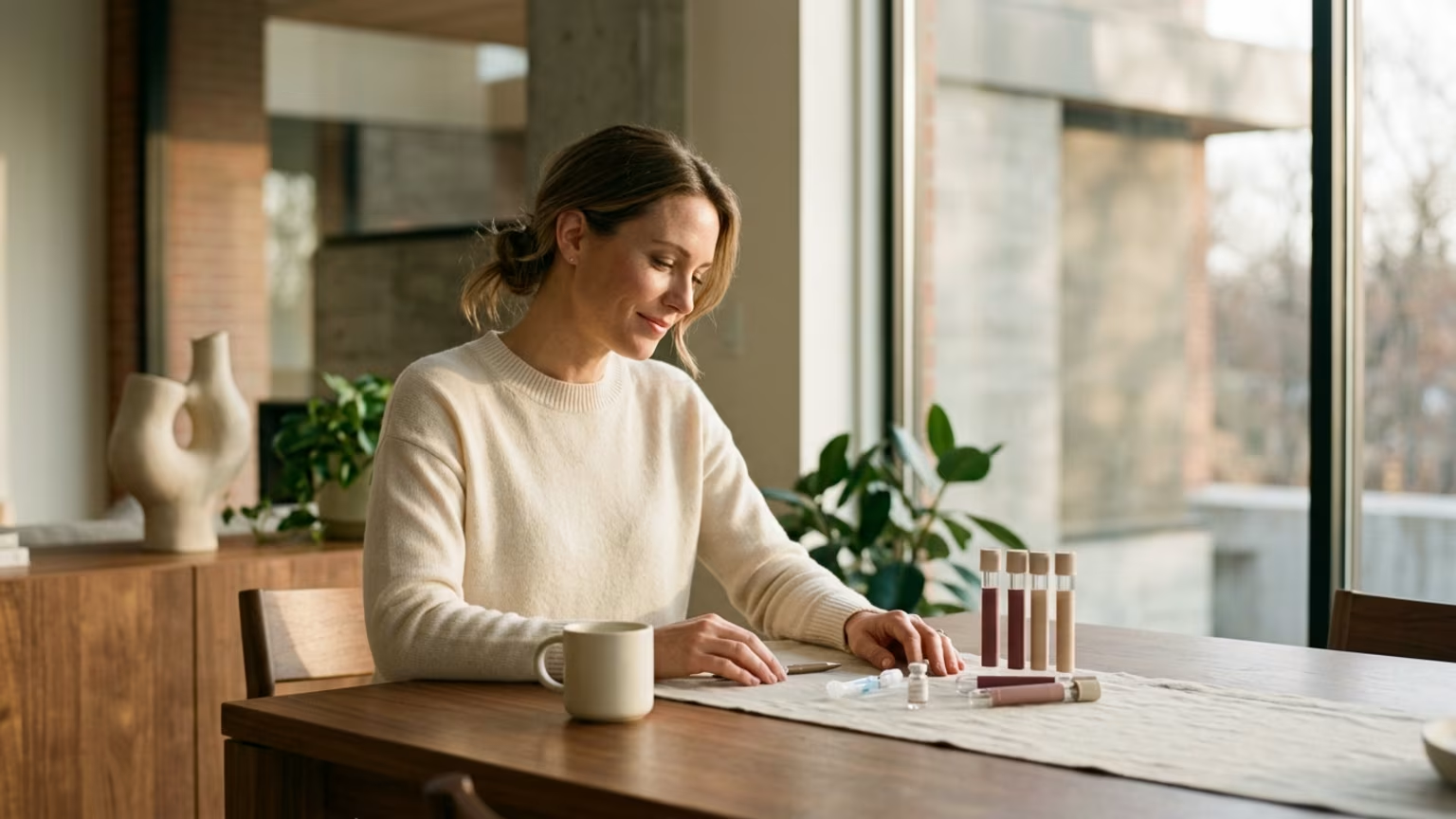
On August 25, 2026, Quest Diagnostics and Humanity Health announced that Humanity Biological Age is available in the United States through questhealth.com. Customers can now add this $29 analysis to eligible Quest health profiles without another blood draw. These eligible panels include the Elite Health Profile and the Fitness Profile Elite. Customers can also choose the Men’s Comprehensive Health Profile or the Women’s Comprehensive Health Profile.
Users simply provide a blood sample at one of approximately 2,000 U.S. patient service centers. After completing their blood work, customers upload their Quest results directly to the Humanity platform. Humanity says its model was developed with Imperial College London. The company claims the algorithm was trained on more than 306,000 UK Biobank participants followed for an average of 11.6 years.
Furthermore, the company states the underlying research was published in the peer-reviewed journal Communications Biology. The launch makes the product available in five countries, bringing advanced tracking to a mainstream audience. Humanity reports that 83% of customers in a 2026 survey said their result would prompt them to improve their lifestyle. Additionally, 80% of those surveyed said they intended to retest within six to 12 months.
The fundamental flaw in this excitement is that constant testing often leads to unnecessary anxiety. Medscape recently reported that researchers and clinicians believe longitudinal data and clinical-trial evidence are still needed. These experts argue that such evidence is required before aging clocks can progress fully into translational medicine. An algorithm can summarize your blood markers perfectly, but it does not prove that changing your score extends your healthspan.
The report from Humanity is explicitly designed as a wellness product, rather than a definitive medical diagnosis. A favorable score does not automatically rule out underlying disease, and an unfavorable score does not pinpoint a specific illness. Furthermore, the accessible source material does not establish that a lower Humanity Biological Age score guarantees longer life or better athletic performance. The company states that users should interpret their results alongside a full clinical assessment.
Stressing over a precise biological age actively detracts from the true goal of living well. Active adults often spend their 40s and 50s optimizing their daily routines to achieve perfect laboratory results. They might skip late dinners with friends to meticulously protect their recovery metrics. They frequently decline physically demanding international trips just to avoid travel stress on their next blood draw.
This extreme optimization creates a rigid lifestyle that is fundamentally fragile. The entire point of healthy aging is to maintain the capacity for adventure and spontaneity. If your pursuit of longevity keeps you confined to a strictly controlled routine, you are failing. You have already lost the worldly capability you are trying so desperately to preserve.
The new Humanity report estimates a biological age and highlights an age difference compared with your chronological age. The company notes the report also identifies the specific body systems influencing the final result. These highlighted systems include cardiovascular and metabolic health. The report also factors in liver, kidney, and blood markers alongside immune, inflammatory, hormonal, and bone-and-mineral health.
Treating these system-level outputs as definitive clinical diagnoses causes immense and unnecessary worry. A fluctuating score after a demanding ski trip does not mean your organs are permanently failing. Your blood biomarkers can vary significantly with recent illness and hydration levels. They are also heavily affected by medication changes and alcohol intake.
Frequent travelers and endurance athletes face particular challenges with these algorithms. A demanding travel schedule involves changes in altitude, irregular meals, and significant physical exertion. These environmental stressors will temporarily alter the routine biomarkers used in these calculations. If you test shortly after returning from an international business trip, your biological age might artificially spike.
There is a much simpler alternative that achieves the vast majority of longevity benefits with a fraction of the anxiety. WealthAtPlay advocates for focusing on functional fitness metrics that actually translate to real-world capability. A recent UK Biobank analysis reported that each annual 1 mL/kg/min increase in VO₂ max was associated with a 15% lower risk of incident cardiovascular disease. The same analysis showed a 34% lower risk of cardiovascular mortality for that exact same improvement.
This is a practical cardio capacity metric you can build through enjoyable activities like cycling, hiking, and swimming. Improving your real-world stamina allows you to seamlessly handle the physical strain of long-distance travel. It is a metric you can actually feel when you carry heavy luggage up a steep flight of stairs. You do not need a laboratory to tell you if you are getting stronger and more capable.
When you prioritize real-world performance, your perspective on healthy aging changes entirely. You stop viewing your body as a delicate machine that needs constant chemical balancing. Instead, you treat it like a robust vehicle designed for movement and endurance. A strong aerobic base protects your heart better than fretting over a minor biomarker fluctuation.
You can certainly still use the $29 Humanity Biological Age add-on if you are already ordering routine blood work. It can be a helpful tool for organizing your baseline data over time. However, treat it as a slow-moving background trend rather than a daily report card. Test under consistent conditions to avoid skewed data from temporary environmental stressors.
Use your test results to formulate better questions for your doctor during your annual health screening. Discuss any concerning patterns with a qualified clinician instead of self-prescribing extreme diet modifications. Keep your focus on maintaining a consistent sleep schedule and eating nutritious food. Let the laboratory handle the background data while you focus on staying robust, mobile, and active.
Will you spend your next decade managing a digital dashboard of biomarkers, or will you use your health to experience the world? Biological age estimates are interesting data points, but they are poor substitutes for lived experiences. The science of longevity should serve your active lifestyle, rather than your lifestyle serving the science. True capability means having the stamina to hike a mountain and the resilience to recover quickly.
Today, book a physically challenging activity you have been putting off for too long. Leave your fitness tracker in a drawer, ignore the background data, and simply enjoy the pure movement.
Stay connected for research and practical guidance on longevity, strength, recovery, energy and active living. New ideas to help you stay capable, curious and ready for more.



Explore practical guidance on strength, recovery, energy, travel and longevity for a life that stays active.
explore the Blog