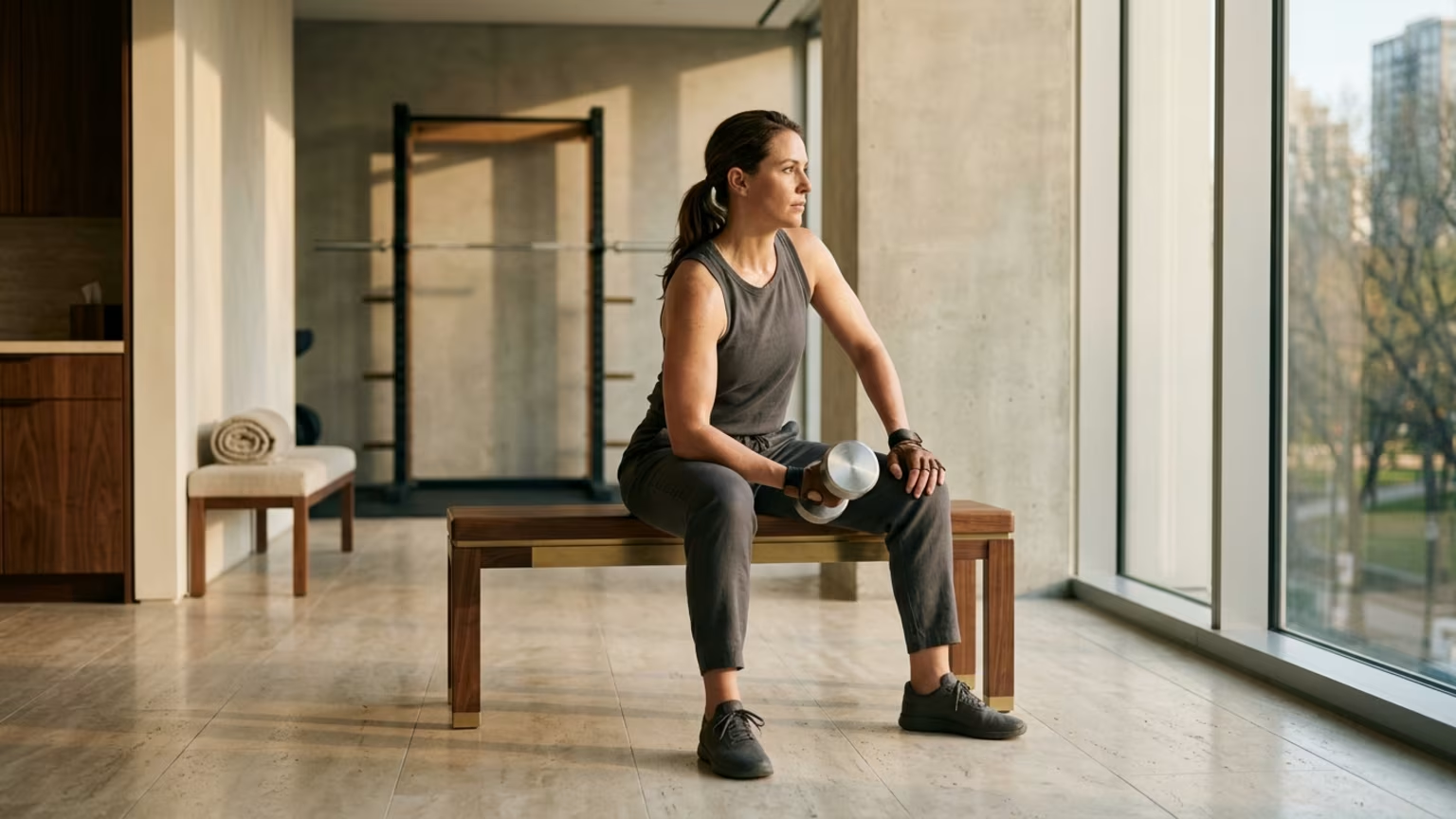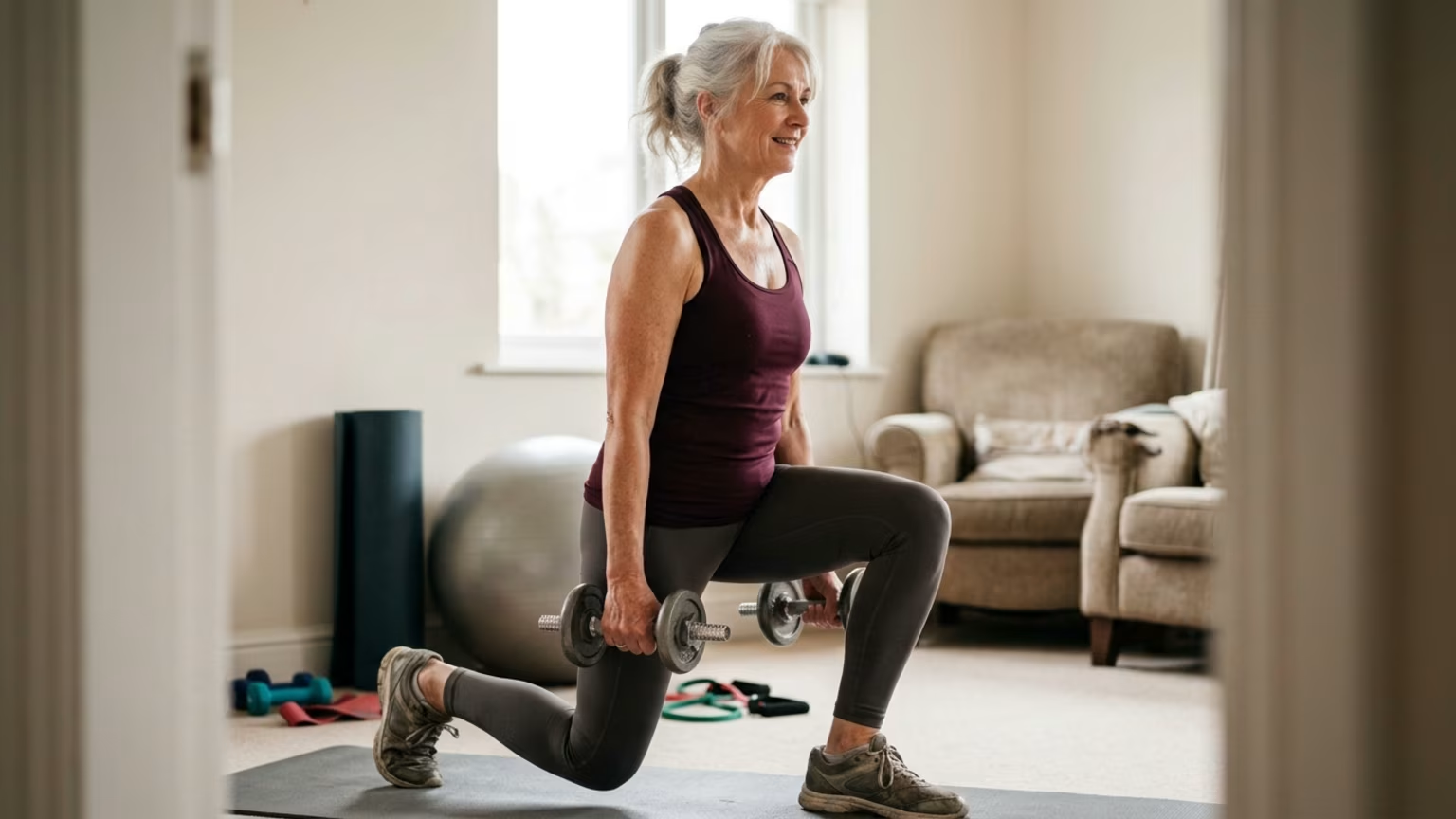

Learn how active adults over 40 can train for durable capacity, maintain their aerobic base, and build the strength required for lifelong travel and adventure.





Why does it take three days to recover from a flight to Tokyo now, when it used to take one? A recent UK Biobank analysis of more than 11,500 adults found that declining fitness by just 1 mL/kg/min per year was associated with a 33% higher risk of cardiovascular disease. This gradual loss of cardiorespiratory capacity explains why travel and sport suddenly feel more exhausting over time. The human body quietly lowers our ceiling for physical stress unless we proactively train to raise it.
At WealthAtPlay, we view training after 40 as a strategy for durable capability rather than peak athletic performance. It is about preparing the body for the tasks you want to keep doing without pain or hesitation. You need specific preparation to control a downhill ski turn, carry heavy equipment, or step safely over uneven ground. You cannot simply hope your physical foundation remains intact without targeted, consistent effort over the years.
Yes, and you absolutely must if you want to maintain your physical independence into later decades. A 2026 meta-analysis of 41 randomized controlled trials involving 3,141 older participants examined this exact issue. The researchers found that resistance exercise significantly improved muscle-specific strength across the studied population. The effect size was notable, showing a standardized mean difference of 0.61 with a 95% confidence interval of 0.27 to 0.94.
While nutritional supplementation alone had inconclusive effects in that review, lifting weights proved highly effective. The same review reported substantial variation between studies, showing a heterogeneity of I² = 81%, meaning you must find the specific lifting routine that works for your body. You should train major movement patterns like squatting, pushing, and pulling. Unilateral exercises are especially important for your travel and adventure goals, because most sports require one leg to accept and produce force at a time.
The World Health Organization provides a highly reliable activity framework for adults seeking long-term health. The guidelines recommend accumulating 150 to 300 minutes of moderate aerobic activity each week. Alternatively, you can target 75 to 150 minutes of vigorous activity. This aerobic base is what makes a full day of sightseeing or hiking feel entirely manageable.
Aerobic capacity dictates your recovery speed between demanding efforts on long trips. You must adapt this volume to your current fitness level and your personal recovery capacity. Consistent endurance work keeps your heart resilient and your energy levels stable. Without this foundation, even leisurely vacations can become physically draining and frustrating.
Maintaining your stamina is not just about avoiding fatigue during a weekend ski trip. In the UK Biobank analysis mentioned earlier, improving fitness was highly beneficial for long-term health. Participants who improved their fitness by at least 1 mL/kg/min per year saw a 16% lower risk of cardiovascular disease. These observational associations highlight the profound systemic benefits of staying active over time.
The field of healthy aging is paying greater attention to these fitness trajectories. It is no longer about achieving a single impressive score on a static fitness test. Your goal is to maintain a steady, functional capacity that supports your daily lifestyle. Regular movement acts as a powerful buffer against inevitable age-related decline.
Many adults assume that reaching for their toes will prevent future trips and falls. However, a massive 2026 systematic review of balance training proves otherwise. The review included 423 trials and 33,901 participants across various exercise modalities. Researchers found that stretching alone showed no clear benefit for improving overall balance.
Instead, you should prioritize dynamic movement and specialized stability work. The review found promising estimates for agility stepping, sensory training, and perturbation training. It explicitly cautioned that no single modality established superiority over the others. Match your balance training to the specific challenges you face while traveling or playing sports.
As we age, a simple trip on a cobblestone street can ruin an expensive vacation. For adults 65 and older, the World Health Organization adds specific guidance to their framework. They recommend multicomponent activity emphasizing balance and strength on at least three days per week. This specific addition exists to help maintain functional capacity and reduce fall risk significantly.
The ability to react quickly is a vital component of this training methodology. In a pilot laboratory study of step training, researchers tested recovery steps after induced trips. The training group recorded a recovery step that was initially 9.0% of body height longer and 0.25 metres per second faster than the control group. This step training was associated with a 39% lower fall rate than treadmill training after those induced trips.
Active adults inevitably face setbacks, physical strains, and minor injuries along the way. Return-to-activity decisions after an injury must involve biological healing, functional recovery, psychological readiness, and load tolerance. You cannot simply rely on a single strength test or a specific calendar date. Real recovery requires a comprehensive approach to rebuilding your physical confidence safely.
You should progress one variable at a time when returning to your routine. Change the duration, elevation, speed, or resistance gradually before booking a major trip. Your strength and physical performance will return if you respect the healing process. Pushing through severe pain will only undermine your goal of lifelong participation.
A durable program requires balancing physical stress with adequate, structured rest periods. You might start with two full-body strength sessions each week to build a robust foundation. Add two or three aerobic sessions to build your stamina for long, active days. Finally, integrate short balance or stepping practice on several days alongside one genuinely restorative day.
This framework represents a practical synthesis of current health guidance rather than a rigid prescription. The most useful measure of success is your ongoing participation in the activities you love. You want to remain confident enough to ski, hike, cycle, and carry your own luggage. Consistency always matters more than occasional bursts of extreme athletic effort.
Active adults often receive generic fitness guidance that fails to address their specific needs. If you want to maintain your enthusiasm for lifelong movement, you should explicitly ignore these outdated approaches. They are overly clinical, largely ineffective, and fail to prepare you for real athletic challenges.
Many people treat the 150-minute aerobic target as a rigid minimum threshold for success. They mistakenly assume that exercising for less time is entirely useless for their health. The World Health Organization guidelines provide a useful public-health range rather than an absolute rule. Your training history, schedule, health status, and recovery capacity should dictate your actual dose.
Runners and cyclists often assume their aerobic training provides enough leg strength. However, the evidence clearly supports treating dedicated resistance training as a foundation for future independence. Aerobic exercise alone had inconclusive effects on muscle-specific strength in the recent meta-analysis. You must lift challenging weights to preserve your critical force-producing capacity.
Static stretching feels good, but it is not a complete balance strategy. Reaching for your toes does not prepare your nervous system to catch an unexpected fall. The massive balance review of 423 trials found no clear benefit for stretching alone. You must challenge your stability with agility stepping or perturbation training to see real results.
That grueling three-day recovery after a flight to Tokyo does not have to be your permanent reality. By approaching your fitness systematically, you can keep your passport to an active life firmly in hand. Focus on longevity and living well by integrating these foundational principles into your daily routine.
You are training to maintain your capability for decades of future travel and sport. The goal is not to win a clinical fitness test or break athletic records. Your real victory is having the stamina to ski, cycle, and enjoy the world without hesitation.
Stay connected for research and practical guidance on longevity, strength, recovery, energy and active living. New ideas to help you stay capable, curious and ready for more.





Explore practical guidance on strength, recovery, energy, travel and longevity for a life that stays active.
explore the Blog