

A 2026 expert consensus details a three-part movement framework helping active adults properly prepare their bodies for demanding training and physical travel.





On September 24, 2026, new analysis of an expert consensus published in the International Journal of Sports Physiology and Performance revealed a unified framework for physical preparation. The landmark study, titled International Expert Consensus on Warm-Up Protocols for Athletes, synthesises the shared knowledge of 23 sports scientists and elite coaches from 12 countries. Outside magazine reports that this global panel approved 72 formal statements to define exactly how individuals should prepare for physical exertion. For active adults who value their physical independence, this consensus replaces outdated generic routines with a highly precise system for sustained capability.
Physical preparation often suffers from conflicting advice and a severe lack of clear structure across the fitness industry. Many active individuals default to the exact same routine regardless of whether they are lifting heavy weights, playing tennis, or going for a daily run. The 2026 consensus firmly pushes back against this rigid, repetitive methodology. By breaking the preparation process into three distinct phases, the panel provides a logical pathway to prime the body for any specific physical demand.
The consensus defines movement preparation as a deliberate protocol used strictly to prepare for what immediately follows. Rather than viewing it as an arbitrary requirement, the panel identified a rigid sequence containing a general phase, a specific phase, and targeted conditioning activities. Each segment serves a unique biological and mechanical purpose to successfully shift your body from a resting state into a highly capable state. Following this logical sequence ensures that your cardiovascular and muscular systems are fully prepared to handle intense physical effort.
The sequence begins with the general phase, which focuses entirely on continuous, submaximal aerobic movement. The primary objective here is to steadily raise your core body temperature and actively stimulate your metabolic systems before heavy loading begins. The specific exercise modality matters far less than the steady accumulation of internal heat and circulating blood flow. A runner might simply jog at a very slow pace, while someone preparing for a strength session might choose light cycling to build foundational heat safely.
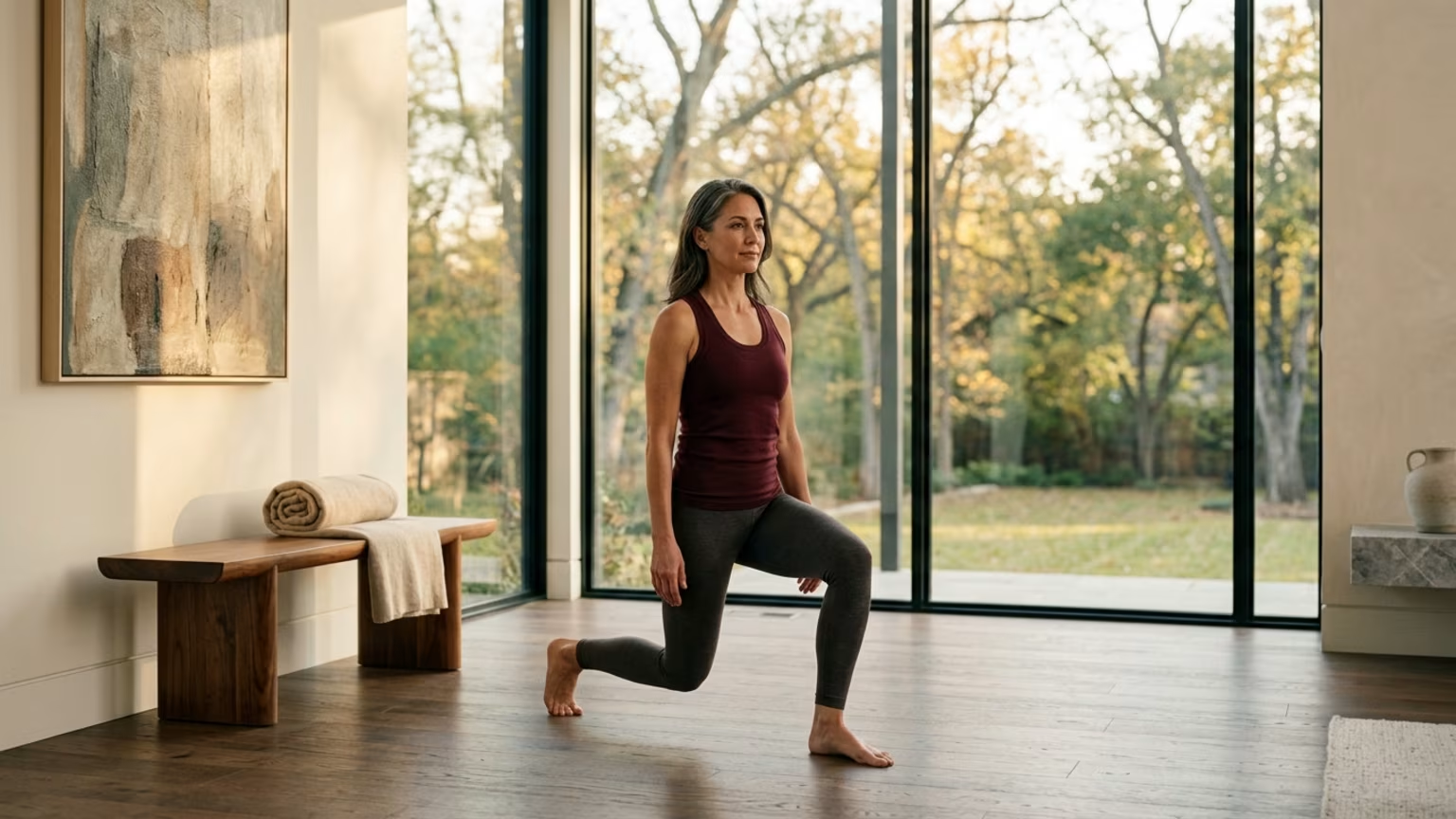
After establishing foundational heat, the routine transitions directly into the highly targeted specific phase. This critical segment prepares your physical, technical, and tactical systems for the exact demands of your upcoming session. During this time, the experts strongly recommend taking your muscles through the precise range of motion you expect to encounter. You might even push slightly beyond that anticipated range to ensure you have an adequate buffer of mobility for unexpected movements.
The method of stretching during this specific phase also received highly clear direction from the international panel of sports scientists. The consensus generally favours dynamic stretching over static holds for highly effective movement preparation. However, they clearly note that static stretching remains entirely appropriate for sports that require substantial flexibility. Furthermore, engaging in dynamic movement immediately after static stretching can successfully reverse some of the negative effects frequently noted in older academic research.
The final conditioning phase acts as the ultimate bridge between gentle preparation and actual training intensity. This segment comes much closer to the physical demands and raw output requirements of the workout itself. Strength and power athletes might execute near-maximal efforts on their primary exercises to carefully gauge their daily readiness. Meanwhile, a soccer player might engage in rapid passing and dribbling drills to actively sharpen their coordination before a match begins.
This structured approach firmly replaces the poor habit of walking into a facility and randomly selecting basic movements. A highly predictable sequence creates a reliable physiological response that your body quickly learns to recognise over time. By consistently following the general, specific, and conditioning steps, you establish a powerful neurological signal that intense effort is imminent. This mental preparation is equally as vital as the physical warming effect for maintaining high performance as you age.
Duration is another critical factor that the panel addressed with nuance rather than strict universal rules. They characterise a short preparation phase as taking less than five minutes, while a long session exceeds 20 minutes. Importantly, they emphasise that the appropriate duration depends entirely on the context of your environment and current systemic fatigue levels. Excessive warming can create counterproductive fatigue, especially when you are already tired or actively training in a hot climate.
One of the most fascinating findings from the consensus involves the heavily debated topic of injury prevention. Outside magazine reports that the panel did not reach an agreement that warming up immediately reduces your injury risk during the subsequent workout. The clinical evidence framing immediate preparation as a guaranteed shield against acute injury remains remarkably limited. Instead, the experts view this protocol strictly as a vital preparation tool for immediate athletic performance and physical readiness.
Despite the lack of consensus on immediate injury protection, the panel did recognise highly valuable long-term preventative benefits. They agreed that preventive exercises, such as targeted strength and balance work, may reduce injury risk over time. These preventative movements offer significant chronic benefits, regardless of whether you perform them early or late in your routine. Incorporating targeted balance training protocols into your general preparation actively builds the functional resilience required for ambitious lifestyles.
The consensus also clearly distinguishes between preparing for a standard workout and preparing for a competitive race. A daily workout routine might include highly technical elements that provide valuable, longer-term training benefits over time. In contrast, a pre-race sequence is sharply focused on maximising immediate speed and peak competitive readiness. This simple distinction helps active individuals allocate their time and energy efficiently based on their specific daily goals.
Furthermore, the consensus highlights that physical preparation serves multiple distinct purposes simultaneously for active adults. Beyond merely preparing for immediate athletic performance, it allows individuals to carefully rehearse complex physical skills and technique. It also serves as a critical diagnostic period to accurately gauge readiness for a particularly demanding training session. By viewing this period as a multifaceted tool, worldly adults can extract significantly more value from their pre-training minutes.
This precise, three-part framework has highly practical applications for demanding physical travel and outdoor mountain sport. When you arrive in a high-altitude environment, a progressive general aerobic phase helps your cardiovascular system adjust safely before strenuous exertion. It gently introduces your lungs and heart to the thinner air, significantly mitigating the harsh shock of sudden physical effort. By carefully managing this initial phase, you lay a highly secure foundation for a successful day of high-elevation trekking.
The specific phase becomes particularly valuable when preparing for activities with highly unpredictable outdoor terrain. If you are preparing for alpine skiing or mountain hiking, you must ready your joints for uneven ground and heavy, eccentric loads. Rehearsing deep knee bends and lateral movements directly prepares your soft tissue for the rigid demands of the slopes. Effectively planning how to condition your legs for downhill running requires successfully matching this specific phase to the exact terrain you will face.
Applying this consensus framework to water sports or aquatic travel activities reveals highly similar performance benefits. Preparing for a day of ocean kayaking or long-distance swimming requires a highly specific approach to upper body mobility. The general phase might involve light rowing motions to accumulate heat, followed by a specific phase that tightly targets the shoulders and thoracic spine. Moving your arms slightly beyond their expected range of motion ensures you can comfortably handle sudden, turbulent currents.
Incorporating elements of updated resistance training standards into the conditioning phase can further enhance your preparation. The consensus notes that near-maximal efforts are highly appropriate for strength athletes, provided they do not generate excessive fatigue. Testing your muscular readiness with a brief, challenging movement allows you to precisely gauge your central nervous system recovery. If the weight feels significantly heavier than normal, you have the immediate opportunity to scale back your planned training volume for the day.
Cycling through varied terrain further illustrates the absolute necessity of a highly precise conditioning phase. If you are preparing for a long ride featuring steep, challenging ascents, your specific preparation must accurately reflect those demands. The general phase gently elevates your heart rate, while the specific phase focuses heavily on hip mobility and lower body circulation. Rehearsing short bursts of power directly tests your muscular readiness before you face the absolute hardest segments of your route.
Furthermore, the conditioning phase serves as a vital diagnostic tool when you are actively managing travel fatigue or severe jet lag. Before committing to a remote trail or a demanding ski route, a brief conditioning effort allows you to test your physical readiness safely. If your near-maximal effort feels unusually sluggish, you can consciously adjust your intensity targets for the day. This immediate feedback loop helps active adults make incredibly smart, conservative decisions while navigating remote or unfamiliar environments.
Travel inherently introduces highly unpredictable variables that should firmly dictate the overall duration of your movement preparation. A long transatlantic flight or a significant time zone shift might dictate a significantly shorter, highly focused specific phase. The ultimate goal is to consistently conserve your limited energy for the primary activity rather than exhausting yourself before you even begin. Conversely, if you have spent the entire day sitting in a car, you might require a longer general phase to restore basic blood flow.
Environmental temperature also dramatically alters exactly how you should precisely approach your entire preparation sequence. If you are hiking in a tropical, high-heat destination, an extended general aerobic phase can cause highly counterproductive systemic overheating. The consensus explicitly warns that excessive warming in hot conditions creates unnecessary fatigue that actively harms subsequent athletic performance. In these specific scenarios, you should deliberately shorten the general phase and focus your energy solely on the essential mobility requirements of your route.
Abandoning the outdated idea of a single, universal routine allows you to become a significantly more resilient and capable traveller. Tailoring the precise sequence to the specific demands of the day ensures you never waste precious energy on completely irrelevant movements. A highly structured approach ensures you are physically primed to handle challenging physical environments with complete confidence and total control. Proper physical preparation ensures that consistent strength training secures lifelong independence across all your diverse, worldly pursuits.
To sustain your physical capability and optimise your daily athletic performance, structure your warm-up to begin with general aerobic movement before transitioning directly into the specific demands and range of motion required for your chosen activity.
Stay connected for research and practical guidance on longevity, strength, recovery, energy and active living. New ideas to help you stay capable, curious and ready for more.




Explore practical guidance on strength, recovery, energy, travel and longevity for a life that stays active.
explore the Blog