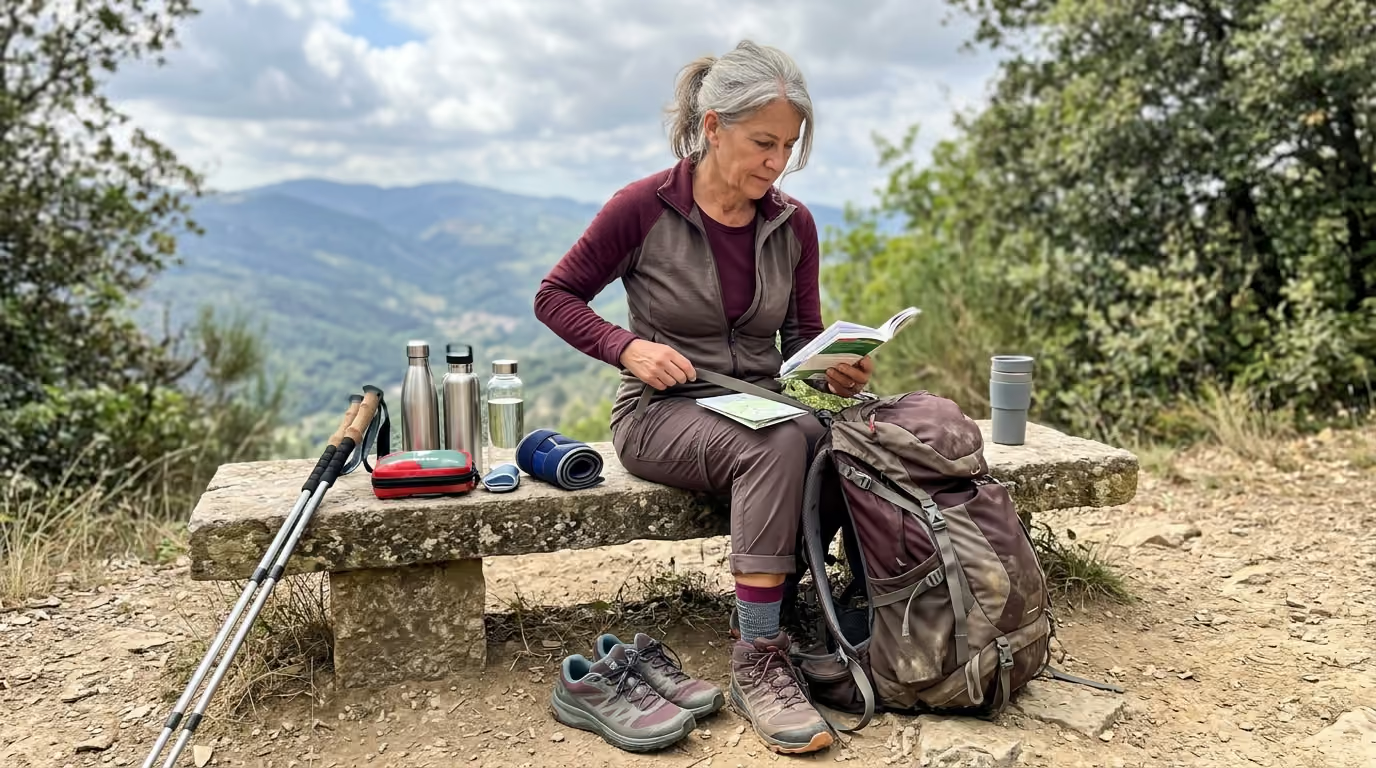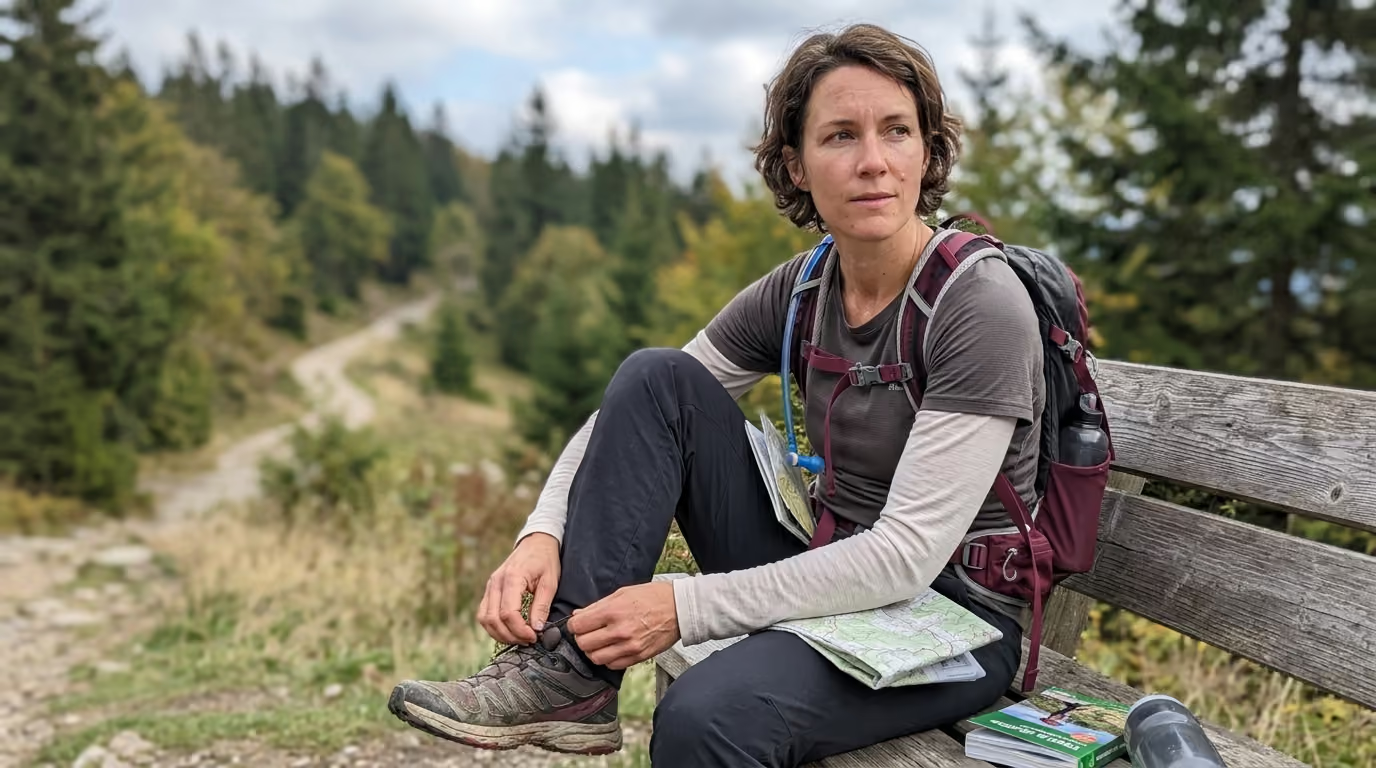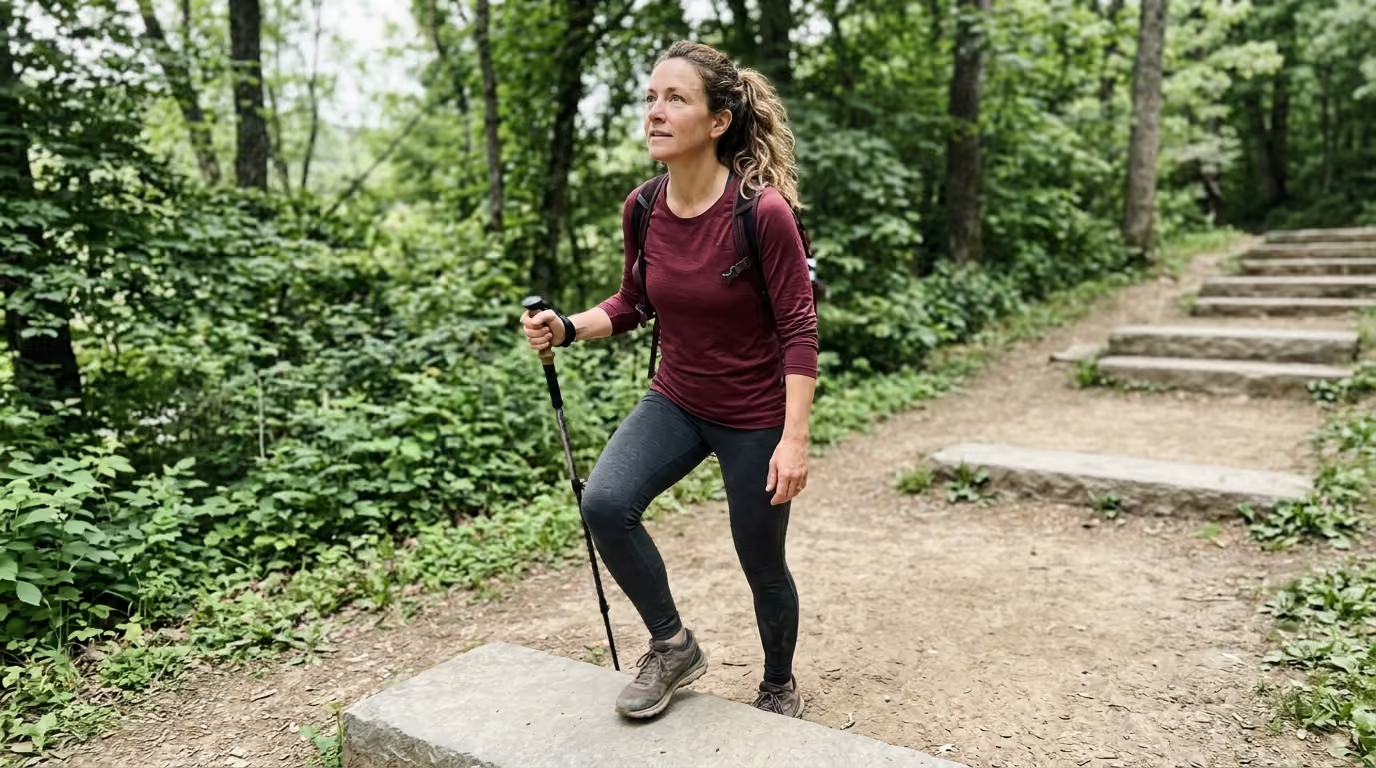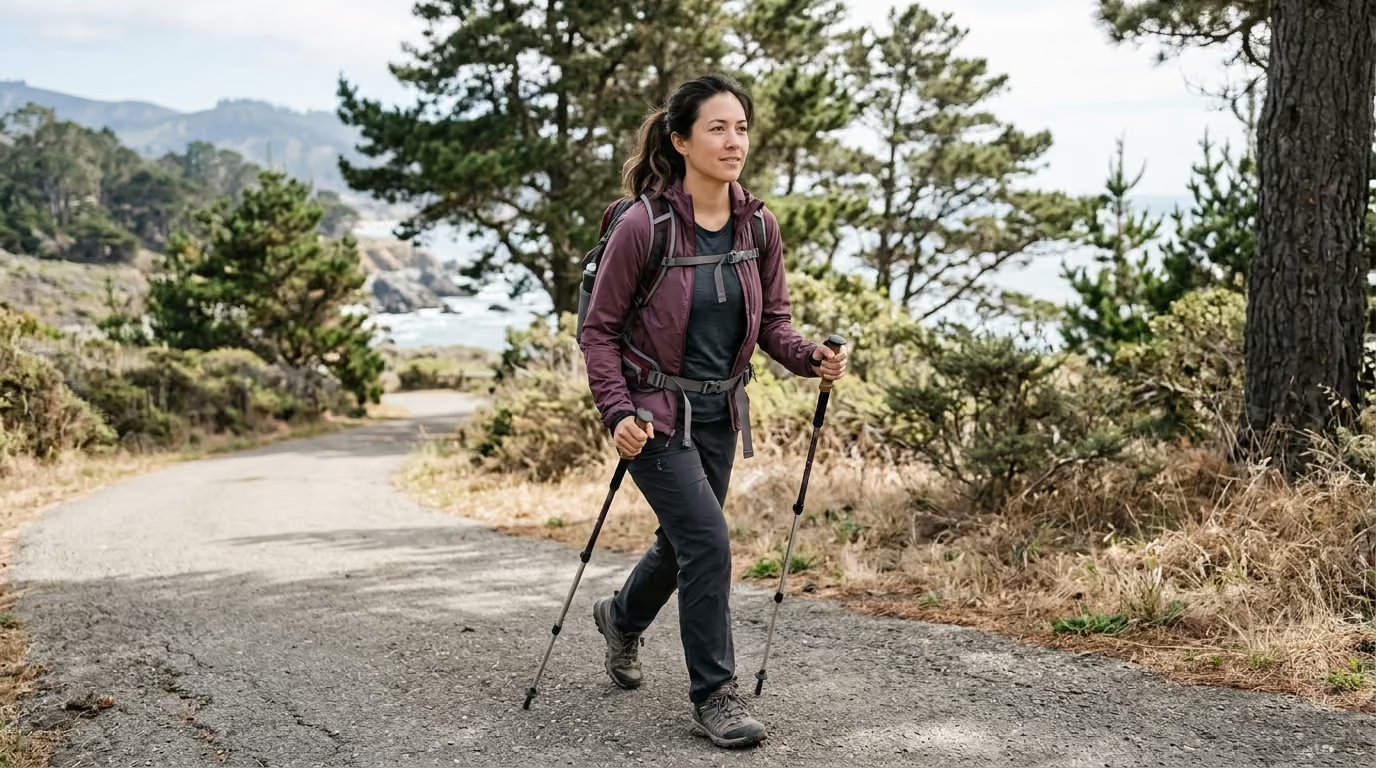

Standard gym workouts do not ensure all-day travel readiness, requiring progressive training across aerobic volume, eccentric braking.





You arrive in Florence, Kyoto, or Edinburgh feeling completely fit from your regular weekly gym routine. By three in the afternoon, after navigating miles of stone pavements, climbing bell towers, and standing in museum galleries, your lower back aches, your arches burn, and your calves feel like concrete. Cardiovascular fitness developed on stationary bikes or treadmills does not automatically translate into the durability needed for long, active travel days.
Real-world travel demands a specific kind of physical capacity. It requires the ability to stay upright for six to eight hours, absorb repetitive braking forces on downhill cobblestones, and carry a daypack without postural fatigue. It also demands the resilience to wake up the following morning and do it all again.
Building genuine travel walking capacity requires progressive physical conditioning tailored to real journey demands. This guide details how to build an aerobic base, condition your feet and connective tissues, master terrain and elevation changes, select the right gear, and integrate supportive strength work. By shifting from basic step counting to targeted preparation, you can ensure your body enhances your travel experiences rather than limiting them.
Walking is often viewed merely as casual transportation or low-intensity leisure. In the context of travel, walking becomes a demanding endurance activity performed in unpredictable environments. When you travel, you rarely walk on smooth, level, climate-controlled surfaces. You encounter uneven flagstones, steep staircases, inclined alleys, loose gravel, and long stretches of standing in queues.
General fitness and travel walking capacity differ in several key physiological ways:
A typical gym workout lasts forty-five to seventy-five minutes. In contrast, an active travel day easily involves six to ten hours of intermittent physical activity. This extended time on your feet exposes the plantar fascia, Achilles tendons, calves, and spinal erectors to cumulative loads they rarely experience at home. Without specific preparation, the small stabilizer muscles in your feet and ankles fatigue early, transferring stress directly to your knees, hips, and lower back.
Walking uphill taxes your heart and lungs, but walking downhill creates significant mechanical damage in your muscle fibers. Descending steep paved streets or rocky paths forces your quadriceps to contract eccentrically to slow your downward momentum. Eccentric contractions generate high mechanical tension, leading to micro-tears and delayed-onset muscle soreness if your legs are unaccustomed to braking forces.
Travel rarely involves continuous, unobstructed movement. You stop abruptly to look at architecture, stand motionless in museum rooms, step over curbs, and carry asymmetrical loads like a shoulder tote or camera bag. Static standing creates pooling in the lower extremities and strains the postural muscles of your spine far more than continuous rhythmic walking.
Developing capacity requires a structured framework that progressively challenges your system before departure. Understanding foundational travel and human performance principles helps you structure this training effectively.
To train effectively, you must understand how volume, intensity, and capacity interact. Many travelers focus solely on daily step counts, but step counts only provide a partial view of physical readiness.
Walking volume can be quantified using several metrics:
For travel preparation, time on feet and elevation change are often more valuable metrics than pure horizontal distance. Covering four miles over steep, cobblestone hills with a pack demands far more physical capacity than walking four miles on a flat suburban sidewalk.
Public health guidelines often define moderate-intensity exercise using the talk test. According to the Centers for Disease Control and Prevention, moderate aerobic activity noticeably increases your heart rate and breathing while still permitting a full conversation. For travel conditioning, a practical three-zone model works best:
Capacity is the maximum physical output you can generate in a controlled environment. Performance is what you can actually deliver while managing jet lag, warm weather, navigation stress, restaurant meals, and poor hotel sleep.
A reliable readiness standard is not whether you can complete a sixteen-kilometer walk once on a quiet Saturday morning. Real travel readiness means completing that distance with a pack, enjoying dinner that evening, sleeping soundly, and walking twelve kilometers the next morning with normal gait mechanics and minimal soreness.
Major health institutions provide clear baselines for physical activity. The World Health Organization and the Centers for Disease Control and Prevention recommend that adults accumulate 150 to 300 minutes of moderate-intensity aerobic physical activity per week, or 75 to 150 minutes of vigorous-intensity activity. They also recommend muscle-strengthening activities involving all major muscle groups on two or more days per week.
Meeting these public health minimums provides significant protection against chronic disease and improves overall longevity. However, meeting the baseline does not mean you are prepared for the demands of active travel.
Recent epidemiological research provides valuable perspective on daily walking volume. A large 2023 meta-analysis published in the Journal of the American College of Cardiology evaluated step counts from multiple international cohorts. The researchers found that significant reductions in all-cause mortality and cardiovascular disease risk begin at approximately 2,600 to 2,800 steps per day.
The analysis identified progressive risk reductions up to roughly 8,763 steps per day for all-cause mortality and 7,126 steps per day for incident cardiovascular disease. At these thresholds, participants experienced estimated risk reductions of approximately 60 percent for mortality and 51 percent for cardiovascular events. Other reviews have shown that older adults achieve substantial cardiovascular benefits at 6,000 to 8,000 steps daily, while younger adults see benefits up to 10,000 steps.
These figures represent population-level health associations rather than individual performance prescriptions. A daily average of 8,000 steps maintains good cardiovascular health, but an ambitious walking vacation can easily demand 18,000 to 25,000 steps per day for a week straight. If your habitual daily baseline is 4,000 steps, suddenly quadrupling that volume on holiday will likely lead to severe foot soreness, tendon irritation, or joint pain.
Closing the gap between your baseline activity and your trip requirements requires gradual physical preparation. Exploring dedicated healthy aging and physical performance methods will help bridge this gap safely.
Building walking capacity requires systematic progressive overload. Rather than increasing duration, speed, hills, and pack weight all at once, adjust one training variable at a time. This structured approach allows muscles, tendons, and joints to adapt without inflammation or injury.
The initial objective is establishing a reliable movement habit throughout the week. If you currently walk irregularly, focus on adding frequency before adding duration or speed.
Distributing your walking across multiple short sessions builds soft tissue tolerance with minimal recovery cost.
Once walking four to five days a week feels effortless, begin extending the duration of selected sessions and introducing Zone 2 brisk walking.
During the brisk walk, focus on pushing off actively with your rear foot and maintaining a steady, efficient arm swing.
The weekly long walk serves as the cornerstone of your travel conditioning. It mimics the sustained physical duration of a full morning or afternoon of exploration.
If your trip will involve four-hour walking tours, your weekly long walk should comfortably reach two and a half to three hours in training.
After establishing an aerobic base and endurance foundation, introduce the specific environmental stressors you will face during your travels.
The final phase tests your ability to recover overnight and perform well on consecutive active days.
This rehearsal reveals minor gear or conditioning issues while you still have time to fix them before your trip.
Preparing for varied terrain requires specific biomechanical adjustments and strategic pacing. Understanding these physical demands helps you navigate steep cities and mountain trails with minimal fatigue.
Uphill walking is metabolically demanding, while downhill walking is mechanically destructive. Each requires a distinct technical approach:
Ancient cobblestones, cracked pavements, and loose gravel demand continuous micro-adjustments from the intrinsic muscles of your feet and the stabilizing tendons around your ankles.
Condition your lower legs by including varied terrain in your weekly training walks. Spending thirty minutes on a forest trail, gravel path, or irregular city sidewalk develops joint stability and reactive balance that flat asphalt cannot provide.
The most common travel pacing mistake is starting the day too fast. Morning excitement, cool temperatures, and fresh legs often lead travelers to walk at an unsustainable speed, exhausting their energy reserves by early afternoon.
Adopt a conservative pacing strategy:
For broader endurance strategies, explore our practical guidance on travel and adventure preparation.
Your feet are the foundation of your travel mobility. The interaction between your footwear, socks, and carried pack weight determines your comfort on long walking days.
There is no single travel shoe that suits every foot or destination. Footwear choice should match the terrain, climate, luggage constraints, and your individual biomechanics.
Research examining outdoor injuries shows that footwear categories alone do not determine injury rates. Shoe fit, proper conditioning, and gradual familiarization are far more critical than choosing a specific boot style. Always buy travel footwear with adequate toe room, as feet naturally swell after hours of walking. Purchase your shoes several months before departure and log plenty of training miles in them.
Blisters result from a combination of friction, moisture, and heat. Prevent them through a layered protection system:
Carrying extra weight increases the mechanical stress placed on your feet, knees, and spine. Research examining backpack mechanics shows that loads exceeding approximately 10 percent of body weight produce significant, measurable increases in plantar pressure beneath the heel and forefoot.
To manage pack stress during active travel:
Trekking poles are valuable tools for active walking trips involving steep trails or uneven terrain, but they should be used intentionally.
Biomechanical studies show that using trekking poles on descents significantly reduces peak braking forces and joint moments at the knees and ankles. This reduction can help spare sensitive joint structures on steep descents.
However, studies also demonstrate that using poles increases overall upper-body muscle engagement, raising heart rate and metabolic energy cost on level ground.
Use trekking poles strategically:
Walking develops cardiovascular capacity and basic muscular endurance, but it does not fully train the strength required for steep stairs, heavy luggage, or downhill braking. Integrating targeted resistance training creates durable joints and prevents late-day fatigue.
Health guidelines from major organizations recommend performing muscle-strengthening exercises on two or more days per week. For travelers, strength training should focus on the lower body, hip stabilizers, and postural muscles. You can find comprehensive training systems within our strength and physical performance resources.
Prioritize these functional movement patterns to build resilience for demanding trips:
This straightforward twice-weekly routine fits easily alongside your walking schedule:
Keep your resistance challenging while prioritizing clean movement mechanics. Leave one or two repetitions in reserve on each set to support recovery for your walking sessions.
Avoid these common mistakes when preparing for a walking-intensive journey:
Accumulating 8,000 steps while moving between your kitchen, desk, and local grocery store does not prepare your body for eight continuous hours of urban sightseeing. Household steps are broken up by frequent sitting, occur on level indoor floors, and involve zero pack weight. Travel demands sustained, continuous time on your feet in varied outdoor environments.
Walking downhill feels easy on your heart and lungs, leading many travelers to speed up on descents. However, the eccentric loading placed on your quadriceps and patellar tendons during downhill walking is substantial. Treat steep descents with respect, shorten your stride, and slow down to protect your knees and muscles.
Purchasing heavy, rigid mountaineering boots for a city trip or moderate countryside walk often creates more problems than it solves. Heavy footwear increases the energetic cost of every step and can cause blisters if not thoroughly broken in. Choose the lightest, most comfortable, and most flexible footwear that still provides appropriate traction and support for your specific destination.
Completing a single twenty-kilometer hike on a Sunday does not prove you are ready for a multi-day trip. If that long walk leaves you stiff, exhausted, and limping for three days afterward, you lack the recovery capacity needed for consecutive active travel days. Focus on your ability to repeat moderate-to-long efforts on back-to-back days with consistent movement quality.
If you do all your conditioning on a flat indoor treadmill or paved suburban road, your ankles and feet will struggle when encountering the cobblestones of Rome or the root-strewn paths of the Cotswolds. Incorporate varied surfaces, stairs, and natural outdoor inclines into your weekly training routine well before your trip.
If your departure date is approaching and your schedule is demanding, you can still build meaningful travel capacity using a focused, time-efficient approach. You do not need twenty hours of training per week to see significant adaptations.
This streamlined weekly plan requires just three to four hours of total training time while addressing the core physiological components of travel fitness:
This focused structure builds aerobic endurance, conditions lower-leg connective tissues, develops necessary leg strength, and fits naturally into a busy lifestyle.
Different destinations present unique physical challenges. Tailoring your preparation to your specific travel itinerary ensures you arrive fully prepared.
During your trip, smart daily recovery practices help maintain your walking capacity from morning to morning:
Explore our comprehensive recovery and regeneration strategies to keep your energy and mobility high throughout your journey.
Before significantly increasing your walking volume or undertaking vigorous hill and pack training, ensure it is safe to do so. The American College of Sports Medicine provides clear guidelines regarding exercise preparticipation screening.
ACSM screening focuses on three main factors: your current physical activity habits, the presence of known cardiovascular, metabolic, or renal disease, and any signs or symptoms suggestive of these conditions.
If you are currently inactive and plan to progress toward vigorous exercise, or if you experience chest discomfort, unexplained dizziness, unusual shortness of breath, or joint pain during exertion, consult a qualified healthcare provider before starting your training program.
Listen carefully to your body as you increase your training load. Mild, generalized muscle tiredness that resolves within twenty-four to forty-eight hours is a normal training adaptation. In contrast, sharp joint pain, localized tendon tenderness, swelling, or pain that alters your natural walking gait are clear warning signs. If these occur, reduce your walking volume, adjust your footwear, and allow inflamed tissues to settle before progressing again.
The broader exercise science and medical communities agree on several key points regarding walking, cardiovascular conditioning, and functional capability:
By treating walking as a valuable physical discipline and preparing systematically for your journeys, you build lasting physical resilience. This preparation ensures you can move through any city, trail, or landscape with confidence, comfort, and complete independence.
Return to this guide eight to twelve weeks before any major walking vacation, trekking trip, or urban holiday to structure your preparation phases, calibrate your long walk progression, review your strength routines, and test your footwear system.
With the right physical base beneath you, the world opens up completely, allowing you to experience every destination on your own terms.
Stay connected for research and practical guidance on longevity, strength, recovery, energy and active living. New ideas to help you stay capable, curious and ready for more.


Explore practical guidance on strength, recovery, energy, travel and longevity for a life that stays active.
explore the Blog