
Most travel support gear promises universal comfort, but active adults only need specific biomechanical tools that match their terrain and physical limits.





You stand in an outdoor shop or pack your luggage before an ambitious trip, staring at rows of gear designed to keep your body moving. There are ultralight carbon trekking poles, compression socks, supportive backpacks, hydration bladders, and joint braces promising total joint protection. It is easy to assume that packing more supportive equipment automatically produces a safer, more comfortable journey.
Biomechanical research shows that supportive travel gear does not work as a blanket insurance policy. Every tool alters how your muscles, joints, and cardiovascular system handle the physical demands of moving through new environments. Understanding the distinct mechanical function of each item ensures you pack only what improves your stability, circulation, and physical endurance.
Supportive travel equipment functions best when matched to specific mechanical demands rather than general fatigue. Trekking poles offer clear benefits for joint unloading during steep descents and provide side-to-side stability on uneven ground. However, they transfer work to the upper body and increase total oxygen consumption rather than saving overall metabolic energy.
Backpacks alter your posture and spinal loading with every additional kilogram. A properly fitted pack that holds the load high across your thoracic spine with a supportive hip belt preserves normal walking mechanics far better than an oversized bag. Meanwhile, generic knee sleeves offer little documented benefit for healthy joints, whereas structured ankle braces significantly reduce re-injury rates for travelers with past sprains.
Graduated compression stockings provide proven vascular support during long-haul flights over four hours, reducing edema and the risk of asymptomatic deep vein thrombosis. Conversely, compression sportswear offers subjective comfort after exercise but does not reliably speed physical recovery or prevent muscle damage. Choosing the right gear requires selecting tools that address specific physical limitations or terrain profiles.
Every piece of support equipment alters your interaction with gravity, terrain, and momentum. When you walk across level ground, your lower extremities absorb forces equal to roughly one to one-and-a-half times your body weight per stride. When you add a backpack or step down a steep gradient, those forces multiply significantly.
Carrying extra weight shifts your center of mass upward and backward. To keep from falling backward, your body adapts by tilting the trunk forward. This posture increases flexion at the hips, knees, and ankles, which recruits more muscular effort from your lower back and legs. As your pack weight approaches heavier thresholds, your metabolic cost rises rapidly.
Joint support gear alters how these mechanical forces travel through your skeletal structure. Trekking poles share the braking load by redirecting force through your arms, shoulders, and core musculature. This redistribution spares the knees and hips from peak braking forces, particularly in the sagittal plane where joint moments are highest.
Vascular support operates under fluid dynamics rather than skeletal mechanics. Prolonged sitting during air or train transit eliminates the natural calf muscle pump that pushes venous blood back toward your heart. Hydrostatic pressure causes blood and interstitial fluid to pool in your lower limbs, increasing swelling and vascular stasis. External graduated pressure counteracts this gravitational pooling by maintaining steady venous return.
To optimize your physical durability on demanding journeys, you can review our guide to travel human performance to align your equipment choices with physiological needs.
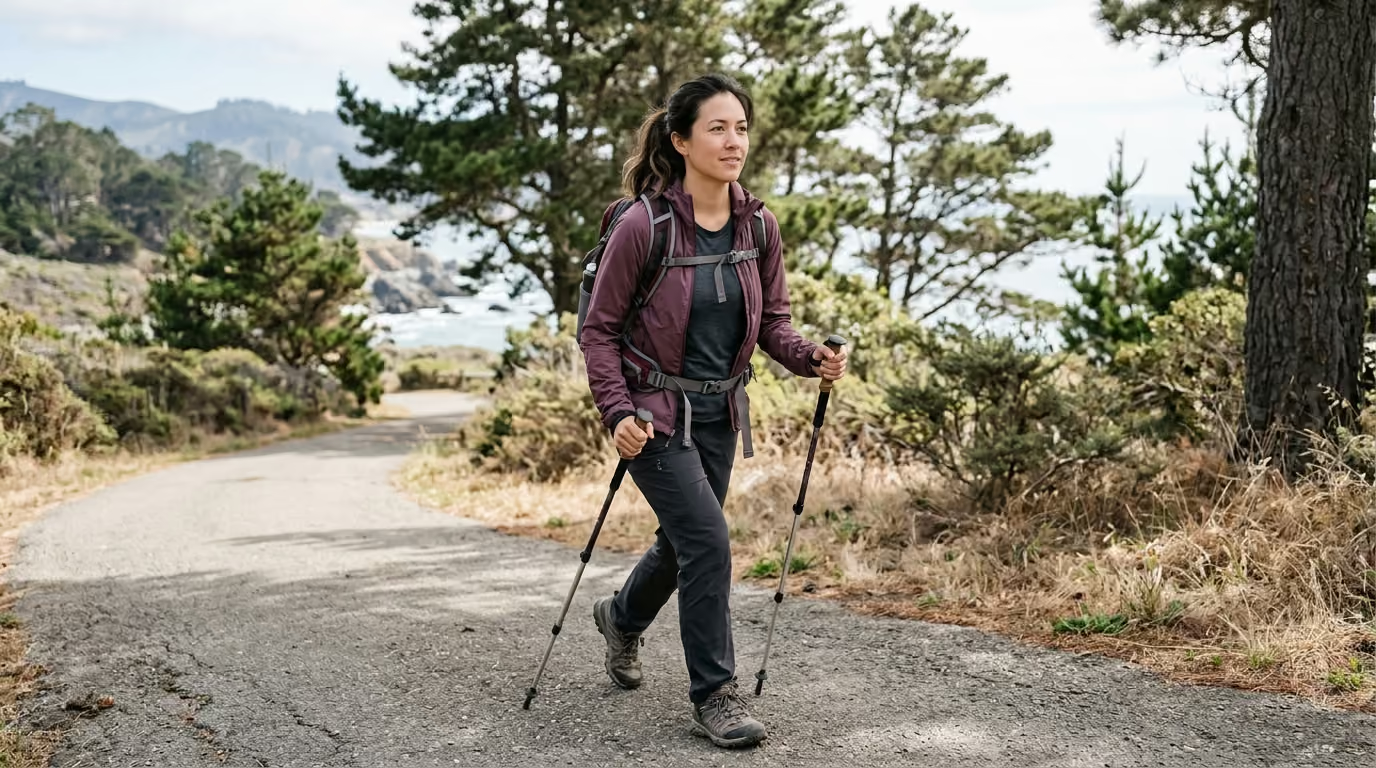
Trekking poles are among the most popular tools for active travelers, yet their physiological impact is frequently misunderstood. Biomechanical research confirms that poles are primarily a stability and load-sharing tool rather than an energy-saving device. Using poles changes which muscles perform the work of walking.
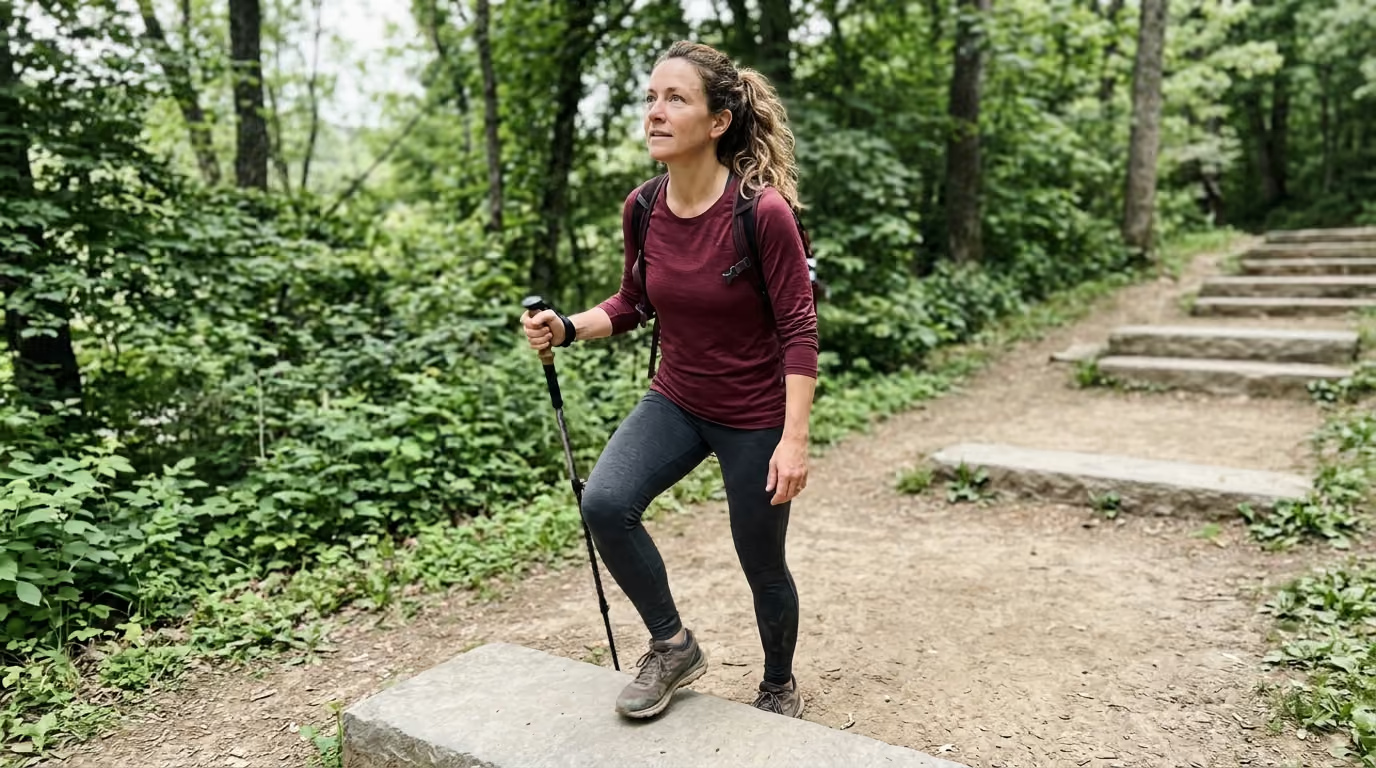
The clearest biomechanical evidence for trekking poles appears during downhill hiking. Walking downhill forces your quadriceps and patellar tendons to perform intense eccentric contractions to brake your downward momentum. This action creates high compressive forces across the patellofemoral and tibiofemoral joints.
Biomechanical studies show that using two poles during downhill walking reduces peak ground reaction forces by 12% to 25%. It also reduces sagittal-plane joint moments at the ankle, knee, and hip. By planting the poles ahead of your body, your upper body absorbs a portion of the impact before your lead foot strikes the ground.
Poles also encourage a slight forward trunk lean that shortens the knee moment arm. This postural shift reduces tibiofemoral shear forces, which protects aging cartilage and sensitive tendon insertions. For travelers managing past knee discomfort, poles provide meaningful joint unloading on long mountain descents.
Trekking poles provide distinct advantages for mediolateral stability. Controlled studies on walking mechanics demonstrate that poles improve side-to-side balance and trunk muscle coordination on irregular surfaces. Having additional points of contact helps you maintain your balance when navigating loose scree, wet roots, or narrow trails.
Poles do not show significant improvements in forward-and-backward stability compared to normal walking. Their primary value lies in catching sudden lateral shifts and stabilizing your torso when carrying a pack over uneven ground. They act as dynamic outriggers that broaden your base of support.
While poles protect your lower-body joints, they do not make walking physiologically easier on level or uphill terrain. Research shows that walking with poles significantly increases oxygen consumption and overall energy expenditure compared to walking without them at the same speed.
When you plant and push through poles, your arms, shoulders, and upper back muscles work continuously. This upper-body muscle activation demands additional oxygen and cardiovascular output. Studies demonstrate that perceived exertion and heart rate often remain unchanged or rise slightly, even while total metabolic work increases.
If you have pre-existing shoulder, elbow, or wrist issues, poles can transfer stress away from your knees only to cause upper-extremity discomfort. Proper use requires active planting rather than loosely carrying them. If you carry poles without planting them with good form, you add dead weight without gaining any mechanical joint protection.
Adjusting pole length correctly ensures you receive mechanical benefits without overloading your neck and shoulders. Your elbows should rest at a 90-degree angle when the pole tips touch the ground beside your boots on flat surfaces.
When climbing steep inclines, shorten your poles by five to ten centimeters. This adjustment prevents you from reaching upward, which strains your trapezius and shoulder muscles. On long descents, lengthen your poles by five to ten centimeters so you can plant them ahead of your descent without leaning excessively forward.
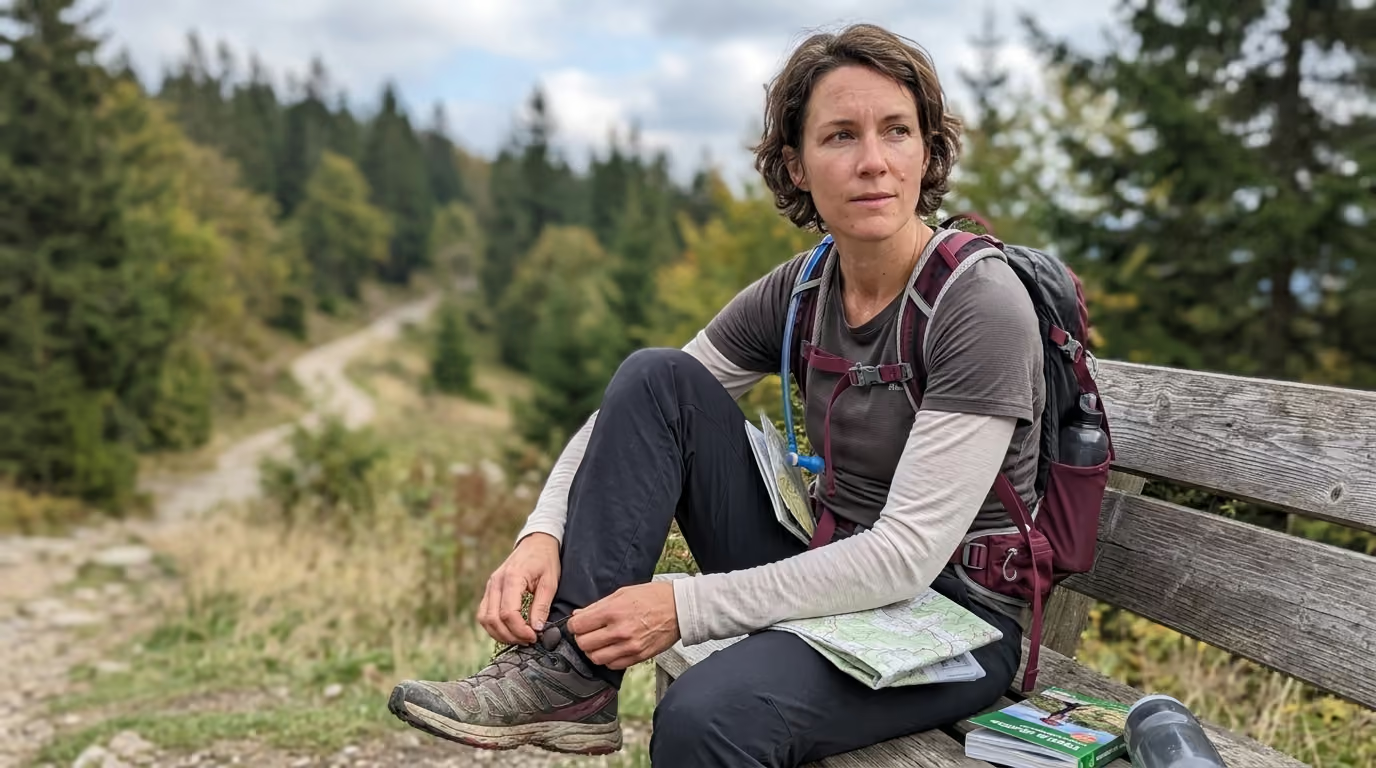
A backpack is often the most critical support item you bring because it directly alters your gait and posture for hours at a time. The interaction between pack weight, harness design, and load placement determines whether your bag supports your movement or accelerates fatigue.
Ergonomic research indicates that backpack loads between 25% and 46% of body mass cause dramatic increases in oxygen uptake, minute ventilation, and spinal compression. Loads above 40% of body mass lead to severe muscle exhaustion and altered gait mechanics in adult walkers.
For active adults, these higher percentages represent an upper safety boundary rather than a recommended target. For standard day hikes and travel transit days, keeping your total pack weight between 10% and 15% of your body mass preserves normal joint mechanics. Heavier loads force your trunk into extreme forward flexion, which strains the lumbar spine and alters your foot strike pattern.
Carrying excessive weight during airport transfers, train connections, and city walking fatigues postural muscles before your outdoor adventures even begin. Keeping your pack lean is the most effective way to protect your physical capacity.
How you arrange gear inside your pack matters almost as much as the total weight. Biomechanical studies confirm that positioning heavy items high in the pack, close to the thoracic spine, results in lower oxygen uptake and lower minute ventilation than letting the weight sag into the lower lumbar region.
A high and tight load placement keeps the pack's center of mass aligned with your own body. This reduces the rotational torque pulling your shoulders backward. When heavy gear sinks to the bottom of a pack, your body must lean further forward to counterbalance the load, increasing strain on the lower back extensors.
Using a structured pack with a supportive hip belt stabilizes the load across the transverse plane. Research demonstrates that a secure hip belt transfers up to 70% of the pack's weight directly to your pelvic structure, sparing your shoulders and cervical spine from continuous vertical compression.
Poorly designed or improperly adjusted shoulder straps can impair upper-limb circulation and nerve function. Studies show that heavy backpack straps can reduce brachial artery blood flow by up to 43% and cause a complete temporary loss of finger microvascular flow within ten minutes.
This compression across the brachial plexus and axillary vessels leads to numbness, tingling, and cold fingers. If you notice paresthesia or weakness in your hands while carrying a pack, treat it as a sign of improper fit rather than an unavoidable part of travel.
To prevent vascular compression, use wider, padded shoulder straps adjusted to keep the pack close to your upper back. Fasten the sternum strap across your mid-chest to pull the shoulder straps inward, away from the neurovascular structures near your armpits.
Hydration bladders built into daypacks provide easy hands-free drinking on the move, but they are not superior performance devices. Comparative research shows no inherent endurance advantage to sipping from a hose versus drinking from accessible bottles.
A full two-liter water reservoir adds two kilograms of weight directly to your upper back. If the reservoir lacks internal baffles, water shifts with every stride, altering your balance and stability.
For urban walking or short nature paths, standard water bottles stored in exterior side pockets are often simpler and easier to monitor for total fluid intake. Hydration bladders excel during continuous activities like trail running or cycling where stopping to unholster a bottle disrupts your movement rhythm.
Building foundational durability through smart training reduces the physical toll of carrying gear on the road. You can review our advice on strength and physical performance to prepare your body for demanding load-carriage days.
Joint supports fill pharmacy shelves, but their effectiveness varies widely depending on the joint and your specific injury history. Active adults should understand what these devices can and cannot accomplish before packing them.
The strongest clinical evidence for joint bracing supports the use of ankle braces for secondary injury prevention. Systematic reviews and meta-analyses show that wearing an external ankle brace reduces the risk of acute ankle sprains by up to 69% in individuals with a history of past ankle trauma.
For travelers with chronic ankle instability or previous ligament tears, wearing a semi-rigid or lace-up ankle brace provides clear mechanical protection. The brace restricts excessive inversion and internal rotation when stepping on loose rocks, uneven cobblestones, or concealed trail edges.
The evidence for primary prevention in individuals who have never injured an ankle is much weaker. Routine bracing of healthy ankles can restrict natural joint mobility and reduce proprioceptive engagement. If your ankles are healthy, investing in supportive footwear and balance training is more effective than wearing preventative braces.
Soft, elastic knee sleeves are widely marketed to active adults as tools to reduce joint wear, boost endurance, and stabilize the kneecap. High-quality biomechanical research does not support these broad claims for healthy travelers.
An elastic sleeve provides local warmth, mild cutaneous compression, and heightened sensory feedback, which may make a stiff joint feel temporarily more comfortable. However, a simple sleeve provides no mechanical stability against rotational torque or lateral forces. It cannot unload worn cartilage or correct structural patellar tracking issues.
Specialized unloading braces prescribed for severe unicompartmental osteoarthritis do offer mechanical joint separation, but these require professional clinical fitting. Relying on a generic slip-on sleeve to protect a compromised knee during aggressive mountain descents creates a false sense of security.
When deciding whether to pack braces for an upcoming trip, evaluate your needs using this practical hierarchy:
Compression garments fall into two distinct categories that serve very different purposes: medical-grade graduated compression stockings designed for circulatory support during immobility, and elastic compression sportswear marketed for athletic performance and recovery.
The strongest travel-specific research supports wearing graduated compression stockings during long-haul air travel. Cochrane systematic reviews show high-certainty evidence that knee-length graduated stockings significantly reduce the incidence of symptomless deep vein thrombosis on flights lasting longer than four hours.
Cochrane reviews also confirm moderate-certainty evidence that compression stockings reduce superficial vein thrombosis and lower-leg edema during extended air travel. By applying graduated pressure, highest at the ankle (typically 15 to 30 mmHg) and decreasing toward the calf, these garments support venous return and prevent blood pooling in the lower extremities.
Medical guidelines do not recommend routine compression stockings for every low-risk traveler on short flights. However, for flights over four hours, especially for travelers with risk factors such as previous thrombosis, recent surgery, limited mobility, or varicose veins, graduated stockings provide proven circulatory protection.
The evidence surrounding compression tights, calf sleeves, and shirts worn for sports recovery is mixed. Systematic reviews of athletic compression clothing indicate that these garments do not reliably improve immediate physical performance, spare muscle strength, or accelerate biological tissue repair.
Some studies note a modest subjective benefit: athletes wearing compression tights often report lower perceived muscle soreness and a greater sensation of recovery after intense training. However, objective markers of muscle damage, such as creatine kinase levels and peak force production, show little consistent improvement.
Wearing compression sportswear during active travel will not harm your performance, and the psychological sensation of muscle support can feel pleasant. However, these garments should not be viewed as a substitute for adequate sleep, hydration, and proper active recovery.
After a grueling thirty hour transit to Tokyo, I realized my old strategy of just powering through was no longer working. I felt foggy for three days. I started digging into circadian biology and realized that timing my light exposure and fasting during the flight could completely shift my recovery. Now, I never board a long haul flight without a precise schedule for when to eat and when to put on an eye mask. It is the difference between losing a week of your trip and hitting the ground running.
To support your body during long transit days, you can learn more about managing physical strain in our guide to travel and adventure.
Packing supportive equipment without understanding its mechanical function often leads to wasted luggage space, unnecessary fatigue, and physical discomfort. Here are four common misconceptions active adults encounter when choosing travel gear.
Many travelers believe that using poles makes any hike easier. In reality, trekking poles redistribute effort rather than eliminate it. Using poles on flat terrain or gentle grades increases total oxygen demand and heart rate by engaging the arms and shoulder girdle.
Reserve poles for situations where you specifically need them: long descents to spare your knees, uneven ground for lateral stability, or slippery mud and river crossings for balance. Stowing your poles on easy, flat trails allows your upper body to relax and conserves metabolic energy.
A soft elastic sleeve does not act as structural armor for your knee. While it increases local warmth and skin sensation, it cannot prevent ligament strain, stop meniscus compression, or correct poor landing mechanics.
Relying on a simple knee sleeve to tackle aggressive terrain without adequate leg strength often leads to overexertion. Building quadriceps and hip strength before your trip is far more protective than packing an elastic sleeve.
Carrying a large three-liter hydration pack creates significant physical costs. Water is heavy, weighing one kilogram per liter. If you fill a large reservoir for a hike where water refill points are readily available, you force your spine and legs to carry dead weight.
Match your fluid carrying capacity to your actual environment. In areas with regular potable water access, carrying a single light bottle that you refill frequently reduces your pack load and preserves your stamina.
Putting on a pair of compression socks does not give you permission to remain entirely motionless during a twelve-hour flight. While the external pressure supports venous return, it cannot match the circulatory power of your natural calf muscle pump.
Compression garments work best when combined with regular physical movement. Flexing your ankles, performing seated calf raises, and walking down the airplane aisle every two hours provides the muscular contraction needed to keep blood moving efficiently.
For deeper insights into restorative rest and daily vitality on the road, read our guide on recovery and sleep.
Applying support gear successfully requires tailoring your kit to the specific physical demands of your itinerary. Here is how to configure your supportive equipment across four common travel situations.
Alpine trails with steep ascents, rocky descents, and changing weather demand a focused equipment setup. The primary physical challenges are eccentric knee loading, lateral balance disruption, and sustained spinal compression from your pack.
Exploring ancient cities involves walking 15,000 to 25,000 steps daily on rigid stone, irregular cobblestones, and steep flights of stairs. The primary challenges are plantar impact stress, lower back fatigue from slow walking, and ankle rolling on uneven pavements.
International flights, long train journeys, and multi-hour bus transfers involve prolonged immobility in pressurized or cramped environments. The primary physical challenges are lower-limb fluid pooling, joint stiffness, and deep vein thrombosis risk.
Day trips involving aggressive climbs and descents with minimal gear require a light, efficient setup. The primary physical challenges are sudden downhill braking impacts and maintaining rapid movement without overheating.
Discovering how daily physical vitality supports a lifetime of exploration is a core principle of healthy aging and living well.
Packing smart means carrying only the equipment that delivers proven biomechanical value for your specific body and destination. Overpacking supportive gear adds weight, clutters your luggage, and often leads to using the wrong tool for the job.
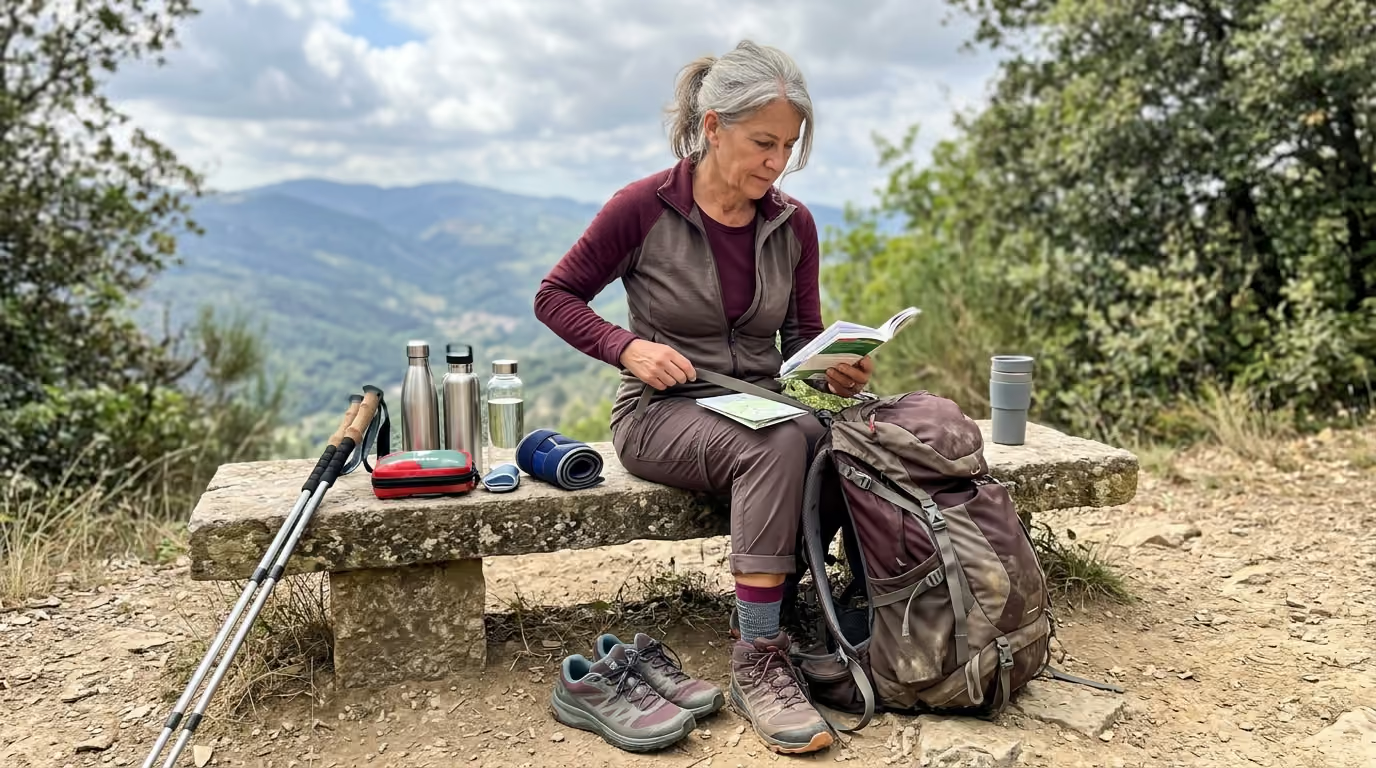
Here is the minimal effective gear kit that meets the needs of most active adults over 40:
Select poles with reliable lever-locking mechanisms rather than twist-locks, which can slip under heavy downhill loads. Aluminum poles offer exceptional durability and bend under stress without snapping, while carbon fiber poles reduce swing weight for long trekking days. Ensure the poles collapse small enough to fit inside your standard checked luggage.
Look for a pack featuring a lightweight internal frame or stiffened back panel, adjustable shoulder straps, a sternum strap, and a padded hip belt. This size provides sufficient volume for layers, food, and water while preventing you from overloading your spine. Ensure the pack carries the load close to your thoracic spine.
Choose knee-length stockings that deliver certified 15 to 30 mmHg graduated pressure at the ankle. Pack them in your carry-on bag so they are readily available for all flights and train segments exceeding four hours. Replace them every six to twelve months, as elastic fibers lose their compressive strength over time.
Only pack joint braces if you have a documented medical history of instability or past joint trauma. If you have recurrent ankle sprains, pack one low-profile lace-up ankle brace. If you have clinically diagnosed knee osteoarthritis, pack your prescribed unloader brace. Leave generic, unprescribed sleeves and wraps behind.
Sports medicine physicians, physical therapists, and travel medicine specialists agree on several fundamental principles regarding supportive gear for active adults:
First, supportive equipment should complement physical capability rather than compensate for a complete lack of preparation. Trekking poles and braces manage mechanical forces effectively, but they do not eliminate the need for lower-body strength, joint mobility, and balance training prior to an active trip.
Second, the clinical consensus strongly favors graduated compression stockings for high-risk travelers on flights exceeding four hours. The reduction in asymptomatic venous thromboembolism is well-documented, making graduated compression a standard medical recommendation for extended transit.
Third, experts caution against the continuous prophylactic use of rigid joint braces on healthy joints. Restricting natural joint movement can alter normal movement patterns and reduce proprioceptive awareness. Bracing should remain targeted, situational, and based on individual medical history.
Finally, ergonomic specialists emphasize that load management is the single most controllable factor in preventing musculoskeletal pain during travel. Keeping daypack loads light, distributing weight symmetrically, and carrying the load close to the upper spine prevents the postural distortions that cause neck, back, and hip pain.
Review this guide before planning your next multi-day adventure, when packing for long-haul international flights, or whenever you consider purchasing new joint supports or load-carriage equipment. Matching each piece of support gear to your body's precise biomechanical requirements ensures you stay strong, stable, and ready for every mile of your journey.
Stay connected for research and practical guidance on longevity, strength, recovery, energy and active living. New ideas to help you stay capable, curious and ready for more.


Explore practical guidance on strength, recovery, energy, travel and longevity for a life that stays active.
explore the Blog