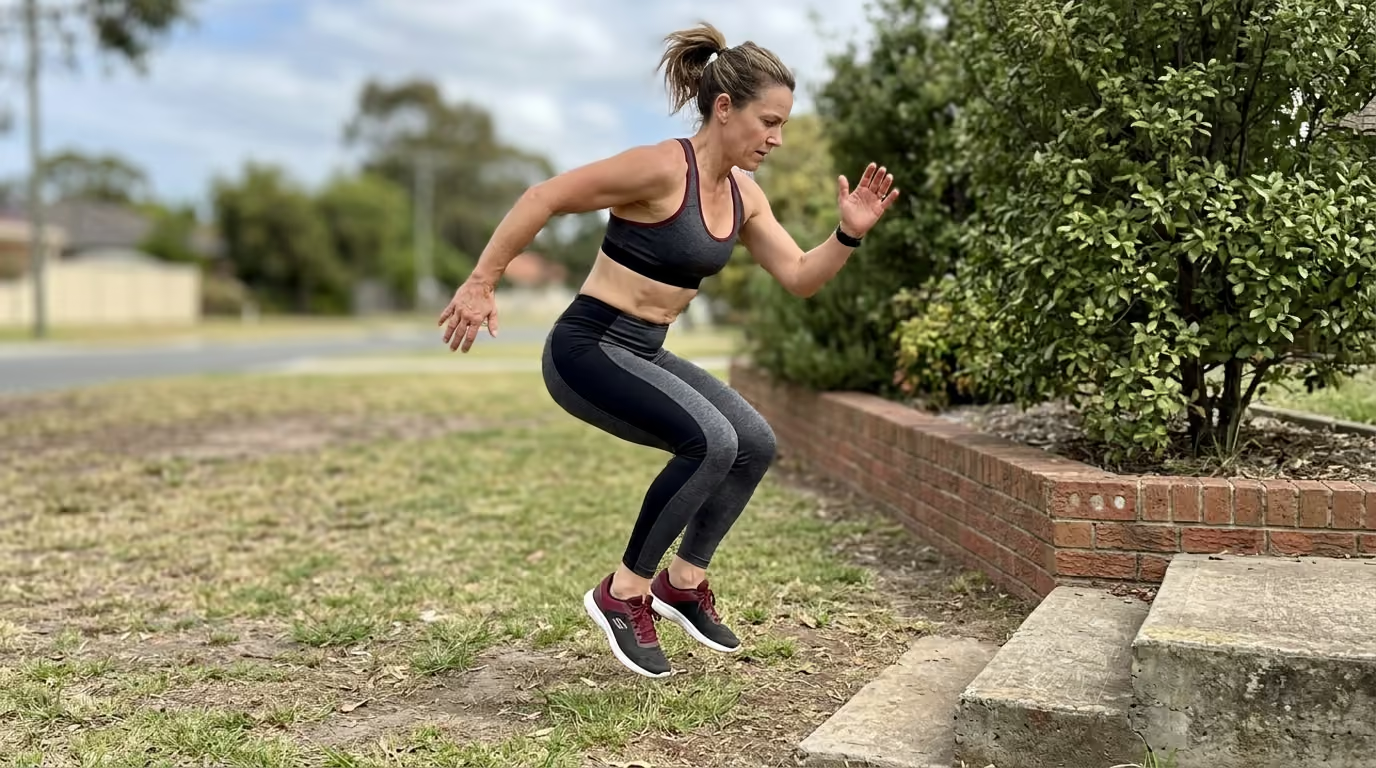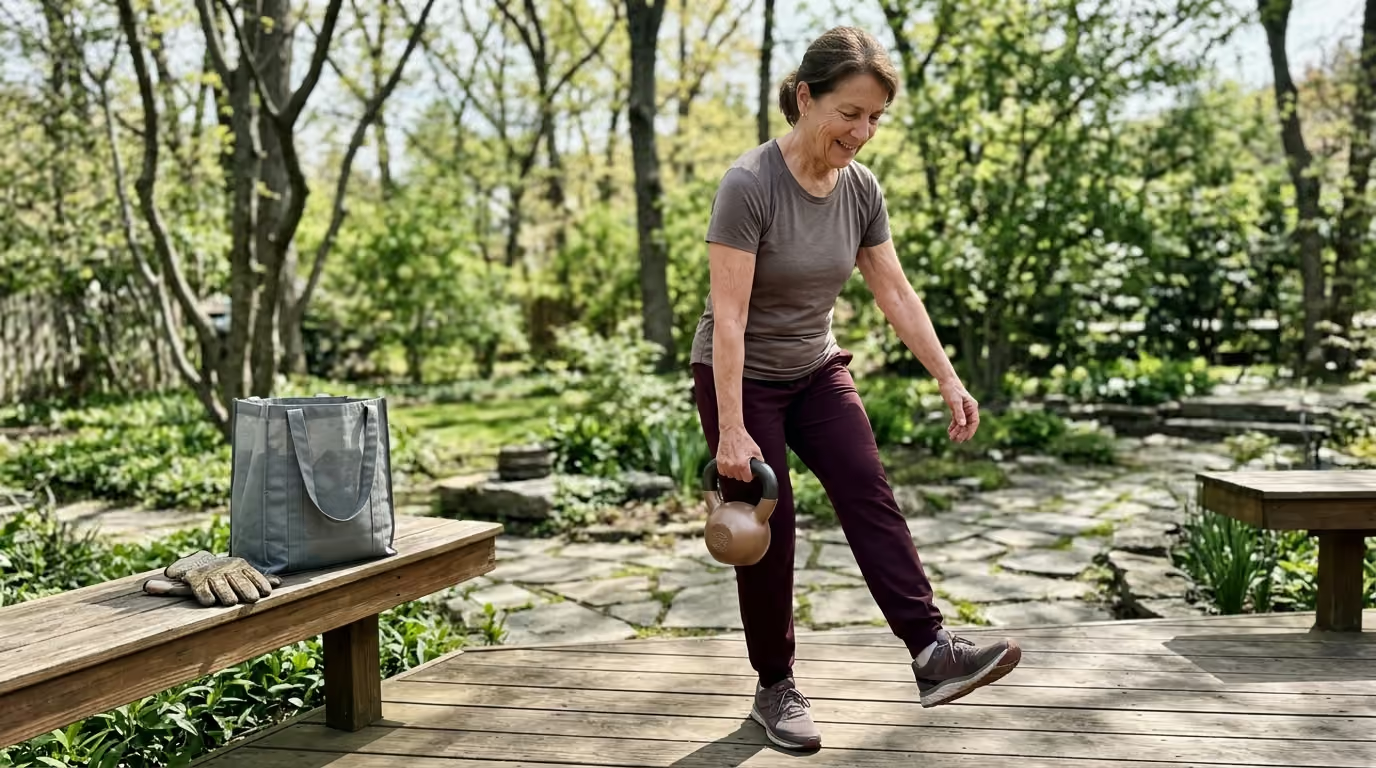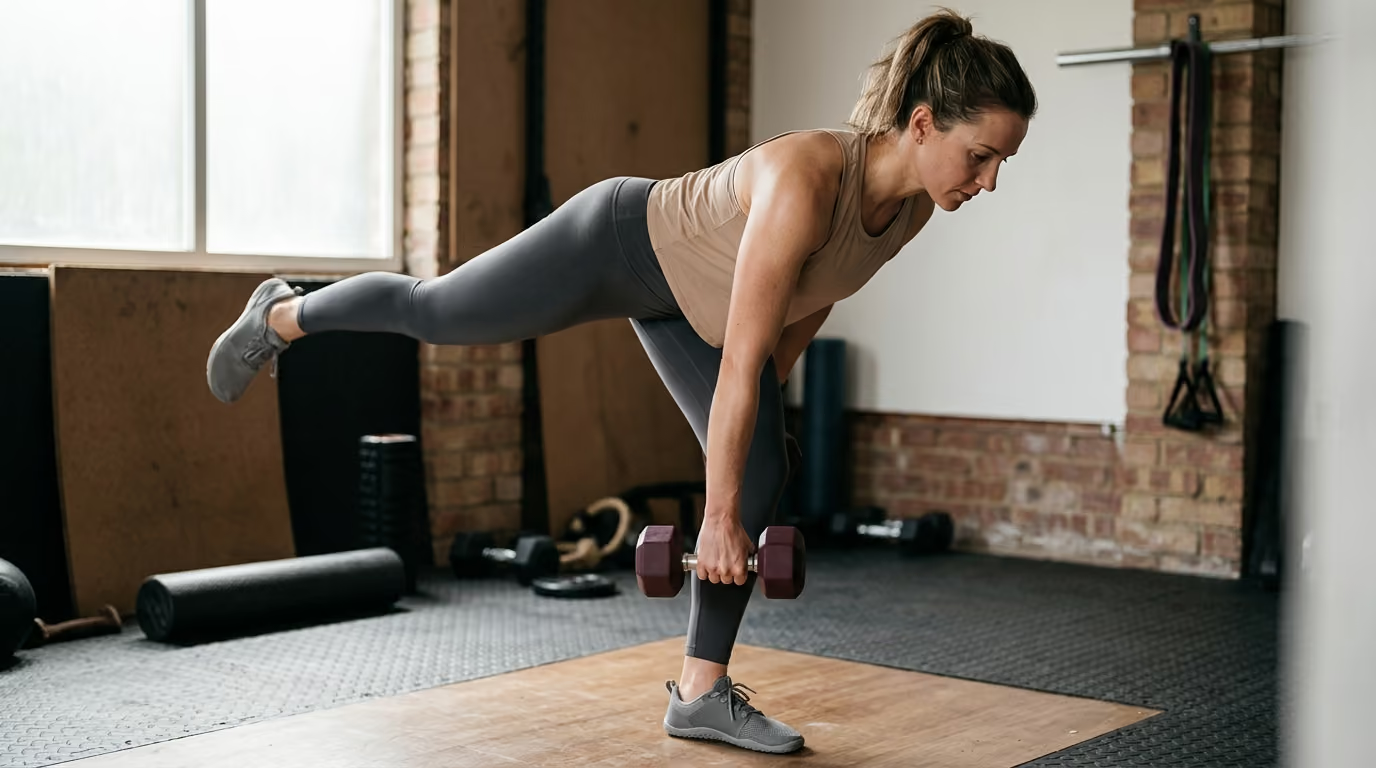

Four foundational unilateral movement patterns eliminate hidden strength discrepancies and build exceptional joint stability for demanding outdoor athletic pursuits.





Most training programs operate on the assumption that bilateral exercises build balanced bodies. Lifters load a barbell across their shoulders, step into a squat rack, and assume that both legs are sharing the load equally. In reality, bilateral movements often hide severe side-to-side compensations. The stronger side naturally shoulders more load, masks joint instability, and leaves the weaker side lagging behind.
True physical capability requires the ability to produce, absorb, and direct force on one leg or with one arm. When you isolate movement to a single limb, you immediately expose hidden discrepancies in balance, mobility, motor control, and raw strength. For active adults who want to hike rugged mountain trails, ski demanding terrain, and stay resilient against injury, unilateral strength training provides an essential training stimulus.
This comprehensive guide details the physiological foundations of unilateral training. You will examine the latest scientific research on interlimb asymmetry, master four foundational unilateral movement patterns, and learn how to program these exercises for lifelong functional performance.
Unilateral strength training simply means producing force primarily through one limb at a time. This includes exercises such as split squats, single-leg Romanian deadlifts, single-arm presses, and offset carries. Its value does not stem from being universally superior to bilateral lifting. Instead, unilateral training makes side-to-side differences visible, quantifiable, and directly trainable.
For decades, conventional gym culture treated single-leg and single-arm movements as mere accessory work. Athletes performed heavy bilateral back squats and bench presses first, saving a few light lunges for the end of a workout. Research now demonstrates that single-limb training stimulates profound neuromuscular adaptations that bilateral training cannot match.
When you train on one limb, you reduce your base of support. This immediately increases demands on hip stabilizers, trunk anti-rotation muscles, and foot mechanics. You can develop high levels of usable strength while placing far less compressive load on the spine.
Building durable physical capacity requires an intelligent combination of both modalities. Unilateral exercises build joint stability and eliminate weak links, while bilateral lifts allow you to overload raw force production. Integrating both methods ensures your body remains balanced, symmetrical, and prepared for real-world physical challenges.
The human body is naturally asymmetrical. Internal organs are distributed unevenly, and everyday life encourages handedness and lateral preferences. However, when side-to-side physical differences become excessive, movement efficiency and athletic performance can suffer.
To address these imbalances effectively, you must understand the underlying neuromuscular mechanisms that govern single-limb force production.
One of the most fascinating phenomena in exercise physiology is the bilateral deficit. This occurs when the combined force produced by both limbs together is less than the sum of the forces each limb can produce independently. For example, an athlete might be able to leg press 200 pounds with their right leg and 200 pounds with their left leg, but only 360 pounds using both legs simultaneously.
Researchers believe the bilateral deficit stems from neural inhibition and motor cortex recruitment patterns. When both limbs work together, the central nervous system distributes neural drive across a broader network of motor units. When training a single limb, the nervous system can direct maximal neural drive to that specific working side.
Studies show that bilateral training tends to reduce the bilateral deficit, whereas unilateral training can increase it. This adaptation is entirely task-specific. If your physical activities require unilateral power, such as sprinting or stepping across uneven terrain, single-limb training optimizes neuromuscular efficiency for those exact demands.
Scientific literature categorizes interlimb asymmetry into distinct domains. A common mistake is assuming that an imbalance is purely a deficit in muscular strength. In practice, imbalances usually fall into one of two categories:
A trainee may produce equal force on both legs during a split squat, yet display poor knee tracking and pelvic drop on the left side. Conversely, another individual might display clean movement mechanics on both sides, yet experience rapid muscular fatigue on their non-dominant leg.
A meta-analysis published in the British Journal of Sports Medicine examined how lower-limb asymmetries affect performance. The researchers found that asymmetries in single-leg jump testing were associated with reductions in sprint speed and change-of-direction performance. Interestingly, vertical jump height was largely unaffected by these imbalances. This finding reinforces that asymmetries affect multi-directional, dynamic movement far more than simple linear bilateral tasks.
Cross-education describes the phenomenon where training one limb results in strength gains in the untrained, opposite limb. For years, fitness enthusiasts believed that cross-education could automatically correct dominant-side imbalances.
A 2024 systematic review examined the evidence surrounding asymmetrical strength transfer. The researchers found minimal support for the idea that strength transfers reliably from a dominant limb to a non-dominant limb. Cross-education remains a valuable clinical concept during injury rehabilitation when one limb is immobilized in a cast. However, for healthy adults, it is not a substitute for direct, focused unilateral training on both sides.
Bilateral exercises operate almost exclusively in the sagittal plane, moving straight up and down. Daily life and outdoor adventures, however, require multi-planar control.
When you stand on one leg, gravity creates a rotational and lateral tipping force on your pelvis. The gluteus medius, tensor fasciae latae, adductors, and quadratus lumborum must contract simultaneously to keep the pelvis level. Single-arm pressing and carrying movements similarly create rotational forces across the spine. Unilateral training conditions the deep stabilizers of the trunk and hips to resist these rotational forces, creating a stable core that protects your lower back during demanding activities.
Before you begin loading unilateral exercises, you must establish an objective baseline. Attempting to lift heavy weights on an unstable joint only reinforces poor movement patterns.
A structured diagnostic assessment reveals whether your limitation is raw strength, joint mobility, or neuromuscular control.
Observe how each side of your body responds to bodyweight movements. When you notice a side-to-side discrepancy, determine which specific factor is failing:
Matching your programming to the specific deficit is critical. A lack of balance requires movement practice and stability drills, while a lack of force capacity requires progressive overload.
Human movement varies from one repetition to the next. A single test trial is often influenced by learning effects, temporary distractions, or balance adjustments.
Research in the International Journal of Sports Physical Therapy recommends recording multiple trials and calculating the average score. When testing single-leg balance, jump distance, or split squat repetitions, perform three trials on each side. Comparing the average of three clean attempts provides an accurate assessment of your true baseline capacity.
To obtain reliable data, you must maintain identical testing conditions for both limbs. Ensure you standardize the following variables:
Changing your footwear or rushing the rest interval between sides invalidates the comparison. Document your results meticulously in a training journal.
Because asymmetry is task-specific, a person can be stronger on their right leg during a press, yet display superior dynamic balance on their left leg. A practical assessment battery should evaluate several distinct physical qualities:
Reviewing these results helps you identify whether your imbalances are localized to a single joint or represent a broader coordination pattern.
To build comprehensive physical capability, your training should emphasize four primary unilateral movement patterns. Each pattern targets specific muscle groups while demanding precise joint alignment and trunk stability.
Mastering these movements requires careful attention to setup, posture, and progressive loading.
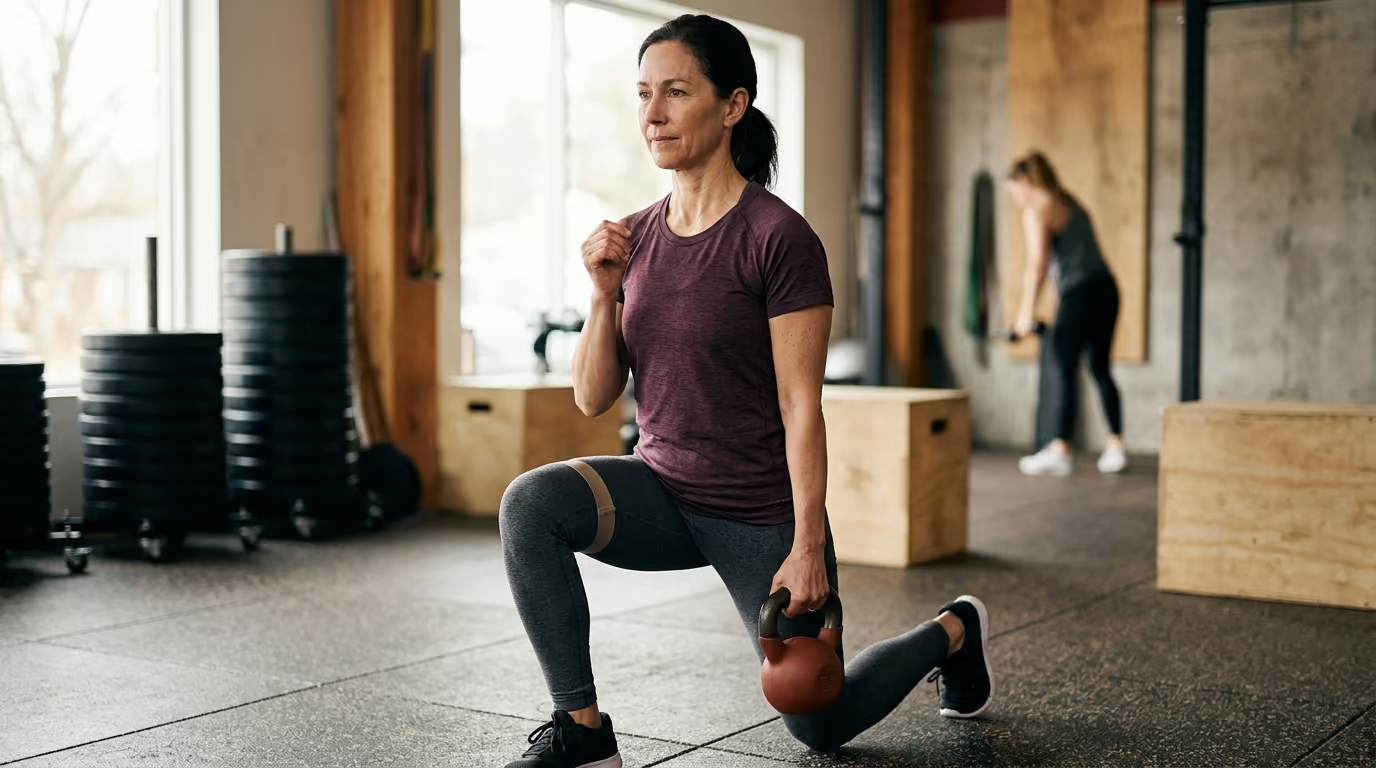
The split squat is the cornerstone of unilateral lower-body development. Unlike a true single-leg squat, both feet remain in contact with the ground, providing enough stability to safely handle meaningful external loads.
In a proper split squat, the front leg accepts roughly 75 to 85 percent of the total load. The front hip, knee, and ankle work through deep flexion, placing significant eccentric demand on the quadriceps and gluteus maximus.
Maintain a neutral spine with a slight forward torso lean that matches the angle of your front shin. The front knee should track directly over the second toe, avoiding medial collapse. The rear hip should remain extended, providing a dynamic stretch to the hip flexors while stabilizing the pelvis.
Focus on pulling your front hip back while driving your front big toe firmly into the floor. Lower your body with control over three seconds, allowing the back knee to lightly touch a padded mat directly beneath your hips. Drive through the entire front foot to return to the starting position without locking the knee aggressively.
The single-leg hinge develops posterior chain strength, targeting the hamstrings, gluteal complex, and deep spinal erectors. It requires exceptional balance and rotational control across the pelvis.
During a single-leg hinge, the standing leg acts as a rotational axis. As the hips travel backward, the torso hinges forward while the non-working leg extends straight behind the body to serve as a counterbalance.
The primary challenge is resisting pelvic rotation. The non-working hip naturally wants to rotate upward toward the ceiling. To maintain a neutral pelvis, keep the toes of the rear foot pointed straight down at the ground. Maintain a soft bend in the stance knee while driving the hips backward to load the hamstring eccentrically.
Imagine closing a door behind you with your back hip. Keep your lats engaged and pull the shoulder blades down to prevent the upper back from rounding. Lower the weight only as far as your hamstring flexibility allows while maintaining a rigid, neutral spine.
Single-arm pressing movements build upper-body pressing strength while demanding intense anti-lateral flexion and anti-rotation control from the trunk.
When pressing a weight overhead with one arm, the body naturally wants to lean away from the load and flare the lower ribcage. To maintain structural integrity, the abdominal wall must brace tightly to connect the ribcage to the pelvis.
The shoulder blade should rotate upward naturally along the ribcage during the press. Forcing the shoulder blade to stay pinned back and down restricts natural scapulohumeral rhythm and can lead to shoulder impingement over time.
Squeeze the glute on the pressing side to stabilize the pelvis. Inhale and brace your abdomen before initiating the press. Drive the weight upward while keeping the elbow slightly in front of your body in the scapular plane, finishing with your bicep aligned next to your ear.
Carries bridge the gap between static gym exercises and dynamic human gait. By unevenly distributing weight across the body, offset carries build exceptional grip strength, shoulder stability, and lateral trunk integrity.
Walking with an uneven load forces the quadratus lumborum, obliques, and hip abductors on the non-weighted side to contract vigorously. This muscular action prevents the torso from collapsing toward the heavy side.
The objective during an offset carry is to maintain completely normal walking mechanics. Your shoulders should remain level, your stride length should stay consistent, and your torso should remain perfectly vertical.
Stand tall as if a string is pulling the crown of your head toward the ceiling. Take deliberate, measured steps, placing your heel down first and rolling through to the big toe. Breathe smoothly into your diaphragm while maintaining abdominal tension, avoiding short, shallow breaths.
To explore how these movements fit into a broader physical preparation plan, visit our detailed guides in Strength and Physical Performance.
The primary value of unilateral strength training becomes obvious the moment you leave the gym and engage with the real world. Everyday movement, adventurous travel, and recreational sports rarely occur in symmetrical, controlled environments.
Whether you are navigating cobblestone streets in Europe or descending a steep scree field in the Rockies, single-limb strength dictates your stability and safety.
Last winter in Chamonix, I noticed something striking. It was not the altitude that forced my peers into the lodge by noon, it was a lack of rotational strength and poor recovery from the flight. We spend so much time debating the perfect supplement stack, yet we neglect the basic foundational strength required to actually enjoy our travels. That trip changed how I approach fitness. I stopped training for aesthetics and started training exclusively for capability.
When skiing, every turn requires independent leg control. Your downhill ski bears the majority of your bodyweight while negotiating variable snow and terrain vibrations. If your quadriceps and hip stabilizers lack unilateral strength, your form breaks down, leading to premature fatigue and increased stress on the knee joints.
Hiking over rugged terrain presents similar physical demands. Stepping up onto a high rock ledge requires single-leg concentric power from the glute and quadriceps. Stepping down requires immense eccentric control to decelerate your bodyweight without jarring your spine.
Unilateral training also protects your body during transit. Lifting heavy luggage into an overhead compartment while standing in a narrow airplane aisle is fundamentally an offset, rotational press. Building a foundation of unilateral strength ensures you handle these physical challenges with confidence and ease.
For additional strategies on maintaining physical readiness during demanding journeys, review our insights on Travel and Adventure.
Misinformation regarding structural symmetry and exercise selection is widespread. Trainees often waste energy worrying about minor, natural variations while ignoring practical principles of progressive loading.
Let us clarify several common misconceptions using established exercise physiology research.
A widespread belief in commercial fitness is that any measurable difference between the right and left sides represents an impending injury. Trainees often become anxious when an assessment reveals a five or eight percent strength difference between their legs.
Scientific reviews examining interlimb asymmetry demonstrate that minor differences are completely normal. The human body naturally adapts to daily habits, sporting backgrounds, and structural mechanics. Research published in the Journal of Science and Medicine in Sport indicates that asymmetries below ten to fifteen percent rarely impair performance or increase injury risk in non-contact activities.
An asymmetry only becomes concerning when it is accompanied by joint pain, significant movement compensations, or drastic deficits exceeding twenty percent. Focus on movement quality and general progression rather than obsessing over mathematical perfection.
When people identify a weaker limb, their initial instinct is often to perform double the sets and repetitions on that side. While this aggressive approach has shown utility in specific athletic rehabilitation contexts, it frequently backfires for general trainees.
Doubling the training volume on a weaker limb often leads to excessive local muscular fatigue, joint irritation, and compromised recovery. A more sustainable strategy is using weak-side matching. Complete your repetitions on the weaker side first, then match that exact repetition count on the stronger side, even if the stronger side has capacity remaining. Over time, the weaker side will catch up naturally without inducing chronic fatigue.
Fitness enthusiasts often refer to split squats and lunges as pure isolation exercises. In reality, single-leg exercises still require substantial contribution from the opposite limb, the pelvis, and the core.
During a rear-foot-elevated split squat, the rear leg actively assists with stabilization, balance, and hip extension. Describing these exercises as limb-dominant rather than strictly isolated provides a much more accurate physiological representation of what the body is doing.
In an effort to challenge balance, trainees often perform single-leg squats on foam pads, wobble boards, or balance domes. While these tools have a place in early-stage neurological rehabilitation, they are counterproductive for building usable strength.
Excessive surface instability forces the nervous system to drastically reduce motor unit recruitment to protect the joint. As a result, the amount of external weight you can lift drops precipitously. To build strength and stability, stand on a firm, stable surface and create instability through uneven loading, such as holding a single dumbbell or walking with an offset carry.
Most people assume their dominant writing or throwing side is automatically their strongest side across all physical tests. Research consistently demonstrates that this assumption is false.
A comprehensive review in Sports Medicine revealed that limb dominance is entirely task-specific. An individual may demonstrate higher jump power on their left leg because it acts as their plant foot during athletic movements, while their right leg exhibits greater maximal strength during a static leg press. Never make assumptions about your body without conducting objective testing.
To learn more about optimizing your physical longevity and movement quality, read our articles on Longevity and Living Well.
Implementing unilateral training does not require abandoning your favorite bilateral lifts. An effective resistance training program integrates both approaches, leveraging the maximal strength benefits of bilateral loading alongside the stabilization and symmetry benefits of single-limb work.
The following programming models allow you to systematically incorporate unilateral exercises based on your training history and physical goals.
This is the standard model for general physical conditioning and balanced hypertrophy. You perform the exact same sets, repetitions, tempo, and external load on both limbs.
This model is ideal for trainees who display minor, natural asymmetries and want to build overall physical durability.
If you identify a noticeable strength gap between limbs, use the weak-side matching protocol. Always perform the exercise on your weaker or less stable limb first.
Count how many technically sound repetitions you can complete before form begins to deteriorate. Rest, and then perform that exact number of repetitions on the stronger side, even if you could easily perform more. This protocol caps the progression of the dominant limb, allowing the lagging limb to close the gap over several weeks of training.
Pairing a heavy bilateral movement with an asymmetrical or unilateral accessory movement within the same session provides a complete training stimulus.
This pairing structure preserves your energy for maximal force production on the primary lift while ensuring stability, hip control, and rotational strength are consistently trained.
For busy adults who want to maintain exceptional joint health and balance without spending hours in the gym, the minimal effective dose approach delivers outstanding results.
Incorporate two focused unilateral sessions per week, dedicating just twenty to twenty-five minutes to three core movements.
This simple, highly focused routine hits all four foundational unilateral patterns, ensuring balanced physical development without creating excessive fatigue.
For guidance on managing systemic fatigue and enhancing tissue repair between sessions, review our practical resources on Recovery and Sleep.
The broader scientific and athletic community agrees that comprehensive physical training requires a diversified movement profile. Decades of sports science research have shifted the paradigm from rigid, barbell-only philosophies toward integrated athletic development.
The American College of Sports Medicine position stand on resistance training explicitly recommends incorporating both bilateral and unilateral exercises. The ACSM guidelines emphasize that multi-joint unilateral movements recruit stabilizing musculature and challenge motor coordination in ways that isolated or strictly bilateral exercises cannot replicate.
A meta-analysis published in Sports Medicine evaluated 28 randomized controlled trials comparing unilateral and bilateral resistance training interventions. The researchers concluded that both modalities produce significant, comparable gains in maximal strength and muscular hypertrophy.
However, unilateral training showed superior outcomes for unilateral jumping, sprint acceleration, and change-of-direction tasks. Conversely, bilateral training showed superior transfer to bilateral jump height and absolute barbell squat numbers.
This evidence reinforces the principle of training specificity. If your objective is purely to lift the heaviest possible weight in a powerlifting meet, bilateral lifts must dominate your routine. If your objective is athletic longevity, fluid movement on the mountain, and resilient joints that support an active life, unilateral training must form an essential component of your regimen.
For more evidence-based frameworks to enhance your physical capabilities, visit our collection of Performance and Fitness Resources.
Prioritizing balanced, single-limb strength ensures your body remains resilient, agile, and capable of meeting every physical adventure with complete confidence.
Stay connected for research and practical guidance on longevity, strength, recovery, energy and active living. New ideas to help you stay capable, curious and ready for more.


Explore practical guidance on strength, recovery, energy, travel and longevity for a life that stays active.
explore the Blog