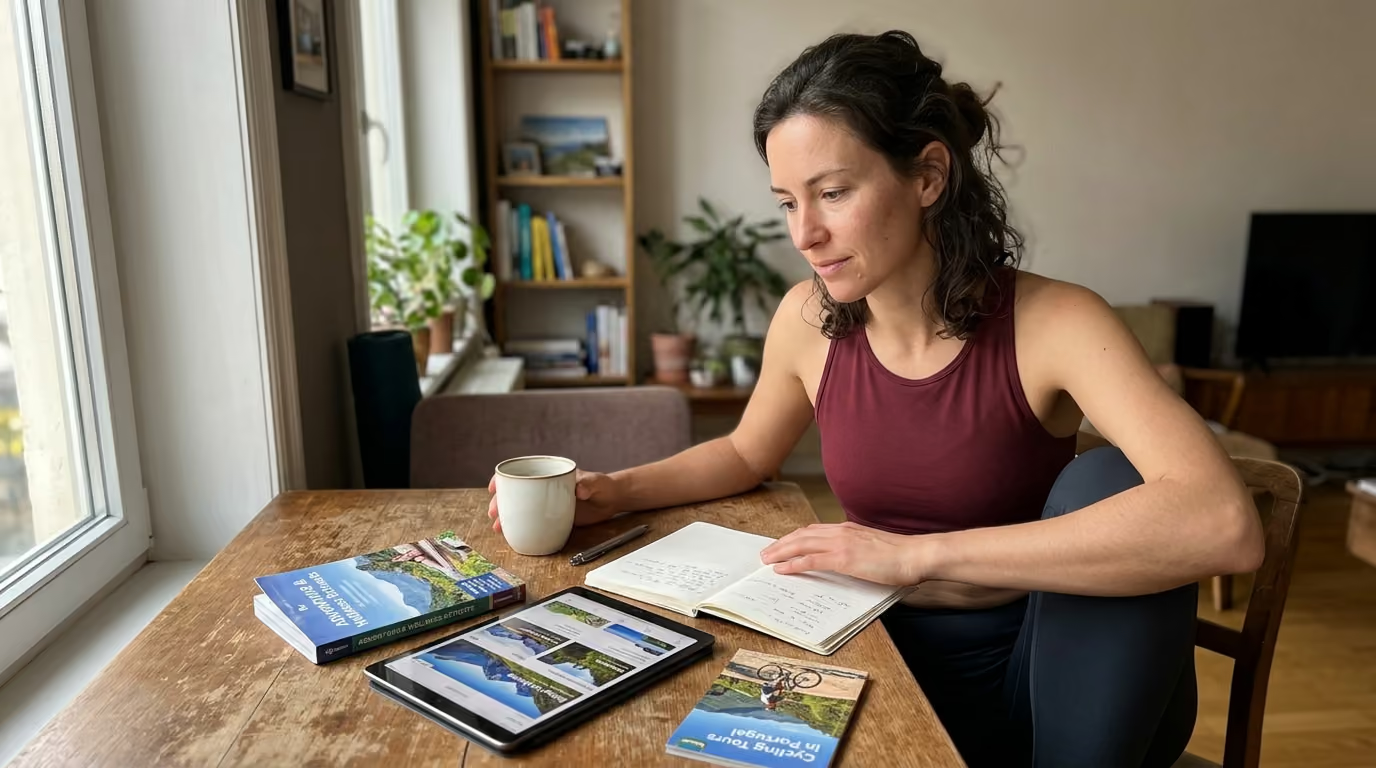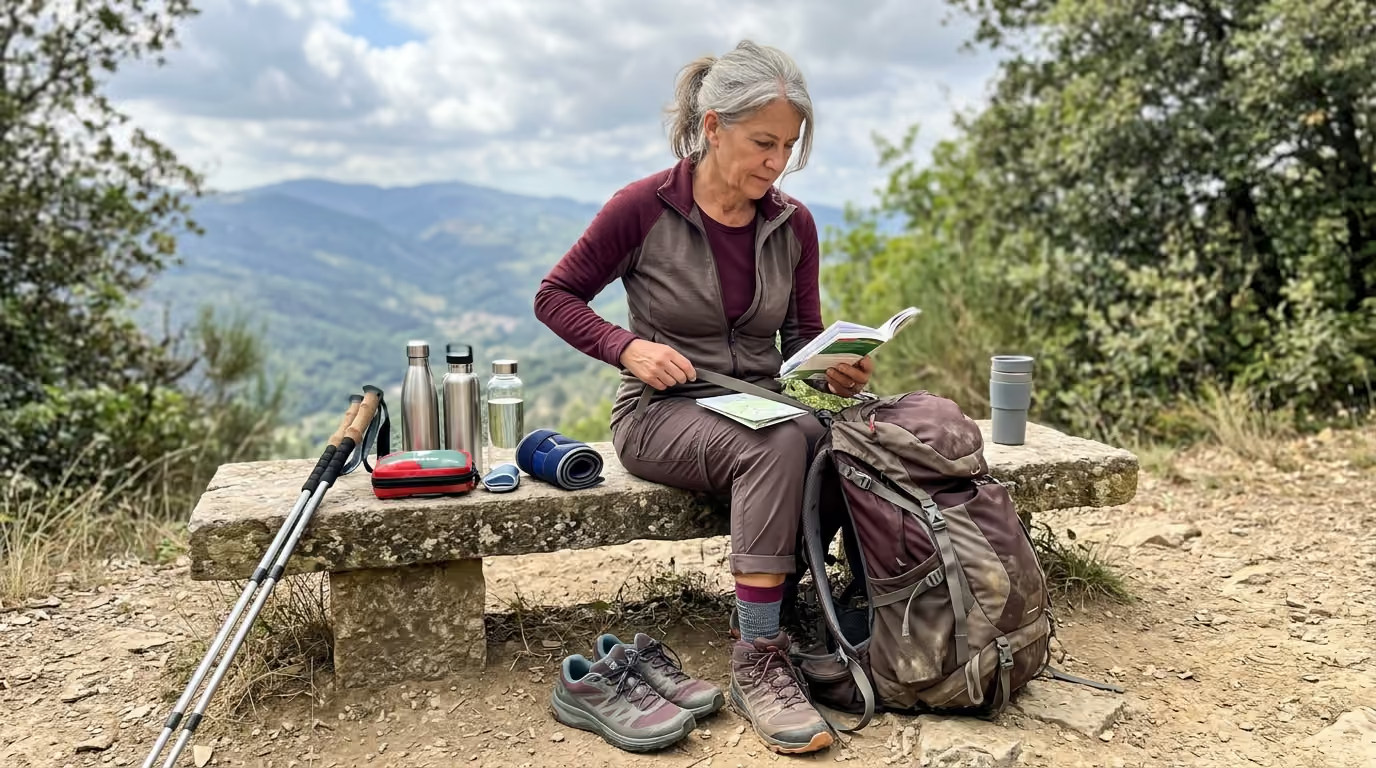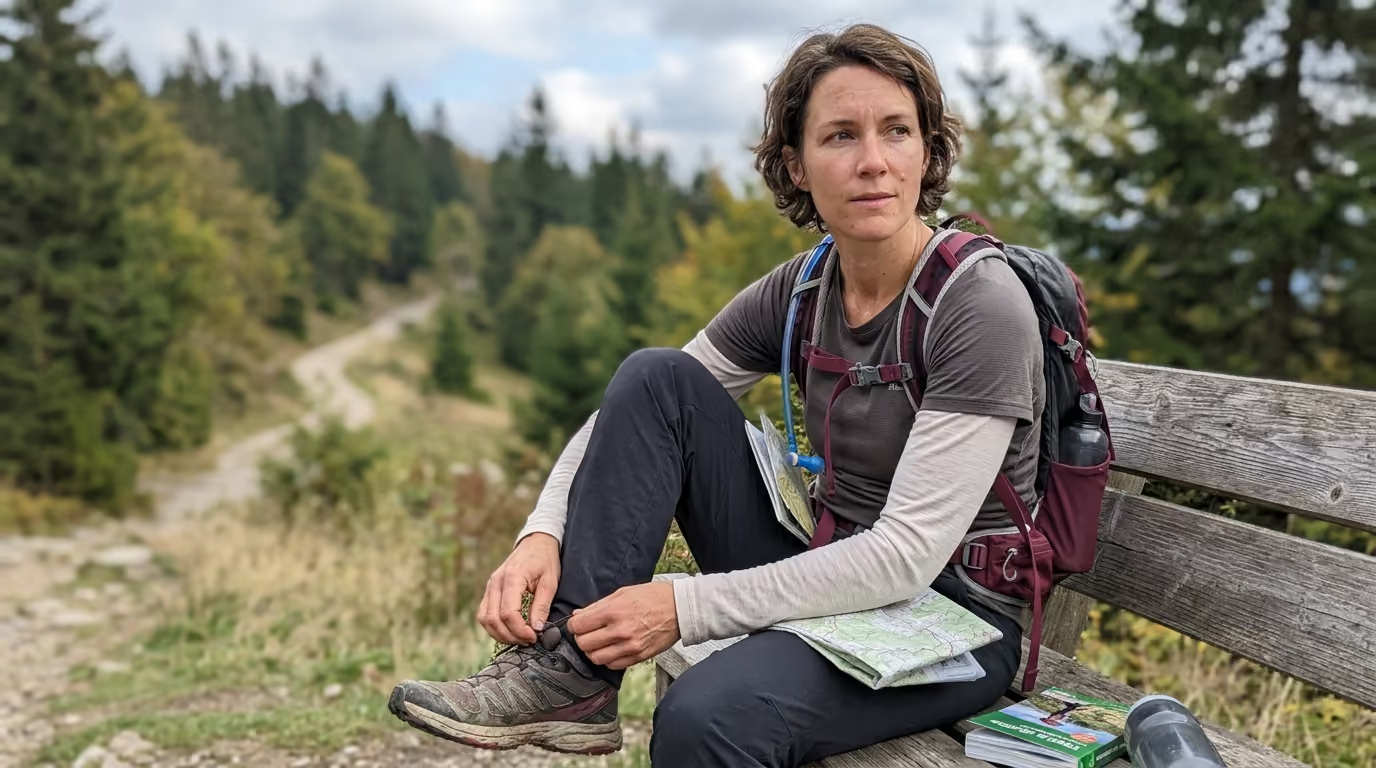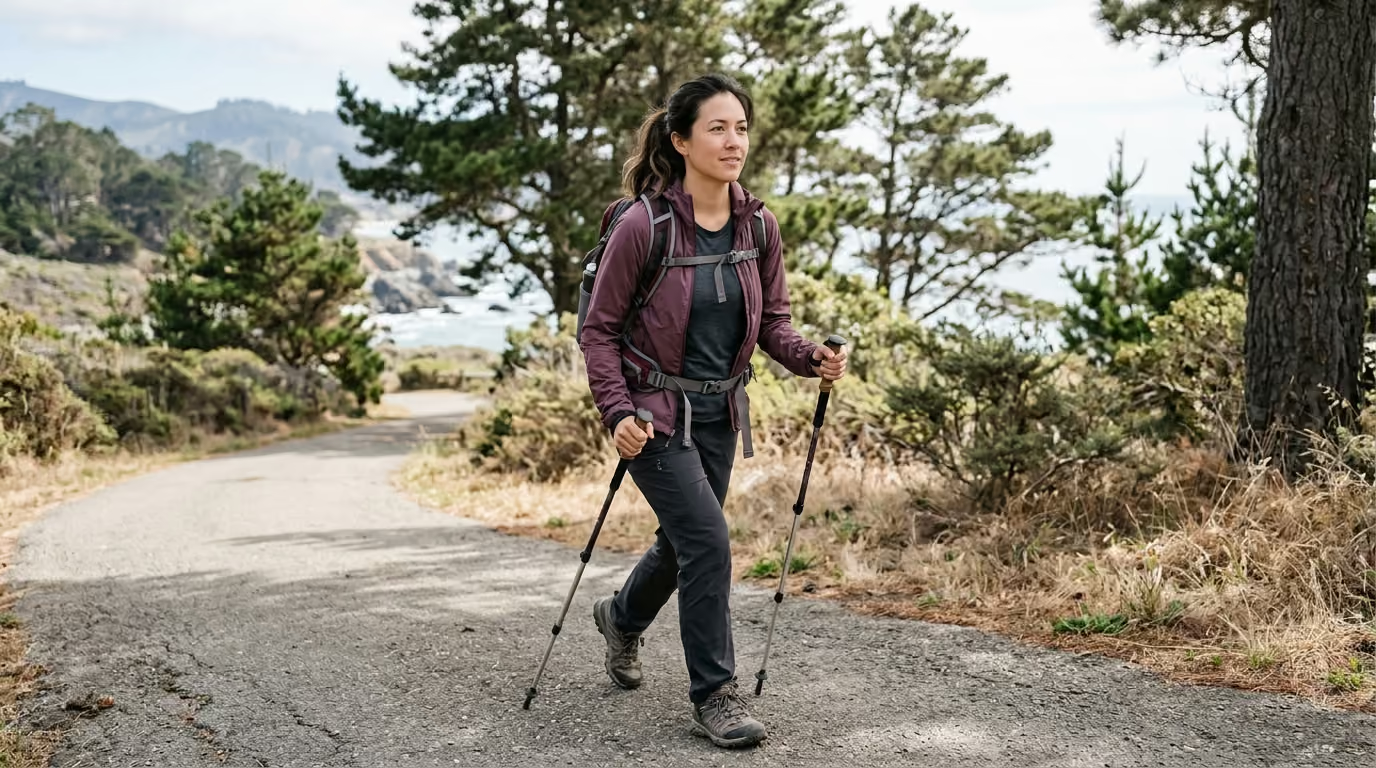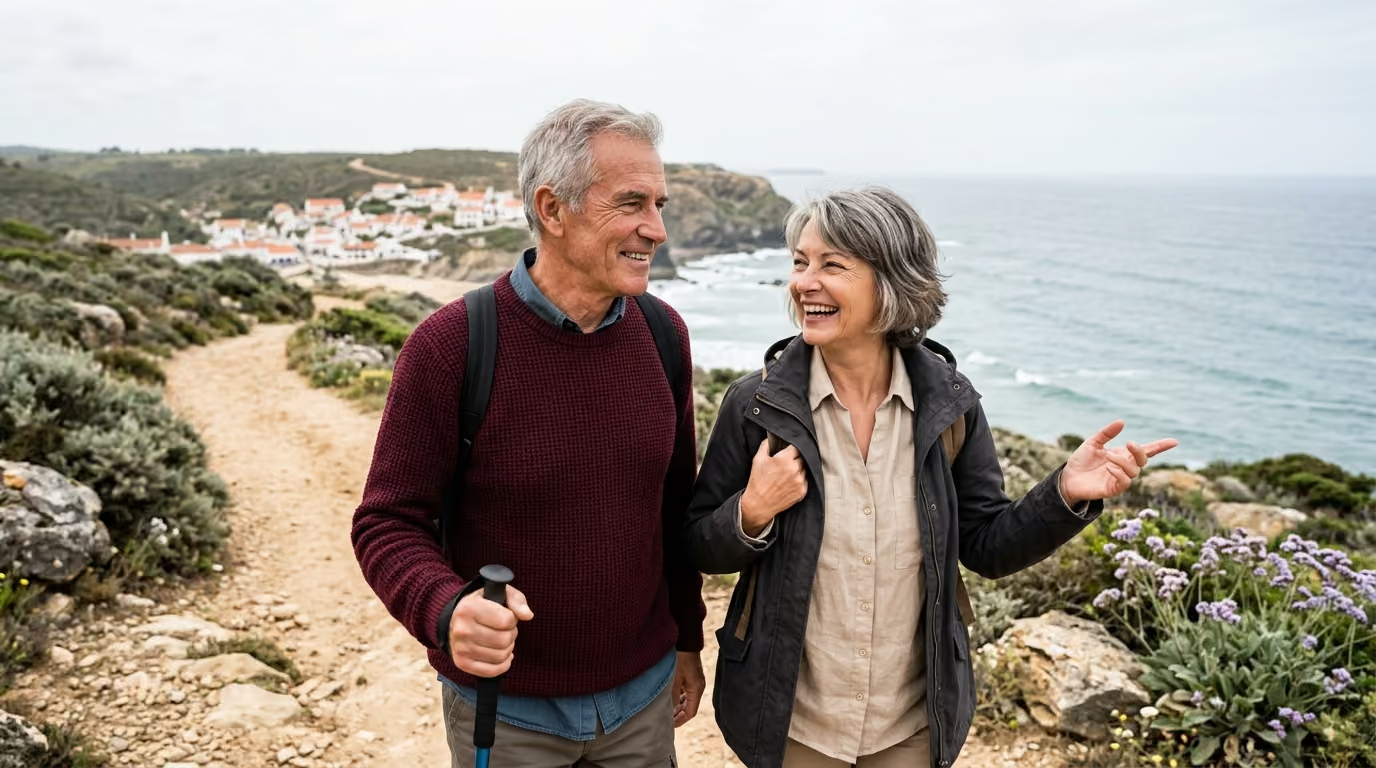

Navigating foreign transit systems and varied walking terrain strengthens physical vitality and cognitive sharpness to help sustain functional independence.





How to maintain physical independence and mental sharpness in your sixties, seventies, and beyond is a question many active adults search for online. You might wonder whether traveling the world actually protects your cognitive function, strengthens your joints, or extends your active years. The short answer is that travel is not a medical treatment or an automatic shield against the biology of growing older. It is, however, one of the most effective behavioral platforms available for reinforcing the real-world capabilities that keep you autonomous for life.
The conversation around longevity often focuses too heavily on laboratory markers and hypothetical timelines. For active adults, the real priority is functional capability. You want to remain capable of climbing stairs, carrying your own luggage, navigating unfamiliar cities, and making independent choices. True vitality is measured by what you can do in the real world rather than by calendar years alone.
Travel serves as a powerful training ground for this functional capacity. When you step out of your domestic routine, you place yourself in dynamic environments that require continuous physical and mental adaptation. You walk on varied surfaces, decode transit maps, speak new phrases, and solve unexpected logistical puzzles. These actions do not just pass the time on vacation. They directly stimulate the physiological and neurological systems required for daily independence.
At the same time, we must maintain scientific honesty. Booking a flight will not reverse cellular aging or guarantee immunity against chronic conditions. Research shows clear associations between leisure travel and improved cognitive function, lower rates of depression, and stronger social engagement. Yet these associations exist because travel bundles several proven health behaviors into a single experience.
When you design trips around movement, novelty, social connection, and intentional recovery, you reinforce the exact skills needed to live independently at home. You can read more about our approach to purposeful movement in our guide to travel and human performance strategies.
To understand how travel supports healthy aging, we must look at how the body interacts with new environments. The World Health Organization defines healthy aging as the process of developing and maintaining the functional ability that enables well-being in older age. This framework moves away from simply measuring the absence of disease. Instead, it focuses on your intrinsic capacity, which is the composite of all your physical and mental reserves.
Intrinsic capacity is divided into five core domains: locomotor capacity, cognitive capacity, vitality, sensory capacity, and psychological capacity. Travel challenges and supports every one of these domains simultaneously:
Functional ability is not an isolated personal trait. It is the ongoing interaction between your intrinsic capacity and the environment around you. An individual with minor knee stiffness may function with total independence in a city with smooth sidewalks, abundant seating, and reliable public transit. That same individual might struggle in a historic town with steep cobblestones and no rest stops.
True independence does not require doing everything entirely alone. A practical concept for the active traveler is interdependence, which means using available infrastructure, guides, or assistance while retaining complete control over your decisions. Choosing an accessible hotel or booking luggage transfers is an exercise of autonomy. It preserves your physical reserves so you can direct your energy toward meaningful experiences.
Travel acts as a multi-system intervention. When you analyze a well-planned itinerary, you find six specific mechanisms that support physical resilience, cognitive reserve, and psychological well-being.
Everyday life at home often encourages repetitive, predictable movement patterns. You walk across level floors, sit in the same ergonomic chairs, and drive along familiar routes. Travel immediately breaks this kinetic monotony.
A single day in a walkable destination exposes your musculoskeletal system to diverse functional movements. You vary your walking speed to catch a connection. You step onto moving escalators, pivot around pedestrians on crowded sidewalks, and navigate uneven cobblestones. You rise from low café chairs and carry asymmetric loads such as shoulder bags or daypacks.
These varied movement patterns recruit stabilizing muscles around the ankles, knees, and hips. The World Health Organization recommends that adults perform at least 150 to 300 minutes of moderate aerobic activity weekly. They also strongly advise multicomponent physical activity emphasizing functional balance and strength training on three or more days per week. Travel makes reaching these aerobic thresholds effortless, while adding valuable balance challenges.
However, walking alone is not a complete fitness routine. Sightseeing does not replace intentional resistance training or dedicated balance work. A comprehensive approach to longevity and daily living well requires maintaining your strength foundation year-round so that travel remains effortless.
Navigating a new city requires active mental effort. Your brain must construct new mental maps, translate unfamiliar symbols, and manage sensory information. This real-world cognitive demand stimulates neural pathways that often remain dormant during routine domestic life.
Observational research shows significant associations between engaging in regular cognitive leisure activities and lower rates of cognitive decline. A systematic review published in neuroepidemiology literature noted that frequent cognitive leisure participation correlates with reduced risk of cognitive impairment. A landmark Australian cohort study of over 10,000 older adults found that active mental engagement and adult-literacy tasks were associated with a 9 to 11 percent reduction in dementia risk over the study period.
Travel serves as an applied form of this cognitive stimulation. When you calculate train schedules, memorize a neighborhood layout, or learn basic phrases in a foreign language, you practice complex executive function. You are not simply memorizing facts; you are solving practical problems under dynamic conditions. This strengthens cognitive reserve and builds mental confidence that carries over into your daily routine at home.
Isolation is one of the most significant risk factors for functional decline as adults grow older. Travel creates organic opportunities for human connection that break through social isolation.
Travel connects people across several layers of interaction:
Research examining leisure patterns indicates that traveling longer distances is associated with lower levels of loneliness and fewer depressive symptoms in older adults. Meaningful social engagement during travel stimulates emotional well-being and provides a sense of belonging. The key is prioritizing quality interactions over superficial crowds.
Spending time in natural environments produces measurable physiological and psychological benefits. Active travel often places you in national parks, coastal trails, alpine valleys, or botanical gardens.
Systematic reviews of nature-based interventions show consistent improvements in mood, stress regulation, and overall well-being across diverse adult populations. Natural environments lower sympathetic nervous system activation, which helps reduce resting blood pressure and cortisol levels. Walking along uneven dirt trails or coastal paths also challenges proprioception, improving your subconscious awareness of joint position and balance.
Nature exposure does not require extreme wilderness trekking. A stroll through an urban arboretum, a boat excursion on a quiet lake, or a scenic walk along a coastal path provides environmental restoration. These settings allow your nervous system to recover from the sensory overstimulation of urban transit hubs.
Travel constantly invites you to learn and apply new skills. You might learn how to use a foreign transit ticketing app, master a local culinary technique, adjust to driving on the opposite side of the road, or navigate a sea kayak.
Psychologically, successfully executing a new task builds self-efficacy, which is your internal belief in your ability to handle challenging situations. When an active adult navigates an unfamiliar foreign airport or manages a train transfer without assistance, their sense of personal competence grows.
This confidence is highly transferable. An individual who successfully manages complex travel logistics feels far more capable when managing medical appointments, home renovations, or community leadership roles back home. Competence in unfamiliar environments reinforces self-reliance across all areas of life.
Life transitions such as retirement, changes in caregiving responsibilities, or minor health setbacks can sometimes shrink an individual's personal world. Routine can slowly turn into restriction if you are not careful.
Travel provides an immediate antidote to this narrowing of experience. It places you in the role of the primary decision-maker. You choose the destination, set the daily pace, decide what to eat, and select which historical sites or natural landscapes to visit.
Autonomy is a fundamental pillar of psychological health. Deciding when to push forward with an ambitious day of sightseeing and when to rest at a sidewalk café reinforces personal agency. Travel reminds you that you are an active participant in your life, capable of curiosity, learning, and self-direction at any age.
Applying these healthy-aging mechanisms requires thoughtful trip design. Travel should challenge your capacities without overwhelming your ability to recover. Here are five practical examples of how to design trips that support long-term capability.
Consider a 68-year-old traveler spending two weeks in Kyoto or Vienna. Instead of rushing through five cities in ten days, they stay in a single, highly walkable neighborhood near excellent public transit.
Their daily schedule includes one major morning activity, such as touring an architectural site or visiting an art museum. They walk two to four miles at a moderate pace, stopping regularly at neighborhood gardens and tea houses. In the afternoon, they return to the same local café, establishing a warm social connection with the staff.
This itinerary delivers steady aerobic movement, gentle balance challenges on historic steps, cognitive stimulation through language and history, and low logistical stress.
A family trip to the Italian Dolomites or the Canadian Rockies includes grandparents in their seventies alongside adult children and teenage grandchildren. Rather than forcing everyone into the exact same physical schedule, the trip utilizes tiered activity options.
In the morning, the younger family members take a strenuous eight-mile ridge hike. The grandparents take a scenic cable car to a high mountain hut, completing a gentle two-mile alpine loop with minimal elevation gain before settling on the terrace with a book. The entire family reunites at the mountain refuge for a long, shared lunch.
This structure preserves individual autonomy and avoids physical overexertion. It maintains deep social connection while allowing everyone to operate within their ideal physical capacity.
An active 72-year-old with mild knee osteoarthritis plans a trip to explore national parks in the American Southwest. Recognizing their joint limitations, they choose an itinerary focused on paved overlook paths, scenic drives, and low-impact outdoor activities.
They schedule short morning walks on flat, well-maintained trails before the midday heat sets in. Afternoons are reserved for swimming in the hotel pool, light stretching, and resting in air-conditioned comfort. They use trekking poles to reduce joint loading on downhill sections.
By matching the physical environment to their current capacity, they gain the full restorative benefits of nature exposure without triggering joint inflammation. You can review our detailed methods for joint preservation in our guide on strength and physical performance.
A recently widowed traveler in their early seventies decides to take their first solo trip across Switzerland by train. Before departing, they practice using regional rail apps and digital mapping tools in their home city.
During the journey, they utilize pre-arranged station luggage transfers, allowing them to travel between alpine villages with only a light daypack. They stay in small, family-run hotels where the owners provide daily route recommendations and personal conversation.
The trip provides a massive boost in self-efficacy. Managing international rail connections independently reaffirms their organizational skills and restores their confidence in navigating the world solo.
A retired professional joins a small-group marine conservation or archaeological survey program in the Mediterranean. The daily routine combines classroom lectures with hands-on field measurements and light manual tasks.
The physical demands are moderate but meaningful. Participants work together in small teams, cataloging artifacts or recording coastal wildlife data. The trip provides intellectual rigor, physical engagement, and a deep sense of contribution to a broader scientific mission.
This combination of cognitive demand and purposeful collaboration directly reinforces psychological vitality and social belonging.
The modern wellness industry frequently makes exaggerated claims about the health benefits of international travel. To make informed decisions, you must separate marketing hype from solid biological reality.
The most common misconception is that frequent travel directly extends your lifespan. You will often see claims that regular vacations prevent heart disease or halt cognitive decline.
The existing scientific literature does not support a direct causal link between tourism and prolonged lifespan. The research shows clear associations between leisure travel and improved well-being, but these studies are inherently observational. People who travel frequently often possess higher levels of education, greater financial resources, better baseline health, and stronger social support before they ever board an airplane.
Travel should be viewed as an enjoyable vehicle for practicing proven health behaviors. It is not an independent medical cure for biological aging.
It is easy to assume that logging 15,000 steps a day while sightseeing means you have covered all your fitness needs. While high daily step volumes provide excellent cardiovascular benefits, walking alone lacks two crucial components of functional longevity: progressive resistance and dedicated balance training.
Walking on level city streets does not generate sufficient load to build or maintain muscle mass in the upper body, core, or posterior chain. It also does not fully challenge the dynamic balance systems required to prevent falls under complex conditions.
If you rely solely on walking during extended travel, you may experience a gradual loss of functional strength. An effective healthy-aging routine must pair daily travel walking with targeted bodyweight exercises, resistance band movements, and balance drills.
Neuroscience confirms that novel stimuli encourage neuroplasticity and cognitive engagement. However, there is a distinct threshold where healthy novelty transforms into disruptive distress.
Excessive environmental chaos, extreme language barriers, confusing itineraries, and severe sensory overload can trigger intense acute stress. This leads to elevated cortisol, gastrointestinal distress, decision fatigue, and severe sleep fragmentation. For individuals managing early cognitive changes or sensory limitations, an overly complicated environment can cause disorientation rather than cognitive enhancement.
The goal of travel should be graded novelty: environments that are comfortably unfamiliar and stimulating, yet sufficiently orderly to allow for predictable navigation and restful sleep.
Immersion in nature provides undeniable restorative benefits, but natural settings present real physical hazards that increase with age. Heat illness, dehydration, sudden hypothermia, altitude sickness, poor trail footing, and delayed emergency medical access can turn a scenic outing into a medical crisis.
Age-related changes in thirst perception and thermoregulation make older adults more susceptible to rapid dehydration and heat stress. A trail that was simple at age thirty requires more planning at sixty-five. Checking terrain profiles, carrying proper hydration, monitoring weather shifts, and knowing local emergency evacuation protocols are essential requirements for capable adventure travel.
You do not need to embark on grueling, high-altitude expeditions to gain the functional benefits of adventure. The most sustainable approach relies on what we call the minimum effective dose of travel challenge.
The objective is to introduce enough physical and mental novelty to stimulate adaptation without generating excessive fatigue that ruins your trip. A well-balanced itinerary follows a clear, sustainable rhythm:
Pacing is an active performance strategy, not a sign of physical weakness. By intentionally managing your energy expenditure, you ensure that every day of your trip remains enjoyable and physically restorative. To learn more about structuring your daily rest and energy, read our comprehensive resource on recovery and regeneration.
Long-distance transit is one of the most physically demanding aspects of adventure travel. Crossing multiple time zones disrupts your internal circadian clock, impairing sleep architecture, metabolic regulation, cognitive performance, and immune function.
In our experience, travelers over forty cannot simply push through severe jet lag with sheer willpower. After a grueling thirty hour transit to Tokyo, I realized my old strategy of just powering through was no longer working. I felt foggy for three days, struggling with basic navigation and persistent fatigue.
Our team started digging into circadian biology and realized that timing light exposure and fasting during long-haul flights could completely shift transit recovery. Now, I never board a long haul flight without a precise schedule for when to eat, when to seek bright light, and when to put on an eye mask. It is the difference between losing a week of your trip and hitting the ground running.
When you cross time zones, your central circadian pacemaker in the suprachiasmatic nucleus must synchronize with the local solar day. You can accelerate this process through three primary environmental signals:
Managing demanding travel also requires attention to destination-specific health risks. The Centers for Disease Control and Prevention provides detailed travel notices regarding required vaccinations, regional water safety, and vector-borne illnesses. Reviewing destination guidance and carrying necessary medications in your carry-on luggage ensures that simple health disruptions do not derail your functional independence abroad.
The broader scientific and public health community agrees on several clear principles regarding physical capability, cognitive maintenance, and lifelong independence. Understanding these established facts helps put the role of travel into proper perspective.
First, regular physical activity is universally recognized as the single most effective intervention for preserving functional capacity in older adults. The World Health Organization, the American College of Sports Medicine, and global health authorities emphasize that maintaining aerobic endurance, muscular strength, and balance is essential for fall prevention and independent living.
Physical activity guidelines emphasize several key benchmarks for adults:
Second, cognitive reserve is built through lifelong engagement in mentally demanding, complex activities. Epidemiological research consistently shows that individuals who maintain rich intellectual, social, and physical pursuits experience better cognitive outcomes as they age. However, researchers emphasize that no single leisure activity, including tourism, acts as a guaranteed preventive measure against neurodegenerative diseases.
Third, the relationship between independence and environment is dynamic. Global fall-prevention guidelines emphasize that safe functional movement depends equally on an individual's balance capacities and the physical hazards of their immediate surroundings.
Travel serves as a practical, engaging environment where all these evidence-backed behaviors converge. When combined with a consistent baseline of performance fitness, travel allows active adults to test, refine, and enjoy their functional capacities across the world.
Building the physical and cognitive capacity for lifelong adventure begins long before you arrive at the airport. You can take immediate, practical steps this week to prepare your body and mind for your next journey.
Use this checklist to build your travel readiness over the next seven days:
Stay connected for research and practical guidance on longevity, strength, recovery, energy and active living. New ideas to help you stay capable, curious and ready for more.


Explore practical guidance on strength, recovery, energy, travel and longevity for a life that stays active.
explore the Blog