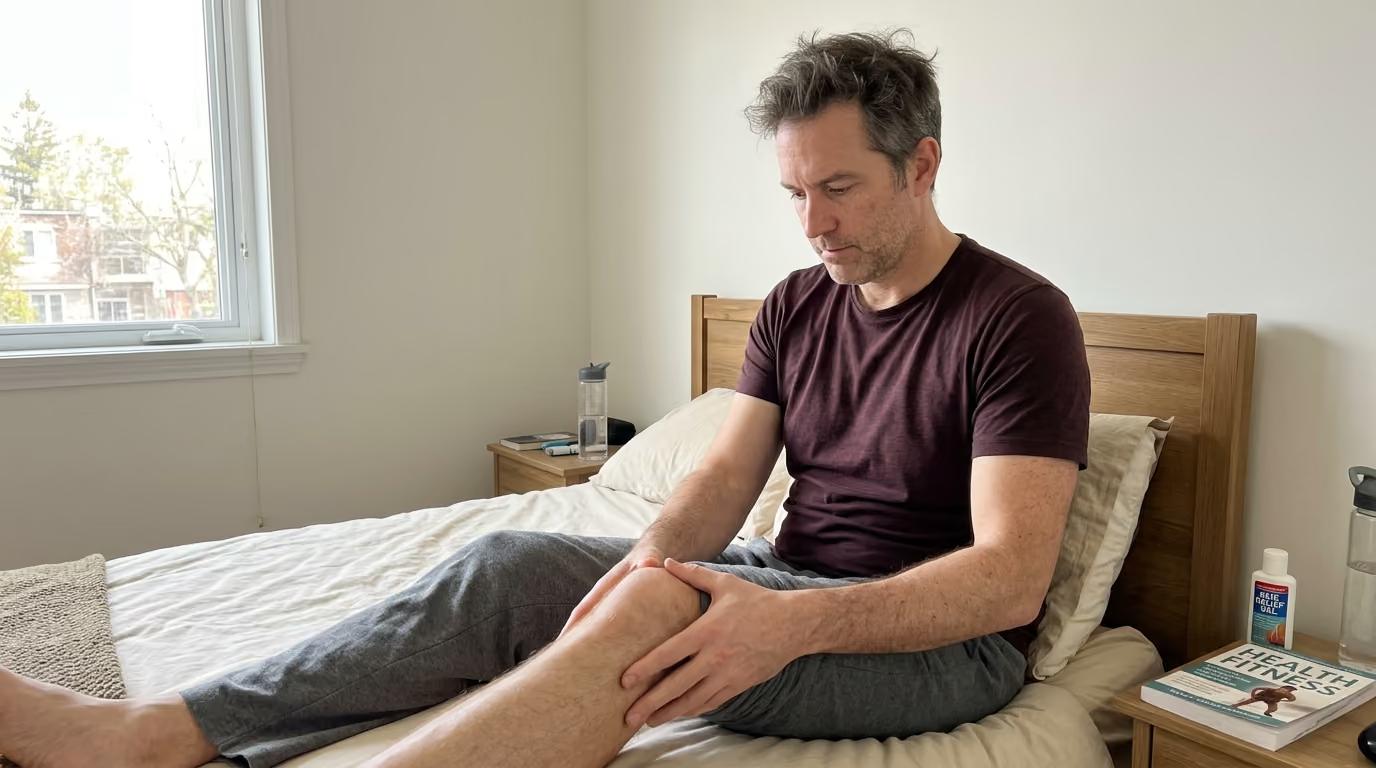

Sustained athletic performance and pain-free Mondays become achievable through structured weekend training blocks, weekday baseline conditioning.





Most recreational athletes assume that severe soreness on Monday morning is a badge of honor. They believe pushing through a grueling Saturday morning tennis match or a three-hour mountain bike ride proves their physical resilience. In reality, crippling post-weekend stiffness is rarely a sign of superior fitness. Instead, it is a clear warning sign of an unmanaged load spike.
The primary challenge for active adults is not the desire to work hard on weekends. The problem is concentrating an entire week of physical demand into a narrow 48-hour window after days of desk work. When unconditioned tissues encounter sudden high volume, intense impact, and heavy eccentric forces, the body responds with prolonged inflammation and fatigue.
Building a resilient body after 40 does not mean abandoning ambitious weekend adventures. It requires closing the gap between your baseline weekday conditioning and your peak weekend ambitions. By managing acute workloads, supporting biological repair, and structuring sensible training blocks, you can enjoy demanding sports without losing several days to debilitating stiffness.
Athletic load extends far beyond the simple number of miles run or minutes spent on the field. The International Olympic Committee defines athletic load broadly. It includes physical training volume, movement intensity, psychological stress, environmental conditions, and travel demands.
To manage your physical readiness, you must understand the difference between acute load and chronic load. Acute load represents the total physical stress you accumulated over the previous seven days. Chronic load reflects the average workload your tissues have adapted to tolerate over the past three to six weeks.
When your acute workload drastically exceeds your chronic training base, you create a load spike. Research cited by the International Olympic Committee indicates that when the acute-to-chronic workload ratio rises above 1.5, the likelihood of sustained tissue injury more than doubles. For someone who sits in meetings from Monday through Friday, a five-hour hike on Saturday represents an extreme workload ratio.
As we age past 40, biological recovery processes change in subtle ways. Muscle protein synthesis becomes slightly less responsive to simple exercise stimuli without adequate protein and rest. Connective tissues such as tendons, ligaments, and joint capsules naturally lose some elasticity. These structures adapt more slowly to mechanical tension than the cardiovascular system.
Your heart and lungs might easily remember how to sustain two hours of vigorous singles tennis. However, your Achilles tendons, calf muscles, and lumbar spine might lack the recent mechanical conditioning required to absorb those forces. This discrepancy creates a fitness gap where cardiovascular enthusiasm exceeds local tissue tolerance.
Recovery after demanding exercise is a multidimensional process. It involves the restoration of muscle force output, tendon repair, nervous system rebalancing, glycogen replenishment, and mental alertness. A comprehensive approach to recovery and regeneration ensures that every physiological system receives the support it needs to rebuild.
Delayed-onset muscle soreness, commonly known as DOMS, is a normal response to unfamiliar physical work or heavy eccentric loading. Downhill hiking, rapid deceleration in court sports, and high-volume resistance exercises frequently trigger this response.
A 2023 systematic scoping review published in Sports Medicine evaluated post-exercise recovery timelines in older adults. The authors found that muscle soreness after damaging resistance exercise typically peaks between 24 and 48 hours. Furthermore, full tissue recovery and performance restoration often take between three and five days.
Ordinary soreness presents as a diffuse, dull ache spread evenly across the muscle belly. It is often accompanied by temporary stiffness and slight tenderness to touch. Crucially, normal DOMS improves gradually each day and feels somewhat better as you move and warm up.
Structural injury presents a completely different clinical picture. Sharp, sudden pain during an explosive movement suggests localized tissue damage. Pain concentrated directly inside a joint, persistent swelling, visible bruising, and joint instability are clear indicators of injury rather than routine soreness.
NHS Inform guidance notes that ordinary post-exercise muscle aching should settle steadily within two to five days. If musculoskeletal pain persists beyond five days or worsens with simple daily movement, you should seek a professional medical evaluation.
To manage your weekly activity safely, use a four-zone readiness model before every training session:
Movement feels fluid and free of sharp discomfort. Joint structures feel stable, and baseline physical energy is normal. Soreness is mild, improving, and light warm-up sets make the body feel better.
You feel moderate stiffness, lingering fatigue from travel, or mild movement compensations. Reduce overall session duration by 20 to 40 percent. Remove high-impact plyometrics, heavy sprint intervals, and technical downhill running while keeping basic movement patterns intact.
Stairs, deep sitting, or normal walking feel significantly impaired by heavy soreness. Your previous night of sleep was severely disrupted. Dedicate this day to light walking, gentle joint mobility, and targeted hydration to support tissue blood flow.
Red flags require immediate cessation of exercise and prompt medical evaluation. These include localized joint swelling, inability to bear weight, severe focal pain, or sudden structural weakness.
You must also watch for symptoms of rhabdomyolysis following unusually intense or unaccustomed workouts. The Centers for Disease Control and Prevention lists dark, cola-colored urine, severe muscle pain, and profound physical weakness as primary symptoms. Rhabdomyolysis involves rapid muscle breakdown and requires immediate emergency medical attention.
The most effective way to prevent weekend athletic breakdown is to maintain a consistent baseline of physical capacity during the workweek. You do not need to spend hours in the gym every day to protect your body. Instead, you need strategic micro-doses of movement that keep your joints, tendons, and neuromuscular pathways primed for action.
CDC physical activity guidelines recommend multicomponent physical training for adults. This includes muscle-strengthening activities targeting all major muscle groups at least two days per week, alongside cardiovascular conditioning and balance work. Maintaining this multicomponent foundation ensures that weekend challenges do not arrive as a total shock to your musculoskeletal system.
A minimal effective dose program focuses on high movement quality and low systemic fatigue. Performing two focused 20-minute sessions during the week preserves tissue conditioning without interfering with professional schedules.
Prioritize fundamental movement patterns that replicate the demands of recreational sport:
Invest in targeted strength and physical performance during the workweek. Doing so keeps tendon stiffness and muscular coordination at levels capable of tolerating sudden weekend stops, turns, and jumps.
Treating Saturday and Sunday as separate, unrelated workouts is a common mistake among recreational athletes. A demanding Saturday session inevitably impacts your neuromuscular coordination and muscular capacity on Sunday morning. You should design your weekend as a cohesive 48-hour block using intentional intensity budgeting.
Dedicate Saturday to your primary, high-demand sport. This might be a competitive tennis match, a fast group road ride, or an intense round of basketball.
Use Sunday for low-impact, restorative aerobic work. A brisk flat walk, an easy swim, or light spin on a stationary bike promotes blood circulation without adding mechanical impact. This approach allows you to challenge your cardiovascular system on Saturday while preserving joint integrity on Sunday.
This structure suits activities like downhill skiing, multiday hiking, or recreational golf. Keep your effort level controlled and steady on Saturday, avoiding all-out maximum exertion.
Review your physical condition on Sunday morning using the readiness framework. If your movement remains smooth and joint discomfort is absent, you can execute a similar moderate session on Sunday.
When participating in organized races, charity rides, or tournaments, eliminate all unnecessary supplementary physical stress. Avoid long walking tours, excessive standing, or late-night social gatherings before the event.
Prioritize a thorough warm-up to prepare cold tissues for explosive demands. Treat the entire day following the event as a mandatory recovery window dedicated to rest and nourishment.
Intensity budgeting requires practical discipline. If your weekend involves travel, hot weather, alcohol consumption, or short sleep, you must scale back pure training intensity. Combining extreme volume, unaccustomed terrain, dehydration, and poor sleep on the same weekend dramatically increases the likelihood of injury.
Musculoskeletal recovery depends directly on cellular hydration and nutrient availability. Approaching a demanding weekend under-fueled or dehydrated accelerates neuromuscular fatigue. It also impairs coordination and increases the rate of exercise-induced muscle damage.
American College of Sports Medicine (ACSM) guidelines advise starting exercise in an adequately hydrated state. Fluid management should prevent excessive dehydration exceeding 2 percent of total body mass during long activities. Significant fluid losses impair cardiovascular efficiency, diminish heat dissipation, and elevate the perception of physical effort.
For activities extending past 60 minutes, plain water is often insufficient. ACSM recommendations highlight the utility of sodium concentrations between 0.5 and 0.7 grams per liter of fluid. Adding sodium improves fluid retention, supports cellular osmotic balance, and lowers the risk of exercise-associated muscle cramping.
Avoid extreme over-hydration with plain water, which can dilute blood sodium levels and cause dangerous hyponatremia. Fluid replacement should match your specific sweat rate, clothing choices, and ambient environmental conditions. A simple field check is to monitor your body weight before and after long weekend sessions.
Protein intake provides the essential amino acids required to repair damaged muscle fibers and stimulate protein synthesis. The International Society of Sports Nutrition recommends an intake of 1.4 to 2.0 grams of protein per kilogram of body weight daily for exercising individuals.
Rather than consuming a massive protein serving once a day, distribute your protein across three or four balanced meals. Each meal should provide between 30 and 40 grams of high-quality protein to support muscle protein synthesis.
Carbohydrates are equally critical for restoring depleted liver and muscle glycogen stores after long sessions. Pairing protein with quality carbohydrates in your post-exercise meal accelerates tissue repair and restores systemic energy balance.
Business travel, vacation schedules, and spontaneous adventures frequently disrupt consistent training. Travel imposes genuine physiological strain through circadian disruption, poor sleep environments, and extended periods of static sitting. The International Olympic Committee explicitly includes travel stress as a meaningful contributor to overall athletic load.
When traveling for business or leisure, beware of the vacation activity trap. Walking miles through airports, carrying heavy luggage, and standing on museum floors create a substantial physical base load. If you add an aggressive new sport on top of this accumulated fatigue, you create an uncalculated load spike.
Optimize your travel and human performance strategies by adjusting your workout expectations during trips. Use hotel gyms for joint maintenance, mobility work, and light resistance circuits rather than testing personal records. If an overnight flight leaves you exhausted, replace a planned high-intensity interval session with a restorative walk.
Sleep is the ultimate biological recovery tool for active adults over 40. A consensus statement from the American Academy of Sleep Medicine and Sleep Research Society recommends that adults regularly obtain at least seven hours of sleep per night.
Research highlighted by the British Journal of Sports Medicine shows that sleeping fewer than eight hours is associated with a 1.7 times higher risk of musculoskeletal injury. Sleep loss impairs reaction time, reduces movement coordination, and compromises executive decision-making. When planning an adventurous weekend away, safeguarding your sleep schedule is essential for physical longevity.
Learn how to integrate dedicated recovery and sleep routines while on the road to keep your nervous system balanced and resilient.
The modern wellness market is saturated with rapid-recovery gadgets, therapies, and supplements. Many athletes rely on these tools hoping to erase the consequences of poor weekly planning. Separating legitimate physiological mechanisms from marketing hype is essential for protecting your health and your time.
Severe soreness simply reflects unaccustomed eccentric mechanical stress and local tissue damage. It is an unreliable indicator of muscle growth, cardiovascular adaptation, or athletic progress. Deliberately seeking crippling soreness impairs training consistency and increases injury risk.
Athletes often spend thousands of dollars on pneumatic compression boots, massage guns, and ice baths while neglecting basic sleep and nutrition. A comprehensive systematic review and meta-analysis published in Frontiers in Physiology evaluated various post-exercise recovery modalities.
The researchers found that while massage provided minor subjective comfort, its clinical effect on exercise-induced muscle damage was small. Furthermore, evidence supporting cryotherapy, passive stretching, and very low-intensity exercise for tissue repair was weak or inconsistent. Passive tools can offer temporary comfort, but they cannot compensate for an unmanaged load spike.
Having a strong aerobic engine does not make your connective tissues immune to impact forces. Tendons and ligaments adapt to mechanical tension through specific resistance training and repeated loading cycles. Relying entirely on cycling or swimming will not prepare your lower legs for the high-impact forces of trail running or court sports.
The traditional guideline suggesting that you should never increase weekly training volume by more than 10 percent is a helpful heuristic, not an immutable law. The International Olympic Committee emphasizes that training progression must be individualized based on age, injury history, movement competency, and environmental factors. Sudden jumps in intensity or novel movement patterns can cause injury even when total volume remains within the 10 percent threshold.
Transitions between sports seasons represent the highest-risk periods for recreational athletes over 40. Transitioning from summer cycling directly into winter alpine skiing, or moving from winter gym workouts to competitive spring tennis, introduces sudden novel joint stresses.
A structured six-week progressive runway prepares connective tissues for specific sport demands before you head out for a full weekend:
Restore full range of motion in the joints most relevant to your sport. Introduce foundational multi-joint strength exercises with light to moderate loading. Focus on building control through full joint ranges.
Begin integrating movement patterns that mirror your upcoming sport. For court sports, introduce lateral lunges, change-of-direction drills, and progressive calf loading. For alpine skiing, incorporate isometric wall sits, loaded goblet squats, and balance board stability work.
Introduce controlled eccentric exercises and sport-specific tempos. Practice decelerating your body weight smoothly. If preparing for mountain hiking, incorporate slow step-downs and weighted downhill walking.
When your season officially begins, avoid attempting an all-day epic on your first outing. Cap your first day at 50 to 60 percent of your maximum perceived capacity. Step off the mountain or the court while your movement quality and neuromuscular coordination remain sharp.
Applying deliberate progression to your performance and fitness routines protects your joints from the shocks of seasonal sports.
The broader sports medicine and longevity communities agree on a fundamental principle: lifelong physical activity is essential for healthy aging, but sustainable consistency requires intelligent load management. Extreme swings between total inactivity and excessive weekend exertion create unnecessary injury risks and prolonged physical setbacks.
Consensus guidelines from the International Olympic Committee, the American College of Sports Medicine, and the CDC converge on three central pillars:
First, maintain regular, multicomponent training that blends resistance exercise, aerobic conditioning, and balance work throughout the week. This provides the structural foundation required to enjoy demanding sports safely.
Second, recognize that biological recovery is cumulative and multifaceted. High-quality sleep, individualized hydration, and structured daily nutrition form the true foundation of tissue repair.
Finally, listen to objective physical feedback. Using readiness frameworks, pacing your output, and modifying sessions when fatigue appears ensures that sport remains an enriching, lifelong pursuit.
With intelligent weekly planning and smart load management, you can tackle demanding physical adventures well past 40 while staying strong, pain-free, and fully capable.
Stay connected for research and practical guidance on longevity, strength, recovery, energy and active living. New ideas to help you stay capable, curious and ready for more.


Explore practical guidance on strength, recovery, energy, travel and longevity for a life that stays active.
explore the Blog