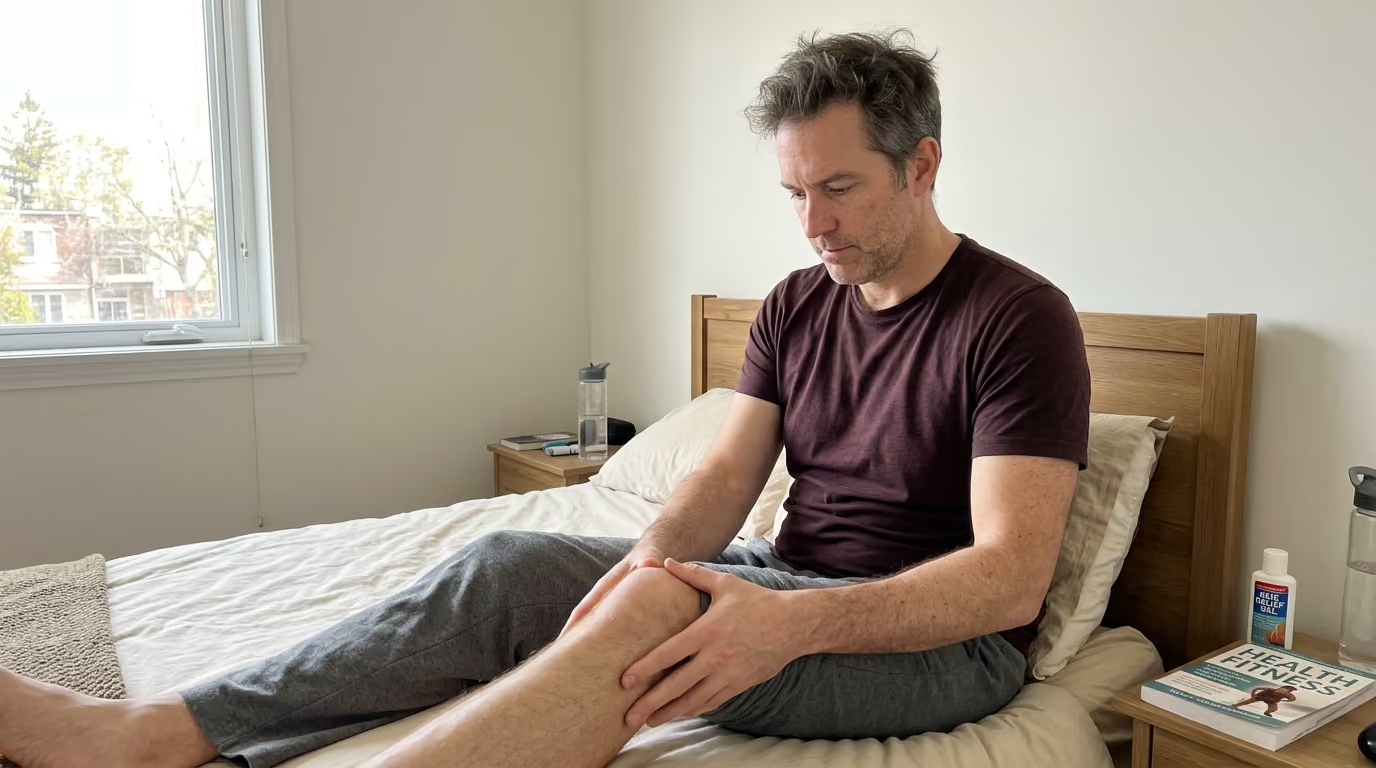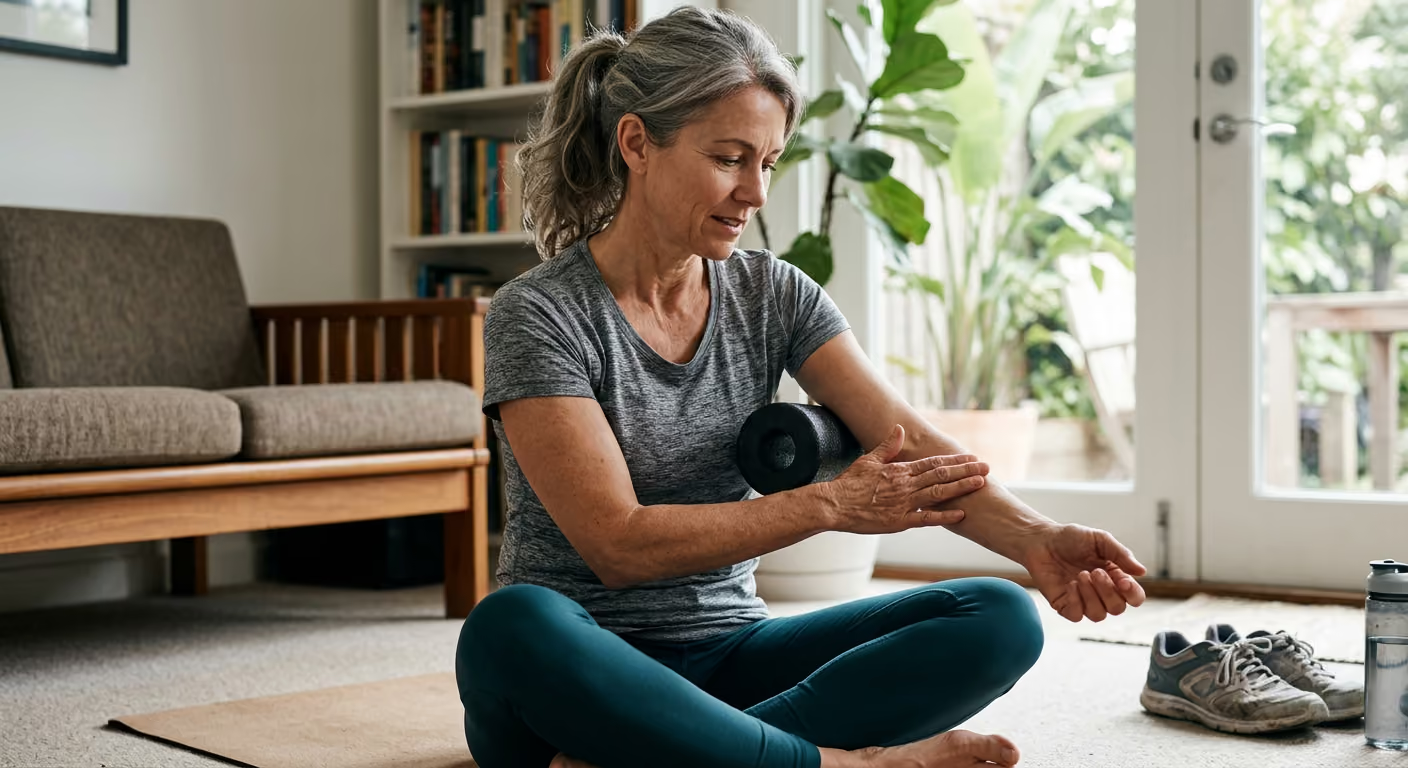

Seven core dimensions of physical recovery guide single-person experiments to identify effective post-workout interventions using measurable baseline.





You have likely typed variations of the same question into a search engine after a grueling workout or a long flight. Why am I still stiff two days after training, and is that expensive cold tub or massage gun actually helping me bounce back? The wellness marketplace is full of aggressive marketing claims, complicated gadgets, and proprietary recovery scores that promise immediate physical renewal. This guide provides a definitive answer by teaching you how to run a rigorous, personal experiment to discover exactly what works for your own body.
A recovery intervention is only useful if it produces a meaningful, verifiable improvement in your life. The central question is never whether an intervention has an interesting biological narrative or a celebrity endorsement. The real question is whether it improves the specific performance and wellness outcomes you care about, at an acceptable cost, without sabotaging your long-term progress.
Recovery is not a single biological number that can be distilled into a single morning wearable metric. It is multidimensional, encompassing tissue soreness, functional range of motion, nervous system readiness, sleep quality, and psychological motivation. Because individual biology varies widely, group averages in published papers can only provide hypotheses. You must test these hypotheses on yourself using a systematic, single-person experimental framework.
To determine whether an intervention is worth your time and capital, you can use a simple value calculation. The net value of any recovery strategy equals the observed benefit multiplied by its personal importance, minus its direct burden and potential risks. Burden includes the financial cost, time requirement, and travel friction of the method. Risk includes potential downsides, such as blunting muscular adaptation or masking a developing injury.
The most effective approach is to establish a clear baseline, introduce one intervention at a time, and evaluate the results across multiple trials. By focusing on practical measurements like next-day movement quality, resting soreness, and training consistency, you eliminate the noise. This structured process allows you to build a personal toolkit that preserves your independence, energy, and physical capability for decades to come.
Understanding recovery requires looking beneath marketing claims to examine how human tissues respond to mechanical and metabolic stress. When you lift weights, climb a mountain, or sprint, you create microscopic disruption within muscle fibers, deplete cellular energy stores, and stress connective structures. Delayed onset muscle soreness, commonly known as DOMS, typically begins roughly twelve hours after unaccustomed exercise and can persist for three to five days. According to clinical guidance on muscle recovery from Texas Health Resources, this discomfort is a normal response to structural remodeling, but severe swelling, joint pain, or loss of limb function indicates potential injury rather than healthy adaptation.
Recovery represents several distinct physiological systems returning to balance at varying speeds. Blood flow clears metabolic byproducts relatively quickly, while glycogen replenishment takes twenty-four to forty-eight hours depending on carbohydrate intake. Connective tissues and deeper cellular structures often require multiple days to remodel fully. Therefore, feeling subjectively good does not always mean your muscles and tendons have restored their full force-producing capacity.
A critical biological concept is the trade-off between acute relief and long-term adaptation. When you exercise, the temporary inflammation and oxidative stress you generate serve as the exact cellular signals that tell your body to build stronger muscles and denser mitochondria. If you aggressively shut down this inflammatory cascade immediately after every workout, you may feel better the following morning, but you might also blunt your long-term fitness gains.
A clear example of this dynamic appears in the research surrounding cold-water immersion. A systematic review published in the British Journal of Sports Medicine by Dupuy and colleagues found that cold water immersion reliably reduces delayed onset muscle soreness and perceived fatigue after hard efforts. However, a comprehensive meta-analysis conducted by Malone and colleagues demonstrated that regular post-exercise cold water immersion significantly attenuates long-term strength gains from resistance training. Cold exposure dampens anabolic signaling pathways and reduces muscle protein synthesis, trading long-term physical capacity for short-term comfort.
To scientifically evaluate recovery interventions without getting misled, we can turn to the medical framework of N-of-1 clinical trials. As outlined in the CONSORT extension guidelines by Shamseer and colleagues, an N-of-1 trial is a prospectively planned, multi-crossover experiment conducted within a single individual. In its classic format, designated as an ABAB design, condition A represents your baseline or control state, while condition B represents the active intervention. By alternating between periods of using an intervention and periods of abstaining, you become your own control group.
This experimental rigor protects you from the statistical phenomenon known as regression to the mean. Active adults often adopt a new recovery technique on days when they feel exceptionally exhausted or sore. When their body naturally recovers over the subsequent forty-eight hours, they mistakenly credit the new gadget or supplement rather than the passage of time. A planned series of challenge and withdrawal periods separates genuine physiological benefit from natural biological healing.
Designing a personal recovery protocol requires an orderly sequence of decisions before you spend time or money on a new method. You must treat every intervention as a specific, falsifiable hypothesis rather than a guaranteed solution. A well-structured hypothesis states that if you apply a specific intervention under precise conditions, a designated outcome will improve by a predefined threshold compared to your standard baseline.
Start by clarifying the exact practical choice you need to make. Are you trying to decide whether to purchase an expensive set of pneumatic compression boots for home use? Are you wondering if spending twenty minutes in a dry sauna helps your joints recover from heavy squat sessions? Are you trying to see if an afternoon walk helps you maintain training consistency during busy work weeks?
Define the practical threshold that makes the intervention worthwhile for your life. If a technique costs hundreds of dollars or requires thirty minutes of daily setup, a marginal one percent reduction in soreness is insufficient. Establish your criteria for success before you begin testing.
Select one primary outcome metric that directly aligns with your goal. If you track ten different variables simultaneously, you will inevitably see random fluctuations in some metrics that give the false illusion of progress. Choose the single outcome that matters most for your current training block.
Your primary outcome might be next-morning quadriceps soreness rated on a standard scale. It could be your movement speed during a standardized warm-up set of squats. Alternatively, it might simply be your ability to complete all planned training sessions over a two-week period without needing unplanned rest days. You may monitor two or three secondary measures, such as subjective sleep quality or morning motivation, but your ultimate decision must rest upon the primary metric.
Before introducing any new recovery tool, record your baseline numbers across a standard one-to-two-week training cycle. The International Olympic Committee consensus statement on athletic training load notes that physiological responses vary widely within the same individual across time. Capturing your normal day-to-day variance allows you to distinguish real treatment effects from random biological noise.
During this baseline phase, keep your routine entirely normal. Record your morning soreness, your resting joint comfort, and your session performance under standard conditions. If you do not know how your body feels during a normal week, you cannot determine if a new intervention provides any meaningful advantage.
A valid personal experiment requires testing the intervention under consistent, repeatable circumstances. If you test a massage gun after an easy mobility session and compare it to how you felt after a brutal leg workout, your data is meaningless. This error is known as confounding by indication, where the difficulty of the workout distorts your perception of the recovery tool.
Keep your training volume, exercise selection, and intensity predictable throughout the testing weeks. Standardize your testing environment by assessing your metrics at the same time each morning, using the same movements, and maintaining consistent baseline hydration and nutritional habits. Never introduce two major recovery changes at the exact same moment.
To confirm that an effect is real, use an alternating schedule across several weeks. For interventions with immediate, short-lived physiological effects, such as post-exercise foam rolling or contrast showers, you can alternate by training session. Use the tool after your Monday session, omit it on Wednesday, use it on Friday, and omit it the following Monday.
For interventions that influence systemic physiology or sleep habits, use weekly blocks. Spend two weeks adhering to your baseline recovery routine, followed by two weeks of using the target intervention, and then return to baseline for two final weeks. Be mindful of carryover effects, allowing a few days between blocks so the lingering benefits of the intervention do not contaminate your control data.
Many active adults rely entirely on commercial wearable devices to tell them whether they have recovered. While these devices can provide helpful trend data over several months, using a proprietary morning score as the sole measure of your physical readiness is a major mistake. You need a practical, low-cost recovery dashboard that tracks subjective physical sensations alongside objective movement capacity.
Track your physical soreness every morning using a clear, standardized zero-to-ten scale. In this system, zero represents complete absence of discomfort, three to four represents noticeable soreness that does not alter how you move, and seven or above reflects severe soreness that forces you to limp or modify your exercise mechanics.
Record the specific anatomical location of the discomfort and note whether it resides in the muscle belly or around a tendon and joint. Muscle soreness that lessens as your body warms up is typically benign delayed-onset soreness. Sharp, pinpoint discomfort that worsens with movement is a sign of tissue irritation that requires medical attention rather than a recovery experiment.
Commercial sleep trackers frequently overestimate how well you sleep. A validation study by Chinoy and colleagues published in the Journal of Applied Physiology evaluated six consumer wrist devices against laboratory polysomnography. The researchers found that while wearables detected sleep epochs with over ninety percent accuracy, their ability to correctly identify wakefulness was poor, ranging between twenty-nine and fifty-two percent. Consumer trackers routinely misclassify quiet, motionless wakefulness as deep sleep.
Instead of obsessing over algorithmic sleep scores, track your actual sleep opportunity window alongside your morning alertness. Record the exact time you turn out the lights and the time you wake up. Pair this with a simple subjective rating of your morning mental clarity thirty minutes after getting out of bed. This combination provides a far more reliable indicator of neurological recovery than an unverified wearable sleep-stage graph.
A recovery metric should never turn into an exhausting workout of its own. Select a simple, non-fatiguing physical test that reflects your functional readiness. For endurance athletes, this could be your heart rate response during a five-minute stationary bike warm-up at a fixed wattage. For strength enthusiasts, it might be barbell speed during your first warm-up set with a standard load.
If you enjoy hiking or mountain sports, an unweighted countermovement jump test or a timed wall-sit can serve as a dependable assessment. If your performance on this standardized task drops significantly below your baseline average, you are carrying residual neuromuscular fatigue.
Subjective feelings of tightness can be deceptive. A muscle often feels stiff because your nervous system is maintaining defensive tone, not because the muscle tissue has physically shortened. Measure your mobility using an objective, repeatable test against an immovable surface.
The knee-to-wall ankle dorsiflexion test is an outstanding metric for active adults. Stand facing a wall, place your foot perpendicular to the baseboard, and lunge forward until your knee touches the wall without your heel lifting off the floor. Measure the maximum distance your toes can reach from the wall in centimeters. Similar objective tests include the seated hamstring reach or shoulder reach against a flat wall.
Your mental state provides a direct window into autonomic nervous system recovery. Rate your mood, your overall stress tolerance, and your genuine motivation to train on a zero-to-ten scale each morning. A sustained decline in mental drive often shows up days before muscular performance drops.
Finally, log your overall training adherence. Track whether you completed your planned session as designed, modified the exercises due to fatigue, or abandoned the session entirely. A recovery strategy that reliably allows you to complete your scheduled training without modification is delivering genuine value. For those pursuing lifelong health and capability, reading more on healthy aging and physical performance can provide broader perspective on structuring sustainable routines.
To put this experimental architecture into practice, consider five structured protocols designed for active adults over forty. Each protocol addresses a common recovery method, providing a step-by-step testing plan and clear rules for interpreting your results.
Massage is one of the most widely used recovery modalities in the world. A comprehensive systematic review by Dupuy and colleagues found that massage therapy was the most effective method for reducing delayed-onset muscle soreness and subjective fatigue. However, massage requires substantial time, financial investment, and logistical effort.
To test massage, select a recurring, demanding physical effort, such as a heavy lower-body resistance workout or a challenging weekend trail run. For four consecutive matching workouts, alternate your post-exercise protocol. Following sessions one and three, perform your standard post-workout routine without massage. Following sessions two and four, receive a standardized thirty-minute soft tissue massage on your legs within two hours of finishing.
Measure your quadriceps and calf soreness at twenty-four and forty-eight hours post-session. Measure your ankle dorsiflexion mobility and assess your readiness during your subsequent workout. If the massage produces only a minor, temporary reduction in soreness without improving your mobility or next-session performance, you may decide it is an enjoyable luxury rather than a mandatory performance tool.
Cold-water immersion requires careful evaluation because of its conflicting physiological effects. Research shows that immersing yourself in water between ten and fifteen degrees Celsius for ten to fifteen minutes reliably reduces acute soreness and accelerates power recovery. Yet, as demonstrated in meta-analytic reviews by Malone and colleagues, cold water immersion attenuates strength gains and muscle hypertrophy when used immediately after resistance workouts.
Design your experiment around a competitive athletic event, such as a multi-day tennis tournament, a golf championship, or back-to-back days of skiing. Do not use cold immersion during your standard strength-building phases in the gym. During your next two intense multi-day sporting events, use cold-water immersion on one weekend and passive resting recovery on the other.
Track your movement comfort, power output, and joint stiffness on morning two and morning three of the event. If cold immersion significantly improves your multi-day competitive stamina, keep it in your athletic toolkit exclusively for competition blocks. Keep it away from your standard resistance training workouts to protect your long-term muscular development. You can review our dedicated guide on strength and physical performance to understand how to preserve adaptations while staying strong.
Sleep is the undisputed foundation of physiological recovery. A systematic review by Bonnar and colleagues evaluated sleep interventions in elite athletes, finding that sleep extension and planned daytime naps were the most potent strategies for improving physical and cognitive output. Furthermore, a meta-analysis by Craven and colleagues demonstrated that sleep deprivation substantially impairs human endurance performance.
Test sleep extension using a two-week block design. For the first two weeks, maintain your habitual sleep schedule, recording your lights-out time, wake time, morning alertness, and training performance. For the subsequent two weeks, extend your nightly sleep opportunity by forty-five minutes by going to bed earlier, while keeping your morning wake time identical.
Do not worry if your wearable device reports that your sleep stages remained unchanged. Focus on whether the additional time in bed reduced your afternoon fatigue, improved your workout performance, or raised your daily mood. If your training consistency improves and your morning stiffness declines, you have confirmed that extra sleep delivers far greater returns than any commercial gadget. You can find more practical frameworks in our section on recovery and sleep strategies.
Foam rolling is frequently promoted as a way to break up scar tissue and permanently lengthen muscles. However, a meta-analysis by Wiewelhove and colleagues showed that while foam rolling produces small, acute improvements in joint range of motion and minor reductions in perceived soreness, its effects on athletic performance recovery are negligible.
To test foam rolling, assess your baseline range of motion before performing a standardized lower-body workout. Use an objective measure, such as a knee-to-wall ankle test or a seated forward bend. Immediately after the workout, perform a standardized ten-minute foam rolling routine targeting your quadriceps, hamstrings, glutes, and calves. Measure your range of motion immediately afterward, at twenty-four hours, and at forty-eight hours.
Compare these results against identical workouts followed by ten minutes of passive seated rest. If the foam rolling provides a twenty-minute window of improved mobility without changing your next-day soreness or movement quality, you should view it as a helpful warm-up tool rather than a comprehensive recovery solution.
Many active individuals struggle to decide whether they should sit completely still on their rest days or engage in light exercise. Dupuy and colleagues found that active recovery, such as low-intensity cycling or walking, significantly reduces delayed-onset soreness by enhancing local blood flow and lymphatic clearance without placing mechanical strain on healing tissues.
Design an experiment comparing active recovery walks against passive couch rest. Following your hardest training session of the week, spend twenty minutes performing an easy, low-intensity walk or light stationary cycling session at a conversational pace. Following the same hard workout the next week, remain completely sedentary.
Evaluate your muscle stiffness, joint comfort, and psychological energy twenty-four hours later. If light movement consistently lowers your perceived discomfort and leaves you feeling more alert, make structured active recovery walks a permanent part of your weekly routine. To understand how to structure these restoration days across your month, explore our resources on comprehensive recovery and regeneration.
Running an accurate personal experiment requires avoiding common cognitive traps and tracking mistakes. The recovery industry frequently capitalizes on these misunderstandings to sell unproven products.
The most widespread misconception is assuming that because an intervention makes you feel refreshed, your tissues must be fully repaired. Taking a hot bath, using a vibrating massage gun, or sitting in a cryotherapy chamber can temporarily alter how your central nervous system processes pain signals. While perceptual relief is enjoyable, it does not mean your tendons have recovered their elastic recoil or that your muscle fibers can generate maximum force. Never use short-term pain reduction as a green light to perform heavy, high-risk athletic movements ahead of schedule.
Many adults mistakenly believe that a workout is only effective if it leaves them intensely sore for two days. Soreness is primarily an indicator of novel movement patterns, unaccustomed eccentric contractions, or localized tissue micro-trauma. It is not a reliable gauge of progressive overload, cardiovascular development, or muscle growth.
Conversely, the complete absence of soreness does not mean your workout failed to stimulate progress. As your body adapts to consistent training, muscle soreness naturally declines even while your strength and aerobic capacity climb. Judging your recovery interventions solely by their ability to eliminate soreness overlooks more important measures, like movement speed and sustained power.
Relying blindly on a commercial device score to dictate your daily training can impair your self-awareness. Wearable devices estimate recovery using algorithms based on resting heart rate, heart rate variability, and movement patterns. These algorithms can be skewed by minor skin temperature changes, wrist movements during sleep, or late-evening meals.
If your wearable device gives you a poor recovery score, but you wake up feeling energetic, alert, and eager to move, trust your lived experience. Use device data as an informational prompt rather than an absolute directive. Never cancel a planned training session solely because a gadget displayed a red recovery icon.
When people feel chronically run down, they often change several habits at the same time. They might simultaneously begin taking magnesium, drinking tart cherry juice, using an infrared sauna, and going to bed thirty minutes earlier.
While this shotgun approach might help you feel better, it makes it impossible to determine which specific change delivered the benefit. You may end up continuing an expensive, time-consuming habit that does nothing, simply because it was bundled with the real solution: getting more sleep. Change only one variable at a time so you can identify its true impact.
A crucial safety principle in self-experimentation is knowing when to stop. Delayed-onset muscle soreness is diffuse, symmetrical, and improves with gentle movement. Tissue injuries, such as tendon strains, ligament sprains, or stress fractures, tend to be sharp, localized, and asymmetrical, worsening under load.
If you experience joint swelling, skin bruising, visible limping, or pain that wakes you up at night, stop your self-experiment immediately. Applying recovery tools like foam rollers or massage guns to an acutely injured tendon or ligament can worsen tissue damage and delay proper medical treatment.
You do not need a complicated, two-hour daily recovery routine to stay resilient and physically capable. In fact, spending excessive time managing complex recovery protocols can create psychological stress and take time away from sleep and family life. The goal is to identify the smallest, most efficient actions that deliver the vast majority of your physical readiness.
Focus first on the core physiological foundations that account for ninety percent of your recovery. Ensure you provide yourself with a consistent seven to nine-hour sleep opportunity window in a cool, quiet room. Consume adequate high-quality dietary protein and hydrate steadily throughout the day. Manage your weekly training progression logically, avoiding sudden spikes in volume or intensity that outpace your body's ability to adapt.
Once these fundamentals are firmly in place, you can use your experimental findings to build a streamlined, fifteen-minute daily routine. Your personalized routine might include a ten-minute active recovery walk after strenuous sessions, combined with a single mobility exercise that keeps your ankles or hips moving freely.
When you finish an experimental testing block, apply four simple decision rules to the intervention:
Demanding travel creates a unique recovery challenge. Long flights, crossing time zones, sleeping in unfamiliar hotel beds, and carrying luggage can accumulate fatigue before your mountain adventure or cycling trip even begins. When you land in a new destination, you need reliable strategies that preserve your mobility and energy without requiring bulky equipment.
Last winter in Chamonix, I noticed something striking among our group. It was not the high Alpine altitude that forced several capable peers into the lodge by noon on the second day. It was a lack of rotational strength and poor recovery from the long overseas flight. We spend so much time debating the perfect supplement stack, yet we often neglect the basic foundational physical resilience required to enjoy our travels. That trip changed how our team approaches fitness. We stopped training for aesthetics and started training exclusively for real-world capability.
When traveling for outdoor adventure, your personal recovery experiments become immediately practical. Sitting in an airplane cabin for eight hours increases lower-limb fluid retention and restricts hip mobility. Testing simple interventions, like wearing graduated compression socks during flights and taking a twenty-minute outdoor walk in direct sunlight upon landing, can dramatically improve next-day trail readiness.
Pack a minimal recovery kit that fits effortlessly into a carry-on bag. A single lacrosse ball for targeted soft tissue work on your glutes and calves, a resistance band for shoulder mobility, and a pair of earplugs provide far more travel value than complex electronic devices. You can read more about maintaining high physical capacity on the road in our section on travel and adventure preparation.
On multi-day hiking, skiing, or cycling trips, monitor your functional readiness each morning. Perform a simple two-minute bodyweight squat and ankle mobility check before leaving your room. If your movement quality is significantly restricted, adjust your pace for the first hour of the day, allowing your joints to warm up thoroughly before tackling demanding terrain.
The broader sports medicine and exercise science communities agree on the fundamental hierarchy of recovery. The International Olympic Committee consensus on training load and illness risk emphasizes that athletic adaptation is driven primarily by the relationship between stress and planned rest. No recovery tool can compensate for a poorly designed training program that introduces sudden, extreme spikes in physical volume.
The scientific consensus recognizes that basic physiological recovery is governed by three primary pillars: adequate sleep opportunity, balanced energy and macronutrient intake, and sensible progression of physical workloads. Interventions such as massage therapy, active recovery, and compression garments offer valuable secondary support, primarily by reducing perceived muscle soreness and lowering psychological fatigue.
Specialized techniques, like cold-water immersion, require situational application due to the trade-offs between acute inflammation reduction and long-term tissue adaptation. Novel commercial technologies and supplements should be treated as speculative until proven effective in well-designed trials. By anchoring your recovery strategy to verified scientific principles and testing individual tools on yourself, you protect your physical independence, maintain your athletic capacity, and make confident decisions for lifelong health.
You do not need to overhaul your entire lifestyle to discover what works for your body. Use this practical checklist to launch your first structured single-subject recovery experiment this week.
Stay connected for research and practical guidance on longevity, strength, recovery, energy and active living. New ideas to help you stay capable, curious and ready for more.


Explore practical guidance on strength, recovery, energy, travel and longevity for a life that stays active.
explore the Blog