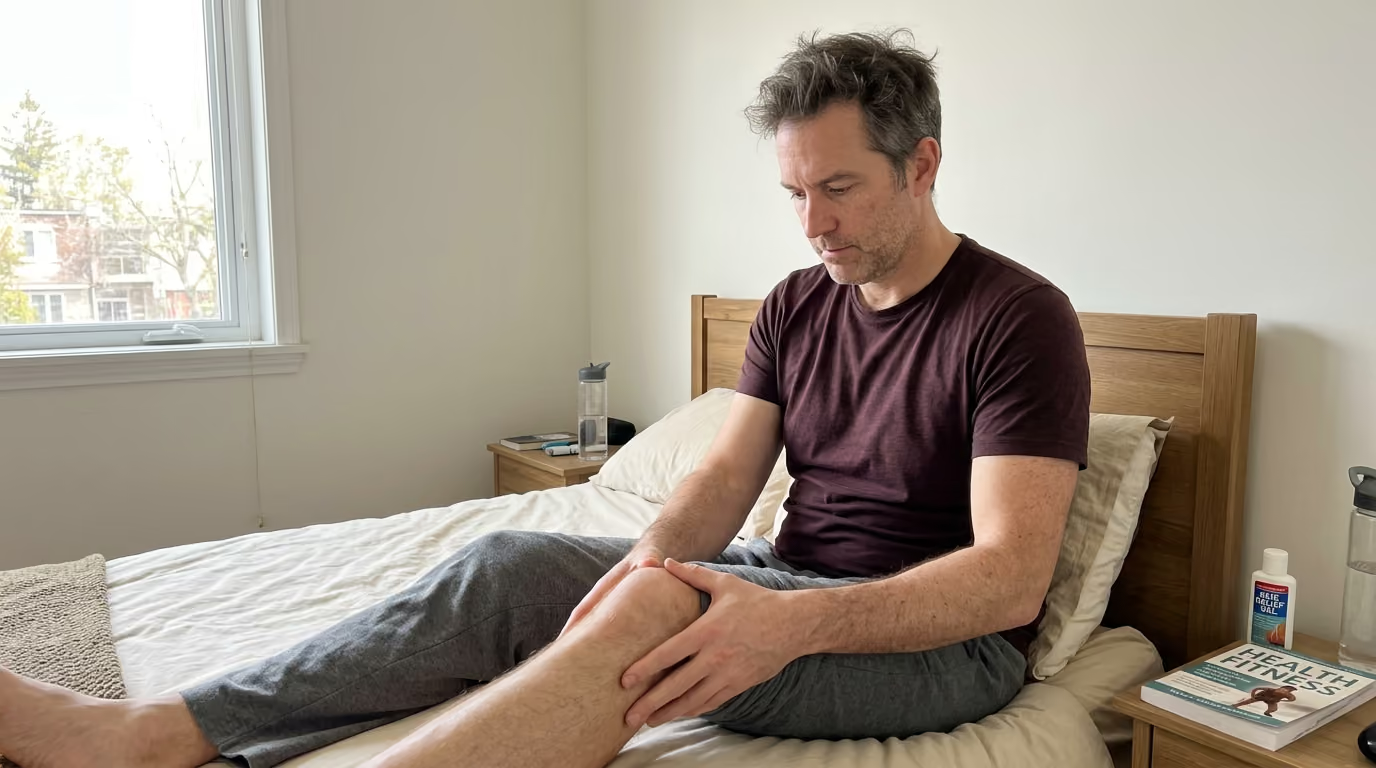

Physical discomfort after forty rarely signals irreversible structural breakdown, reflecting nervous system sensitivity, tissue conditioning needs.





Pain after forty is not a verdict of physical decline, nor is it a signal that your body is breaking down. It is also not something you should recklessly push through or ignore. Real physical recovery is a sophisticated biological and neurological process. It requires understanding what your symptoms actually mean, how your nervous system processes threat, and how to safely rebuild physical capacity.
According to the World Health Organization, approximately 1.71 billion people worldwide live with musculoskeletal conditions. These conditions include lower back pain, neck stiffness, joint discomfort, and sports injuries. Experiencing physical discomfort after forty is exceptionally common, but confusion about how to handle it often leads to two extremes. Some individuals retreat into total rest out of fear, while others ignore meaningful warning signs and cause preventable harm.
This guide provides a comprehensive framework to help you navigate physical discomfort, delayed soreness, and tissue loading. You will learn the science of threat perception, the differences between tissue healing and conditioning, and how to use progressive exposure to regain total movement confidence.
Pain is often misunderstood as a simple measurement of physical damage. For decades, traditional models treated the human body like a mechanical engine where a specific sensation always equaled a specific broken part. Modern neuroscience reveals a far more sophisticated reality.
The International Association for the Study of Pain defines pain as an unpleasant sensory and emotional experience associated with, or resembling that associated with, actual or potential tissue damage. This definition highlights that discomfort involves both physical sensations and emotional processing. Your symptoms are shaped by sensory inputs, contextual cues, previous experiences, and overall nervous system sensitivity.
To understand your body, you must distinguish between nociception and conscious discomfort. Nociception is the nervous system's detection and processing of potentially harmful mechanical, thermal, or chemical stimuli. Peripheral nociceptors in your muscles, tendons, ligaments, and joints transmit signals to your spinal cord and brain. However, nociception can occur without you feeling conscious discomfort. Conversely, you can experience genuine, intense discomfort even when ongoing tissue damage is minimal or entirely absent.
Clinical science categorizes physical discomfort into three distinct mechanisms:
Nociceptive discomfort occurs when peripheral nerve endings respond to actual or threatened tissue injury. Classic examples include an acute ankle sprain, a contusion, a bone fracture, or acute muscle strain. In these situations, the physical tissues are subjected to mechanical forces that exceed their current structural tolerance. The resulting inflammation and cellular chemical release activate local receptors to encourage rest and protection.
Neuropathic discomfort arises from a primary lesion or disease affecting the somatosensory nervous system itself. Common symptoms include sharp shooting sensations, burning, electric tingling, or numbness along a specific nerve pathway. Conditions like lumbar radiculopathy or cervical nerve compression fall into this category. Neuropathic symptoms require precise clinical evaluation to determine the exact site and cause of neural irritation.
The International Association for the Study of Pain introduced nociplastic discomfort to describe symptoms arising from altered nociception without clear structural damage or nerve lesions. In nociplastic conditions, the central nervous system amplifies incoming signals, much like turning up the volume dial on an audio amplifier. Clinicians consider nociplastic features when symptoms have persisted for more than three months, present across a widespread area, and involve hypersensitivity to normal mechanical pressure.
This heightened state of the nervous system frequently manifests through two clinical phenomena: allodynia and hyperalgesia. Allodynia occurs when a normally non-painful stimulus, such as light clothing pressure or gentle joint movement, produces discomfort. Hyperalgesia refers to an exaggerated, heightened response to a stimulus that would normally cause only mild tenderness. Recognizing these mechanisms helps you understand why your body may feel tender without assuming your physical structures are continually breaking down. For a broader look at managing long-term physical capacity, review our frameworks for healthy aging and living well.
Your brain operates as a predictive organ that continuously evaluates safety, uncertainty, and potential danger. Pain is an output produced by your nervous system when perceived threat exceeds your perceived ability to cope. When your brain concludes that a movement, posture, or environment is dangerous, it generates protective sensations to stop you.
Threat perception is influenced by biological, psychological, and environmental inputs. A sudden unfamiliar sensation during exercise can trigger an immediate protective response. If you believe your spine is fragile, your brain will interpret ordinary bending as dangerous. Poor sleep, chronic professional stress, and general fatigue further reduce your threshold for threat.
A useful analogy is a modern home smoke alarm. The smoke alarm is designed to warn you of potential danger, but it cannot measure the exact temperature or size of a fire. A sensitive alarm might sound when bread is slightly toasted, signaling danger when there is no actual emergency. In a similar way, a sensitized nervous system can produce intense warning signals during routine physical tasks.
This analogy does not suggest that symptoms are imaginary or fabricated. Every sensation you feel is physiologically real and processed through your neural circuitry. However, understanding that your alarm system can become overly protective allows you to approach movement with curiosity rather than fear. Research demonstrates that pain neuroscience education, especially when combined with progressive movement, substantially reduces movement fear, catastrophizing, and functional disability.
When you replace catastrophic beliefs with accurate biological understanding, you lower your baseline threat level. Reassuring clinical information and structured exercise create positive physical experiences. Over time, these positive inputs signal safety to your central nervous system, calming the alarm and expanding your physical capacity.
Active adults over forty frequently wonder if their post-workout stiffness is productive adaptation or an impending structural injury. Delayed-onset muscle soreness, commonly known as DOMS, is a normal physiological response to unaccustomed or demanding physical loading. It develops primarily after eccentric muscle contractions, which occur when a muscle produces force while lengthening under load.
Common examples of eccentric loading include walking down a steep mountain trail, lowering weights during resistance training, descending stairs, and decelerating while running. Research indicates that DOMS typically develops between 24 and 72 hours after unaccustomed physical activity. During this window, temporary micro-trauma within muscle fibers and local connective tissues triggers mild inflammation and localized tenderness.
Understanding the distinct features of normal post-exercise soreness versus an acute injury is essential for smart decision-making.
Relying solely on rigid timelines to diagnose your symptoms can be misleading. Individual training history, sleep quality, and exercise intensity all influence how long soreness persists. If your symptoms follow the predictable pattern of post-exercise soreness, you can stay active with gentle movement. If your symptoms match the profile of a structural injury, modify your activity and seek a qualified clinical assessment. Learn more about foundational tissue repair strategies in our guide to evidence-based protocols for recovery and regeneration.
Self-management and progressive movement are effective for routine musculoskeletal discomfort, but safety screening must always come first. Certain clinical signs, known as red flags, indicate the possibility of serious underlying medical pathology. These symptoms require prompt evaluation by a medical professional or emergency department.
National health guidelines, including protocols from the NHS and emergency clinical networks, highlight specific symptoms that must never be self-managed through exercise.
Red flag screenings do not provide a definitive diagnosis on their own. Instead, they serve as crucial safety indicators that lower the threshold for medical imaging, laboratory testing, and specialist intervention. If you experience any of these warning signs, pause all training protocols and consult a physician immediately.
A frequent point of confusion for active adults is the relationship between biological tissue healing and functional physical conditioning. While these two processes interact closely, they operate on different timelines and follow different biological rules.
Biological healing is the cellular sequence of inflammation, tissue proliferation, and structural remodeling following an acute injury. Ligaments, tendons, muscles, and bones require specific biological timeframes to restore cellular integrity. For example, a strained muscle may complete primary cellular repair within four to six weeks. However, the newly formed repair tissue often lacks the tensile strength, neuromuscular coordination, and fatigue resistance of healthy tissue.
Physical conditioning is the systematic adaptation of your muscles, tendons, nervous system, and cardiovascular network to external loads. Conditioning determines your physical capacity, which is the total amount of stress your tissues can handle before becoming irritated. When an injury forces you to rest, your biological tissues may heal completely, but your overall physical capacity declines.
This separation explains why many individuals experience a flare of discomfort when returning to sports after prolonged rest. Their initial injury has healed, but the surrounding muscles, tendons, and nervous system have become deconditioned. When they expose their detrained tissues to pre-injury exercise volumes, the demand exceeds their current capacity, triggering fresh irritation.
Clinical guidelines from the National Institute for Health and Care Excellence (NICE) advise against prolonged bed rest for conditions like low-back pain and sciatica. Instead, NICE guidelines recommend continuing ordinary daily activities within comfortable limits and incorporating tailored exercise programs. Complete immobilization accelerates muscle atrophy, reduces tendon stiffness, and increases nervous system sensitivity.
To restore lasting physical performance, you must manage biological healing while progressively rebuilding tissue capacity. The goal is to keep your tissues moving within a safe, non-threatening threshold while gradually exposing them to increasing demands.
When movement causes discomfort, people naturally develop a fear of repeating that specific action. This fear can trigger a self-reinforcing cycle known as the fear-avoidance model. A person experiences pain, interprets it as structural harm, avoids the movement, loses physical conditioning, and becomes more sensitive. Over time, even minor daily tasks begin to feel threatening and painful.
Graded exposure is a structured behavioral and physical strategy designed to systematically break this cycle. It differs fundamentally from simple graded activity. Graded activity increases general exercise volume based on a fixed schedule, regardless of specific fears. Graded exposure specifically targets the exact movements, postures, or activities you find intimidating and reintroduces them step by step.
Clinical trials show that graded exposure significantly reduces pain-related fear, improves movement self-efficacy, and decreases functional disability in chronic musculoskeletal conditions. The goal of graded exposure is not to guarantee an immediate pain score of zero. Rather, it demonstrates to your brain that you can safely perform meaningful movements without causing tissue damage.
To implement graded exposure safely, break down your feared or irritating task into manageable rungs on a progressive ladder:
For instance, consider an active adult who has avoided deadlifts or bending over after a lower-back episode. Instead of jumping directly to heavy barbells, they start with unweighted hip hinges against a wall. Once that feels safe, they progress to light kettlebell deadlifts from an elevated block, slowly lowering the height over several weeks. By systematically climbing the ladder, their nervous system unlearns the fear response, restoring natural mobility and strength. You can explore these progressive loading techniques further in our guide to progressive strength and physical performance.
Navigating physical recovery after forty requires separating established scientific facts from common cultural myths. Misunderstandings about the aging body often cause unnecessary anxiety, leading people to give up activities they love.
Many people assume that experiencing discomfort means a tendon has torn or a joint has deteriorated. As established by pain neuroscience, physical discomfort is an output of threat perception, not a direct damage meter. Discomfort can be driven by nervous system sensitivity, lack of sleep, emotional stress, and muscular fatigue, even when local tissues are entirely intact.
Diagnostic imaging such as MRI and X-ray scans frequently reveal disc bulges, meniscus fraying, and joint wear in completely healthy, pain-free individuals. Structural changes are a normal part of the biological aging process, much like developing grey hair or skin wrinkles. An abnormal scan finding does not mean you must avoid loading your body. Clinical decisions must always integrate your actual symptoms, physical strength, movement capacity, and medical history.
Complete rest is rarely the best solution for non-traumatic musculoskeletal conditions. While short-term load modification is useful during an acute flare, prolonged rest weakens muscles, stiffens tendons, and increases fear. Gentle, well-tolerated movement maintains tissue health, promotes circulation, and reassures your central nervous system that movement remains safe.
Delayed-onset muscle soreness is simply an indicator of unfamiliar loading or significant eccentric stress. It does not measure the quality of your workout, muscle growth, or long-term fitness progress. You can achieve exceptional gains in strength, cardiovascular fitness, and mobility without experiencing debilitating soreness after every workout.
Explaining that the brain processes physical discomfort does not mean your symptoms are imaginary or psychological. Every physical sensation has a biological, neurochemical, and electrical basis in your nervous system. Acknowledging the role of the central nervous system validates your experience while providing practical tools to calm sensitivity and restore function.
Rebuilding physical capacity after forty does not require complex routines or exhausting workouts. The most sustainable approach focuses on the minimal effective dose. This means identifying the smallest amount of structured physical input required to stimulate positive adaptation without overwhelming your recovery capacity.
The Centers for Disease Control and Prevention recommends that adults perform at least 150 minutes of moderate-intensity aerobic exercise, or 75 minutes of vigorous exercise, each week. The CDC also recommends muscle-strengthening activities on two or more days per week, alongside multicomponent balance training for older adults. If you are recovering from an injury or dealing with sensitivity, treat these targets as long-term goals rather than immediate starting requirements.
To build a reliable recovery routine without triggering persistent symptom flares, use this straightforward three-step model:
A 2025 systematic review and meta-analysis confirmed that structured exercise training, especially when combined with adequate dietary protein intake, significantly lowers systemic inflammatory markers such as C-reactive protein and interleukin-6 in older adults. Consistency matters far more than intensity. By applying the minimal effective dose week after week, you steadily expand your physical capacity without exceeding your recovery limits.
Demanding travel schedules, extended flights, and outdoor adventures introduce unique physical stresses that challenge your recovery capacity. Long periods of sitting compress the spinal discs and shorten hip flexors. Meanwhile, cabin air pressure, disrupted circadian rhythms, and carrying heavy luggage can increase nervous system sensitivity.
In our experience working with active travelers, managing discomfort during extended trips requires a proactive, structured approach. After a grueling thirty hour transit to Tokyo, I realized my old strategy of just powering through was no longer working. I felt foggy for three days, and my lower back and hips remained locked in a protective spasm.
I started digging into circadian biology and realized that timing my light exposure and fasting during the flight could completely shift my recovery. Now, I never board a long haul flight without a precise schedule for when to eat and when to put on an eye mask. It is the difference between losing a week of your trip and hitting the ground running.
To maintain physical comfort and rapid recovery while traveling for adventure or business, integrate these field-tested practices:
By managing systemic stressors like sleep disruption and dehydration alongside local joint loads, you can undertake demanding itineraries while minimizing physical discomfort. To optimize your sleep and travel protocols further, read our guide on optimizing sleep quality and recovery and explore our resources on preparing for demanding travel and adventure.
The international scientific consensus regarding musculoskeletal recovery in adults over forty is clear, consistent, and reassuring. Major public health organizations and research bodies, including the World Health Organization, the International Association for the Study of Pain, and NICE, agree on several foundational principles:
First, chronological age is not an insurmountable barrier to building strength, improving mobility, or regaining tissue tolerance. While recovery rates and tissue elasticity change over time, regular resistance and aerobic exercise stimulate positive neuromuscular adaptations at any age.
Second, modern musculoskeletal care prioritizes active rehabilitation over passive treatments and prolonged rest. While short-term ice, heat, or manual therapy can provide temporary comfort, lasting recovery depends on progressive loading, movement education, and active self-management.
Third, persistent discomfort should be evaluated through a biopsychosocial lens. Tissue mechanics, nervous system sensitivity, sleep quality, stress levels, and emotional confidence all contribute to your physical comfort. Addressing your overall lifestyle alongside targeted physical exercise provides the most dependable path to long-term capability.
Moving forward safely does not require eliminating every sensation before you begin living an active life. It requires learning to respect your symptoms, investigating unexpected changes, and progressively challenging your physical capacity with confidence and patience.
Morning joint stiffness that lasts under thirty minutes often reflects minor fluid settling and mild joint wear rather than acute damage. You do not need to abandon running or weightlifting. Instead, extend your general warm-up, begin your sessions at lower intensities, and monitor how your joints feel 24 hours later. If stiffness persists throughout the day or is accompanied by joint swelling and warmth, consult a sports medicine physician.
Differentiating between a disc issue and a muscle strain requires a professional clinical examination. Muscle strains typically produce broad, localized tenderness across the lower back that worsens with direct contraction or stretching. Disc issues with nerve root involvement often produce sharp, shooting sensations that travel past the knee into the foot, accompanied by altered reflexes, numbness, or focal weakness. If you experience shooting leg pain, progressive weakness, or numbness, schedule a comprehensive medical evaluation.
Taking non-steroidal anti-inflammatory drugs (NSAIDs) prophylactically before exercise is generally discouraged by sports medicine clinicians. Preventive use of NSAIDs can mask meaningful warning signals from your joints and tendons, increasing the risk of overloading vulnerable tissues. Furthermore, chronic NSAID use can interfere with your muscles' natural post-exercise inflammatory signaling, blunting your long-term training adaptations.
Your central nervous system evaluates both physical and psychological inputs when determining overall threat levels. High psychological stress, emotional anxiety, and chronic sleep deprivation elevate systemic stress hormones and increase neuroinflammatory signaling. This heightened state lowers your nervous system's threshold for threat, making ordinary mechanical forces feel irritating or painful. Managing stress and prioritizing restorative sleep are vital components of physical musculoskeletal recovery.
Stay connected for research and practical guidance on longevity, strength, recovery, energy and active living. New ideas to help you stay capable, curious and ready for more.


Explore practical guidance on strength, recovery, energy, travel and longevity for a life that stays active.
explore the Blog