
Evidence-based strength supplementation helps older adults optimize muscle retention, evaluate protein and creatine formulations.





The fitness industry often insists that aging requires an expanding cabinet of pills, powders, and proprietary formulations. Most marketing campaigns suggest that after your fortieth birthday, maintaining muscle and vitality depends on exotic compounds.
In truth, maintaining robust physical capability requires ruthlessly narrowing your focus rather than adding more products. The physiology of building and preserving muscle does change over time. However, the list of supplements backed by rigorous human trials remains remarkably short.
This guide cuts through the commercial noise to provide a clear evaluation of strength-training supplements for adults over 40. We examine what works, what provides minor situational support, and what wastes your time and money.
The practical takeaway is simple. Progressive resistance training, adequate whole-food nutrition, and restorative sleep deliver almost all of your results. Beyond those fundamentals, only a tiny handful of targeted supplements provide measurable advantages for training adaptations and joint performance.
To evaluate any supplement intelligently, you must understand how neuromuscular and muscular physiology changes in your fifth decade and beyond. Aging muscle tissue experiences a phenomenon known as anabolic resistance. This means older muscle requires a stronger stimulus from both mechanical tension and dietary amino acids to trigger muscle protein synthesis. At the same time, recovery kinetics can slow down, connective tissues lose some elasticity, and metabolic flexibility often declines.
These biological shifts mean you cannot simply copy the nutritional routines of a twenty-year-old athlete. However, they do not mean your body has stopped responding to heavy resistance exercise. When you provide sufficient mechanical tension through progressive loading, your muscle fibers still hypertrophy, your tendon stiffness improves, and your neuromuscular recruitment sharpens. Supplements cannot create these adaptations out of thin air. They can only assist the biological processes that your training initiates.
A disciplined approach to supplementation organizes potential aids into a clear physiological hierarchy. At the base sits your training foundation, which includes progressive resistance training, adequate caloric energy, and consistent sleep hygiene. The second layer is foundational nutrition, built around food-first protein sources, complex carbohydrates to fuel work capacity, and micronutrient density. Only after these two layers are established should you consider specific ergogenic aids.
When evaluating any substance, you must also distinguish between three distinct physiological outcomes:
These three categories are not interchangeable. A compound can make you feel energized in the gym without adding an ounce of muscle tissue over six months. Conversely, a foundational nutrient might restore cellular health without producing an immediate jump in your one-repetition maximum squat. Clarifying which limiting factor you are targeting prevents expensive missteps. For deeper background on structuring your training program, review our resources on strength and physical performance.
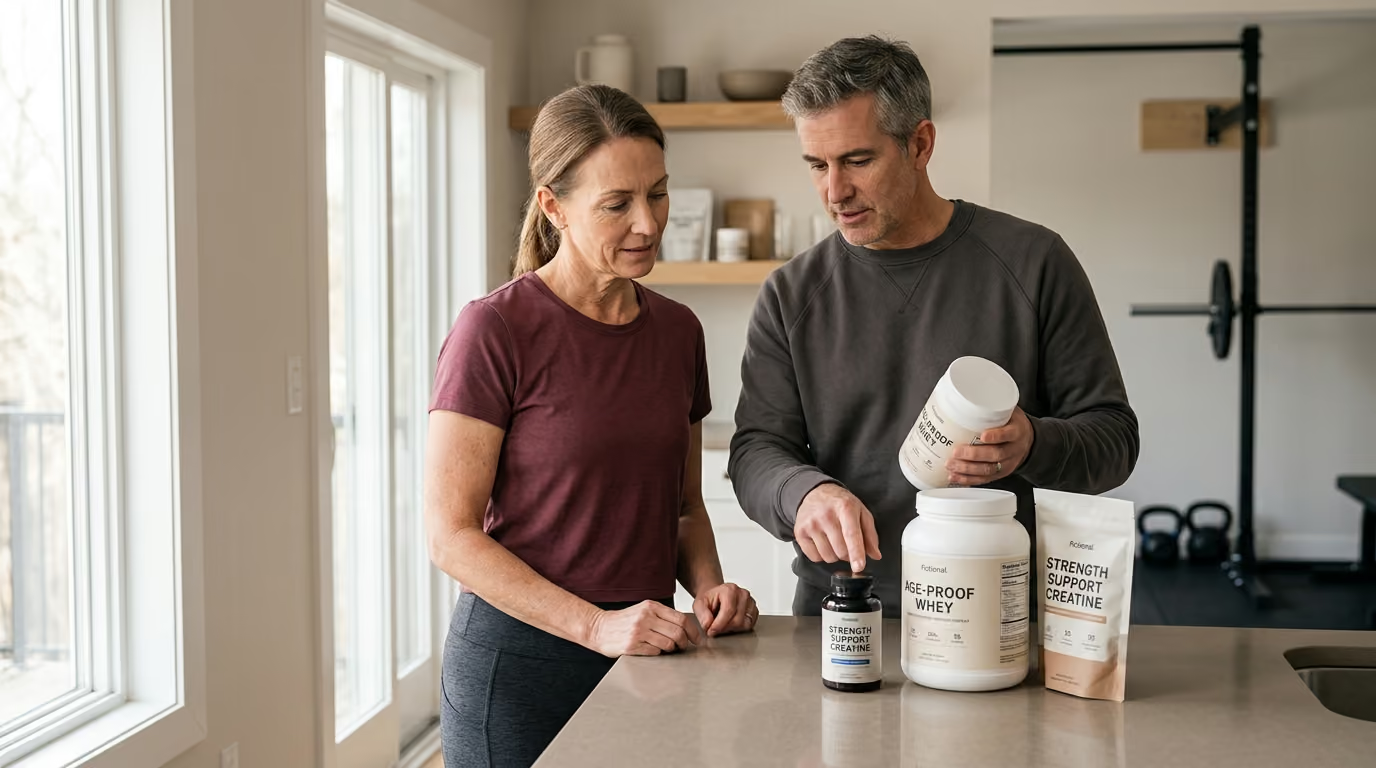
Protein powders are among the most heavily marketed fitness products in the world. They are often portrayed as specialized anabolic agents capable of accelerating recovery beyond normal biological limits. In scientific terms, protein powders are simply concentrated, highly processed food products derived from dairy, soy, egg, or plant sources. Their primary value lies in logistical convenience, not biochemical magic.
A comprehensive systematic review and meta-analysis published in the British Journal of Sports Medicine examined protein supplementation during resistance training. The researchers determined that while protein intake supports gains in muscle mass and strength, the benefits plateau at approximately 1.6 grams per kilogram of body weight per day. Consuming protein powders beyond this ceiling did not produce further increases in fat-free mass. For a 75-kilogram adult, this total daily target equals roughly 120 grams of total protein from all dietary sources combined.
Older adults, however, present a unique set of nutritional dynamics. Because of age-related anabolic resistance, older muscle tissue requires a higher concentration of the essential amino acid leucine to stimulate the muscle protein synthesis pathway. Clinical guidelines from nutrition researchers recommend that healthy older adults consume 1.0 to 1.2 grams of protein per kilogram of body weight daily. For those managing muscle loss or recovering from illness, targets of 1.2 to 1.5 grams per kilogram are often advised.
The research on protein supplementation combined with resistance training in older populations shows nuanced results. One systematic review of healthy older adults found that adding protein powders did not produce greater strength gains compared to resistance training alone when habitual diet was already sufficient. Another meta-analysis found that supplemental protein helped preserve lean mass and leg strength in older adults who struggled to eat enough protein from whole foods. This discrepancy shows that protein powders are an insurance policy for dietary shortfalls, not an independent muscle-building engine.
If you choose to use a protein powder to hit your daily nutritional targets, the source matters far less than your total intake and digestive comfort. Whey protein isolate remains the benchmark for rapid digestion and high leucine concentration, containing roughly 10 to 12 percent leucine by weight. Casein digests more slowly, providing a sustained release of amino acids over several hours, which makes it a traditional evening choice.
Plant-based protein blends, combining pea, rice, or pumpkin seed proteins, offer an effective alternative for adults with lactose sensitivities or plant-based dietary preferences. While individual plant sources may have lower concentrations of specific essential amino acids, modern multi-source plant powders provide complete amino acid profiles that match dairy proteins when dosed appropriately. To overcome the slightly lower leucine content of plant sources, simply consume a slightly larger serving size, such as 30 to 35 grams of total protein per serving.
Several persistent myths continue to confuse active adults about dietary protein. The first is that consuming more protein will always create more muscle tissue. Once your muscle protein synthesis machinery is saturated and your daily baseline target is met, extra amino acids are simply oxidized for energy or converted to other metabolic substrates.
The second misconception is the rigid post-workout anabolic window. Early fitness culture claimed that you must ingest a protein shake within thirty minutes of dropping your last barbell. Current exercise science demonstrates that muscle tissue remains sensitized to amino acids for many hours following a training session. Meeting your total daily protein goal and spacing your meals across three to four discrete feedings matters far more than rushing to drink a shake in the locker room.
Finally, never ignore the caloric and macronutrient composition of the product you choose. Many ready-to-drink shakes and commercial powders contain added sugars, saturated fats, and thickeners that inflate caloric content. If your goal is maintaining a lean, athletic body composition, choose clean powders that list protein isolate as the primary ingredient with minimal added carbohydrates. For broader nutritional guidance, study our articles on nutrition and metabolism.
If there is a single supplement that deserves a place in the cabinet of an active adult over 40, it is creatine monohydrate. Creatine is the most thoroughly researched and scientifically supported ergogenic aid in sports nutrition history. Unlike stimulants or unregulated botanical extracts, creatine works through a well-defined cellular mechanism that directly supports high-intensity physical output.
Inside your muscle fibers, creatine binds with phosphate to form phosphocreatine. During rapid, high-force activities like heavy lifting, sprinting, or power skiing, your cells use phosphocreatine to rapidly regenerate adenosine triphosphate, the primary energy currency of muscular contraction. By supplementing with creatine, you increase your intramuscular phosphocreatine stores by 15 to 30 percent. This allows you to perform an extra repetition under heavy load, maintain speed across repeated intervals, and recover faster between challenging work sets.
Over time, this elevated training capacity translates into meaningful training adaptations. Meta-analyses examining older adults performing resistance training have repeatedly demonstrated that creatine supplementation produces greater gains in lean tissue mass, maximal strength, and functional task performance compared to training with a placebo. Furthermore, emerging research highlights potential benefits for cognitive processing, cellular hydration, and neuroprotection, making creatine an exceptional multi-system compound for healthy aging.
Commercial supplement marketing often insists on complicated loading protocols and exotic, expensive forms of creatine. You will encounter creatine ethyl ester, buffered creatine, creatine nitrate, and liquid suspensions, all claiming superior absorption. Scientific consensus from the International Society of Sports Nutrition confirms that standard creatine monohydrate remains the gold standard for bioavailability, efficacy, and cost-effectiveness.
The practical dosing protocol for adults over 40 is simple and straightforward:
The safety profile of creatine monohydrate in healthy adults is exceptionally strong. Comprehensive reviews focused on aging populations report no adverse effects on liver or renal function in individuals with healthy baseline organ health. In one controlled trial, older men aged 59 to 77 years consumed daily creatine during ten weeks of supervised whole-body resistance training without any negative changes in markers of renal stress.
However, adults over 40 should understand how creatine interacts with standard medical blood tests. Because creatine degrades naturally into creatinine, supplementing with creatine will often cause a slight, harmless elevation in your serum creatinine levels. An uninformed physician reading a routine metabolic panel might misinterpret this elevated creatinine as a sign of impaired kidney filtration.
If you are undergoing blood work to assess kidney function, inform your physician that you take creatine monohydrate. Your doctor can order a cystatin C blood test, which measures glomerular filtration rate accurately without being skewed by creatine supplementation or dietary protein intake. Anyone with pre-existing chronic kidney disease should consult their nephrologist before beginning creatine use.
Caffeine is an effective acute ergogenic aid, but it comes with distinct trade-offs that become sharper as we age. Unlike creatine, which builds up gradually in tissues to support long-term training adaptations, caffeine works immediately on your central nervous system. It acts primarily as an adenosine receptor antagonist, reducing your perception of effort, improving neuromuscular motor unit recruitment, and increasing mental alertness during strenuous tasks.
The International Society of Sports Nutrition position stand on caffeine reports consistent performance enhancements in resistance training, endurance work, and sprinting at doses of 3 to 6 milligrams per kilogram of body weight. For a 75-kilogram individual, this research-backed range equates to 225 to 450 milligrams of caffeine taken 30 to 60 minutes before physical exertion. At these concentrations, lifters frequently experience increased peak power output, enhanced repetition volume to failure, and sharper tactical focus.
However, the dose-response curve of caffeine is non-linear. Consuming doses above 6 milligrams per kilogram does not produce additional strength or power gains. Instead, higher doses dramatically increase the incidence of adverse side effects, including acute blood pressure spikes, tremors, gastrointestinal distress, and heightened anxiety. For older adults, excessive stimulant intake can also trigger cardiac palpitations or interact poorly with antihypertensive medications.
The most critical liability of caffeine for adults over 40 is its profound disruption of sleep architecture. As we grow older, the brain naturally experiences a reduction in deep slow-wave sleep and an increase in nocturnal awakenings. Caffeine has an average half-life of five to seven hours, and a quarter-life of up to twelve hours. This means that a large cup of coffee consumed at two in the afternoon still leaves significant amounts of active stimulant in your brain at midnight.
Even if you can fall asleep with caffeine in your bloodstream, the drug suppresses deep sleep stages and compromises cellular recovery. Impaired sleep halts muscle repair, elevates systemic inflammation, and blunts hormonal recovery, directly sabotaging the training adaptations you worked to achieve.
To use caffeine intelligently without sacrificing recovery:
Prioritizing your neurological recovery remains non-negotiable for long-term health. To optimize your nightly restorative cycles, examine our practical guides on recovery and sleep.
Many popular strength supplements occupy a middle tier. They are neither universally beneficial nor entirely useless. Instead, their value depends entirely on individual baseline deficiencies, dietary patterns, and specific physical constraints. Understanding when these compounds are appropriate prevents you from taking expensive products that deliver zero physiological return.
Vitamin D is frequently marketed in the fitness industry as a natural strength booster. In reality, vitamin D functions as a secosteroid hormone that regulates calcium homeostasis, bone mineralization, immune function, and muscle protein transcription. The National Institutes of Health Office of Dietary Supplements notes that inadequate vitamin D levels cause muscle weakness, diffuse musculoskeletal pain, and an increased risk of bone injuries.
However, treating vitamin D as an ergogenic supplement is a fundamental misunderstanding of endocrine biology. If your serum 25-hydroxyvitamin D levels are clinically low, medically supervised supplementation will resolve deficiency symptoms, restore baseline muscle function, and improve musculoskeletal stability. Conversely, if your blood levels are already sufficient, taking massive doses of vitamin D will not increase your strength or accelerate muscle growth.
Active adults should avoid arbitrary mega-dosing. Excessive vitamin D intake can lead to hypercalcemia, kidney stones, and arterial calcification. Request a standard 25-hydroxyvitamin D blood test during your annual physical examination. If your levels fall below adequate clinical thresholds, work with your physician to implement a targeted daily replacement protocol, paired with dietary vitamin K2, until normal physiology is restored.
Beta-alanine is an amino acid that combines with histidine inside muscle tissue to form carnosine, an intracellular buffer that neutralizes hydrogen ions produced during glycolytic energy metabolism. The International Society of Sports Nutrition notes that supplementing with 4 to 6 grams of beta-alanine daily for at least four weeks significantly increases muscle carnosine content, buffering intramuscular acidity.
However, this buffering capacity only enhances physical performance during sustained, high-intensity efforts lasting between one and four minutes. If your training consists of standard heavy resistance training, such as sets of three to eight repetitions lasting fifteen to thirty seconds, beta-alanine provides virtually no performance benefit. Phosphocreatine, not carnosine, is the limiting energetic factor in short, maximal strength sets.
Beta-alanine is only relevant for adults who participate in high-intensity functional fitness circuits, combat sports, or repeated sprint sports like rowing and mountain biking. The primary side effect of beta-alanine is paresthesia, a harmless but uncomfortable tingling sensation on the skin. You can easily prevent this tingling by dividing your daily intake into smaller doses of 1.5 grams or using sustained-release formulations.
Beta-hydroxy-beta-methylbutyrate, commonly known as HMB, is an active metabolite of the essential amino acid leucine. HMB received massive marketing attention as an anti-catabolic agent capable of preventing muscle breakdown and accelerating tissue repair. It was widely promoted to older adults as a primary defense against age-related sarcopenia.
Recent high-quality scientific reviews have substantially dampened this enthusiasm. A comprehensive meta-analysis evaluating adults aged 50 and older found that adding HMB to a structured resistance-training program provided no meaningful improvements in body composition, lean mass gains, or maximal muscle strength compared to training alone. A separate 2025 review noted only borderline improvements in handgrip strength, with no significant impact on appendicular lean mass or gait speed.
HMB may offer situational utility in specialized clinical scenarios, such as extended bed rest, limb immobilization following orthopedic surgery, or severe catabolic illness. For healthy, active adults over 40 who are capable of performing progressive resistance training and eating adequate dietary protein, routine HMB supplementation is unnecessary. Investing your resources in high-quality whole foods and standard creatine monohydrate yields far superior results.
The dietary supplement industry operates under a unique regulatory framework that every consumer must understand. In the United States, the Food and Drug Administration does not approve dietary supplements for safety or efficacy before they are manufactured and sold. Under the Dietary Supplement Health and Education Act, supplements are regulated post-market. This means the regulatory burden falls on government agencies to prove a product is dangerous after it is already on retail shelves.
The United States Anti-Doping Agency routinely warns athletes and active adults about the hazards of supplement contamination. Commercial testing programs regularly identify multi-ingredient pre-workout blends and botanical formulas that contain unlisted pharmaceutical agents, excessive stimulants, or synthetic anabolic steroids. These hidden ingredients pose genuine medical hazards for adults over 40, including acute hypertension, cardiac arrhythmias, and hepatotoxicity.
A major warning sign in sports nutrition is the use of proprietary blends on product labels. When a manufacturer uses a proprietary blend, the label lists a collection of ingredients under a trademarked name, but conceals the precise dosage of each individual component. This allows companies to practice angel dusting, which involves including a tiny, ineffective trace of an expensive evidence-backed ingredient while packing the product with cheap stimulants, artificial dyes, and fillers.
Be equally skeptical of commercial testosterone boosters, deer antler velvet extracts, and herbal anabolic complexes. Rigorous scientific evaluations, including direct statements from the National Institutes of Health, confirm that these botanical mixtures do not raise physiological testosterone levels or improve muscular performance in healthy human trials. They rely entirely on aggressive marketing and emotional manipulation aimed at aging anxieties.
When purchasing any performance supplement, adhere to three strict purchasing principles:
True physical capability is not measured by numbers on a gym whiteboard. It is demonstrated when you step into demanding environments, such as carrying a heavy pack across alpine terrain, skiing untracked powder, or navigating long international travel days without physical breakdown. Your nutritional and supplement protocols should serve your outdoor performance, not encumber your luggage with unnecessary clutter.
Last winter in Chamonix, I noticed something striking among our group of experienced skiers. It was not the high alpine altitude that forced my peers into the mountain lodge by early afternoon. It was a severe lack of rotational trunk strength, combined with poor recovery from an overseas flight. We spend vast amounts of time debating complex supplement stacks, yet we frequently neglect the basic physical strength and systemic hydration required to enjoy challenging mountain travel.
That trip reinforced a core operating philosophy. Training and nutrition must focus entirely on real-world functional capacity. When preparing for international adventure travel, hauling half a dozen large tubs of powders and specialized pills is completely impractical. You need a streamlined, minimalist protocol that preserves muscle function, supports cellular hydration, and resists travel-induced fatigue.
When transitioning from daily training to backcountry adventures or international expeditions, strip your supplement routine down to the minimal effective dose:
This disciplined approach ensures you stay strong and capable without turning your nutrition routine into a burden. For strategies on maintaining physical peak performance across demanding itineraries, explore our resources on travel and human performance.
To bring order to your health and training strategy, avoid adopting supplements at random. Follow a logical, step-by-step decision algorithm that audits your needs, addresses real constraints, and prevents unnecessary spending.
To see how this decision framework operates in daily life, consider three common profiles of active adults:
By viewing every supplement through the lens of individual limiting factors, you make rational, evidence-based choices that deliver measurable results. For more perspectives on lifelong vitality, explore our articles on longevity and living well.
True strength and enduring capability come from mastering the basic physical fundamentals with patience, precision, and consistency.
Stay connected for research and practical guidance on longevity, strength, recovery, energy and active living. New ideas to help you stay capable, curious and ready for more.


Explore practical guidance on strength, recovery, energy, travel and longevity for a life that stays active.
explore the Blog