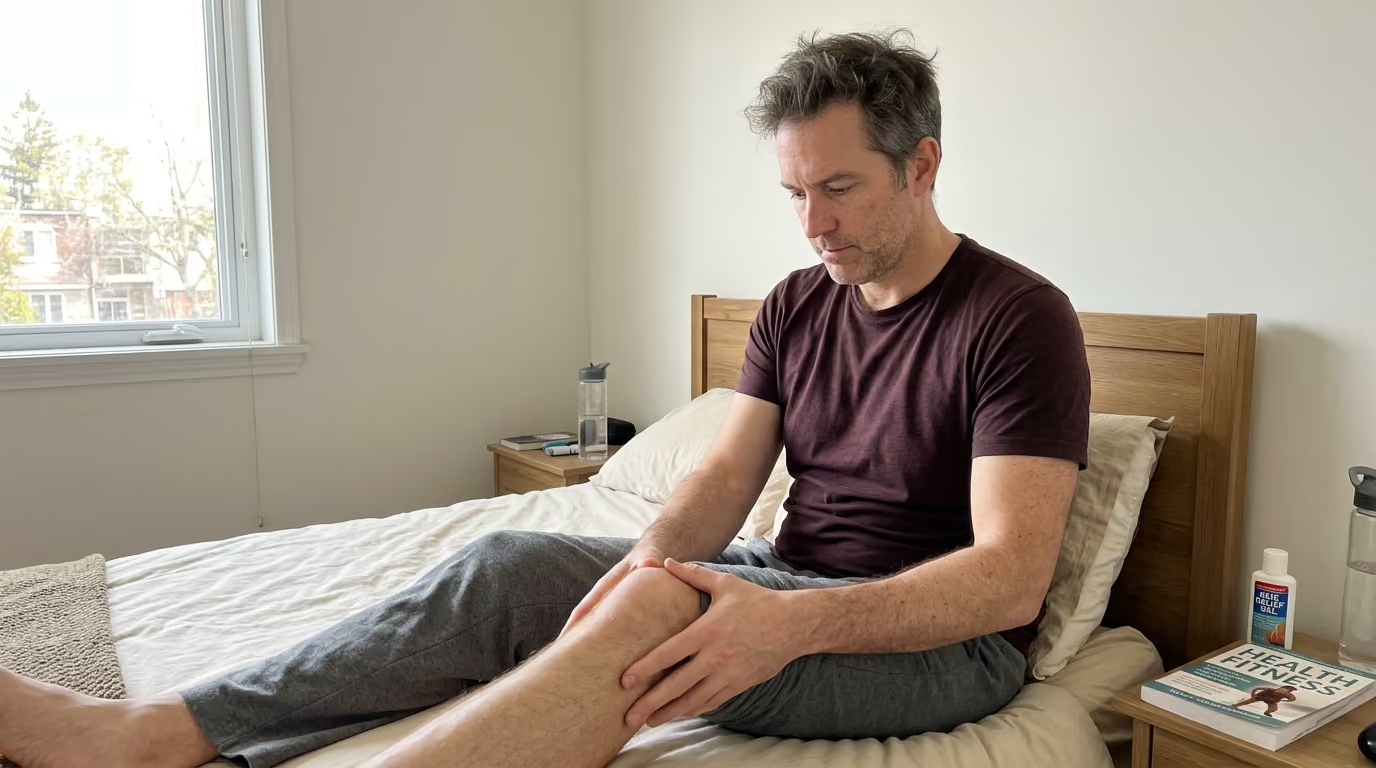

Four distinct age categories shape athletic longevity, requiring tailored nutrition, tendon care, sleep, and load management for lifelong performance.





You finish a demanding mountain climb or a heavy lifting session on a Saturday afternoon. Twenty years ago, a hearty dinner and eight hours of sleep left you completely refreshed for another hard effort on Sunday. Today, that same weekend effort lingers in your quads, your Achilles tendons feel stiff on Monday morning, and your nervous system takes three days to hit top gear again.
This shift is not a signal to stop pushing your limits. Masters athletes routinely display lower rates of cardiovascular disease, preserved bone density, sharper cognitive function, and higher physical resilience than sedentary adults of the same chronological age. Research shows that the functional declines commonly attributed to aging are often attenuated or absent in highly active older adults.
The central rule of longevity in sport is simple. Age changes the recovery equation, but it does not eliminate your ability to adapt, build strength, and perform. Older muscle, tendons, and nervous systems remain adaptable, but they require a more deliberate approach to nutrition, sleep, and training density.
Understanding this balance allows you to continue chasing ambitious physical goals across decades. By shifting from reckless exertion to precise regeneration, you can maintain high performance without treating your birth year as a limitation. You can explore structured protocols in our recovery and regeneration resources to build an individualized plan.
Recovery is not merely the passive absence of muscle soreness. In athletic science, recovery is the multidimensional restoration of your ability to produce force, tolerate stress, and adapt to future workloads. It includes neuromuscular readiness, metabolic refueling, connective tissue remodeling, and psychological bandwidth.
To manage this process effectively, masters athletes should separate their athletic timeline into four distinct categories:
A 55-year-old who has trained consistently for thirty years possesses high mechanical efficiency and tendon tolerance. A 55-year-old returning to intense training after a twenty-year hiatus has the same chronological age, but a vastly different recovery profile. Treating every adult over forty as a homogenous group leads to either undertraining or overuse injuries.
Adaptation always follows a simple biological equation. Training stimulus combined with adequate resources and sufficient recovery produces positive physical adaptation. Resources include sleep, amino acids, carbohydrates, hydration, micronutrients, and psychological margin.
When life stress, travel fatigue, or poor sleep reduce your available resources, the same workout that once stimulated growth can easily cause nonfunctional overreaching. Masters athletes do not need easier training. They need precise stress management that accounts for total systemic load.
To understand why recovery feels different in midlife and beyond, we must look at muscle protein synthesis. Muscle protein synthesis, or MPS, is the primary biological mechanism through which the body repairs damaged muscle fibers and creates new contractile proteins. The most critical fraction for strength and athletic longevity is myofibrillar protein synthesis, which builds the cellular machinery responsible for generating force.
In sedentary populations, aging often introduces anabolic resistance. This term describes a blunted biological response where a given dose of dietary protein or mechanical tension produces less muscle remodeling than in younger adults. A meta-analysis published in the journal Nutrients confirmed a modest but significant age-related reduction in postprandial muscle protein synthesis rates across older adults.
However, lifelong athletic activity changes this narrative. A comprehensive review in Research Directs in Strength and Performance established that highly active masters athletes do not suffer from the same severe muscle wasting or anabolic resistance seen in inactive individuals. Research shows that exercise-induced muscle protein synthesis remains robust well into later decades.
A study in the American Journal of Physiology-Endocrinology and Metabolism evaluated master triathletes against younger counterparts during multi-day endurance training. The researchers found that masters athletes had an integrated myofibrillar protein synthesis rate of approximately 1.49 percent per day compared to 1.70 percent per day in younger triathletes. The masters group also experienced a slight lag in the acute recovery of cycling time-trial performance, highlighting that muscle remodeling can take longer during dense training blocks.
Conversely, another study published in Frontiers in Physiology compared older masters athletes with younger controls under rested and resistance-trained states. Rested baseline myofibrillar protein synthesis was nearly identical between the groups, measuring 1.46 percent per day in older athletes and 1.47 percent per day in younger controls. When both groups performed heavy resistance training, protein synthesis increased equally to approximately 1.60 percent per day.
Furthermore, clinical research published in Medicine and Science in Sports and Exercise showed that myofibrillar protein synthesis remains significantly elevated at both 24 and 48 hours following resistance training in older men. The biological machinery to rebuild tissue is fully operational, but the window of active repair extends across several days.
Because the window of muscle protein synthesis remains elevated for up to 48 hours, dietary protein delivery must be consistent. Older muscle requires a higher concentration of the essential amino acid leucine to trigger the mammalian target of rapamycin signaling pathway, which initiates protein synthesis.
Masters athletes should build their daily nutrition around clear, evidence-backed protein benchmarks:
For a 75-kilogram athlete, this equates to roughly 23 to 30 grams of high-quality protein per meal. Leucine-rich whole foods like pasture-raised eggs, wild fish, poultry, Greek yogurt, and grass-fed whey provide the necessary amino acid density. Plant-based masters athletes can achieve identical outcomes by combining diverse protein sources or using plant protein blends fortified with extra leucine.
Protein alone cannot rescue recovery if total energy availability is low. When an active adult consumes fewer total calories than required, the body oxidizes dietary and stored amino acids for basic energy production. This diversion starves the musculoskeletal system of the building blocks required for myofibrillar repair.
Carbohydrates are equally critical for athletic preservation. Replenishing muscle glycogen after long sessions lowers cortisol, supports immune function, and spares amino acids for tissue remodeling. If you notice chronic fatigue, dropping power output, or persistent muscle soreness, assess your total daily caloric and carbohydrate intake before adding new supplements.
Muscles adapt to training relatively quickly because they possess a rich blood supply. Tendons and ligaments, by contrast, receive significantly less vascular flow and remodel at a much slower pace. Tendons transfer force from contracting muscle to bone, acting as dynamic springs during walking, sprinting, jumping, and skiing.
As we age, tendons naturally experience reductions in collagen turnover, structural modulus, and elastic capacity. A review in the Scandinavian Journal of Medicine and Science in Sports noted that chronic mechanical loading through resistance training increases tendon stiffness and modulus, preserving structural integrity in older adults. Tendons remain plastic and responsive in later life, but their adaptation timeline is extended.
Research published in the Journal of Applied Physiology compared patellar tendon adaptations between younger and older men over a resistance training protocol. While both groups achieved significant gains in tendon stiffness, older men required approximately eight weeks of consistent loading to achieve the structural adaptations that younger men developed in four weeks. Tendon remodeling consistently lags behind muscular strength gains.
A common injury pattern occurs when an older athlete experiences rapid neural and muscular strength gains. The muscle becomes capable of producing high force, but the tendon has not yet remodeled to handle that mechanical tension. This mismatch frequently leads to chronic tendinopathies in the Achilles, patellar, and rotator cuff tendons.
A landmark study in the Journal of Applied Physiology revealed that heavy-load resistance training is superior to moderate-load training for maintaining patellar tendon mechanical properties in older adults. Avoid the mistake of assuming older connective tissue should only be trained with light, high-rep movements. Heavy, slow resistance training provides the mechanical strain necessary to stimulate collagen synthesis and improve fibril packing density.
To maintain resilient tendons, apply these training habits:
Supplemental collagen combined with vitamin C has emerged as a supportive nutritional strategy for connective tissue. Clinical studies suggest consuming 15 to 30 grams of hydrolyzed collagen roughly 45 to 60 minutes before loading can increase amino acid availability in joint structures, though progressive mechanical loading remains the non-negotiable driver of tendon remodeling.
Sleep is the ultimate physiological performance tool. During slow-wave deep sleep, the body releases growth hormone, clears metabolic waste from the brain, downregulates sympathetic nervous tone, and initiates deep cellular repair. For masters athletes, sleep quality directly determines how well the musculoskeletal and central nervous systems adapt to hard training.
Expert consensus guidelines from sports medicine literature recommend that active adults obtain between seven and nine hours of quality sleep per night. Athletes undergoing heavy training blocks or mountain expeditions often need an additional 30 to 60 minutes to offset higher neuromuscular fatigue. Sleep restriction dramatically lowers your physical margin for error, elevating injury risk and impairing reaction time.
Aging often brings natural disruptions to sleep architecture, including lighter sleep, more frequent nighttime awakenings, and shifts in circadian rhythms. Common midlife sleep challenges include:
You can read more about establishing high-quality evening routines in our recovery and sleep strategies.
To protect nighttime regeneration, maintain a consistent wake-up time every day, regardless of when you fell asleep. Keep your sleeping environment completely dark, quiet, and set to a cool temperature around 65 to 68 degrees Fahrenheit. Avoid consuming alcohol within three hours of bedtime, as ethanol disrupts slow-wave and REM sleep cycles even in small amounts.
If daytime fatigue persists, strategic napping can restore alertness without disrupting nighttime sleep pressure. Keep naps between 20 and 30 minutes, and complete them before 2:00 PM. If you suffer from chronic snoring, morning headaches, or unrefreshing sleep despite spending eight hours in bed, seek a clinical sleep study to evaluate for sleep apnea rather than relying on over-the-counter sleep aids.
Midlife is marked by gradual endocrine shifts. Growth hormone secretion and circulating insulin-like growth factor-1 decline progressively, a natural process known as somatopause. In men, circulating total and bioavailable testosterone concentrations decline gradually with age, while women navigate the profound hormonal transition of perimenopause and menopause.
These biological transitions have led to aggressive marketing around hormone optimization and unverified vitality supplements. It is critical to recognize that a single hormone level does not dictate your recovery capacity or athletic performance. Endocrine function is an integrated system influenced by energy availability, sleep quality, systemic inflammation, training volume, body fat percentage, and psychological stress.
A study published in the European Journal of Applied Physiology found that older men exhibit lower acute spikes in testosterone and growth hormone immediately following heavy lifting compared to younger men. However, baseline circulating hormone levels do not entirely predict an individual's capacity to build strength or recover from training.
A systematic review in Sports Medicine confirmed that structured exercise training naturally increases basal levels of total testosterone, IGF-1, DHEA, and growth hormone in adults aged 40 and older. Progressive resistance training remains one of the most powerful natural stimuli for endocrine health across the lifespan.
For women entering the postmenopausal transition, the decline in estrogen alters bone turnover rates and muscle mass retention. A review in Sports Medicine demonstrated that progressive resistance training significantly improves functional capacity and maintains bone mineral density in postmenopausal women. You can explore targeted strength frameworks within our strength and physical performance resources.
To support long-term endocrine balance without extreme protocols, prioritize foundational health behaviors:
Persistent symptoms like sudden loss of strength, chronic fatigue, depressive mood, joint pain, or loss of libido warrant a comprehensive medical workup. Address lifestyle fundamentals, nutritional adequacy, and stress management before considering medical hormone therapies.
Mobility for the masters athlete should not be confused with passive, excessive flexibility. Flexibility is merely the passive range of motion available at a joint. Mobility is your ability to actively control, stabilize, and produce force through that range of motion under load.
As joints age, articular cartilage experiences minor thinning, synovial fluid production can decrease, and connective tissues become less compliant. Attempting aggressive, painful stretching routines on cold or stiff joints often causes microtrauma and protective muscle guarding. The goal of mobility training is to expand usable, pain-free movement while enhancing joint stability.
A structured daily mobility sequence should take no more than ten minutes and follow a logical progression:
Prioritize mobility in the areas most vulnerable to modern sedentary stiffness: thoracic spine extension, hip internal and external rotation, and ankle dorsiflexion. When hips and ankles lose mobility, the body transfers unwanted shear forces to the lumbar spine and knees during sport and travel.
Avoid aggressive static stretching immediately prior to heavy lifting, sprinting, or explosive athletic activities. Static stretching held longer than 60 seconds per muscle group can temporarily reduce neural drive and peak power output. Save gentle static stretches or foam rolling for post-workout cool-downs or dedicated active recovery days.
The primary determinant of injury risk and recovery success in masters athletes is load management. An impressive prospective study published in the International Journal of Sports Medicine tracked 3,154 masters athletes competing in world championships. The researchers found injury rates were remarkably low (2.8 percent in women and 2.2 percent in men), and injury rates showed no significant correlation with chronological age or age-graded performance level.
Consistent, progressive training is protective. Injuries occur most frequently when athletes introduce sudden, unconditioned spikes in training volume, high-speed eccentric loading, or density without adequate preparation.
To organize training effectively, masters athletes should utilize a high-low weekly model. Separate your week into high-stress days and low-stress days:
These sessions involve heavy resistance training, maximal velocity sprinting, intense interval training, plyometrics, or competitive matches. High-stress days require 48 to 72 hours of systemic recovery before repeating a similar neuromuscular stimulus.
These days focus on low-intensity zone 2 aerobic base building, easy walking, technical mobility work, swimming, or complete physical rest. Low-stress sessions promote blood flow, enhance mitochondrial density, and stimulate parasympathetic nervous system tone without causing tissue breakdown.
Monitoring training readiness ensures that you match each day's planned workout to your current physiological capacity. Combine objective and subjective markers to create a practical dashboard:
Adopt a traffic-light decision model before training. A green status means normal sleep, good energy, and clean movement: execute the workout as planned. A yellow status indicates minor fatigue, a busy workweek, or slight muscle tightness: remove maximal lifts, drop overall set volume by 30 percent, and focus on movement quality. A red status means broken sleep, joint pain, or illness: replace the session with a restorative walk or complete rest.
The ultimate purpose of building robust recovery habits is to maintain the freedom to explore the world, participate in sports, and take on demanding physical adventures. Whether you are heli-skiing in the Canadian Rockies, hiking the Tour du Mont Blanc, or competing in a coastal sailing regatta, active pursuits introduce unique recovery challenges.
Mountain adventures and hiking holidays impose high volumes of eccentric muscle damage through continuous downhill descents. Eccentric muscle contractions occur when a muscle lengthens under tension, such as your quadriceps absorbing force with every downhill step. In unconditioned masters athletes, eccentric overload creates significant delayed-onset muscle soreness, local inflammation, and reduced force output that can ruin subsequent days of travel.
To prepare for multi-day mountain trekking or skiing, prepare your tissues specifically:
For strategies on maintaining performance during demanding expeditions, explore our guides on active travel and adventure.
International travel also introduces significant circadian disruption through transmeridian time-zone shifts. Jet lag desynchronizes your central master clock in the brain from peripheral clocks located in muscle, liver, and gut tissues. Exercising at high intensities during the first 48 hours in a new time zone can elevate injury risk due to altered reaction times and uncoordinated motor unit recruitment.
Manage international travel fatigue by immediately aligning your meal and light exposure schedules to your destination time zone. Spend 20 minutes in natural morning sunlight upon arrival to reset your circadian pacemaker. Keep your physical activity during the first day in a new country limited to an easy, low-intensity zone 2 walk or gentle swim to stimulate systemic circulation without stressing your central nervous system.
Popular fitness media often surrounds older athletes with harmful extremes, ranging from fragile helplessness to reckless biohacking. Let us clarify the most common misconceptions:
Total inactivity often prolongs muscle stiffness and delays connective tissue remodeling. Low-intensity active recovery, such as easy walking, light cycling, or swimming, improves local circulation, aids lymph movement, and reduces perceived muscle tension without adding systemic fatigue.
While older muscle requires a slightly higher leucine threshold to trigger synthesis, the biological response remains highly functional. Resistance training sensitizes older muscle to dietary protein, making amino acid utilization remarkably efficient when consumed in proper single-meal doses.
Delayed-onset muscle soreness is primarily a marker of novelty, high eccentric strain, or unaccustomed volume. It is not an accurate indicator of muscular adaptation, cardiovascular progression, or strength gains. Judging workout quality by how sore you feel the following day encourages excessive muscle damage and delays your next productive session.
Light, high-repetition loading does not generate sufficient mechanical strain to stimulate collagen synthesis, cross-linking, or increased tendon stiffness. Heavy, slow resistance training performed with pristine form is essential for maintaining strong, resilient tendons in later decades.
Heart rate variability fluctuates naturally due to hydration status, digestion, ambient temperature, and psychological stressors. A single low reading is not a command to sit on the couch. Look for multi-day rolling trends and cross-reference your HRV data with subjective motivation, joint comfort, and warm-up performance.
You do not need a complicated, four-hour daily recovery protocol to stay strong, mobile, and durable. Elaborate cold plunges, compression boots, and high-tech gadgets provide marginal benefits compared to mastering the core physiological foundations.
If you have limited time and demanding professional or family obligations, focus on this simple, high-yield baseline:
Executing these six fundamentals consistently delivers over 90 percent of your total recovery and tissue adaptation benefits. Keep recovery simple, sustainable, and integrated naturally into your lifestyle.
While lifestyle adjustments, structured load management, and sound nutrition resolve most athletic recovery hurdles, masters athletes must recognize when symptoms require medical investigation. Pushing through severe, unyielding pain or systemic exhaustion is counterproductive to lifelong capability.
Schedule a consultation with a qualified sports medicine physician or specialist if you encounter:
A comprehensive clinical assessment ensures that underlying structural injuries, cardiorespiratory conditions, or metabolic deficiencies are addressed promptly, keeping you on track for lifelong sport.
Revisit this guide whenever you prepare for a demanding athletic event, transition into a new training season, plan a multi-day mountain expedition, or notice that your recovery feels sluggish across several weeks.
Longevity in sport is built on respecting your body's changing biological timelines while refusing to accept artificial boundaries on your strength, endurance, and adventure.
Stay connected for research and practical guidance on longevity, strength, recovery, energy and active living. New ideas to help you stay capable, curious and ready for more.


Explore practical guidance on strength, recovery, energy, travel and longevity for a life that stays active.
explore the Blog