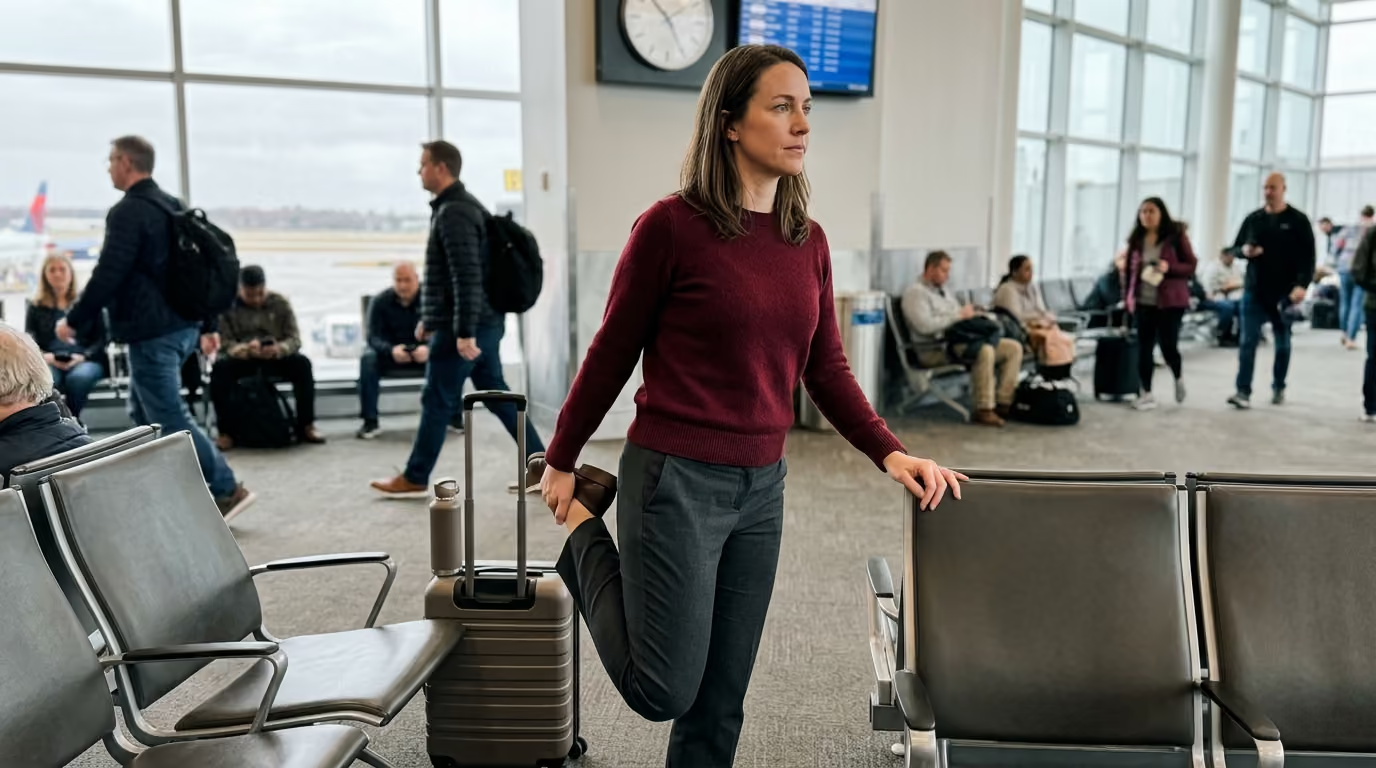

Travel mobility protocols relieve transit stiffness across the spine, hips, and vascular system during long flights, road trips, and hotel stays.





Travel mobility is not passive stretching, and it is not a demanding exercise routine squeezed into an airport terminal. True travel mobility is the active, usable range of motion across your joints that allows you to step off an overseas flight ready for business, sport, or adventure. It represents a structured system for managing prolonged physical immobility, pressurized cabins, confined seating, and temporary workstations. This comprehensive field manual details the physiological mechanics of travel stiffness and delivers practical movement protocols for flights, lounges, road trips, trains, and hotel rooms.
Prolonged transit forces the human body into sustained joint angles while drastically reducing muscular contractions. The core problem during long journeys is not a lack of flexibility. The real issue is the absence of positional variation and the temporary stagnation of fluid dynamics throughout your connective tissues. When you sit in a fixed position for hours, resting muscle tone increases, blood pools in the lower extremities, and spinal discs experience continuous compressive loading.
A common assumption is that joint stiffness indicates muscular shortening or mechanical damage. In reality, post-travel tightness is primarily a protective neurological response combined with low tissue perfusion. When you maintain a static posture, your nervous system upregulates resting muscle tone around the hips, lower back, and neck to stabilize the spine. At the same time, the gel-like ground substance within your fascia thickens, which produces a sensation of friction during movement.
You can address this mechanical lock-in through targeted movement snacks. These brief, low-intensity movement patterns restore joint lubrication and stimulate muscular blood flow without breaking a sweat in public spaces. Understanding these biological dynamics allows active adults to manage their physical readiness across demanding travel schedules. Exploring comprehensive travel and human performance resources provides the broader physiological context for maintaining physical autonomy on the road.
To build an effective travel routine, you must understand how fixed seating alters specific anatomical regions. A standard transit seat locks your hips into roughly ninety degrees of flexion while rounding your thoracic spine and restricting calf activity. Understanding these specific joint constraints helps you apply targeted movement solutions.
Sustained sitting places the iliopsoas, rectus femoris, and tensor fasciae latae in a shortened position. Over several hours, the nervous system adapts to this shortened range, making immediate hip extension feel restricted upon standing. Meanwhile, the gluteal muscles remain in a mechanically lengthened, dormant state under direct body weight. When you stand up to collect your carry-on luggage, your hip flexors resist extension, which frequently forces your lumbar spine to hyperextend to compensate.
The lumbar spine naturally maintains an inward curve known as lordosis. Standard passenger seating often flattens this curve into flexion, shifting the mechanical load from the posterior facet joints onto the anterior portions of your intervertebral discs. This sustained pressure pushes fluid toward the back of the disc space, irritating surrounding nerve endings. Higher up, the mid-back rounds forward under the weight of holding laptops, reading tablets, or resting against unsupportive headrests. This thoracic rigidity directly limits your ability to rotate your torso comfortably.
Working on a digital device in transit typically requires forward head posture. For every inch your head drifts forward past your shoulders, the workload on your upper trapezius and cervical erector muscles increases dramatically. Shoulder blades drift upward and outward into protracted elevation, creating tension across the base of the skull and down through the shoulder girdle. This muscular strain can trigger tension headaches and restrict comfortable neck rotation.
Your lower leg musculature serves as a peripheral pump for the circulatory system. When you walk, the rhythmic contraction of the soleus and gastrocnemius muscles compresses the deep veins of the calf. This action propels deoxygenated blood upward through one-way valves toward the heart.
Sitting still stops this pump mechanism. Blood pools in the lower legs and feet, increasing hydrostatic pressure and pushing fluid into interstitial spaces, which causes ankle swelling.
Prolonged immobility also influences whole-body metabolic and vascular parameters. Research shows that sustained sitting reduces flow-mediated dilation, a key marker of arterial health, due to lower blood flow and reduced shear stress against blood vessel walls. A systematic review published in Sports Medicine found that breaking up sitting with regular movement breaks produces consistent improvements in resting blood pressure and cardiovascular biomarkers. Further experimental research indicates that light-intensity walking interruptions can improve post-meal glucose regulation compared to unbroken sitting blocks.
Every transit environment imposes distinct physical boundaries. A crowded airplane economy cabin demands subtle, seated micro-movements, while an airport terminal offers space for loaded movement and brisk walking. Adapting your approach to each specific environment ensures consistency throughout your journey.
Air travel combines restricted space with lower barometric pressure and low relative humidity. Your primary goals on a flight are stimulating venous return and varying spinal loading without disrupting other passengers.
When selecting seats, an aisle seat offers the greatest movement freedom for frequent standing. Keep your personal bag in the overhead compartment if possible to maximize footwell space. Keeping your feet flat allows full ankle range of motion for heel and toe raises. If turbulence keeps the seatbelt sign illuminated, rely entirely on rhythmic seated calf contractions, quad squeezes, and pelvic tilts.
Airport lounges offer comfortable seating, but they can easily lead to a second unbroken block of sitting right after a flight. Treat the lounge as an active transition zone rather than a waiting room.
Begin by walking through the terminal corridors to accumulate low-intensity steps. When working in the lounge, find a high-top counter to create a standing workstation. Before your next flight segment, use a stable wall or heavy lounge chair to perform supported split-stance hip extensions and gentle chest-opening stretches.
Operating a motor vehicle demands steady physical focus, but the seated driver remains fixed in a slight forward lean with the right foot held in sustained positions. Safety is the primary priority on the road.
When adjusting your vehicle seat, set the backrest to a slight incline between 100 and 110 degrees to balance spinal disc pressure and muscular effort. Use the car's lumbar support to preserve the natural inward curve of your lower back. During rest stops, step away from the car to walk around, open your hips, and move your neck through a comfortable range of motion before driving again.
Train journeys provide more physical freedom than air travel or driving, but unexpected carriage sway requires good balance. Moving through the train carriage recruits your stabilizing core and ankle musculature.
Take advantage of train travel by alternating thirty minutes of seated work with ten minutes of standing in the vestibule area or walking to the dining car. When standing in a moving carriage, keep a slightly wider stance and soft knees to absorb motion naturally.
Temporary business travel environments rarely match the ergonomic setup of a dedicated home office. Hotel desks, dining room chairs, and conference setups often lead to slumped postures and neck fatigue.
The Canadian Centre for Occupational Health and Safety recommends a five to ten minute break for every hour spent working at a computer workstation. Elevate your laptop using a portable stand or a stack of books, and connect a compact external keyboard and mouse. Take phone calls standing up or pacing around the room. During long conference meetings, change your sitting posture regularly, alternate crossing your ankles, and use scheduled breaks to walk the hallways rather than remaining seated at the table.
Travel mobility advice is often filled with oversimplified rules and misconceptions. Correcting these myths will help you make better use of your travel time and focus on what actually works.
Many travelers believe that holding intense static stretches at the end of a long travel day will erase hours of sitting. Static stretching can temporarily increase your stretch tolerance, but it does little to address the circulatory and fluid stagnation built up during travel. Rhythmic dynamic movement, walking, and active muscle contractions are far more effective for increasing blood flow and reducing perceived stiffness.
Standing desks and standing areas in transit lounges are popular, but standing still is simply another static posture. While standing burns slightly more energy than sitting, it can still cause blood to pool in the lower extremities if your calf muscles remain inactive. A systematic review in Sports Medicine found that light-intensity walking interruptions offer clear metabolic and vascular advantages over standing in place alone.
Searching for a single, rigid sitting posture often creates unnecessary muscle tension across your lower back and shoulders. Holding yourself in an exaggerated military-style posture for hours can be just as fatiguing as slouching. The Occupational Safety and Health Administration emphasizes that postural variation is essential. The best sitting posture is the one that changes regularly within a comfortable, well-supported range.
A widespread travel myth suggests taking an aspirin before an overseas flight to prevent blood clots. The Centers for Disease Control and Prevention explicitly advises against self-prescribing aspirin for travel-related clot prevention. For travelers without clinical risk factors, non-medical strategies like walking, moving your calf muscles, and staying well-hydrated are the standard recommendations. Travelers with known risk factors should speak with their physician for personalized medical guidance.
Forcing a joint past its comfortable range of motion during a travel break can trigger protective muscle guarding. Mayo Clinic exercise guidance recommends gentle, pain-free stretching without bouncing or straining. If a movement produces sharp discomfort, pinching sensations, or radiating numbness, back off immediately. Movement breaks should leave your joints feeling refreshed and relaxed, not stressed.
You do not need an hour of dedicated gym time to maintain your physical readiness while traveling. The key is applying brief, focused movement routines consistently throughout the day. Below are four practical routines designed for different schedules and environments.
This seated sequence is completely discreet. You can perform it in economy class, on a train, or as a passenger in an automobile without disturbing anyone around you.
Begin with your feet flat on the floor. Raise your heels as high as possible while keeping your toes down to engage your calf muscles, then lower them smoothly for twenty repetitions. Immediately reverse the movement by keeping your heels grounded and pulling your toes upward toward your shins for twenty repetitions. Next, squeeze your gluteal muscles firmly for two seconds, then relax, repeating this ten times. Finish with five slow shoulder rolls backward and three deep diaphragmatic breaths.
This standing sequence requires no equipment and minimal floor space. It is ideal for open gate areas, hotel corridors, or lounge spaces.
Spend the first minute walking briskly with a relaxed arm swing. Next, step into a split stance with your hands resting on a sturdy wall, luggage handle, or chair back. Tuck your pelvis slightly and squeeze the glute of your rear leg to open the front of your hip, holding for twenty seconds on each side. Transition into gentle torso rotations, turning your shoulders slowly to each side while keeping your hips facing forward. Finish with ten standing scapular retractions, drawing your shoulder blades down and back without shrugging your neck.
Perform this routine immediately upon entering your hotel room. It helps transition your body from hours of travel sitting into normal, active movement.
Begin by pacing the room for one minute to let your legs settle. Next, use the hotel desk chair for ten to twelve sit-to-stand repetitions, focusing on driving through your heels and extending your hips fully at the top. Move to the wall, place both hands flat at shoulder height, and step one foot back into a gentle lunge to open the hip flexor for thirty seconds per side. Place one hand on the wall and gently rotate your chest outward to open your thoracic spine and chest, completing five slow repetitions per side. Finish with fifteen standing calf raises, pausing briefly at the top of each repetition.
This comprehensive sequence is designed for a quiet hotel room morning or an evening unwind after a long transit day. It works through all five primary movement zones to leave you feeling loose and capable.
Start with two minutes of easy walking and deep, relaxed breathing to bring your heart rate and nervous system into a calm state. Next, perform two sets of ten bodyweight squats using the edge of the bed or a sturdy chair as a depth guide, keeping your chest tall. Transition to the floor or a firm mattress for gentle hip and inner-thigh openers, holding each side for thirty seconds without forcing the range. Stand up and complete five slow torso windmills per side, sweeping your arms gently to mobilize your mid-back and shoulders. Finish with two minutes of seated ankle circles and quiet diaphragmatic breathing to release resting muscle tension.
For structured, research-backed approaches to muscle recovery, consult our library of recovery and regeneration strategies.
For active travelers, arriving at a destination is usually just the beginning. Long-haul travel is often immediately followed by physically demanding sports, such as heli-skiing, high-altitude trekking, cycling tours, or coastal sailing. Stepping straight from a long-haul flight onto a mountain trail or ski slope with stiff hips and sluggish circulation increases fatigue and impairs coordination.
When hip extension is restricted from prolonged sitting, your body naturally borrows movement from the lower back during walking or hiking. This compensatory movement places extra mechanical stress on your lumbar spine when carrying a daypack on uneven terrain. In sports like skiing or trail running, reduced ankle mobility limits your ability to absorb ground forces smoothly, shifting strain upward to the knees.
Applying movement snacks throughout your journey preserves your baseline mobility and joint coordination. Priming your hips, ankles, and spinal stabilizers in transit ensures you arrive ready for the physical demands of your trip. Maintaining your physical performance and joint capacity allows you to move seamlessly from travel days to active mountain, trail, or water pursuits.
Regular movement during long journeys also supports travel recovery. By stimulating blood flow and keeping your nervous system engaged through dynamic movement, you help your body adapt more easily to new time zones. For additional insights on maintaining physical energy and joint readiness during active excursions, explore our practical travel and adventure insights.
Major public health agencies, occupational ergonomics bodies, and sports science institutions share a clear consensus on physical immobility, movement breaks, and travel safety.
The World Health Organization physical activity guidelines recommend that adults accumulate 150 to 300 minutes of moderate-intensity aerobic exercise, or 75 to 150 minutes of vigorous activity, each week. The WHO also emphasizes strength training for all major muscle groups at least two days per week. Crucially, the guidelines advise adults to reduce prolonged sitting and replace sedentary time with physical activity of any intensity. In transit, light-intensity steps across an airport concourse contribute directly to your daily physical activity foundation.
Occupational safety standards from OSHA emphasize neutral joint alignment and adaptable workstations rather than searching for one static ideal posture. Key principles include:
OSHA notes that short, strategically spaced rest breaks relieve musculoskeletal fatigue and eye strain without lowering daily work productivity. The Canadian Centre for Occupational Health and Safety reinforces this approach, recommending a five to ten minute movement break for every hour of seated desk work.
The Centers for Disease Control and Prevention provides clear guidelines for long-distance travel lasting more than four hours. The CDC recommends standing or walking whenever the cabin environment permits, choosing an aisle seat on long journeys, taking regular driving breaks, and actively exercising the calf muscles.
Mayo Clinic exercise guidance emphasizes that mobility drills should always remain gentle and controlled. You should never bounce during a stretch or push into sharp joint pain. Movement should focus on smooth dynamic ranges when your body is cold, saving longer static stretches for after a light warm-up walk or at the end of the day.
Integrating these research-backed habits into your travel days helps protect your joint health and mobility over the long term. To discover more about building daily resilience and vitality, explore our articles on longevity and living well.
Ordinary travel stiffness typically affects both sides of the body equally, showing up as a generalized sensation of tightness across your hips, lower back, or calves that improves with a warm shower, gentle movement, and light walking. In contrast, deep vein thrombosis usually develops in one leg. Warning signs include localized swelling in one calf or thigh, noticeable warmth, redness or discoloration, and tenderness when applying light pressure.
Symptoms such as sudden shortness of breath, chest pain that sharpens with deep breathing, coughing up blood, or sudden lightheadedness indicate a potential pulmonary embolism and require immediate emergency medical care.
If you are a healthy adult without clinical risk factors for venous thromboembolism, medical guidelines from the American College of Chest Physicians do not mandate routine compression socks. However, many travelers choose to wear mild over-the-counter graduated compression socks (15 to 20 mmHg) simply to reduce gravity-induced fluid pooling and keep their ankles feeling light.
Travelers with known medical risk factors, a history of deep vein clots, recent surgery, or pregnancy should consult their physician for an individualized prescription and proper fitting (typically 20 to 30 mmHg).
When you cannot leave your seat due to extended turbulence or tight seating, focus entirely on seated micro-movements to stimulate the calf muscle pump and relieve spinal disc pressure. Perform twenty rhythmic heel raises followed by twenty toe raises every thirty minutes. Add seated pelvic tilts by gently flattening your lower back against the seat for three seconds, then releasing into a subtle arch.
Contract your glutes and thigh muscles isometrically for two-second holds, roll your shoulders backward to release neck tension, and take slow diaphragmatic breaths to keep your nervous system relaxed.
Working from a soft hotel bed or a low lounge table forces your lumbar spine into prolonged flexion and strains your neck. If your room lacks a suitable desk, place a firm pillow behind your lower back while sitting on a sturdy dining chair to support your lumbar curve. Place your laptop on a firm surface, such as a raised suitcase or a stack of books, so you do not have to look straight down.
If you must work from a bed, sit completely upright with your back supported firmly against the headboard, place a pillow directly under your knees to ease tension on your hamstrings, and stand up every thirty minutes to walk the room.
Stay connected for research and practical guidance on longevity, strength, recovery, energy and active living. New ideas to help you stay capable, curious and ready for more.


Explore practical guidance on strength, recovery, energy, travel and longevity for a life that stays active.
explore the Blog