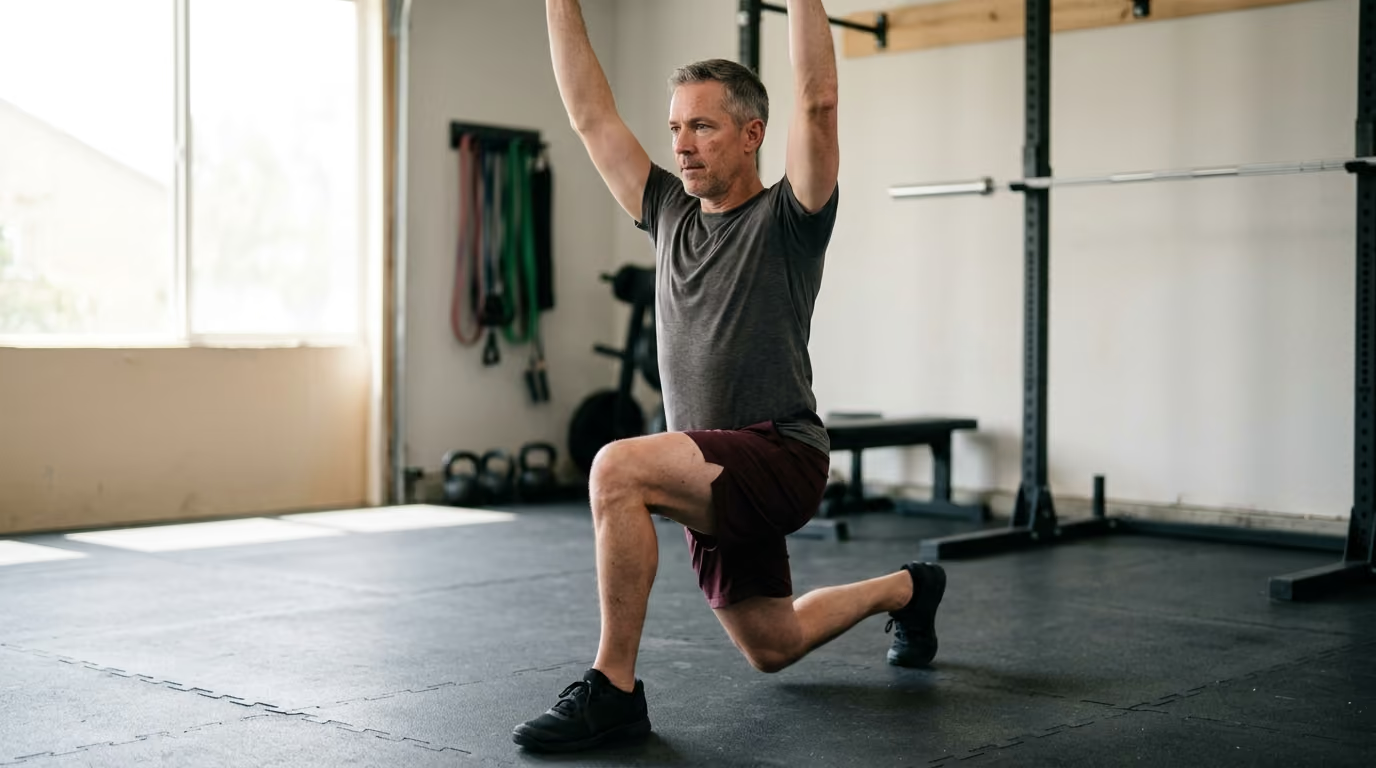

Lengthy static stretching routines often cause unnecessary fatigue, whereas structured RAMP framework protocols optimize joint mobility and potentiation.





Most conventional fitness advice tells adults over 40 to spend half an hour on foam rollers, static stretching mats, and elaborate band circuits before touching a weight. This approach is not only inefficient, but it can actively impair the very performance you want to protect. Spending thirty minutes on low-intensity floor drills produces unnecessary muscular fatigue without adequately preparing your central nervous system for heavy loads or explosive movements. A warm-up should function as a targeted readiness system, not an exhausting preliminary workout.
By shifting your mindset from generic stretching to purposeful preparation, you can optimize joint lubrication, motor unit recruitment, and mental focus in ten to fifteen minutes. Whether you are preparing for heavy barbell squats, an afternoon of alpine skiing, or a competitive match on the tennis court, your preparatory routine must balance physiological stimulation against energy conservation. This guide details the research-backed frameworks, loading protocols, and movement categories needed to prepare your body for high physical output while preserving joint health and athletic longevity.
A warm-up is an active bridge between baseline resting physiology and high-demand physical exertion. When you transition from rest to strenuous movement, several biological systems must adapt simultaneously. Muscle temperature rises, which decreases intramuscular viscous resistance and accelerates metabolic reactions. Higher temperatures allow oxygen to dissociate more readily from hemoglobin and myoglobin, delivering vital fuel to working muscle fibers.
Joint health represents another critical physiological factor for active adults. Synovial fluid within the joint capsules changes viscosity as movement occurs. At rest, this fluid is thick and gelatinous. Controlled movement warms the capsule and thins the fluid, allowing it to coat articular cartilage evenly and distribute compressive forces during loading.
Neural readiness is equally vital for strength and athletic output. Preparing the nervous system increases nerve conduction velocity and enhances motor unit recruitment. This phenomenon, known in exercise science as post-activation performance enhancement, temporarily increases your ability to generate force and power. The goal of potentiation is to prime these motor units without depleting the intracellular energy stores needed for your primary session.
Tissue tolerance undergoes subtle changes as we age. Tendons and ligaments experience natural collagen cross-linking, which can slightly alter tissue compliance and joint range of motion. However, age does not require an entirely different biological approach to training. Instead, it calls for a more progressive, deliberate loading sequence that respects joint history while systematically waking up your coordination, balance, and proprioception. Exploring dedicated strength and physical performance guides can help you align these physiological principles with your broader training goals.
To eliminate guesswork, modern sports science relies on the RAMP framework developed by sports scientist Ian Jeffreys. RAMP stands for Raise, Activate, Mobilize, and Potentiate. This structured progression ensures you address every physiological requirement in a logical sequence without accumulating excessive volume.
The Raise phase uses low-intensity movement to elevate your core temperature, heart rate, respiration rate, and blood flow. This is not the time for high-intensity cardiovascular intervals. You want an easy, rhythmical activity that warms the body while allowing you to maintain a steady conversation.
Effective options include three to five minutes of easy cycling, brisk walking on an incline, rowing, or light sled dragging. Sled drags are particularly effective for adults over 40 because they provide concentric-only muscular work with zero eccentric joint stress. The objective is simply to produce a light sensation of warmth and joint lubrication.
Activation drills target specific muscle groups that stabilize prime joints during heavy or rapid movements. The intent is not to fatigue the muscle to failure, but to improve neuromuscular coordination and sensory awareness. You are reminding the nervous system how to recruit key stabilizers before they are exposed to heavy external loads.
Typical targets include the gluteal complex, rotator cuff musculature, and deep trunk stabilizers. Useful exercises include bodyweight glute bridges, band pull-aparts, lateral band walks, and dead bugs. Keep the volume low, usually one to two sets of five to eight controlled repetitions per movement.
Mobilization focuses on dynamically taking joints through the ranges of motion required by the upcoming activity. Unlike passive stretching, active mobilization requires muscular control at the end ranges of motion. This builds functional stability and prepares your nervous system to handle loads across full movement patterns.
Common mobilization movements include ankle rocks for dorsiflexion, thoracic spine rotations, hip airplanes, and deep bodyweight lunges with an overhead reach. By actively controlling these ranges, you ensure your hips, ankles, and spine can safely accommodate the demands of compound lifting or multi-directional sport.
The Potentiate phase bridges the gap between general movement prep and high-intensity performance. This phase exposes your nervous system to progressively higher movement velocities or loads, stimulating high-threshold motor units.
For strength athletes, potentiation involves specific, low-repetition warm-up sets of the primary barbell exercise. For field and court athletes, it involves short accelerations, submaximal jumps, or medicine ball throws. Volume must remain minimal here so that you stimulate the neuromuscular system without producing metabolic fatigue.
Not all preparatory exercises serve the same function. Athletes often confuse dynamic stretching, activation drills, and specific warm-up sets, leading to disorganized routines that waste valuable gym time. Understanding the distinct purpose, limitations, and best applications of each modality allows you to construct a streamlined routine tailored to your session.
For decades, fitness culture treated static stretching as the mandatory starting point for every workout. Athletes sat on the floor holding passive hamstring and quad stretches for minutes at a time. In the early 2000s, sports science corrected this trend, revealing that prolonged passive stretching could temporarily reduce explosive strength and power output. Unfortunately, this led to an equally dogmatic counter-myth that static stretching before exercise is inherently dangerous.
Modern research provides a much more nuanced perspective. A comprehensive systematic review published in the British Journal of Sports Medicine examined stretching modalities across diverse athletic tasks. The researchers found that long-duration static stretches held for over sixty seconds per muscle group did indeed produce small reductions in subsequent maximal strength and explosive power. However, short-duration static stretches held for less than thirty seconds caused only trivial performance decrements, generally under two percent, when followed by dynamic movement and technical rehearsal.
Furthermore, a systematic review and network meta-analysis demonstrated that dynamic stretching produced significant improvements in explosive performance. Dynamic stretching improved countermovement jump height by approximately 1.60 centimeters and reduced sprint times by 0.08 seconds compared to non-warm-up controls. Static stretching performed alone produced a small negative effect on sprint velocity, but combining brief static stretches with dynamic movement yielded excellent results for athletes needing specific joint access.
The evidence regarding injury prevention also requires clarification. Multiple systematic reviews have evaluated static stretching as a standalone injury prevention tool. The data consistently demonstrates that passive stretching alone does not reduce overall exercise-related injury rates. In contrast, comprehensive neuromuscular warm-up programs that incorporate strength, balance, dynamic mobility, and landing mechanics reduce injury incidence by thirty to fifty percent. You can access additional evidence-based fitness strategies through curated longevity and performance resources designed for active lifestyles.
The practical rule is straightforward. Do not spend ten minutes passively holding static stretches before explosive sports or heavy lifting. If you have a specific joint restriction that limits your movement quality, hold a short static stretch for twenty seconds to calm tissue tension. Immediately follow that stretch with an active mobility drill and task-specific rehearsal to teach your nervous system how to control that newly acquired range under active muscular tension.
The primary objective during a strength training warm-up is to prepare the nervous system and articular structures for heavy loads while burning as little fuel as possible. High-repetition warm-up sets create metabolic fatigue, lactic accumulation, and glycogen depletion before your primary work even begins. An intelligent ramp-up sequence uses low repetitions and progressive load increases to prime movement mechanics and build mental confidence.
When preparing for a heavy compound movement like the barbell squat, bench press, or deadlift, your working weight determines the structure of your ramp-up sets. As the load increases toward your working weight, your repetitions per set must decrease. This maintains neural intent while keeping fatigue near zero.
Consider an athlete preparing to perform working sets of squats at 225 pounds. A well-designed, minimal-fatigue ramp-up sequence follows a precise loading progression:
Rest intervals between warm-up sets should be brief during the lighter percentages, typically around sixty seconds. As you reach your heavier single-repetition sets, increase rest to ninety or one hundred and twenty seconds to allow full phosphocreatine resynthesis before your first true work set.
For upper-body strength sessions, the exact same principle applies. Before heavy bench pressing or overhead work, perform your general raise and light scapular stabilization drills, such as band face pulls or external rotations. Then, move directly to the barbell, using progressive, low-repetition ramp-up sets. This structured approach eliminates wasted effort and leaves your energy reserves intact for the sets that actually drive strength and muscular adaptation.
Recreational sports, mountain hiking, skiing, and court athletics impose vastly different physical demands than controlled barbell lifting. These activities require multi-directional deceleration, reactive balance, rotational force production, and sudden changes of speed. A proper warm-up for field and court sports must therefore emphasize proprioceptive awareness, unilateral stability, and elastic tissue recoil.
Before stepping onto a tennis court or dropping into a ski run, your warm-up should incorporate dynamic lateral movements and deceleration practice. Lateral band steps, skater hops with a controlled stick landing, and walking lunges with thoracic rotation prepare the adductors, abductors, and knee stabilizers for cutting forces. Progress from slow, deliberate movement patterns to reactive, high-speed footwork over the course of six to eight minutes.
Environmental and lifestyle stressors also demand adjustments to your warm-up strategy. Cold weather outdoor training thickens synovial fluid and slows muscle contractile speed, requiring a longer Raise phase to reach baseline body temperature. Travel presents another common challenge for active adults, as prolonged sitting in compressed cabin seating dehydrates tissues and creates temporary hip and spinal stiffness.
In our experience, managing athletic performance across different environments requires adapting your preparation to your recent travel history. After a grueling thirty hour transit to Tokyo, I realized my old strategy of just powering through was no longer working. I felt foggy for three days, and my hips felt completely locked during my initial training sessions. I started digging into circadian biology and realized that timing my light exposure and fasting during the flight could completely shift my recovery.
Now, our team never boards a long haul flight without a precise schedule for when to eat and when to put on an eye mask. It is the difference between losing a week of your trip and hitting the ground running. When landing after long transit, we always perform an extended ten-minute mobility sequence focusing on hip extension, thoracic rotation, and foot articulation before engaging in any demanding physical activity. Pairing sensible movement prep with targeted recovery and sleep protocols ensures you can transition smoothly from international transit to high-output mountain or court performance.
For outdoor adventures like trail hiking or backcountry skiing, cold mountain air requires a patient, progressive warm-up. Start with five minutes of steady, low-incline walking before adding dynamic leg swings, ankle rotations, and bodyweight squats. If you are interested in broader strategies for active global pursuits, review our dedicated travel and human performance strategies.
A well-designed warm-up serves a secondary diagnostic purpose. It acts as an internal screening tool that allows you to assess your physical state on any given day. If an athlete experiences localized discomfort or movement resistance during warm-up sets, they can modify exercise selection or load before causing an acute injury.
Differentiating between normal muscular stiffness and warning signs of joint injury is essential for long-term athletic consistency. Mild, diffuse stiffness that gradually dissipates as your body temperature rises is completely normal, especially for adults with decades of training history. In contrast, sharp, pinpoint joint pain, sensations of joint instability, or pain that steadily escalates with load are clear indicators to stop the exercise immediately.
Certain chronic conditions require specific modifications to the standard warm-up framework:
Athletes with joint osteoarthritis should prioritize low-impact, cyclical movement during their Raise phase. Stationary cycling or rowing helps circulate synovial fluid without exposing worn joint surfaces to impact forces. Extend the mobilization phase, but work strictly within pain-free ranges of motion rather than forcing joints into restricted end ranges.
Tendons require gradual, progressive mechanical loading to align collagen fibers and prepare for high-force output. If you have a history of patellar or Achilles tendinopathy, incorporate slow, controlled isometric holds into your activation phase. A forty-five-second isometric wall sit or single-leg calf raise hold reduces tendon pain sensitivity and enhances local load tolerance before dynamic training.
Individuals with excessive joint laxity do not need aggressive stretching or mobilization drills. For hypermobile athletes, the warm-up must focus entirely on joint stability, motor control, and end-range muscular activation. Emphasize isometric holds, controlled tempo movements, and closed-chain stability exercises to establish neuromuscular control before loading.
The World Health Organization physical activity guidelines specifically recommend that adults over 65 perform multicomponent physical activity emphasizing functional balance and strength training on three or more days per week. Incorporating low-fatigue balance exercises into your daily warm-up provides a safe, consistent opportunity to build proprioception. Single-leg balance reaches, controlled step-downs, and tandem walking drills can be integrated seamlessly into the activation phase without causing muscular fatigue. Aligning your routine with broader longevity and living well frameworks ensures your training supports lifelong functional capacity and independent vitality.
Intelligent athletic preparation after 40 is about precision, purpose, and energy management, allowing you to train hard, perform at your peak, and stay in the game for decades to come.
Stay connected for research and practical guidance on longevity, strength, recovery, energy and active living. New ideas to help you stay capable, curious and ready for more.


Explore practical guidance on strength, recovery, energy, travel and longevity for a life that stays active.
explore the Blog