
Five essential movement patterns build lasting upper-body strength, shoulder resilience, and joint durability through targeted resistance training.





You are lifting a heavy rolling duffel into an overhead bin on a flight to Zurich. Or perhaps you are three miles into a kayak crossing, feeling a dull ache spreading across the top of your shoulder blade. In both moments, upper-body capability is not an abstract fitness metric. It is the practical difference between unhindered adventure and nagging physical limitation.
After age forty, upper-body training requires a shift in perspective. Building physical capacity must replace simple vanity metrics. The goal is to build shoulders, elbows, wrists, and an upper back that can pull, press, carry, and rotate without breaking down.
A decline in raw strength is not an inevitable biological cliff. Muscle force production generally begins a subtle decline after age thirty. Reviews show strength differences between adults under forty and those over forty range between 16.6% and 40.9%. Longitudinal studies show annual declines of roughly 1% to 5% in grip strength and elbow extension torque.
Yet these numbers reflect average populations, which often include sedentary lifestyles. Aging, past injuries, reduced exposure to heavy loads, and sports overuse interact over time. When you train the tissues and movement patterns you want to keep, your upper body can remain robust, powerful, and remarkably resilient.
Understanding the biological shifts of middle age helps you program training intelligently. Muscle tissue experiences age-related changes in fiber size, motor unit recruitment, and tendon elasticity. Sarcopenia prevalence varies widely based on clinical definitions, ranging from 9.9% to 40.4% in community-dwelling older adults. A global review across 58,404 individuals estimated overall sarcopenia prevalence at approximately 10% in adults over sixty.
Research on sarcopenia interventions demonstrates that combined resistance training, balance work, and proper nutrition improve handgrip strength by an average of 4.19 kilograms. Sarcopenia is not an unavoidable fate for active adults. It is largely a reversible response to underloading.
Tendon biology also shifts over time. Tendons adapt more slowly than muscular tissue because they have lower metabolic activity and blood flow. After forty, a lifter or athlete might regain muscular strength quickly, but their rotator cuff and biceps tendons may require months to build equal load tolerance. If you increase training volume too fast, the muscle will handle the weight while the tendon becomes irritated.
Structural changes in the shoulder joint are normal and expected. A pooled analysis found rotator cuff abnormalities on scans in just 9.7% of people aged twenty or younger, rising to 62% in adults aged eighty or older. Another study revealed asymptomatic rotator cuff tears in 13% of adults in their fifties, 20% in their sixties, 31% in their seventies, and 51% in those over eighty.
These imaging findings prove that structural wear does not automatically equal pain or loss of function. An MRI showing a partial tear or fraying is often just the internal equivalent of gray hair or wrinkles. The central focus must always remain on your symptoms, your movement quality, and your actual load tolerance. For a deeper look at sustainable programming, review our structured strength and physical performance protocols.
True shoulder resilience is the ability to produce force in multiple angles while controlling the joint under fatigue. The shoulder complex sacrifices bony stability for extreme mobility. The shallow glenoid fossa acts like a saucer holding a golf ball, relying on dynamic muscular control rather than deep socket geometry.
Dynamic stability is maintained through the coordinated action of the rotator cuff and scapular musculature. The rotator cuff consists of four muscles: the supraspinatus, infraspinatus, teres minor, and subscapularis. These muscles compress and center the head of the humerus inside the socket while the larger prime movers, such as the latissimus dorsi and pectorals, generate major force.
Scapular mechanics dictate how freely the arm moves overhead. During arm elevation, the shoulder blade must upwardly rotate, tilt posteriorly, and rotate externally around the rib cage. The serratus anterior and the upper and lower trapezius muscles work together to guide this motion smoothly.
Many athletes are told to keep their shoulder blades constantly pinned down and back. This rigid posture restricts natural movement and can irritate the subacromial space during overhead tasks. Resilient shoulders require free, controlled scapular motion that moves naturally with the arm.
Systematic reviews confirm that exercise-based rehabilitation reduces pain and improves function in adults with rotator-cuff-related shoulder pain. A 2025 systematic review confirmed that specific, progressive exercise programs alleviate symptoms far better than passive treatments. Training the shoulder to move smoothly across full ranges creates long-term joint integrity.
A complete upper-body program after forty should be organized around movement patterns rather than isolated muscle groups. Training movements ensures that force transfers effectively from the torso to the hands during sports and daily tasks.
Pulling exercises build the upper back, latissimus dorsi, posterior deltoids, biceps, and forearm flexors. These muscles maintain upright posture against gravity, support climbing and paddling efficiency, and balance pressing loads.
Horizontal pulling movements include chest-supported dumbbell rows, seated cable rows, and inverted bodyweight rows. Chest-supported rows are especially valuable for lifters over forty because they remove shear stress from the lower spine. This allows you to train the upper back muscles to full fatigue safely.
Vertical pulling variations include lat pulldowns, assisted chin-ups, and full pull-ups. Varying your grip between overhand, underhand, and neutral positions reduces repetitive strain on the wrists and elbows. Neutral-grip pulldowns, where palms face each other, place the shoulder in a joint-friendly position that reduces impingement risks.
Pressing builds the anterior deltoids, pectorals, and triceps, creating the pushing power needed for daily tasks and athletic performance. Some lifters abandon pressing after forty due to shoulder discomfort, but sensible pressing is vital for maintaining anterior joint strength.
Dumbbells and push-up handles allow your wrists and forearms to rotate naturally during movement. This natural freedom avoids the joint stress that often comes with a straight, rigid barbell. Incline dumbbell presses and push-ups with hands elevated on a bench provide exceptional training benefits while sparing the anterior shoulder capsule.
Landmine pressing is another outstanding angled pressing variation. By anchoring a barbell into a floor pivot, you press along a natural upward arc. This angled path allows full scapular upward rotation without forcing the arm into an uncomfortable vertical position.
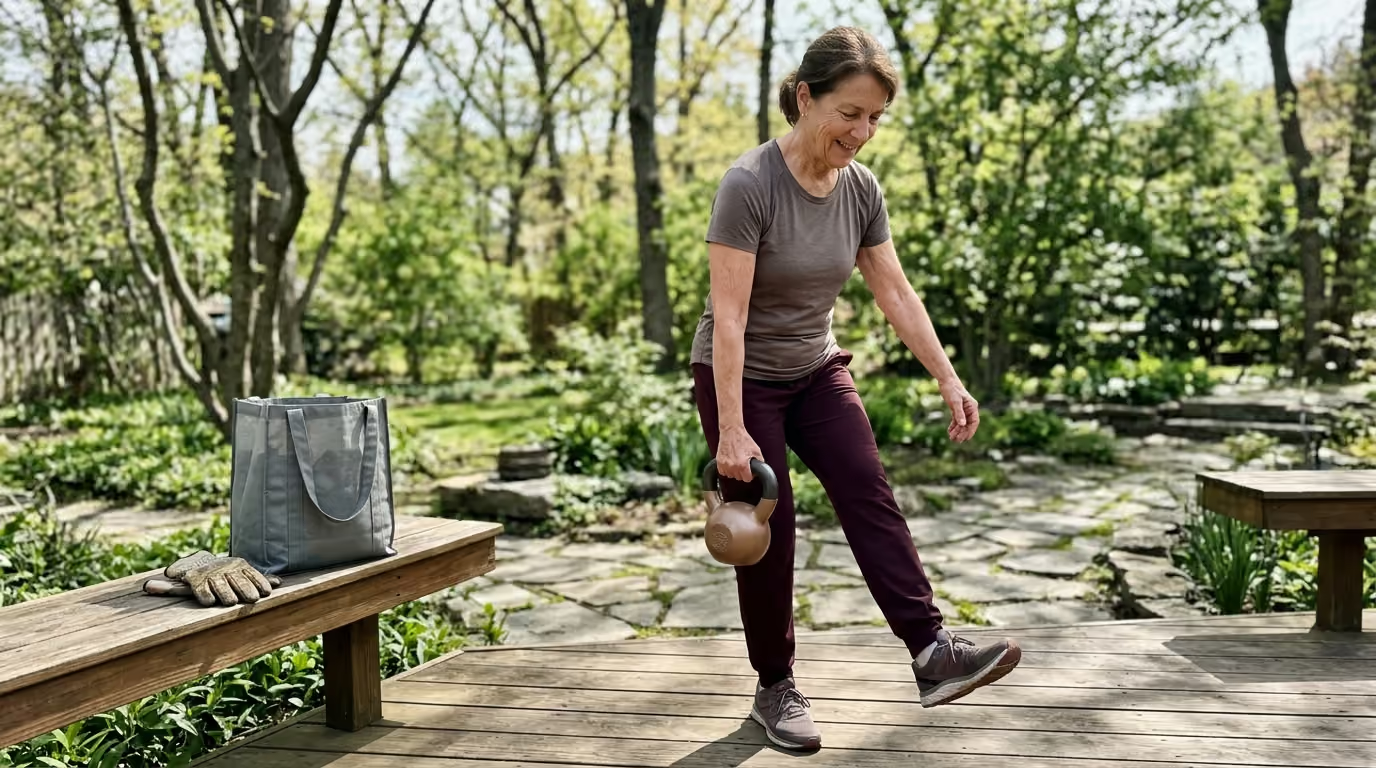
Carrying heavy objects across distance is one of the most functional upper-body exercises available. Carries train grip endurance, rotator cuff centering, scapular depression, and core stability in a single movement.
The farmer carry involves walking with heavy weights held at both sides, challenging grip and total body posture. The suitcase carry places a load on only one side of the body, forcing the opposite oblique and hip muscles to resist lateral flexion. Waiter carries and bottoms-up kettlebell carries hold the weight overhead or at shoulder height, demanding high-level shoulder control.
Carries should be progressed by tracking distance, time under tension, and walking posture rather than rushing to lift heavier loads. Maintain a tall spine, keep the ribs pulled down, and avoid letting the weights bounce against your thighs as you walk.
Rotational power allows you to swing a tennis racquet, drive a golf ball, or slice a paddle through open water. Efficient rotation does not originate solely in the arms. It is generated through the hips and legs, channeled through a stable core, and expressed through the shoulders.
Cable woodchops, medicine-ball rotational throws, and band-resisted torso rotations train the upper body to transfer rotational force smoothly. Anti-rotation movements, such as the Pallof press, train the trunk and shoulders to resist unwanted twisting forces.
Deceleration strength is equally essential for joint health. When you swing a racquet or throw a ball, the posterior rotator cuff muscles must fire eccentrically to slow the arm down. Medicine ball catches and controlled eccentric cable pulls train these muscles to absorb force safely, protecting the joint from strain.
The hand, wrist, and elbow form the mechanical link between your shoulder and the outside world. Neglecting these distal structures often leads to medial or lateral elbow irritation, common in racquet sports, climbing, and lifting.
Forearm training should include wrist flexion, wrist extension, pronation, and supination. Pronation and supination drills with an off-center dumbbell build resilience in the tendons surrounding the elbow joint. Pinch-grip carries and open-hand plate pinches target the deep flexors of the hand and fingers.
Tendon recovery protocols benefit from slow eccentric loading and isometric holds. If you experience mild tendon irritation, perform thirty-second isometric wrist extensions or static towel hangs. These exercises stimulate collagen remodeling without aggravating the tendon attachment point.
Designing an effective upper-body routine after forty requires careful management of training variables. You must balance weekly volume, intensity, exercise selection, and recovery to stimulate adaptation without causing overuse injuries.
A systematic review published in the British Journal of Sports Medicine confirmed that higher-load, multiset training maximizes strength. The same review demonstrated that performing higher-load, multiset workouts twice weekly yielded the highest gains in muscle hypertrophy across all analyzed groups.
The American College of Sports Medicine and the National Strength and Conditioning Association recommend periodized training for older adults. They suggest using loads of 70% to 85% of one-repetition maximum for strength development, combined with moderate loads of 40% to 60% moved at faster speeds for power.
Instead of testing absolute one-repetition maximums, use the Repetitions in Reserve framework. Terminate most working sets with one to three clean repetitions remaining in the tank. This preserves movement quality, prevents technical breakdown, and protects joints from unnecessary strain.
An umbrella review on resistance training variables highlighted a clear dose-response relationship between weekly volume and muscle growth. Reaching 6 to 12 challenging sets per muscle group each week is a productive target for intermediate lifters. Highly advanced athletes may benefit from 10 or more sets per week, provided their recovery capacity is managed properly.
Rest intervals should be generous on heavy compound movements. Taking two to three minutes of rest between sets of rows, presses, and pull-ups restores intramuscular energy stores. This allows you to maintain high force production and clean technique across every set.
Progressive overload should follow a clear hierarchy:
Every fourth to sixth week of consistent training should be a planned deload. Reduce total set volume by 30% to 50% while maintaining moderate resistance and clean movement patterns. Deloading allows joints and connective tissues to recover, clearing accumulated fatigue before your next training block. You can browse our full library of healthy aging and performance resources for complementary recovery frameworks.
Many training dogmas from traditional bodybuilding culture are counterproductive for adults over forty. Identifying and correcting these misunderstandings helps prevent recurring joint irritation and keeps your training on track.
Pain is a complex protective output of the nervous system, not a simple gauge of tissue damage. A mild ache during a workout does not mean you have torn a muscle or damaged a joint.
Use a simple traffic light model to guide your training decisions:
The belief that one static posture causes all shoulder pain is unsupported by modern biomechanics research. Resilient shoulders must be able to round forward, arch backward, elevate, and rotate safely under control.
Forcing your shoulders down and back during every exercise restricts natural scapulohumeral rhythm. When you press overhead or reach upward, your shoulder blades need to upwardly rotate freely. Train dynamic control across a variety of body positions rather than locking yourself into a rigid, artificial posture.
Many coaches recommend a rigid two-to-one ratio of pulling exercises to pressing exercises for all older adults. While balancing movement patterns is useful, an arbitrary ratio ignores your individual athletic demands and training history.
A dedicated kayaker or rock climber already performs tremendous pulling volume during sport practice. Adding excessive rowing to their strength routine can lead to elbow tendon irritation and shoulder extension fatigue. Conversely, an office worker who sits at a desk may benefit from additional horizontal rows and rear deltoid work. Tailor your movement volume to your lifestyle and sports demands.
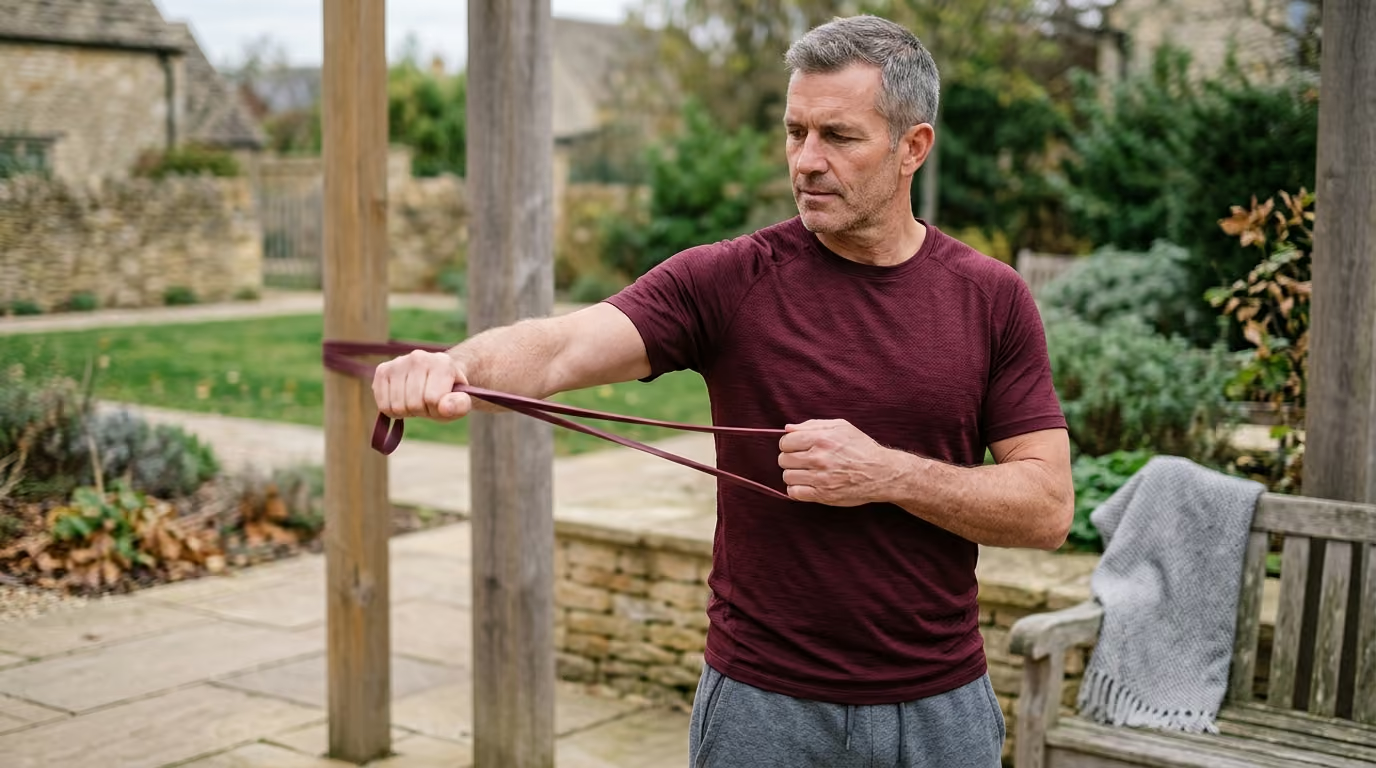
Low-load external rotation exercises with light elastic bands have their place, but they are only one piece of shoulder health. Isolated band work cannot prepare your tissues for the high forces encountered in sports or heavy lifting.
True joint resilience requires exposing the upper body to progressive compound loads. Loaded carries, overhead presses, and heavy rows challenge the rotator cuff to center the humeral head under realistic demands. Use band work as a warm-up, but rely on progressive compound movements to build true physical capacity.
These structured programs apply the principles of upper-body resilience to real-world training schedules. Select the template that matches your experience, current physical condition, and weekly routine.
This two-day routine is designed for adults establishing an upper-body strength foundation. It emphasizes fundamental movement patterns, joint-friendly angles, and steady capacity building.
Perform Day A early in the week, allowing forty-eight hours of recovery before completing Day B. Focus on controlled lowering tempos and smooth transitions between repetitions.
This three-day split suits active adults who want to develop strength, power, and athletic resilience across their upper body.
Session 1 focuses on foundational strength with low-fatigue, joint-friendly compound movements. Keep two clean repetitions in reserve on every work set.
Session 2 targets overhead mechanics, scapular control, and distal joint conditioning. Prioritize smooth rotational movement through the forearms and wrists.
Power training should be performed when you are fresh. The NSCA position statement confirms that moving moderate loads with fast concentric intent improves dynamic balance, reaction speed, and force absorption. Stop each power set before your movement speed drops noticeably.
Athletic pursuits place distinct mechanical demands on the upper body. Adapting your strength program to balance these sport-specific stresses helps prevent overuse injuries and improves field performance.
Kayaking, canoeing, and stand-up paddleboarding require sustained pulling endurance, trunk rotation, and isometric grip stamina. Paddlers often develop tight, overactive internal rotators and latissimus dorsi muscles from thousands of repeated stroke cycles.
Paddlers should emphasize horizontal pushing, serratus anterior development, and dedicated external rotator strengthening in the gym. Adding landmine presses and serratus wall slides balances the constant downward and backward pulling mechanics of the paddle stroke.
During peak paddling season, reduce gym-based rowing volume to avoid overworking the latissimus and biceps tendons. Shift your gym focus toward thoracic mobility, anti-rotation core stability, and wrist extensor endurance to keep the upper body balanced.
Tennis, pickleball, and squash demand explosive rotational power, rapid direction changes, and forceful deceleration of the arm. The rapid deceleration phase of a serve or smash places extreme eccentric strain on the posterior deltoid, infraspinatus, and forearm extensor tendons.
Racquet athletes often experience lateral elbow irritation after suddenly increasing their weekly playing time. This issue is rarely caused by weak wrists alone. It is usually triggered by a rapid spike in racquet impact forces that exceeds the load capacity of the wrist extensor tendons.
Racquet players should pair rotational medicine ball throws with controlled eccentric reverse flyes and cable chops. Conditioning the entire kinetic chain ensures that ground reaction forces transfer smoothly from the legs through the hips and torso, sparing the arm from absorbing excessive torque.
Rock climbing places immense demands on finger flexors, forearms, latissimus dorsi, and shoulder stabilizers. Climbers regularly hang their entire body weight from small handholds, demanding exceptional relative strength and tendon resilience.
Climbers frequently develop an imbalance known as climber's posture, characterized by rounded shoulders and overdeveloped pulling muscles. Adding more pull-ups to a climber's strength routine is rarely helpful and can increase the risk of subacromial impingement.
Climbers should focus their supplemental strength training on overhead pressing, deep push-ups, and scapular upward rotation drills. Incline dumbbell presses, dips, and reverse wrist curls provide the antagonistic balance needed to protect the elbows and shoulders during hard climbing projects. Discover complementary conditioning strategies in our performance and fitness routines.
Demanding travel requires functional upper-body capacity. Hauling heavy luggage across train stations, hoisting duffel bags into overhead racks, and carrying packs over rough terrain all demand upper-body strength, grip endurance, and core stability.
Physical fatigue during long transit days is often magnified by poor recovery habits and circadian disruption. After a grueling thirty hour transit to Tokyo, I realized my old strategy of just powering through was no longer working. I felt foggy for three days. I started digging into circadian biology and realized that timing my light exposure and fasting during the flight could completely shift my recovery. Now, I never board a long haul flight without a precise schedule for when to eat and when to put on an eye mask. It is the difference between losing a week of your trip and hitting the ground running.
Travel preparation should include exercises that match real-world physical tasks:
When traveling without access to a gym, maintain your upper-body capacity with minimal equipment. A single medium-resistance elastic band allows you to perform face pulls, band pull-aparts, push-ups, and standing rows in your hotel room. These brief maintenance sessions preserve movement quality and joint comfort until you return to your regular training routine. Explore our guides on travel and adventure preparation along with dedicated recovery and sleep strategies to support your trips.
You do not need to spend endless hours in the gym to build and maintain capable, resilient shoulders. When work, family commitments, or travel restrict your schedule, focusing on a minimal effective dose preserves strength and joint health efficiently.
This four-exercise circuit trains horizontal pushing, horizontal pulling, loaded carrying, and posterior rotator cuff control in just twenty minutes. Performing this simple sequence twice per week maintains roughly 80% to 90% of your upper-body strength and joint stability during busy periods.
Focus on training quality rather than raw volume. Move through clean ranges of motion, control the lowering phase of every repetition, and keep joint stress low. Consistency with a simple, well-designed routine yields far greater long-term resilience than sporadic bursts of extreme training.
Return to this guide whenever you plan a new training phase, prepare for a physically demanding adventure, or notice minor joint discomfort creeping into your workouts. Reviewing the movement patterns, volume targets, and modification options will help you make clear, informed adjustments to keep your upper body strong and capable.
Building upper-body strength and shoulder resilience after forty is not about chasing past personal records or avoiding hard training. It is about applying progressive resistance deliberately, respecting your tissue adaptation timelines, and building a capable body that supports a life of active adventure.
Stay connected for research and practical guidance on longevity, strength, recovery, energy and active living. New ideas to help you stay capable, curious and ready for more.


Explore practical guidance on strength, recovery, energy, travel and longevity for a life that stays active.
explore the Blog