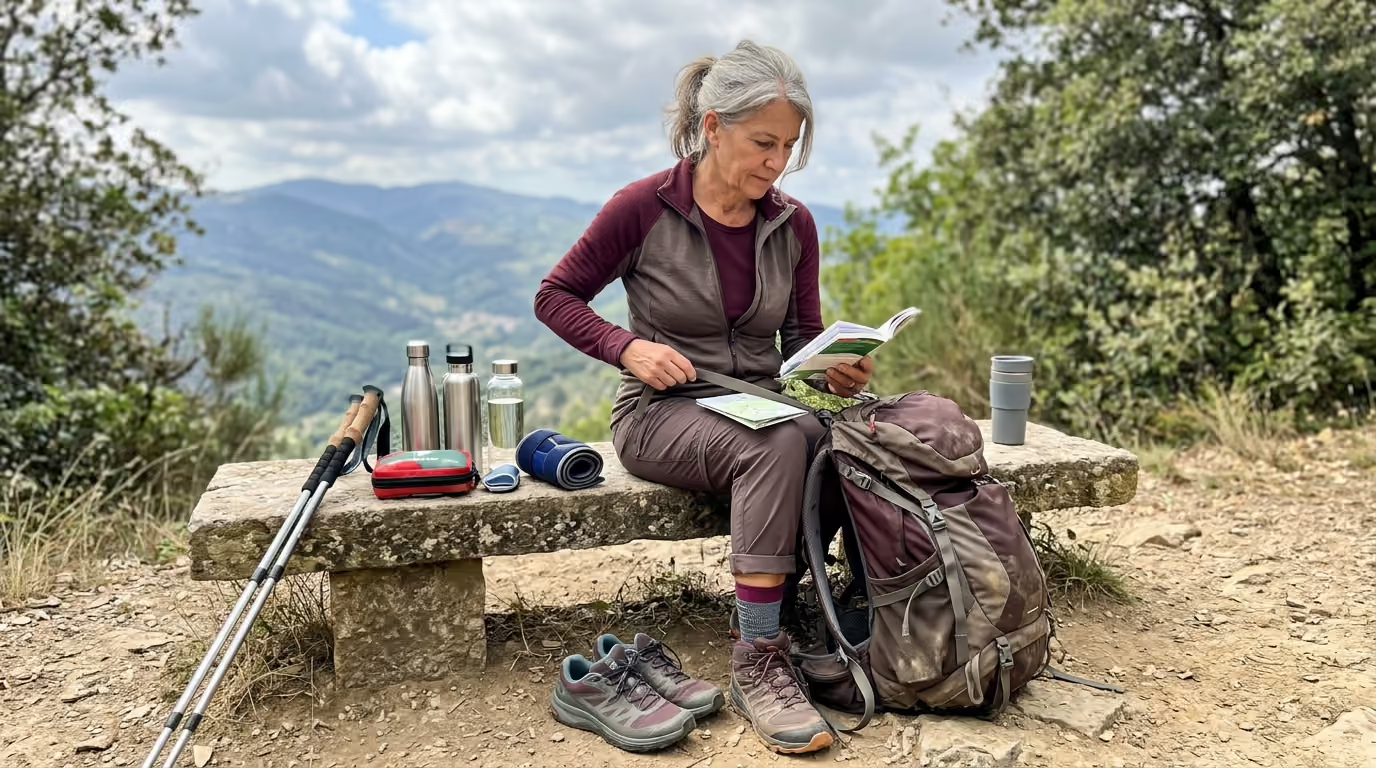

Long-haul flights and unfamiliar climates demand strategic medication scheduling, proactive physiological pacing, and thorough clinical preparation.





Can you take a long-haul flight, hike through alpine trails, or explore foreign cities when managing a long-term medical diagnosis? Many active adults type variations of this question into search engines every week. The answer is an emphatic yes, provided you replace guesswork with a structured, research-backed system.
Managing a chronic condition does not mean resigning yourself to a sedentary life at home. It simply requires matching your clinical stability and functional capacity to the physical realities of your itinerary. This definitive guide delivers the operational blueprint you need to manage medications, adjust physical pacing, navigate international healthcare, and protect your independence wherever you choose to go.
Traveling successfully with a chronic health condition comes down to proactive risk management rather than extreme caution. Medical risk and logistical risk are two distinct challenges. A person can have perfectly stabilized blood pressure at home yet face severe disruption if an airline misplaces their medication bag.
Safe travel rests on six sequential pillars: stabilize, plan, pack, pace, monitor, and escalate. You must first ensure your underlying condition is clinically stable before departure. You then assess the itinerary for environmental and physical demands, pack redundant medical supplies in your carry-on luggage, pace your daily exertion, track relevant biometric indicators, and understand exact emergency escalation triggers.
The primary objective is preserving your physical energy for the experiences that matter most. Accepting strategic assistance, such as airport mobility carts or prearranged luggage transfers, is not a loss of autonomy. It is an intelligent conservation tactic that prevents fatigue, avoids symptom flares, and ensures you arrive at your destination ready to perform.
Travel imposes unique physiological demands on the human body that rarely occur in everyday domestic life. Commercial aircraft cabins are pressurized to the equivalent of 6,000 to 8,000 feet above sea level. This environment reduces the partial pressure of oxygen in your blood. For healthy individuals, this drop causes minimal disruption, but for travelers with cardiovascular or chronic respiratory conditions, it can provoke noticeable shortness of breath, elevated resting heart rates, and accelerated fatigue.
Prolonged seated immobility during flights, train journeys, or long drives alters peripheral blood flow. Blood pools in the lower extremities, increasing venous pressure and elevating the baseline risk for venous thromboembolism. According to research from the Centers for Disease Control and Prevention, this risk increases significantly on journeys lasting four hours or longer. The physiological strain is compounded by cabin humidity levels that frequently drop below twenty percent, accelerating mucosal drying and increasing fluid loss through respiration.
Crossing multiple time zones disrupts the central circadian pacemaker in the suprachiasmatic nucleus. This internal clock coordinates hormone secretion, blood pressure rhythms, cellular repair, and glucose regulation. When your sleep-wake cycle becomes desynchronized from the local solar day, insulin sensitivity decreases and cortisol levels remain elevated. For travelers with metabolic disorders or seizure conditions, circadian misalignment directly lowers the threshold for clinical instability.
Unfamiliar microclimates introduce secondary metabolic loads. High ambient temperatures force peripheral vasodilation, which can drop systemic blood pressure and interact unpredictably with antihypertensive drugs. Conversely, cold mountain climates prompt vasoconstriction, increasing cardiac workload during physical exertion. Recognizing these underlying biological mechanisms allows you to anticipate physical stress and adapt your routine before symptoms occur.
A successful trip starts with structured medical planning several weeks before you leave home. The CDC recommends scheduling a dedicated pre-travel consultation with your physician or a travel medicine specialist at least four to six weeks before departure. This window provides adequate time to review immunizations, run necessary laboratory panels, adjust medication schedules, and order backup medical equipment.
You must distinguish between fitness to travel and fitness for the specific itinerary. A traveler might be medically cleared to sit comfortably on an international flight. That same individual, however, may lack the conditioning required for walking ten miles over uneven cobblestones in extreme heat.
Your pre-travel assessment should systematically evaluate the following physiological capacities:
Certain clinical events require non-negotiable travel delays. The CDC and the American Academy of Family Physicians emphasize that patients should avoid flying for at least two weeks following an uncomplicated myocardial infarction. Similarly, travelers should wait at least ten to fourteen days after major abdominal or thoracic surgery before undertaking commercial air travel. Unstable angina, poorly compensated heart failure, and uncontrolled cardiac arrhythmias require complete clinical stabilization before booking non-refundable itineraries.
You should always obtain a comprehensive travel health letter from your primary care provider. This document must list your formal diagnoses, current medication regimens with exact generic names, known drug or food allergies, and any implanted medical devices. Keep both a physical copy in your carry-on luggage and an encrypted digital copy accessible on your smartphone.
Medication errors represent the single most common and preventable medical complication encountered during international travel. Maintaining strict therapeutic continuity requires treating your medication management as an independent operational system.
Always pack your medications exclusively in your carry-on baggage. Checked luggage can be delayed, lost, or subjected to extreme cargo-hold temperature fluctuations that degrade delicate chemical formulations. The CDC advises packing enough medication for the entire duration of your trip, plus a surplus supply of at least one to two weeks to cover unexpected travel delays or schedule disruptions.
All pharmaceuticals must remain in their original pharmacy-labeled containers. The label should clearly display your legal name, the prescribing physician's details, the exact generic and brand names, and dosage instructions. Carrying loose pills in unmarked plastic organizers may create serious complications at international customs checkpoints.
Certain medications that are standard in your home country may be heavily restricted or strictly illegal abroad. Many nations in Asia and the Middle East enforce zero-tolerance regulations regarding psychostimulants, strong opioid analgesics, and benzodiazepines. You must check the specific regulatory policies with the embassy or consulate of your destination country well before departure. For controlled substances, carry a signed doctor's letter that details the medical necessity and exact dosage prescribed.
When crossing three or more time zones, calculating medication timing based on local clock time can cause dangerous overdosing or prolonged gaps between doses. Certain high-consequence medications must be administered strictly according to elapsed time rather than local morning or evening routines:
Work with your prescribing physician or a clinical pharmacist to create an elapsed-time dosing schedule before departure. Keep one watch or digital device set to your home time zone during transit. This allows you to track the exact number of hours that have passed since your previous dose, eliminating confusion during multi-leg flights.
Biologics, insulin, and certain specialty medications require strict temperature control between 2°C and 8°C (36°F to 46°F). Freezing temperatures destroy these proteins instantly, while sustained heat above 30°C (86°F) accelerates degradation.
Invest in a medical-grade travel cooler equipped with a digital external thermometer. Never place sensitive vials in direct contact with frozen ice packs, as the localized freezing will ruin the medication. When arriving at your lodging, verify that the room refrigerator maintains proper cooling without freezing contents placed near the back wall.
Managing a chronic health condition effectively abroad requires tailored protocols matched to your specific diagnosis.
For travelers with coronary artery disease, controlled hypertension, or stable heart failure, physical pacing and fluid balance are paramount. You must know your baseline functional capacity. If climbing a single flight of stairs at home causes breathlessness, negotiating steep subway stairs while pulling heavy luggage will place severe stress on your cardiovascular system.
Avoid heavy, high-sodium meals during travel days, especially in transit hubs where processed foods are standard. Excessive sodium intake combined with prolonged sitting encourages fluid retention, increasing peripheral edema and raising central venous pressure. If you take prescribed loop diuretics, coordinate your dosing schedule so peak urine output does not coincide with transit periods when restroom access is restricted.
Monitor for specific warning signs of cardiac decompensation. Sudden shortness of breath, unexplained weight gain, progressive bilateral ankle swelling, or new chest tightness require immediate medical evaluation. Build dedicated rest intervals into your daily itinerary, particularly following arrival from an overnight flight.
Traveling disrupts the predictable rhythms of diet, exercise, and sleep that keep blood glucose levels stable. You must monitor your glucose more frequently than you do at home. Increased walking in foreign cities can improve insulin sensitivity and lead to unexpected hypoglycemia, while transit stress, flight delays, and unfamiliar carbohydrate-heavy foods can trigger sustained hyperglycemia.
Always carry fast-acting carbohydrates in your personal carry-on bag, keeping them within arm's reach rather than in an overhead compartment. Glucose tablets, specialized gels, or packaged dried fruit work well because they do not melt or spoil in high temperatures. If you use a continuous glucose monitor (CGM) or an insulin pump, request a manual physical inspection at airport security checkpoints. Certain whole-body scanners and X-ray systems can disrupt the calibration or damage the internal electronics of these devices.
Travelers managing chronic obstructive pulmonary disease (COPD), severe asthma, or pulmonary fibrosis must account for the lower oxygen environment inside commercial aircraft cabins. At cruising altitudes, cabin oxygen saturation equivalents can drop healthy oxygen readings into the upper eighties. For an individual whose baseline room-air saturation is ninety-two percent, in-flight saturation may drop to unsafe levels.
If you use supplemental oxygen, you must coordinate with your airline at least 72 hours before your flight. Airlines do not permit passengers to bring their own pressurized oxygen tanks aboard. You must use an airline-approved, battery-powered portable oxygen concentrator (POC). The Federal Aviation Administration and international regulators require that you carry enough battery capacity to power the device for 150 percent of the maximum total flight and transit duration.
Pack your rescue inhalers in your personal bag along with a spacer device to ensure optimal drug delivery during acute bronchospasm. Avoid booking accommodations in regions with severe ambient air pollution, high seasonal pollen counts, or high baseline elevation without prior medical clearance.
Arthritis, spinal stenosis, and joint replacements often present challenges during transit and urban walking tours. The primary threat is cumulative mechanical load. Attempting to walk eight to ten miles on the first day of an international trip often causes severe joint inflammation that limits mobility for the rest of the journey.
Prioritize supportive, well-cushioned footwear that has been thoroughly broken in prior to departure. When walking through historic cities with stone or cobblestone streets, use lightweight, collapsible trekking poles to distribute mechanical impact away from your knees and hips. Limit the weight of your daypack to less than ten percent of your body weight, and schedule seated rests every sixty to ninety minutes.
Travel-associated venous thromboembolism (VTE), which includes deep vein thrombosis (DVT) and pulmonary embolism (PE), is a major concern for travelers over forty. Long-distance immobility causes venous stasis in the deep veins of the calves. While clinically apparent pulmonary embolism remains rare, affecting roughly 27 individuals per million flights, asymptomatic clot formation occurs significantly more often.
Your baseline risk for developing a travel-related blood clot depends on overlapping medical factors. Higher-risk categories include:
The most reliable way to prevent travel-associated clot formation is regular physical activation of your calf muscle pumps. When your calf muscles contract, they compress the deep veins, forcing pooled blood back toward your heart.
A Cochrane systematic review confirmed high-certainty evidence that wearing graduated compression stockings significantly reduces the incidence of symptomless deep vein thrombosis during flights lasting longer than four hours. These stockings provide calibrated external pressure, highest at the ankle and decreasing up the calf, which maintains venous blood velocity.
Choose stockings with a compression rating of 15 to 30 mmHg, and ensure they are professionally fitted. Poorly fitted garments that roll down at the top edge can create a tourniquet effect that impairs blood return.
Do not self-prescribe aspirin as a generic clot-prevention strategy. Clinical research has shown that routine aspirin therapy is inferior to mechanical prophylaxis for venous clot prevention and introduces unnecessary gastrointestinal bleeding risks. If your individual clinical profile indicates high thrombotic risk, your physician will evaluate whether a prophylactic dose of a low-molecular-weight heparin or a direct oral anticoagulant is appropriate.
Several persistent myths surrounding travel with chronic conditions lead travelers to make poor operational decisions.
A widespread belief suggests that drinking massive volumes of water during a flight prevents blood clots. According to scientific reviews published in the CDC Yellow Book, there is no direct clinical evidence showing that excessive hydration reduces the incidence of travel-associated VTE.
While reasonable fluid intake prevents the discomfort of mucosal drying and mild dehydration, it does not counteract the physical effects of prolonged immobility. Focus your efforts on physical movement, calf contractions, and compression wear rather than consuming excessive fluids that simply increase bathroom trips.
Many travelers assume they can purchase replacement medications at their destination if their supplies run out. The World Health Organization warns that counterfeit and substandard medications remain common in many developing nations.
Formulations, brand names, and active ingredient concentrations vary widely across international borders. Attempting to purchase specialty medications locally can expose you to contaminated compounds or incorrect dosing. Carry everything you need from your home pharmacy, stored securely in your cabin luggage.
Another common misconception is that physical activity during travel must match an ambitious tourist itinerary regardless of how you feel. Pushing through exhaustion, joint pain, or early symptom flares to stay on schedule frequently leads to severe setbacks that disrupt the rest of the trip.
Treat daily recovery as an essential component of your health management. Building structured rest days into your plans ensures your body can adapt to unfamiliar environments. If you want to explore more strategies for long-term health and vitality, reviewing evidence-based healthy aging resources provides valuable context for staying capable throughout midlife.
You do not need an exhaustive medical setup or an overly restrictive itinerary to travel safely. Applying a minimal effective dose approach allows you to protect your health through a few high-impact habits.
Applying this framework keeps your travel management practical and sustainable. You avoid the stress of complex medical routines while protecting yourself against the most common travel disruptions.
To maintain your physical conditioning without overtraining while away from home, you can adapt your foundational performance and fitness habits into simple daily movement routines that fit comfortably into any travel schedule.
Examining practical travel scenarios demonstrates how to apply these safety principles in real-world environments.
An active 54-year-old traveler plans a walking trip through the Swiss Alps at elevations between 6,000 and 9,000 feet. High altitude increases metabolic rates and can alter baseline insulin requirements, while cold temperatures can affect the accuracy of blood glucose test strips and battery performance in digital meters.
The preparation begins with building cardiovascular endurance at home. For this trip, the traveler packs a dual-sensor continuous glucose monitoring system, storing backup sensors in insulated packs to protect them from sub-freezing mountain temperatures. During hikes, the traveler checks glucose trends every hour, carries glucose gels in an inside jacket pocket close to body heat, and maintains steady hydration. Rest days are scheduled every third day to allow muscle glycogen replenishment and prevent systemic fatigue.
A 62-year-old traveler with bilateral knee osteoarthritis books a two-week cultural tour of Rome and Florence. The trip requires walking four to six miles daily over uneven stone paving, climbing museum stairs, and standing for long periods in historic sites.
The traveler manages mechanical joint stress by bringing collapsible carbon-fiber trekking poles fitted with rubber pavement tips. Instead of walking continuously, the itinerary splits sightseeing into two-hour morning and afternoon blocks separated by a seated lunch.
The traveler reserves hotels located within easy walking distance of central transit links and requests ground-floor rooms or guaranteed elevator access. These adjustments keep joint inflammation low throughout the entire two-week trip.
A 58-year-old executive with well-managed hypertension and a previous stent placement undertakes a fourteen-hour flight from Los Angeles to Tokyo. The main risks are prolonged seated immobility, circadian disruption, and maintaining proper medication timing across an extended flight.
The traveler books an aisle seat to allow easy standing without disturbing neighbors. Fitted with knee-high 20-30 mmHg compression socks, the traveler completes ankle pumps and calf raises every hour during waking periods.
Medications remain in a personal bag under the seat. Using a dedicated travel watch set to home time, the traveler takes antihypertensive medications according to elapsed hours, avoiding dosing gaps caused by the crossing of the International Date Line.
Prioritizing your circadian adaptation and getting high-quality rest upon arrival will significantly reduce travel fatigue. You can review specialized sleep and recovery strategies to help synchronize your internal body clock efficiently across multiple time zones.
Recognizing when a symptom represents an expected travel ache versus a genuine medical emergency is critical for your safety abroad. You must establish an objective escalation plan before departing.
If you or your traveling companion experience any of the following acute symptoms, immediately stop all physical activity and contact local emergency medical services:
Never delay seeking emergency care in the hope that severe symptoms will resolve on their own. Carry a printed card in your wallet translated into the local language that clearly states your primary health conditions, emergency contacts, and international health insurance policy details. For those interested in exploring structured approaches to health and vitality, our collection of in-depth longevity resources offers comprehensive frameworks for maintaining peak performance.
You can begin preparing for your next journey right away. Use this practical checklist to organize your medical and physical logistics this week:
Stay connected for research and practical guidance on longevity, strength, recovery, energy and active living. New ideas to help you stay capable, curious and ready for more.


Explore practical guidance on strength, recovery, energy, travel and longevity for a life that stays active.
explore the Blog