
Long transit days and unpredictable holiday schedules can disrupt conditioning, but minimal effective dose workouts preserve baseline strength across varied.





Travel training is not about attempting to reproduce your standard gym program under unpredictable conditions. It is the practice of performance maintenance and movement continuity. The real objective while traveling is preserving your functional capacity, aerobic baseline, joint mobility, and recovery reserves. You do this while adapting your training volume, exercise selection, and intensity to the reality of your environment.
A successful journey requires you to preserve the habit and the fundamental movement patterns while remaining completely flexible with the exact workout. Whether navigating the motion of an ocean liner, enduring eight-hour game drives across the savanna, or managing the temptations of an all-inclusive coastal property, your training must integrate with your trip rather than compete against it. This guide outlines the evidence-based principles, minimal effective doses, and field-tested strategies required to stay strong, sharp, and physically capable anywhere in the world.
Extended travel introduces an immediate clash between high-stress transit and prolonged physical inactivity. Sedentary behavior occurs during long-haul flights, airport layovers, coach transfers, and seated game drives. The World Health Organization defines sedentary behavior as waking time spent sitting or reclining with low energy expenditure. Even an active adult can accumulate eight to fourteen hours of near-total immobility during a typical transit day.
This acute lack of movement reduces local blood flow, decreases insulin sensitivity, and increases joint stiffness. When combined with crossing multiple time zones, the body experiences circadian disruption that impairs deep sleep and blunts cellular repair. Fluid shifts during flights can cause peripheral swelling, while dry cabin air challenges respiratory membranes and hydration status.
Maintaining fitness while away from home relies on the concept of training maintenance. Research indicates that preserving physical capacity requires substantially less total volume than building new capacity. Neuromuscular adaptations and cardiovascular efficiency do not vanish overnight. However, several consecutive days of complete immobility, poor sleep, and dehydration can rapidly erode your sense of physical readiness.
The solution lies in understanding your available training currency. On any given day, your currency consists of your available time, equipment, terrain, and physiological recovery reserves. When transit reduces your time currency and environmental heat depletes your recovery currency, your training must shift from aggressive progression to intelligent maintenance. By doing so, you protect your hard-earned baseline without adding unnecessary systemic strain.
The minimal effective dose is the smallest amount of physical stimulus required to maintain your current muscular strength, aerobic capacity, and joint function. You do not need ninety-minute daily sessions to sustain your baseline. A targeted twenty-minute session performed two or three times per week can successfully preserve muscle tissue and neurological drive.
For cardiovascular health and general vitality, public health guidelines from the World Health Organization suggest accumulating 150 to 300 minutes of moderate-intensity aerobic activity per week, or 75 to 150 minutes of vigorous-intensity work. During travel, this total does not need to come from continuous treadmill running or structured indoor cycling. Active shore excursions, brisk walks through historical districts, swimming in open water, and repeated stair climbs all count toward this weekly total.
To maintain your physical foundation, your weekly routine should target six fundamental movement patterns. You can perform these with body weight, a single resistance band, or basic cabin furniture:
A practical 20-minute full-body maintenance circuit involves cycling through these patterns in a sequence. Perform 8 to 12 repetitions of split squats, 8 to 15 push-ups, 10 to 12 band rows, and a 30-second side plank. Rest for 60 seconds and repeat for three complete rounds. This simple format provides an effective stimulus to preserve strength and physical performance without causing lingering muscle soreness that could interfere with your itinerary.
Another powerful tool is the movement snack. An exercise snack is an intentional, brief bout of activity lasting from two to five minutes performed throughout the day. A review published in health literature shows that distributed bouts of stair climbing, marching, or body-weight squatting can interrupt sedentary time and improve metabolic markers. While movement snacks do not fully replace structured training, they serve as an exceptional continuity tool when schedules leave no room for a formal workout.
A successful travel training strategy begins by classifying your journey along five distinct dimensions before you pack your bags.
A luxury resort with an air-conditioned fitness center offers high predictability. A cruise ship with fixed shore times and sea days presents moderate predictability. A safari or remote expedition with changing weather and wildlife movements has low predictability. The lower the predictability, the more modular and brief your movement sessions must be.
Assess the specific physical challenges of your destination. Consider ambient temperature, relative humidity, altitude, vessel motion, sun exposure, and rough terrain. High heat and altitude impose direct cardiovascular strain. In these conditions, a light workout feels substantially heavier, requiring you to dial back your normal intensity.
Establish where your destination falls on the equipment ladder:
Identify what movement patterns your itinerary provides naturally. If your trip involves walking six miles daily across European cobblestones, you do not need extra lower-body aerobic volume. If your vacation consists primarily of seated vehicle transfers, you must deliberately create opportunities for walking and spinal extension.
Calculate your total physiological fatigue. Account for time-zone shifts, early-morning departures, rich restaurant dining, evening alcohol consumption, and heat exposure. When recovery currency is depleted, hard physical exertion becomes counterproductive.
Based on these dimensions, select an operating mode for your trip:
Ideal for busy itineraries, moderate jet lag, or multi-city tours. You execute two short full-body sessions per week and rely on daily walking to maintain aerobic conditioning.
Used when preparing for an upcoming athletic event or mountain trek. You preserve two or three key workouts while ensuring they do not detract from your travel experience.
Applied when the journey itself provides the training stimulus through activities like sea kayaking, mountain hiking, or snorkeling. Your formal training shrinks to brief mobility sequences and pulling exercises to balance out the adventure activities.
Essential after demanding travel legs, digestive upset, or extreme sleep disruption. You eliminate heavy resistance and intense cardio entirely, prioritizing gentle walking, light mobility, and restorative rest.
Cruise ships function as floating towns that offer unexpected movement opportunities alongside significant sedentary traps. The sheer scale of modern vessels allows you to accumulate substantial physical activity simply by treating the ship as a vertical movement map.
Make a personal rule to use the stairs rather than the elevators for movements within four to six decks. Walking up five flights of ship stairs multiple times each day accumulates valuable vertical volume that engages the quads, glutes, and calves. Use the open promenade or upper running deck for morning walks. Three to four laps around an exterior promenade deck often equal a full mile, providing brisk aerobic work accompanied by natural sunlight that helps regulate your internal clock.
Shipboard fitness centers are frequently modern and well-appointed, but they come with unique constraints. They are typically crowded between 7:00 AM and 9:00 AM on sea days. Schedule your visits during port afternoons or late mornings to avoid the rush.
When exercising on a moving vessel, safety requires specific adjustments:
Port days require careful calibration. If you have booked an active excursion such as a four-hour coastal hike or a guided bicycle tour, treat that excursion as your primary workout. Adding an intense gym session before or after an active shore excursion often leads to excessive fatigue and increases your risk of joint irritation.
If motion sickness strikes, avoid the fitness center entirely. Focus on basic hydration, consume small portions of plain carbohydrates, and spend quiet time on open decks with visual access to the horizon. Once your vestibular system settles, resume movement with easy corridor walking and gentle spinal mobility.
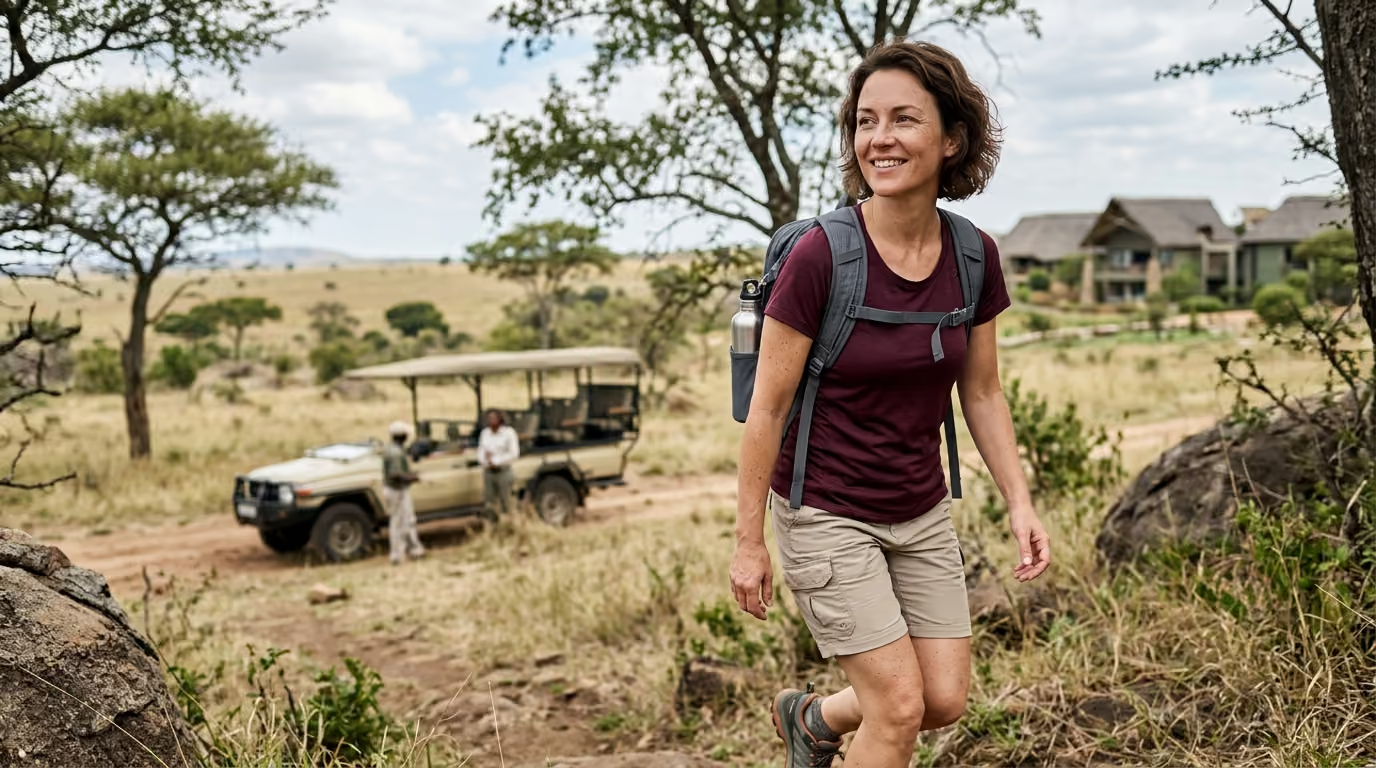
A safari presents a distinct physiological paradox. While considered an active wilderness vacation, travelers spend hours sitting in four-wheel-drive vehicles traversing uneven, jarring terrain. This prolonged sitting, combined with early morning departures and intense equatorial sun, can result in stiff hips, spinal compression, and low daily step counts.
Because wildlife safety protocols strictly prohibit unsupervised walking outside safari camps and lodges, you must be deliberate with your movement opportunities:
Safari game drives typically depart at dawn. Spend eight minutes before breakfast performing deep hip openers, cat-cow spinal flexions, and thoracic rotations. This pre-drive mobility prepares your back and core for the physical jostling of the vehicle.
When riding in safari vehicles, avoid slumping into the seats. Keep your feet planted firmly on the floorboards to let your lower body absorb road vibrations. During designated coffee or comfort stops in safe areas, step away from the vehicle and perform calf raises, standing hip extensions, and shoulder rolls.
Upon returning to camp during the hot midday hours when wildlife rests, take advantage of the shaded deck or tent space. A 15-minute body-weight routine preserves muscle activation:
Whenever guided bush walks are offered with trained naturalists and armed rangers, prioritize them. Walking through the African bush requires heightened awareness, engages the stabilizing muscles of the lower legs on uneven dirt tracks, and delivers moderate aerobic conditioning.
Footwear matters significantly on safari. Choose supportive trail shoes or light hiking boots with sufficient traction for loose sand, thorn scrub, and dry riverbeds. Protect your feet and ankles by avoiding thin-soled lifestyle sneakers on uneven ground.
Resort stays offer extensive leisure opportunities, but they can easily lead to physical stagnation. An unstructured environment with open buffets, poolside loungers, and warm weather encourages long stretches of sedentariness.
The secret to staying capable and energized at a resort is establishing daily anchors. Rather than leaving exercise to chance, attach short movement blocks to existing daily habits:
The resort swimming pool provides an exceptional environment for non-impact cardiovascular and mobility work. You do not need to perform high-intensity swim intervals to benefit from the water:
Resort fitness facilities are often underutilized during late afternoons. If you prefer traditional resistance training, use this quiet window for a focused thirty-minute session using dumbbells and cable machines. Keep your rest periods short and focus on moderate weights with excellent control.
By integrating these simple movement anchors, you maintain physical readiness while enjoying complete freedom during the remainder of your day. Discovering that balance is a key part of following sustainable healthy aging principles.
Training in unfamiliar environments requires an understanding of how external stressors change your internal physiology. Ignoring these factors can quickly transform a refreshing workout into an exhausting or dangerous situation.
Traveling to tropical resorts or savanna climates places immediate strain on your thermoregulatory system. In hot and humid conditions, sweat cannot evaporate efficiently, leading to rapid rises in core body temperature and heart rate.
According to guidance from the Centers for Disease Control and Prevention, physiological heat acclimatization requires approximately seven to ten days of progressive exposure. Research published by the Wilderness Medical Society notes that as few as three 90-minute sessions of moderate exertion in the heat can reduce cardiovascular strain by roughly 20 percent. However, complete adaptation takes time.
When arriving in hot climates, apply these practical safety rules:
The Wilderness Medical Society recommends drinking to thirst during physical activity to avoid dehydration without overdrinking. Excessive, indiscriminate water consumption without electrolytes can cause exercise-associated hyponatremia, a potentially dangerous drop in blood sodium levels. During hot excursions, pair your water intake with dietary sodium or electrolyte packets.
When your travels take you to mountain lodges, ski resorts, or high-altitude trekking routes, the drop in atmospheric pressure reduces oxygen delivery to working muscles.
Centers for Disease Control and Prevention travel guidelines state that travelers should avoid rapid ascents above 2,750 meters (9,000 feet) in a single day whenever possible. When ascending above 3,000 meters, limit sleeping altitude gains to approximately 500 meters per day, and incorporate a dedicated rest day for every 1,000 meters gained.
During your first 48 hours at altitude:
Crossing time zones disrupts the central circadian clock located in the brain, impairing motor coordination, reaction time, and physical recovery. A complete approach to sleep and recovery strategies is vital for performance on the road.
To accelerate circadian synchronization after arrival:
If your trip lasts fewer than 48 hours, maintaining your home sleep schedule can be more practical than attempting a full physiological adaptation. For longer journeys, aligning meals, daylight, and physical movement with local time is the most effective way to restore your physical energy.
Travel dining should never turn into a rigid battle of willpower. Vacation is meant to be enjoyed, and regional cuisine is an essential part of cultural exploration. The objective is simply matching your nutritional fuel to your daily activity level.
Focus on anchor meals to maintain energy balance. For your morning meal, prioritize protein and hydration:
At cruise and resort buffets, take a moment to walk through the entire dining room before picking up a plate. Survey the selections, choose whole foods that support your physical plans for the day, and intentionally select one or two treats you truly want to enjoy. Eating slowly allows your digestive hormones to signal satiety naturally.
Alcohol requires thoughtful moderation during active travel. Beyond adding empty calories, alcohol disrupts sleep architecture by suppressing rapid-eye-movement sleep. It also impairs overnight recovery and acts as a mild diuretic. Enjoy local wines or cocktails intentionally with dinner rather than drinking continuously throughout the afternoon by the pool.
If you encounter gastrointestinal illness or foodborne distress, suspend all formal physical training immediately. Focus entirely on oral rehydration solutions, rest, and medical consultation if symptoms persist. Attempting to train through digestive illness risks severe dehydration and heat injury. For further reading on managing energy balance while away from home, consult our guide to fueling and metabolic health.
Many active adults believe that missing their standard weight room means losing progress. In reality, neuromuscular retention is highly robust. Two brief, well-structured body-weight or band workouts per week are more than enough to maintain muscle tissue and joint health for several weeks.
While hiking and sightseeing deliver excellent aerobic work, walking does nothing to preserve your upper-body pushing, pulling, and postural strength. Integrating push-ups, band rows, and core stabilization ensures your shoulders and spine remain balanced and pain-free.
Adding intense workouts on top of long flights, broken sleep, warm climates, and demanding excursions leads to overreaching. Training stress must always be evaluated alongside total environmental stress. When you are tired or jet-lagged, restorative sleep and gentle mobility provide far greater longevity benefits than a strenuous gym session.
Sweating is merely the body's physiological mechanism for cooling itself, not a measure of calorie burn or training efficacy. High humidity causes sweat to accumulate on your skin simply because it cannot evaporate into the moist air. Do not mistake heat-induced fatigue for an effective training stimulus.
If travel delays or early excursions cause you to miss a planned session, let it go. Trying to perform two workouts in one day creates unnecessary fatigue and ruins your itinerary. Treat missed sessions simply as changes in schedule, not as physical debts to repay.
Major global health and sports medicine authorities agree on the fundamental value of preserving physical activity during travel while modifying intensity to match the environment.
The World Health Organization emphasizes that every move counts toward long-term functional health. Its physical activity guidelines confirm that accumulating movement in short, distributed bouts throughout the day delivers meaningful health and longevity benefits. The organization stresses the particular importance of preserving functional balance, fall prevention, and muscle-strengthening activities for adults aged 40 and older.
The Centers for Disease Control and Prevention provides clear clinical guidance for active travelers through its travel health resources. The CDC recommends progressive acclimatization for heat and altitude, strict hydration monitoring, and careful adjustment of physical intensity when crossing time zones or entering extreme climates. They advise avoiding strenuous exercise during initial altitude exposure and treating sleep hygiene as a primary travel countermeasure.
The Wilderness Medical Society maintains clinical practice guidelines for heat illness, altitude sickness, and wilderness hydration. Their expert consensus strongly advocates for a drink-to-thirst approach during exercise to prevent both dangerous dehydration and hyponatremia. They highlight that maintaining baseline physical fitness directly improves your resilience against environmental stressors, provided you listen to subjective fatigue signals and respect the physical limits of your body.
For a deeper dive into preserving vitality across demanding itineraries, review our collection of travel performance resources.
Prolonged sitting and cabin pressure changes can exacerbate joint stiffness. Focus on low-impact, rhythmic movement rather than heavy loading. Perform gentle ankle alphabets, seated knee extensions, and standing hip circles every ninety minutes during transit. In your room or cabin, use hot showers to warm up stiff connective tissue before performing gentle body-weight squats and stretches. Aquatic movement in a heated resort pool or ship thalassotherapy pool is exceptionally restorative for sensitive hips and knees.
For trips lasting forty-eight hours or fewer, do not attempt to overhaul your schedule or adapt to a minor time change. Keep your watch on home time if practical. Rely on two ten-minute movement snacks in your hotel room: five minutes of push-ups, body-weight squats, and planks upon waking, and a ten-minute brisk walk before dinner. This minimal routine maintains your neuromuscular habit without interfering with your tight itinerary.
Significant muscle atrophy and aerobic decline take between two to three weeks of near-complete immobility to occur. If you are active on excursions, walking through cities, or swimming, your functional loss over a seven-to-ten-day vacation is essentially zero. You may experience a minor, temporary loss of neuromuscular sharpness, which returns within two workouts after returning home. Enjoy your journey without anxiety about losing your physical foundation.
Stay connected for research and practical guidance on longevity, strength, recovery, energy and active living. New ideas to help you stay capable, curious and ready for more.


Explore practical guidance on strength, recovery, energy, travel and longevity for a life that stays active.
explore the Blog