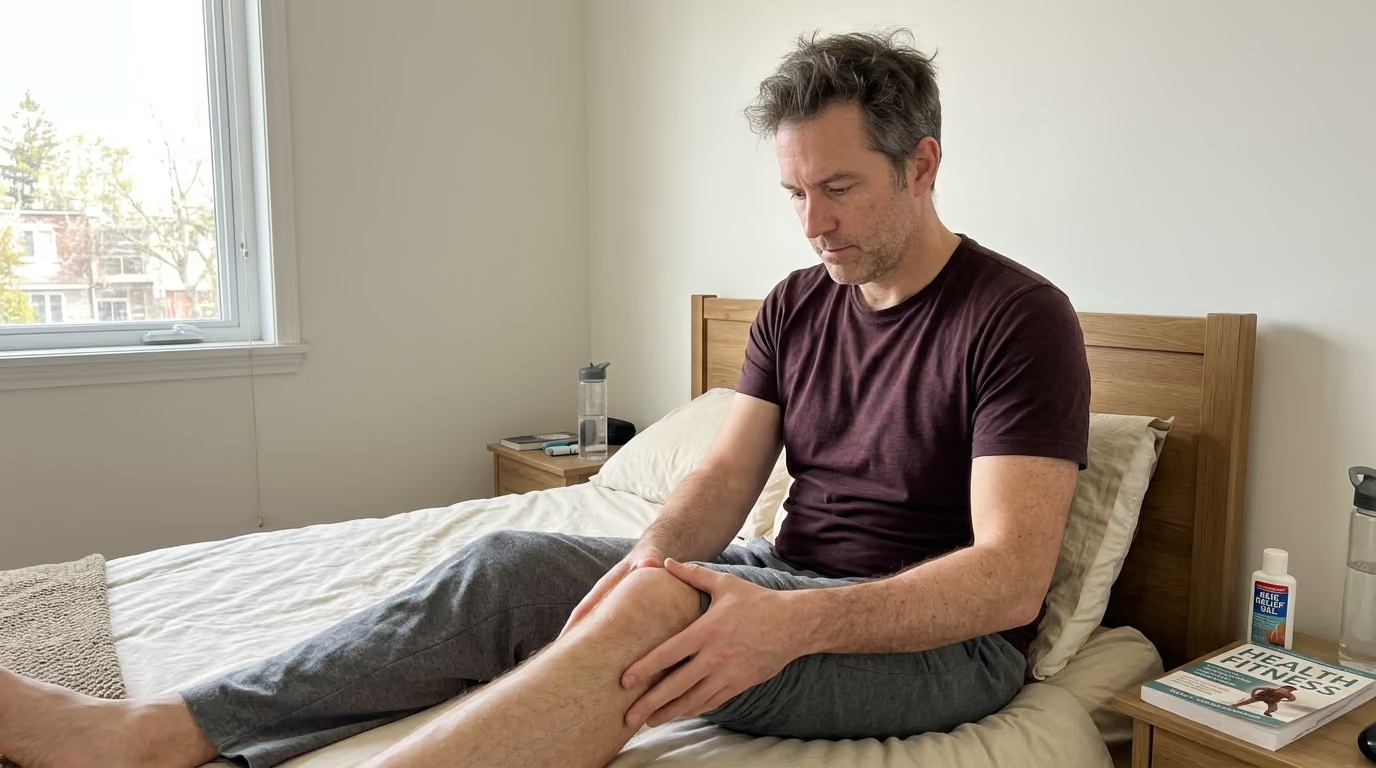

Four biological repair mechanisms govern post-exercise tissue regeneration and muscle protein turnover for athletes who want to sustain hard training past forty.





Most active adults assume that advancing age systematically destroys their capacity to bounce back from hard physical effort. They treat every bout of lingering soreness, stiff tendon, or sluggish morning as an irreversible biological tax. Yet clinical exercise science tells a very different story.
Your body does not lose its ability to repair muscle, remodel connective tissue, and adapt to intense physical demands simply because you passed your fortieth birthday. What changes is your biological margin for error.
The gap between a productive training stimulus and an excessive physical toll becomes narrower. Minor deficits in sleep, irregular nutrition, unmanaged psychological stress, and poorly planned training volumes carry steeper consequences than they did in your twenties.
When you understand the exact mechanisms governing muscle-protein synthesis, tendon remodeling, autonomic nervous system balance, and endocrine signaling, recovery ceases to be a mystery. You can build exceptional physical capacity and sustain demanding adventures well into your second half of life.
True recovery involves far more than simply lying on a sofa until muscle soreness fades. Physiological restoration represents an active, highly coordinated biological cascade across multiple body systems. To master this process, you must separate four distinct biological terms that are often confused.
Recovery is the return of your physiological systems toward baseline function following physical exertion. It includes restoring muscle glycogen, normalizing cardiovascular parameters, clearing metabolic byproducts, and restoring neuromuscular readiness.
Regeneration refers to the structural repair and cellular replacement of damaged tissues. This involves satellite cell activation in skeletal muscle, collagen synthesis within tendons and ligaments, and the resolution of local inflammation.
Adaptation is the long-term structural and functional remodeling that occurs when your body rebuilds itself to handle future stressors more easily. Recovery is the biological window during which adaptation actually takes place.
Tissue damage represents the micro-tears and cellular disruption caused by unaccustomed mechanical tension or metabolic stress. While mild damage can trigger remodeling, excessive damage impairs training frequency and delays functional progress.
Skeletal muscle tissue exists in a dynamic equilibrium between muscle-protein synthesis and muscle-protein breakdown. When cumulative synthesis exceeds breakdown over time, muscle mass and structural integrity are preserved or increased. If breakdown exceeds synthesis, functional tissue is lost.
A single bout of resistance exercise can stimulate muscle-protein synthesis by approximately 100 percent in untrained muscle. However, aging muscle frequently exhibits a phenomenon known as anabolic resistance. This means older muscle fibers require a stronger mechanical and nutritional stimulus to trigger the same protein-building response as younger tissue.
Research published in the Journal of Applied Physiology demonstrates that resistance exercise stimulates robust muscle-protein synthesis even in adults aged 76 and older. Short-term weight training raises protein-synthesis rates in older adults toward levels typically measured in younger cohorts. Anabolic resistance is not an insurmountable barrier, but a clear signal that casual training and inadequate nutrition will no longer suffice.
Skeletal muscle regeneration relies on satellite cells, which are muscle-resident stem cells located between the basal lamina and the sarcolemma. Following mechanical strain, satellite cells proliferate, differentiate, and fuse with damaged muscle fibers to repair structural proteins.
With advancing age, baseline satellite cell activity may decline, particularly when combined with physical inactivity. Furthermore, systemic baseline inflammation can disrupt the normal regenerative sequence.
Acute, localized inflammation following exercise is necessary for tissue adaptation. Macrophages infiltrate damaged tissue to clear debris and release signaling molecules that guide satellite cell activation.
The primary obstacle in midlife is chronic, low-grade systemic inflammation, often referred to as inflammaging. Unlike acute workout-induced inflammation, systemic inflammation degrades muscle quality, impairs metabolic health, and blunts tissue repair. Indiscriminately suppressing every local inflammatory signal with ice baths or high-dose painkillers can actually blunt your adaptation.
Muscles receive a rich blood supply and remodel relatively fast, but connective tissues operate on a much slower metabolic timeline. Tendons, ligaments, and joint capsules possess lower vascularity and cellular turnover.
Research in connective tissue physiology shows that physical loading stimulates collagen synthesis in tendons. However, tendon mechanical adaptation occurs primarily at the outer periphery rather than the deep core. Tendons adapt to mechanical loading by altering their cross-sectional stiffness and modulus.
As connective tissue ages, it can accumulate advanced glycation end products. These cross-links alter tissue elasticity and can create undesirable structural stiffness. Progressive resistance training helps maintain healthy tendon modulus and counters glycation-related stiffening.
A major risk for adults over 40 occurs when muscular strength increases faster than tendon load tolerance. If you return to aggressive sprinting, heavy jumping, or maximum lifting after time away, your muscles may handle the load while your tendons suffer structural overload.
Muscular force production depends entirely on the electrical signals delivered by your central nervous system. The brain and spinal cord regulate motor unit recruitment, firing rates, and movement coordination.
Age-related changes in neuromuscular function can include subtle reductions in motor unit firing frequency and slower reaction times. When systemically fatigued, your nervous system initiates protective inhibition. This protective mechanism reduces voluntary force output to shield vulnerable joints or tissues from perceived threat.
True nervous system fatigue is distinct from local muscle burn. It manifests as sluggish movement velocity, clumsy footwork, poor balance, or an elevated perception of effort during ordinary warm-up sets. Recognizing central fatigue prevents you from forcing heavy loads on an uncoordinated neuromuscular system.
To choose the correct recovery strategy, you must accurately diagnose the type of fatigue your body is experiencing. Applying a muscular recovery solution to a systemic nervous system deficit yields poor results.
Local fatigue occurs within specific muscle groups that performed heavy mechanical work. The contractile proteins experience microscopic disruption, local glycogen stores decrease, and temporary intracellular calcium handling is altered.
This state is characterized by localized muscular soreness, reduced isolated strength in that specific muscle group, and a sensation of muscular tightness. It responds well to active recovery, light movement, adequate dietary protein, and targeted rest for that particular muscle group.
Metabolic fatigue represents the depletion of energetic substrates and the accumulation of cellular metabolites. It occurs following prolonged endurance efforts or high-volume interval training.
Intramuscular glycogen drops significantly, fluid balance is altered, and core body temperature regulation is stressed. Metabolic recovery requires deliberate carbohydrate replenishment, fluid and electrolyte restoration, and cellular rehydration over a 24 to 48-hour window.
Central fatigue originates within the brain and spinal cord, affecting whole-body motivation, coordination, and voluntary motor drive. Systemic fatigue involves the endocrine, autonomic, and immune systems.
Symptoms include poor sleep quality, elevated resting morning heart rate, mood irritability, diminished grip strength, and an inability to concentrate. Treating central fatigue requires reducing overall training intensity, lowering life stress, prioritizing consolidated sleep, and taking time away from high-stress environments.
Readers seeking to understand full-body vitality can explore nutrition and metabolic health to better align daily fueling with systemic recovery demands.
Nutrition provides the physical building blocks and energetic currency for every biological repair process. Without adequate raw materials, your body cannot synthesize new cellular proteins or replenish depleted glycogen reserves.
To overcome age-related anabolic resistance, active adults over 40 require higher daily protein intakes than sedentary younger individuals. Research indicates that older adults performing regular strength training benefit from consuming approximately 1.0 to 1.3 grams of protein per kilogram of body weight each day.
For an 80-kilogram (176-pound) active individual, this equates to roughly 80 to 104 grams of high-quality dietary protein daily as a baseline. Highly active adults, masters athletes, and those undertaking rigorous training blocks may thrive near 1.4 to 1.6 grams per kilogram.
Consuming massive supplemental protein doses above these thresholds provides diminishing returns if total caloric intake is already balanced. When baseline protein is adequate, simply adding excessive protein shakes will not accelerate muscle growth or strength development.
The distribution of protein across the day matters more as tissue responsiveness changes. Spreading your protein across three to four meals allows multiple distinct stimulations of muscle-protein synthesis.
Each meal should ideally provide between 25 and 40 grams of complete protein containing high concentrations of essential amino acids. In particular, the amino acid leucine acts as the primary chemical trigger for intracellular protein synthesis via the mTOR pathway.
Aim for roughly 2.5 to 3.0 grams of leucine per meal, easily obtained from whole foods like wild fish, pasture-raised poultry, lean beef, eggs, or quality whey protein.
A widespread error among health-conscious adults over 40 is chronic caloric restriction combined with high-volume physical training. Low energy availability occurs when dietary energy intake is insufficient to support physiological functions after subtracting the energy cost of exercise.
When energy availability drops too low, your body downregulates reproductive hormones, slows thyroid output, elevates cortisol, and suppresses bone remodeling. In this state, dietary protein is oxidized for basic fuel rather than being directed toward muscle and tendon repair.
Carbohydrates are essential for refilling liver and muscle glycogen following demanding training sessions. Match your carbohydrate intake to your daily physical output rather than adopting arbitrary extreme restrictions. Active adults performing moderate-to-heavy training generally thrive on 2.0 to 4.0 grams of carbohydrate per kilogram of body weight daily.
Hydration also directly governs cellular recovery. Dehydration impairs blood volume, slows nutrient transport, and reduces muscular force generation. Maintain consistent fluid intake accompanied by modest sodium and electrolyte consumption, particularly during warm weather or prolonged exercise.
You can study comprehensive frameworks within our dedicated recovery and regeneration guides to refine your personal post-exercise protocols.
Sleep is the ultimate physiological reset mechanism. It is the only state in which your brain and body simultaneously downregulate energy consumption, release restorative endocrine signals, and consolidate motor skills.
Adults require between seven and eight hours of consolidated sleep per night to maintain cellular repair, cognitive sharpness, and endocrine balance. However, sleep architecture naturally shifts across the lifespan.
Older adults frequently experience a decline in slow-wave deep sleep and an increase in nocturnal awakenings. Slow-wave sleep is the exact physiological phase during which the pituitary gland releases pulses of human growth hormone. Growth hormone stimulates amino acid uptake, supports tissue healing, and regulates metabolic balance.
Disrupted sleep architecture elevates daytime sympathetic nervous system tone and increases circulating cortisol levels. This hormonal environment accelerates muscle catabolism and impairs glucose tolerance.
To protect sleep quality, you must eliminate the common disruptions that emerge during midlife:
Addressing these disruptions creates the stable physiological baseline required for physical regeneration. You can learn more about sleep hygiene protocols by exploring our resources on restorative sleep and recovery.
Smart exercise programming is your most powerful tool for stimulating regeneration rather than causing unrecoverable breakdown. The structure of your training sessions determines whether you trigger productive adaptation or accumulate chronic fatigue.
Every physical activity imposes a distinct physiological cost on your muscles, connective tissues, and central nervous system. Understanding this hierarchy allows you to alternate high-cost and low-cost sessions across your weekly calendar.
Maximal strength work, ballistic jumping, and heavy eccentric training place immense mechanical tension on tendons and impose heavy central nervous system fatigue. Conversely, low-intensity steady-state movement promotes blood circulation, delivers nutrients to healing tissues, and clears metabolic waste without creating structural damage.
Eccentric muscle contractions, where muscle fibers lengthen under load, generate the highest mechanical tension per active motor unit. This makes eccentric training highly effective for building strength and enhancing tendon load tolerance.
However, eccentric contractions are also the primary cause of exercise-induced muscle damage and delayed-onset muscle soreness. If you introduce aggressive eccentric tempos or high-volume downhill running without gradual exposure, you can produce deep structural damage that requires four to seven days of recovery.
Introduce eccentric exercises gradually. Begin with light loads and moderate tempos, allowing your musculoskeletal system two to three weeks to develop protective adaptations before increasing volume.
Fixed training schedules fail because they assume your physical readiness is identical every day. Autoregulation allows you to adjust training intensity based on real-time physiological feedback.
Two effective tools for autoregulation are:
Stopping sets short of absolute failure preserves movement quality, prevents excessive connective tissue strain, and drastically cuts your systemic recovery time. You can learn systematic lifting methods through our guides on strength and physical performance.
Hormonal shifts represent an important biological reality of aging that directly impacts muscle mass, tendon integrity, bone density, and recovery capacity.
During the menopausal transition, declining systemic estrogen levels significantly alter musculoskeletal tissue dynamics. Estrogen exerts a protective influence on muscle fibers by reducing post-exercise inflammation, enhancing membrane stability, and supporting satellite cell proliferation.
When estrogen levels drop, women may experience accelerated loss of lean mass and changes in tendon collagen turnover. Estrogen influences collagen synthesis and tendon elasticity. Fluctuating hormone levels can lead to sudden tendon sensitivity, particularly in the Achilles, patellar, and rotator cuff tendons.
Postmenopausal women should not abandon resistance training. Instead, emphasize progressive, heavy loading with controlled tempos. Consistent strength training provides the mechanical signal necessary to preserve bone mineral density, maintain tendon modulus, and sustain muscle fiber cross-sectional area.
Circulating total and free testosterone levels in men decline by approximately one percent per year after age thirty. Testosterone stimulates muscle-protein synthesis, supports red blood cell production, and influences bone mineral density.
However, mild age-related reductions in testosterone do not automatically prevent strength adaptation or physical resilience. Clinical reviews indicate that testosterone replacement therapy produces modest changes in lean body mass, with variable effects on absolute physical function and strength.
Hormone therapy is a serious clinical decision requiring thorough medical evaluation, comprehensive blood panels, and ongoing physician supervision. It should never be treated as a substitute for progressive resistance training, solid nutrition, and sufficient sleep.
Active adults frequently face their greatest recovery challenges away from home, such as during multi-day alpine skiing trips, backcountry hiking, or international travel.
Consider an alpine ski trip involving six consecutive days of intensive downhill skiing. Skiing imposes extreme eccentric quadricep demands, significant tendon loading, and altitude-induced metabolic stress.
To sustain performance without breaking down:
You can study additional outdoor performance strategies in our section on travel and adventure pursuits.
Crossing multiple time zones creates severe circadian misalignment, impairing cellular recovery and autonomic function. Travel fatigue combines environmental dehydration, prolonged spinal compression from seated flights, and disturbed sleep timing.
To accelerate travel recovery:
Misinformation surrounding recovery often leads active adults toward expensive, passive fads while neglecting fundamental biological requirements.
Delayed-onset muscle soreness indicates that your muscle fibers experienced unaccustomed mechanical strain or high eccentric volume. It is not a reliable marker of long-term muscle growth or progressive adaptation. Excessive soreness that impairs normal movement for several days reduces training frequency and increases injury risk.
Complete sedentary rest between workouts often worsens joint stiffness, reduces circulation, and impairs mood. Low-intensity active recovery, such as brisk walking, easy cycling, or swimming, enhances blood flow, promotes lymph clearance, and accelerates nutrient delivery to healing tissues.
Submerging in cold water immediately after resistance training reduces blood flow and suppresses the natural inflammatory cascade necessary for muscle remodeling. Regularly using cold immersion or high-dose non-steroidal anti-inflammatory drugs after lifting blunts long-term strength and muscle gains. Reserve cold therapy for rapid recovery between competitive events, not daily training.
The idea that muscle-protein synthesis shuts down if you do not consume protein within thirty minutes of dropping a dumbbell is inaccurate. While post-exercise nutrition is helpful, muscle tissue remains sensitized to protein intake for several hours. Total daily protein quantity and consistent meal distribution are far more critical than rushing to drink a shake in the locker room.
When an active adult struggles with chronic fatigue, low drive, or persistent aches, age is rarely the sole cause. Undiagnosed sleep apnea, subclinical thyroid dysfunction, iron deficiency, chronic psychological stress, severe caloric deficits, or poor training programming are frequently the true culprits. These conditions require objective medical evaluation rather than passive acceptance.
You do not need a complex array of modern gadgets, costly therapies, or extreme routines to recover effectively. Mastering a few foundational habits produces the vast majority of biological benefits.
Learn to make smart daily training adjustments based on clear physical feedback:
The broader scientific community in exercise physiology, sports medicine, and gerontology has reached a clear consensus regarding midlife physical capacity.
First, human skeletal muscle retains substantial plasticity, anabolic sensitivity, and capacity for hypertrophy throughout the entire human lifespan. Age-related muscle loss is driven heavily by physical disuse and inadequate training stimulus rather than an absolute biological expiration date.
Second, progressive resistance training is the single most effective non-pharmacological intervention for preserving muscle mass, bone density, tendon stiffness, and metabolic health. The World Health Organization recommends muscle-strengthening activities involving all major muscle groups at least two days per week for all adults.
Third, optimal recovery is an active process supported by sound nutrition, consolidated sleep, structured programming, and stress management. Passive recovery tools, supplements, and extreme trends cannot compensate for deficiencies in these core biological foundations.
By respecting your body's biological timelines and providing the necessary raw materials, you can maintain extraordinary strength, mobility, and capability for decades of active living.
Stay connected for research and practical guidance on longevity, strength, recovery, energy and active living. New ideas to help you stay capable, curious and ready for more.


Explore practical guidance on strength, recovery, energy, travel and longevity for a life that stays active.
explore the Blog