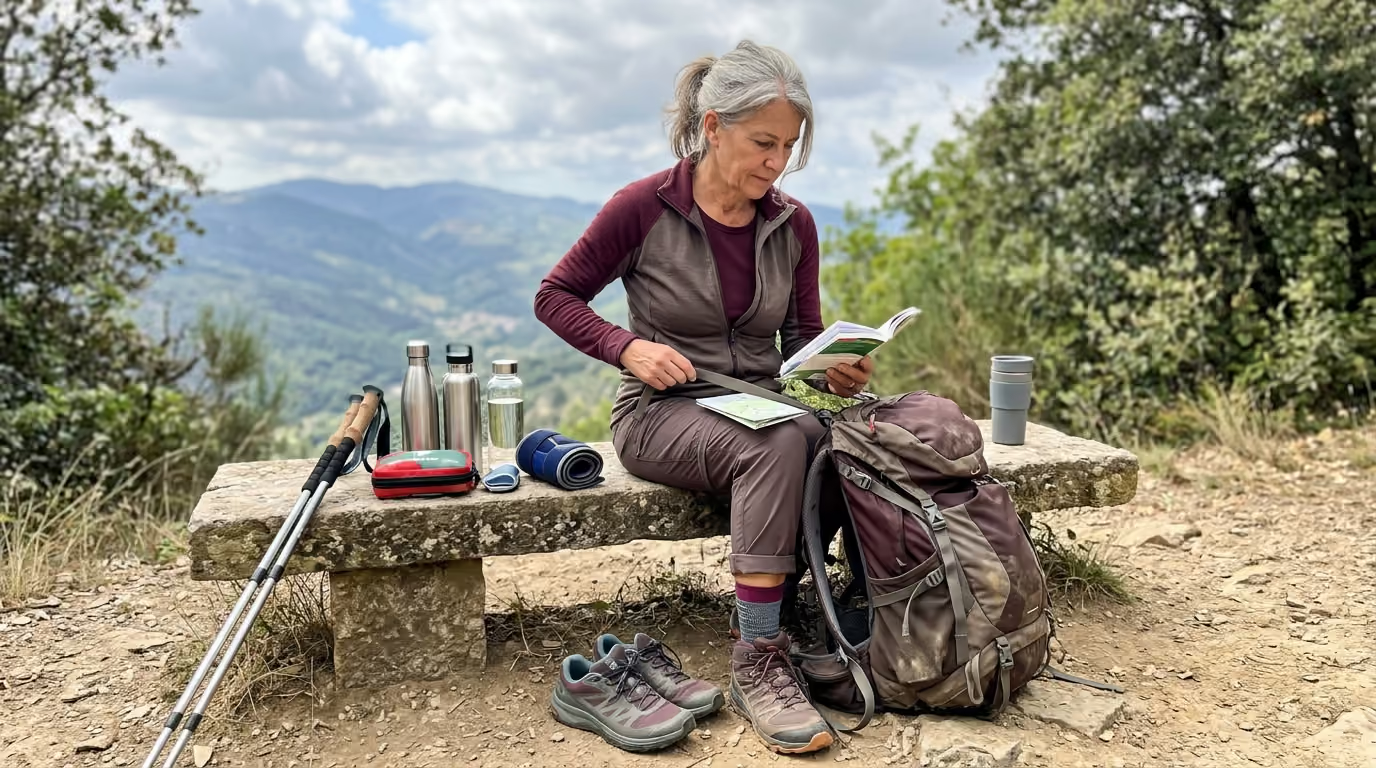

Long trips do not automatically ruin hard-earned physical gains because basic bodyweight resistance and steady protein intake maintain your lean tissue anywhere.





Many active adults have typed a familiar question into a search engine after booking an extended trip: how to avoid losing muscle while traveling for weeks. The thought of losing months of hard-earned progress in hotel rooms or during multi-week itineraries can create unnecessary dread. The reality is far more reassuring. You do not need your standard gym environment, precise meal prep, or rigid schedule to keep your strength intact.
Preserving lean mass away from home requires a clear understanding of biological preservation signals. When you step away from your home gym, your physical goal shifts from accumulating new muscle tissue to defending what you already own. By applying targeted resistance training, disciplined protein distribution, and intelligent recovery habits, you can travel freely without sacrificing your physical capability.
Extended travel disrupts the normal environment that supports muscle retention. Flight schedules, restaurant dining, shifting time zones, and limited fitness facilities challenge your regular routine. The primary mistake most travelers make is attempting to replicate a complete training split under hostile conditions. When that proves impossible, they abandon their efforts entirely.
Muscle retention depends on three biological signals. First, you need mechanical tension from resistance exercise to signal to your body that lean tissue remains essential. Second, you require steady amino acid availability from dietary protein to support tissue turnover. Third, you must protect your recovery capacity through adequate hydration, energy intake, and sleep.
Your objective is simple. Maintain relative intensity when you exercise, reduce total training volume, distribute protein reliably, and protect your energy availability.
Research demonstrates that the stimulus required to maintain muscular adaptations is significantly lower than the stimulus needed to build new tissue. Even highly infrequent resistance sessions can preserve your functional capacity when executed with appropriate effort. You do not need to progress your lifts while traveling. You only need to remind your neuromuscular system that your muscle mass is necessary.
By approaching travel as a preservation phase, you remove the psychological burden of chasing personal records in unfamiliar gyms. You create space to enjoy cultural experiences, outdoor sports, and professional obligations while safeguarding your physical foundation. For more strategies on staying capable on the road, review our guides on travel and human performance.
Understanding how your body manages lean tissue removes the anxiety of missing a workout. Skeletal muscle exists in a constant state of turnover dictated by muscle protein synthesis and muscle protein breakdown. When muscle protein synthesis exceeds breakdown, you remain in a positive net balance. When breakdown outpaces synthesis over extended periods, muscle tissue is gradually lost.
Resistance exercise stimulates muscle protein synthesis, while dietary protein supplies the essential amino acids required to complete the process. These two factors work synergistically. Eating adequate protein without mechanical stimulation provides suboptimal protection, while training hard without sufficient amino acids forces the body to draw on internal reserves. Combining both factors creates a powerful preservation signal.
Detraining refers to the partial or complete cessation of physical training. The timeline of detraining is often misunderstood, with many individuals assuming that muscle tissue begins to disappear after forty-eight hours of inactivity. The scientific literature paints a far more forgiving picture.
In a study published in the European Journal of Applied Physiology, researchers evaluated adolescent athletes who completely stopped training for three weeks. The data showed no significant reduction in muscle thickness, maximal strength, or athletic performance. Another investigation examining older adults found that twelve weeks of complete detraining reduced muscle cross-sectional area, yet muscular capacity remained well above baseline pre-training values.
The physiological changes observed during the first week without training are largely superficial. Intramuscular glycogen stores decline when exercise volume drops, and because each gram of glycogen binds approximately three to four grams of water, muscle bellies appear slightly softer and less full. This shift represents a reduction in stored carbohydrates and fluid rather than a loss of actual contractile muscle fibers.
As adults enter their fourth and fifth decades, anabolic resistance can make muscle maintenance slightly more demanding. Anabolic resistance describes a blunted muscle protein synthesis response to both exercise and dietary protein. To counter this tendency during extended travel, adults over forty must ensure that their reduced workouts maintain adequate relative effort and their meals contain sufficient concentrations of essential amino acids.
Dietary protein represents the primary nutritional defense against muscle loss. When daily calories fluctuate or training volume decreases, a steady supply of amino acids prevents the body from breaking down skeletal muscle to fuel essential metabolic functions.
The International Society of Sports Nutrition recommends a daily intake of 1.4 to 2.0 grams of protein per kilogram of body weight for exercising individuals. For a traveler weighing 75 kilograms (approximately 165 pounds), this equates to 105 to 150 grams of protein daily. An individual weighing 90 kilograms (approximately 198 pounds) should aim for 126 to 180 grams per day.
When training volume is low or total caloric intake drops below maintenance, targeting the higher end of this range (around 1.8 to 2.0 grams per kilogram) provides superior muscle retention. A systematic review published in the British Journal of Sports Medicine confirmed that daily protein intakes around 1.6 grams per kilogram optimize lean mass retention during resistance exercise.
Instead of tracking every gram of macronutrients in unfamiliar restaurants, rely on a structured system of protein anchors. A protein anchor is a deliberate, protein-dense feeding that anchors your daily intake. Plan for three or four protein anchors each day, with each feeding delivering roughly 25 to 40 grams of high-quality protein.
A practical day using protein anchors might include:
This structure ensures that you hit your daily threshold while allowing complete flexibility for sauces, local carbohydrates, fats, and social dining.
Protein quality depends on its amino acid profile and digestibility. To initiate muscle protein synthesis efficiently, each protein feeding should contain approximately 700 to 3,000 milligrams of leucine, alongside a balanced spectrum of essential amino acids.
High-quality sources that clear this leucine threshold include:
Plant-based travelers must pay closer attention to portion sizes and protein blending. Because single plant sources often possess lower concentrations of leucine and essential amino acids, combining legumes with grains or supplementing with plant-based protein powders helps ensure you hit your physiological targets. Exploring our insights on evidence-based nutrition and metabolism will help you refine your daily fueling strategy.
Airport terminals and train stations are notorious for offering refined carbohydrates and low-protein convenience foods. Building a dedicated transit nutrition kit prevents prolonged periods of amino acid deprivation. Pack single-serving protein packets, quality jerky, shelf-stable tuna or salmon pouches, roasted edamame, and low-sugar protein bars in your carry-on luggage.
When approaching a hotel breakfast, skip the trap of pastries and coffee alone. Build your plate around eggs, smoked salmon, cold cuts, or yogurt before adding fresh fruit and whole grains. If the hotel options are sparse, supplement your breakfast with a scoop of protein powder mixed in water or milk.
When dining out, identify the primary protein source on the menu before selecting side dishes. Order double portions of meat or fish when dishes appear light, and do not hesitate to ask for simple preparations like grilling or roasting. This approach lets you enjoy authentic regional cuisine while systematically meeting your muscle preservation targets.
The concept of the minimum effective dose represents the smallest amount of physical training required to preserve your adaptations. During busy travel periods, high-volume bodybuilding workouts or extended barbell sessions are impractical. Fortunately, muscular adaptations are resilient when exposed to short, high-effort stimuli.
A landmark study published in the European Journal of Applied Physiology evaluated individuals who reduced their training frequency following an intensive concurrent training block. The researchers found that performing just one high-intensity session every fourteen days preserved 90 to 95 percent of acquired muscle size, strength, and aerobic power over a three-month period.
While training once every two weeks is not an optimal long-term strategy, it illustrates the remarkable efficiency of the minimum effective dose. You do not need hours in the gym each week. You simply need enough intensity to recruit high-threshold motor units.
To structure your training efficiently, adopt a four-tier hierarchy based on your schedule and equipment access.
A minimal effective dose workout should prioritize compound movement patterns that engage multiple joints and large muscle groups simultaneously. Select one exercise from each of the following categories:
Perform two working sets per exercise. Keep your repetitions within one to three reps shy of muscular failure. By limiting each exercise to two hard sets, you stimulate your neuromuscular system without inducing severe muscle soreness or systemic fatigue that could impair your travel activities. Learn more about preserving strength and physical performance through streamlined workouts.
When hotel gyms are non-existent or poorly equipped, you can construct an effective workout using your body weight, common luggage, and compact accessories. The key to effective bodyweight training is manipulating mechanical leverage, tempo, and range of motion to create sufficient tension.
Bodyweight bilateral squats quickly become too easy for trained individuals, requiring excessive repetitions to reach an effective stimulus. Unilateral exercises solve this problem by doubling the relative load placed on the working limb.
Upper-body pushing exercises are easily adapted to any room, while pulling movements require slightly more creativity.
When your travel schedule prevents a continuous thirty-minute workout, break your training into exercise snacks. Research into minimal-dose training confirms that performing brief, single-set bouts of vigorous exercise spread throughout the day improves strength and physical function.
An exercise snacking day might look like this:
These distributed efforts take less than three minutes at a time, require zero warm-up equipment, and maintain high motor-unit recruitment across the day.
Muscle preservation is fundamentally tied to nervous system recovery and cellular repair. Extended travel frequently introduces physiological stressors, including disrupted circadian rhythms, long-haul cabin pressure, extreme temperatures, and high altitude.
Crossing multiple time zones disrupts your internal molecular clocks, impairing sleep architecture and reducing total sleep duration. When sleep is truncated, the hormonal and cellular environment shifts away from tissue preservation.
A study published in Physiological Reports examined healthy young men subjected to five consecutive nights of sleep restriction (four hours of sleep opportunity per night). The researchers observed a significant reduction in myofibrillar protein synthesis rates. Interestingly, incorporating a session of high-intensity exercise during the sleep-restricted period helped preserve synthesis rates near control levels.
Another study documented that a single night of total sleep deprivation reduced postprandial skeletal muscle protein synthesis by approximately 18 percent. While a single night of poor sleep will not cause observable muscle wasting, chronic sleep deficits combined with travel fatigue elevate cortisol, reduce insulin sensitivity, and accelerate muscle breakdown.
Protecting your sleep environment is essential for maintaining an anabolic internal state. Implement these practical sleep protocols when crossing time zones:
Learn how to manage fatigue and time-zone shifts effectively by exploring our resources on prioritizing sleep and recovery.
A common mistake made by dedicated athletes is landing after a twelve-hour transatlantic flight and heading straight to the gym for a grueling workout. At this point, your body is dehydrated, your spinal discs are compressed from prolonged sitting, and your central nervous system is fatigued.
Treat your arrival session as a re-entry workout. Focus on joint mobilization, light dynamic stretching, and two or three moderate resistance movements kept far from muscular failure. Save your high-effort working sets for the following day, after you have secured a full night of restorative sleep and re-established hydration.
One of the most insidious drivers of muscle loss during extended travel is an unintended caloric deficit. When visiting walkable cities, hiking in alpine environments, or managing back-to-back corporate events, your total daily energy expenditure can surge by 500 to 1,000 calories per day.
At the same time, irregular meal timing, unfamiliar dining options, and travel-induced appetite suppression often lead to lower calorie consumption. When your body experiences low energy availability, it mobilizes both adipose tissue and skeletal muscle to cover the energy deficit.
A systematic review in Sports Medicine reported that short-term moderate energy restriction reduced muscle protein synthesis rates by 27 percent in strength-trained men and 19 percent in strength-trained women. Furthermore, a meta-analysis confirmed that an energy deficit of roughly 500 calories per day prevented lean mass accumulation during resistance training.
If your objective is to preserve existing muscle rather than intentionally cut body fat, you should aim for approximate caloric maintenance.
To prevent accidental energy deficits during high-activity travel:
Hydration also plays a direct role in maintaining cellular volume and physical strength. Airplane cabins typically maintain humidity levels below 20 percent, leading to significant respiratory water loss. Drink water consistently throughout long flights, and supplement with electrolytes when sweating heavily during warm-weather travel or mountain excursions.
Misinformation regarding fitness and travel often causes unnecessary stress. Examining what the science actually says helps you avoid common pitfalls.
Many individuals believe that unless they have access to a squat rack, barbells, and heavy dumbbells, training is a waste of time. As discussed, the minimum effective dose literature demonstrates that your neuromuscular system responds to tension, not specific equipment brands. Two challenging sets of bodyweight split squats taken near failure deliver a potent preservation signal that tells your body to retain quadricep and glute tissue.
A widespread myth claims that missing a week of training causes immediate muscle loss. Controlled detraining studies consistently show that true contractile tissue loss does not begin in earnest for several weeks in experienced lifters, provided baseline protein and calories are met. What feels like muscle loss after four days away from the gym is simply reduced glycogen and intramuscular water.
Some travelers experience anxiety if they cannot consume a protein shake within thirty minutes of finishing a workout. Modern nutrient timing research demonstrates that total daily protein intake and consistent distribution across the day are far more critical than a strict thirty-minute window. Eating a protein-rich meal within two hours before or after your session is entirely sufficient.
Walking ten to fifteen miles while exploring a historic city provides outstanding cardiovascular and metabolic benefits, but it does not replace resistance training. Walking lacks the mechanical tension and high-threshold motor unit recruitment required to preserve upper-body musculature and high-load lower-body strength. Treat walking as an excellent baseline activity, but maintain your brief resistance sessions alongside it.
Exercise physiologists, sports dietitians, and longevity specialists agree on the fundamental mechanics of muscle preservation. As adults age past forty, preserving skeletal muscle becomes a vital component of long-term mobility, metabolic health, and independence.
Age-related muscle loss, known as sarcopenia, is accelerated by prolonged periods of physical disuse and inadequate protein intake. Extended travel should never become an involuntary disuse period. By keeping resistance stimuli present throughout your journeys, you safeguard your functional capacity for decades of active adventures, from backcountry trekking to alpine skiing.
The consensus across the literature emphasizes:
By treating muscle preservation as a manageable biological checklist rather than a rigid daily obligation, you protect your physical capabilities while fully enjoying your travels. To learn more about our philosophy on physical capability and lifelong adventure, read about our mission and explore our comprehensive guides on maintaining healthy aging and physical independence.
Apply these straightforward steps this week to prepare your muscle preservation strategy before your next departure:
Stay connected for research and practical guidance on longevity, strength, recovery, energy and active living. New ideas to help you stay capable, curious and ready for more.


Explore practical guidance on strength, recovery, energy, travel and longevity for a life that stays active.
explore the Blog