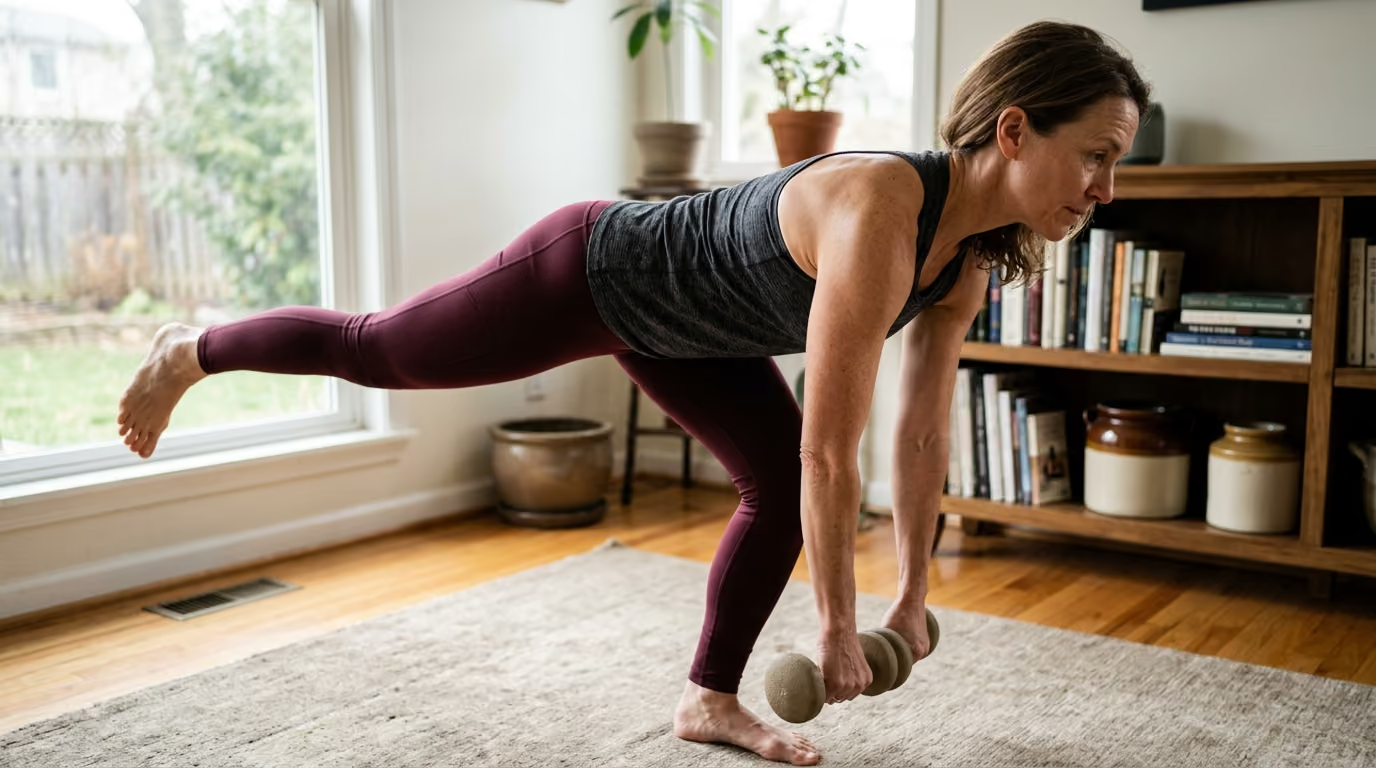

While aging often reduces power, targeted posterior-chain resistance training systematically restores glute, hamstring, and spinal strength for lifelong.





Why do your hamstrings feel constantly tight no matter how much you stretch them, and why does your lower back ache after a long hike or a round of golf? If you have searched for ways to build durable hips, protect your spine, and regain physical spring in your fourth or fifth decade, you are dealing with a common blind spot. The solution is not more passive stretching or cautious rest. The definitive answer lies in systematically strengthening your posterior chain.
The posterior chain consists of the powerhouse muscles running along the backside of your body. These muscles include your glutes, hamstrings, calves, and spinal erectors. Together, they generate propulsion, absorb impact when descending trails, stabilize the pelvis, and protect the spine during heavy lifting. After age 40, maintaining this muscular network is the single most effective way to preserve athletic capacity, power, and physical independence.
Developing these muscles requires a structured approach. True resilience requires coordinating hip extension, knee flexion, ankle propulsion, and trunk endurance under progressive loads. This comprehensive guide covers the functional anatomy, evidence-based lifting principles, movement progressions, and sport-specific adaptations needed to build an enduring posterior chain for life.
The posterior chain is not an isolated muscle group. It is an integrated kinetic network that transfers force between the ground and your upper body. When you run, climb stairs, lift luggage, or swing a club, these tissues work in synchronized patterns. Understanding how these muscles function helps you select the right movements for your training goals.
The gluteus maximus is the largest muscle in the human body and the primary driver of hip extension. It propels you forward during sprinting, pushes your body upward when climbing steep terrain, and drives you out of a deep chair. It also controls pelvic alignment over the thigh bone, preventing the knees from collapsing inward during loaded movements.
Many adults develop sluggish glute recruitment patterns after years of prolonged desk work. When the glutes do not produce adequate force, other tissues must compensate. The lower back and quadriceps often absorb excessive stress as a result. Training the gluteus maximus requires both shortened-position loading, such as hip thrusts, and lengthened-position loading, such as deep hinges and split squats.
The hamstrings consist of three distinct muscles: the biceps femoris, semitendinosus, and semimembranosus. Because they cross both the hip joint and the knee joint, they perform two separate jobs. They extend the hip and flex the knee.
During walking and running, the hamstrings act as powerful brakes. They decelerate the forward swing of the lower leg to protect the knee joint. If your training only includes hip hinges like deadlifts, you are missing half of the functional role of the hamstrings. A comprehensive program must train knee flexion directly using leg curls or Nordic hamstring variations alongside traditional hip-extension exercises.
The erector spinae muscles run parallel to the vertebral column from the sacrum to the base of the skull. Their primary role during athletic movement is not to create excessive spinal motion. Instead, they produce isometric force to resist unwanted spinal flexion, rotation, and side-bending under load.
These deep muscles work directly with the thoracolumbar fascia and the abdominal wall. Together, they create a rigid cylinder of trunk pressure that protects the spine. Training the spinal erectors requires a careful balance between dynamic hip hinges and static trunk-endurance holds.
The lower portion of the posterior chain is frequently neglected in general fitness routines. The calf complex consists of two primary muscles with distinct anatomical roles:
The soleus absorbs up to eight times your body weight during running. It acts as the primary shock absorber for the Achilles tendon and knee. Neglecting seated calf raises, which specifically target the soleus with a bent knee, leaves your running economy and uphill hiking capacity incomplete.
Entering your 40s and 50s does not represent an unavoidable biological cliff. Research confirms that skeletal muscle retains a remarkable capacity to adapt, grow, and produce force well into older age. However, the physiological baseline does shift over time, making deliberate training choices essential.
A comprehensive review published in Sports Medicine notes that adults who do not perform resistance training lose roughly two percent of their muscle mass per year after age 50, alongside a 15 percent loss of strength per decade. Fortunately, regular progressive resistance training halts and often reverses these losses.
Muscular power, which is the ability to produce force rapidly, declines two to three times faster than pure maximal strength. This change is driven by the selective atrophy of fast-twitch Type II muscle fibers. You might not notice this as overt weakness when lifting a heavy box, but you will feel it when trying to regain your footing on loose gravel or reacting to an unexpected bump on a ski slope.
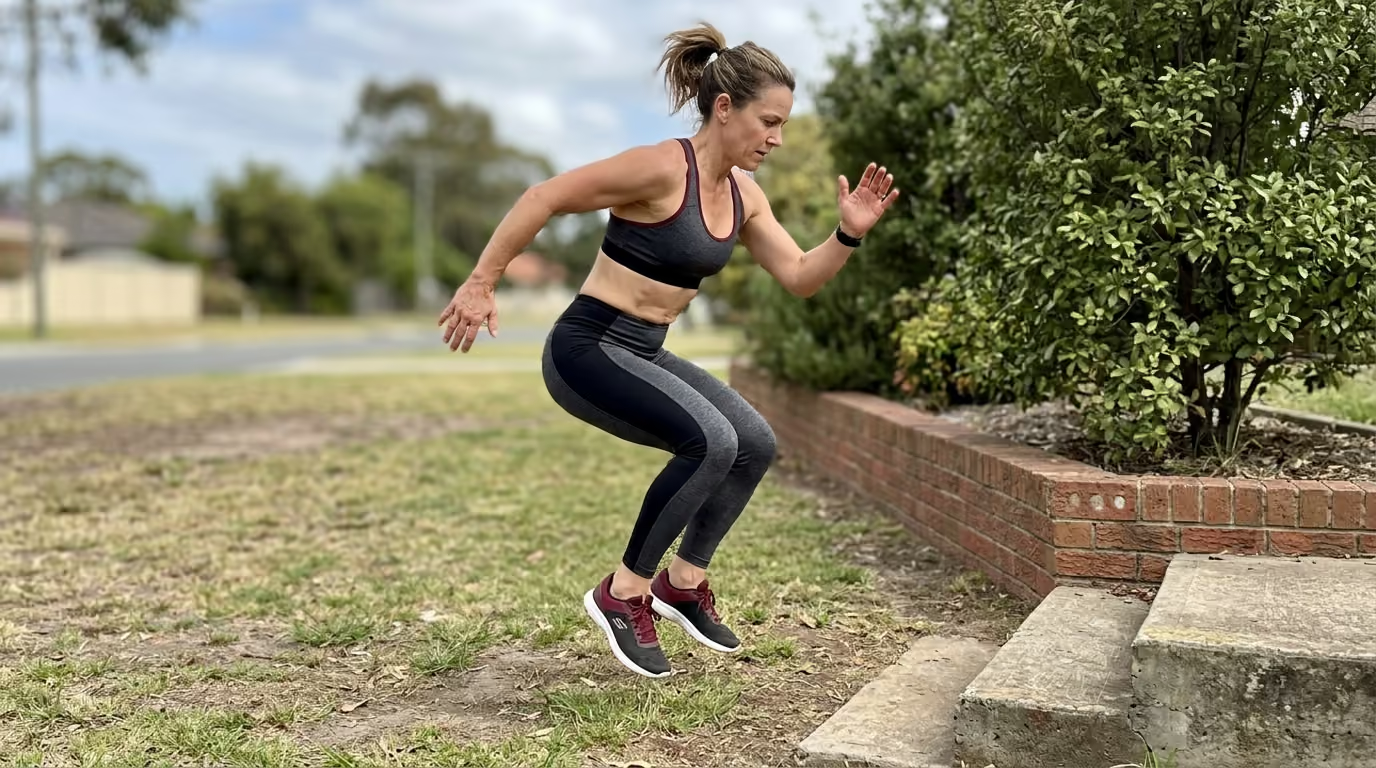
Preserving rate of force development requires training with intent. Once foundational tissue tolerance is established, your routine should incorporate progressive power exercises, such as kettlebell swings, medicine ball throws, and low-impact hops.
It is vital to distinguish normal detraining from clinical sarcopenia. Sarcopenia is defined by significant losses of muscle mass, strength, and physical function. The European Working Group on Sarcopenia in Older People uses specific screening thresholds to identify clinical risk:
For active adults in their 40s and beyond, these markers are baseline health indicators rather than high-performance goals. If you meet these baselines easily, your focus should be on building physical capacity. This capacity ensures that a demanding travel schedule or a weekend mountain trek does not exceed your physical reserves.
For more guidance on sustaining vitality, explore our principles for healthy aging and living well.
Building strength safely after 40 requires moving away from arbitrary exhaustion. You do not need to push every set to failure to stimulate muscle growth and tendon remodeling. Sustainable progress relies on progressive overload, smart intensity selection, and sufficient recovery.
A systematic review published in the British Journal of Sports Medicine demonstrated that higher-intensity resistance training produces superior strength gains in older adults compared to low-load protocols. Performing resistance work two to three days per week provides the ideal balance between stimulus and tissue repair.
For most adults who balance lifting with cycling, running, or outdoor adventure, two full-body sessions per week yield exceptional results. This schedule leaves ample recovery capacity for aerobic conditioning without accumulating excessive joint inflammation.
Different repetition ranges stimulate unique adaptations across your muscular and nervous systems. Rather than staying locked into a single rep scheme, use a tiered approach:
Training to complete muscular failure generates substantial central nervous system fatigue and increases joint strain. Using the Repetitions in Reserve (RIR) framework helps you standardize effort while maintaining strict technique.
For major compound hinges like deadlifts and heavy hip thrusts, stopping your sets at an RPE of 7 to 8 ensures maximum muscular stimulation with minimal joint wear. Save higher-effort sets for isolated exercises like machine hamstring curls or calf raises.
Progressive overload does not simply mean adding iron to the bar every single week. You can progress movements through several different parameters:
A dependable model is the double-progression system. If your program calls for three sets of six to eight repetitions on the Romanian deadlift, begin with a weight you can lift for six clean repetitions. Keep that weight until you can perform all three sets for eight repetitions with good form, then increase the load modestly and return to six reps.
Learn more about optimizing physical output in our practical performance and fitness guidance section.
Exercise selection should match your current training history, mobility, and structural health. This three-tier progression allows you to build posterior-chain strength safely, regardless of your starting point.
These movements re-establish basic movement patterns, build initial tendon capacity, and teach pelvic control with minimal spinal compression.
Lie on your back with knees bent and feet flat on the floor, roughly hip-width apart. Drive through your heels to lift your hips until your thighs and torso form a straight line. Squeeze your glutes hard at the top for two seconds without overarching your lower back. Lower down under control.
Place a kettlebell on a stable platform or weight plate between your feet. Soften your knees and push your hips backward toward the wall behind you while keeping your chest proud. Grasp the handle, brace your abdominal wall, and stand upright by driving your hips forward. This elevated position reduces hip-flexion demands while teaching the hinge pattern.
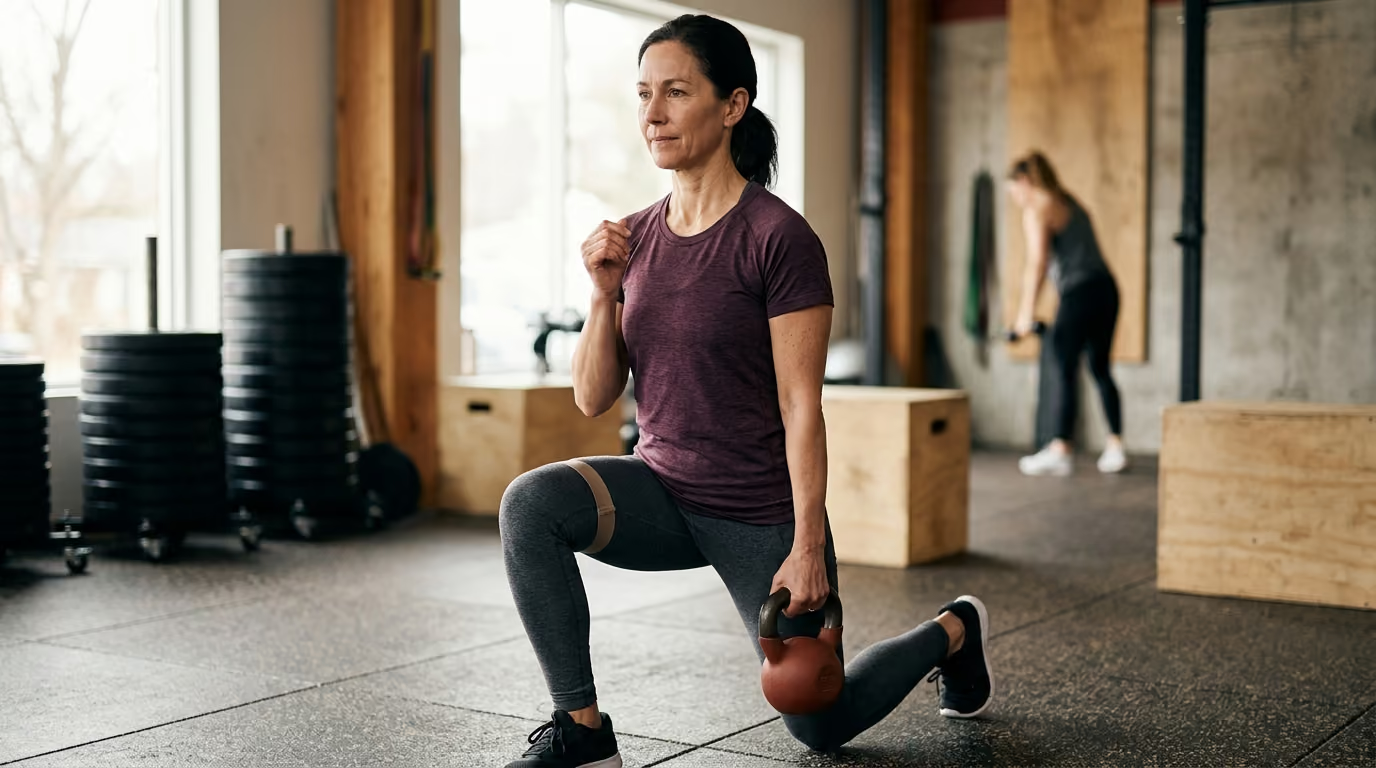
Stand in a staggered stance with one foot forward and one foot back, holding onto a sturdy rack or wall for balance. Lower your back knee toward the floor under control, keeping your front shin relatively vertical. Push through the front foot to return to the starting position. This builds single-leg balance and glute control without balance limitations.
Stand with the balls of your feet on a raised step and your heels hanging off the edge. Lower your heels into a full stretch for two seconds, then drive upward onto your big toes, holding the peak contraction for one second. Keep your knees completely locked to maximize recruitment of the gastrocnemius.
Once movement mechanics are reliable, these exercises introduce heavier axial loading, long-muscle-length tension, and direct knee-flexion work.
Hold a barbell or pair of dumbbells in front of your thighs with a double-overhand grip. Keeping your shins perpendicular to the floor, push your hips backward as if trying to touch a wall behind you. Slide the weights down your thighs, stopping just below the knees when you feel a deep stretch in your hamstrings. Return to standing by contracting your hamstrings and driving your hips forward.
Sit on the floor with your upper back supported against a stable bench and a padded barbell resting across your hips. Plant your feet flat on the floor, hip-width apart. Drive through your heels to extend your hips upward until your thighs and torso are parallel to the ground. Your shins should be completely vertical at the top of the movement. Lower your hips under control without letting your lower back hyperextend.
Adjust the machine pad so it rests comfortably against the back of your lower calves, just below the gastrocnemius. Sit tall, lock the lap pad securely against your thighs, and pull your heels toward your glutes in a smooth arc. Hold the fully contracted position for one second before lowering the weight through a full three-second eccentric phase.
Sit at a seated calf raise machine with the knee pads secured firmly over your lower thighs. Lower your heels as far as comfortable to achieve a deep stretch in the soleus. Drive upward through the balls of your feet into full plantar flexion, pausing at the top. Because the knee is bent at 90 degrees, the gastrocnemius is slackened, placing almost all the work on the soleus.
These high-yield movements are designed for experienced trainees looking to maximize force output, eccentric durability, and athletic performance.
Step inside the center of a hexagonal trap bar with feet hip-width apart. Hinge at your hips and bend your knees until you can firmly grip the high handles. Set your spine, pull the slack out of the bar, and drive the floor away with your legs. The neutral grip and centered weight distribution reduce lower-back shear stress while allowing for substantial loading of the glutes, hamstrings, and quads.
Kneel on a padded mat with your ankles secured under an immovable anchor, a heavy barbell, or held by a partner. Keeping a straight line from your knees to your shoulders, lower your torso forward toward the floor as slowly as possible by resisting with your hamstrings. Use a resistance band attached overhead or your hands against the floor to catch yourself, then push lightly to return to the top.
A systematic review published in the British Journal of Sports Medicine analyzed 8,459 athletes and found that incorporating the Nordic hamstring exercise reduced hamstring injury risk by up to 51 percent. Because this movement creates extreme eccentric tissue stress, start with just two to three sets of three to four assisted repetitions.
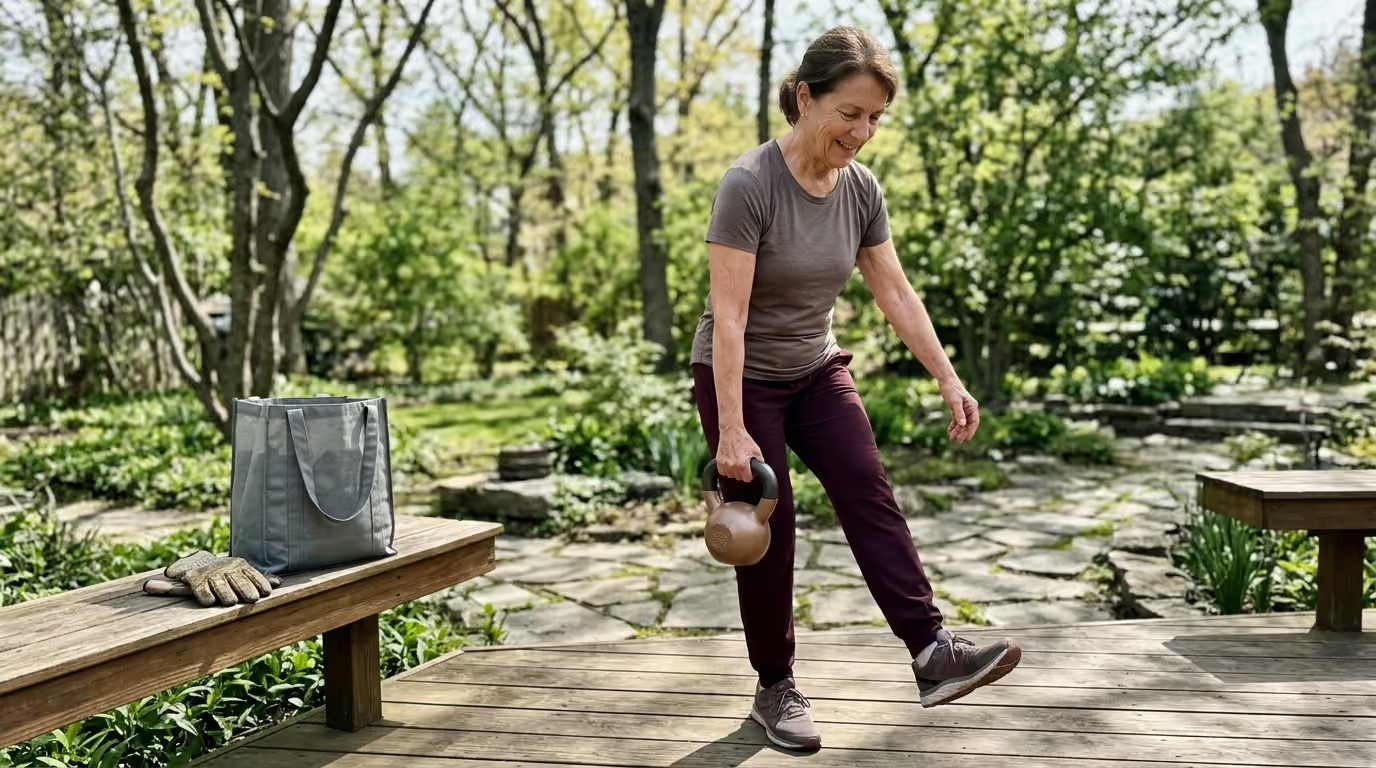
Stand on one leg with a slight bend in your knee, holding a dumbbell in the opposite hand. Hinge at your hip, extending your non-working leg straight behind you to act as a counterbalance. Keep your hips square to the floor as your torso lowers. Drive through the working heel to return to an upright posture. This movement builds unmatched stability across the foot, ankle, and hip.
Pick up a heavy kettlebell or dumbbell in one hand and stand tall with your shoulders level. Walk forward in a slow, deliberate line for 30 to 40 paces without allowing the weight to pull your torso into a side-bend. This movement challenges the deep quadratus lumborum, obliques, gluteus medius, and grip.
Discover additional movement strategies within our long-term strength and physical performance resources.
Strength developed in the gym must translate directly to the sports and adventures you enjoy. A strong posterior chain functions differently across running, hiking, skiing, and cycling.
Running requires your lower limbs to act as efficient springs. A systematic review published in Sports Medicine demonstrated that combining endurance running with heavy resistance training significantly improves running economy and time-trial performance without causing unwanted muscle bulk.
During distance running, the calf complex and Achilles tendon store and return elastic energy with every stride. Meanwhile, the hamstrings work eccentrically to decelerate your leg before foot strike. Incorporating heavy straight-knee and bent-knee calf raises alongside Romanian deadlifts prevents common overuse injuries like Achilles tendinopathy and hamstring strains.
Hiking uphill places heavy demands on the glutes and calves to drive your body mass against gravity. However, downhill hiking creates far more muscular damage. Descending steep, rocky trails requires continuous eccentric braking from your calves, quads, and hamstrings to absorb landing shocks.
To prepare for demanding mountain treks, incorporate high step-ups for climbing capacity and controlled step-downs for downhill braking strength. Performing suitcase carries with a loaded backpack also conditions your spinal stabilizers for long days under load.
Alpine skiing demands sustained isometric endurance from the glutes and legs, coupled with rapid rotational control. When carving through variable snow or absorbing unexpected moguls, your posterior chain keeps your hips stable and protects your knees from twisting forces.
Lateral lunges, single-leg deadlifts, and heavy back extensions provide the hip and trunk durability required to ski from first chair to last without technical breakdown.
Cycling locks your body into a sustained forward-leaning posture with hips flexed. While cycling builds cardiovascular endurance and quad stamina, it leaves the hamstrings and spinal erectors largely unconditioned in extended positions.
A comprehensive review in the Scandinavian Journal of Medicine & Science in Sports highlighted that heavy strength training improves cycling economy and power output at lactate threshold. Adding trap-bar deadlifts and hip thrusts offsets repetitive cycling mechanics, restoring balanced hip-extension power for steeper climbs.
Maintaining posterior chain strength is also vital for frequent travelers. Long flights and prolonged transit compress the glutes, tighten the hip flexors, and place the lumbar spine under continuous low-grade strain.
After a grueling thirty hour transit to Tokyo, I realized my old strategy of just powering through was no longer working. I felt foggy for three days. I started digging into circadian biology and realized that timing my light exposure and fasting during the flight could completely shift my recovery. Now, I never board a long haul flight without a precise schedule for when to eat and when to put on an eye mask. It is the difference between losing a week of your trip and hitting the ground running.
Integrating simple bodyweight glute bridges, band pull-aparts, and walking lunges immediately upon arriving at your hotel reactivates dormant posterior tissues and speeds physical recovery.
For more adventure preparation, browse our active travel and adventure pursuits library.
A common misconception is that a sensitive lower back should never be loaded. In reality, avoiding all spinal loading weakens the surrounding musculature, leaving the back more vulnerable over time.
A landmark 2025 systematic review published in BMC Musculoskeletal Disorders found that progressive, externally loaded resistance training is safe and effective for people with chronic nonspecific low back pain. Strengthening the posterior chain improves functional capacity and reduces disability just as effectively as dedicated clinical exercise programs.
Coaches often instruct lifters to maintain a perfectly flat, neutral spine during all movements. While minimizing excessive lumbar flexion under heavy loads is a sound principle, human spines are designed to move naturally across multiple planes.
If conventional deadlifts from the floor irritate your lower back, switch to a trap-bar deadlift or an elevated kettlebell hinge. The goal is to train the hip-extension pattern without irritating sensitive spinal structures.
Avoiding these common programming mistakes will save you months of stalled progress and unnecessary joint irritation.
When hamstrings feel tight, the default reaction is often prolonged static stretching. However, sensation does not always equal short muscle tissue. Hamstrings often feel tight because they are weak and overloaded, working overtime to stabilize an anteriorly tilted pelvis.
Strengthening the hamstrings through a full range of motion using Romanian deadlifts and seated leg curls lengthens the muscle fibers while building eccentric force capacity. This resolves the feeling of tightness far more effectively than passive stretching.
Many lifters perform only bilateral exercises like barbell squats and standard deadlifts. While these movements build raw strength, sports like running, hiking, and skiing occur primarily on one leg at a time.
Bilateral lifting allows your stronger side to compensate for subtle hip and foot imbalances. Including split squats, step-ups, and single-leg RDLs ensures both limbs develop equal force-production and shock-absorbing capacity.
Severe Delayed Onset Muscle Soreness (DOMS) is not a badge of honor. It simply indicates that your tissues were exposed to novel movements or high volumes of unaccustomed eccentric work. Excessive soreness impairs your recovery, disrupts your running or skiing schedule, and increases injury risk. Aim for workouts that leave you feeling energized and capable rather than physically exhausted.
Explore our structured recovery and sleep strategies to optimize tissue repair between sessions.
These three evidence-based program templates fit easily into an active adult's lifestyle. Choose the level that matches your current baseline and schedule.
This routine is perfect for beginners, busy professionals, or endurance athletes looking to build durable posterior-chain strength with minimal gym time.
Designed for runners, cyclists, and hikers who want to enhance race performance, power, and movement economy without interfering with outdoor training.
Designed for experienced lifters looking to maximize hip power, dynamic speed, and structural resilience.
Building a resilient posterior chain begins with simple, consistent actions. Use this straightforward checklist to integrate these principles into your routine this week:
Stay connected for research and practical guidance on longevity, strength, recovery, energy and active living. New ideas to help you stay capable, curious and ready for more.


Explore practical guidance on strength, recovery, energy, travel and longevity for a life that stays active.
explore the Blog