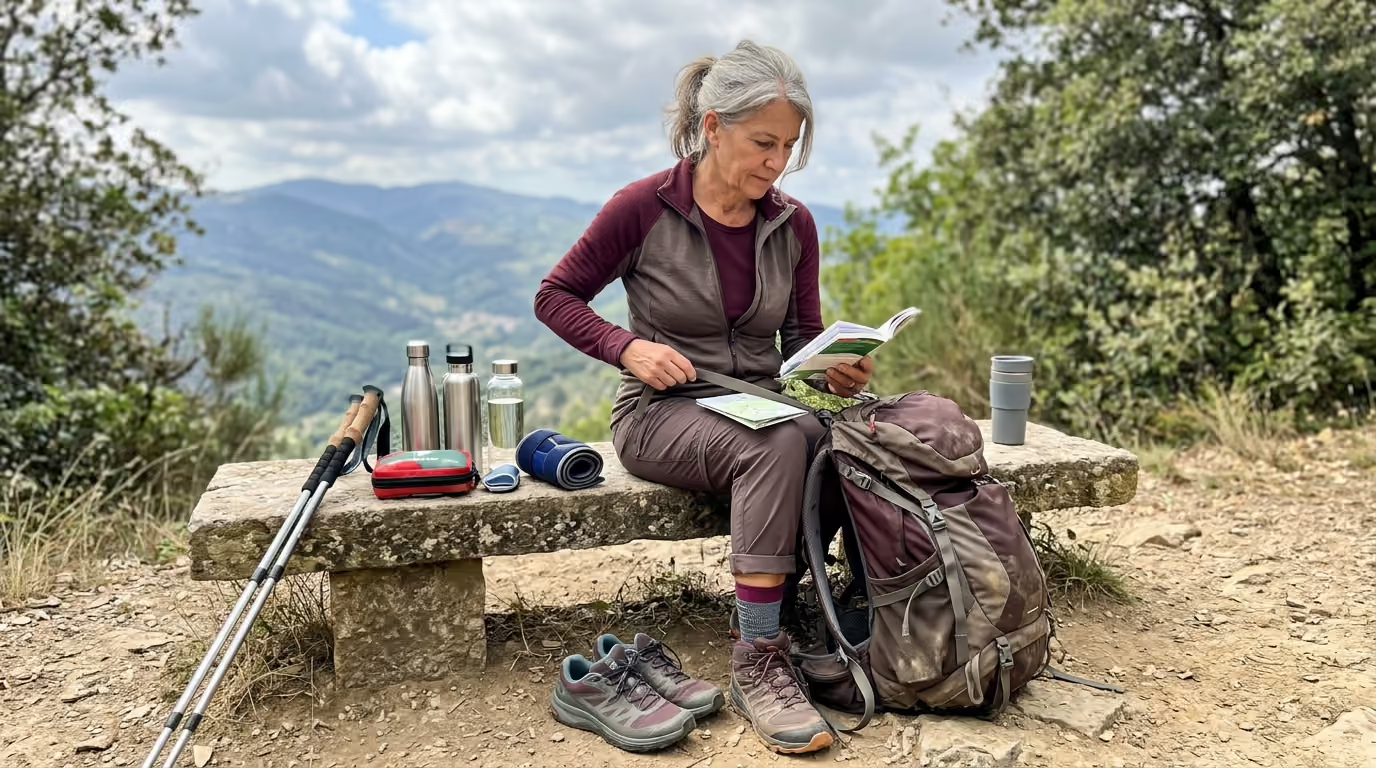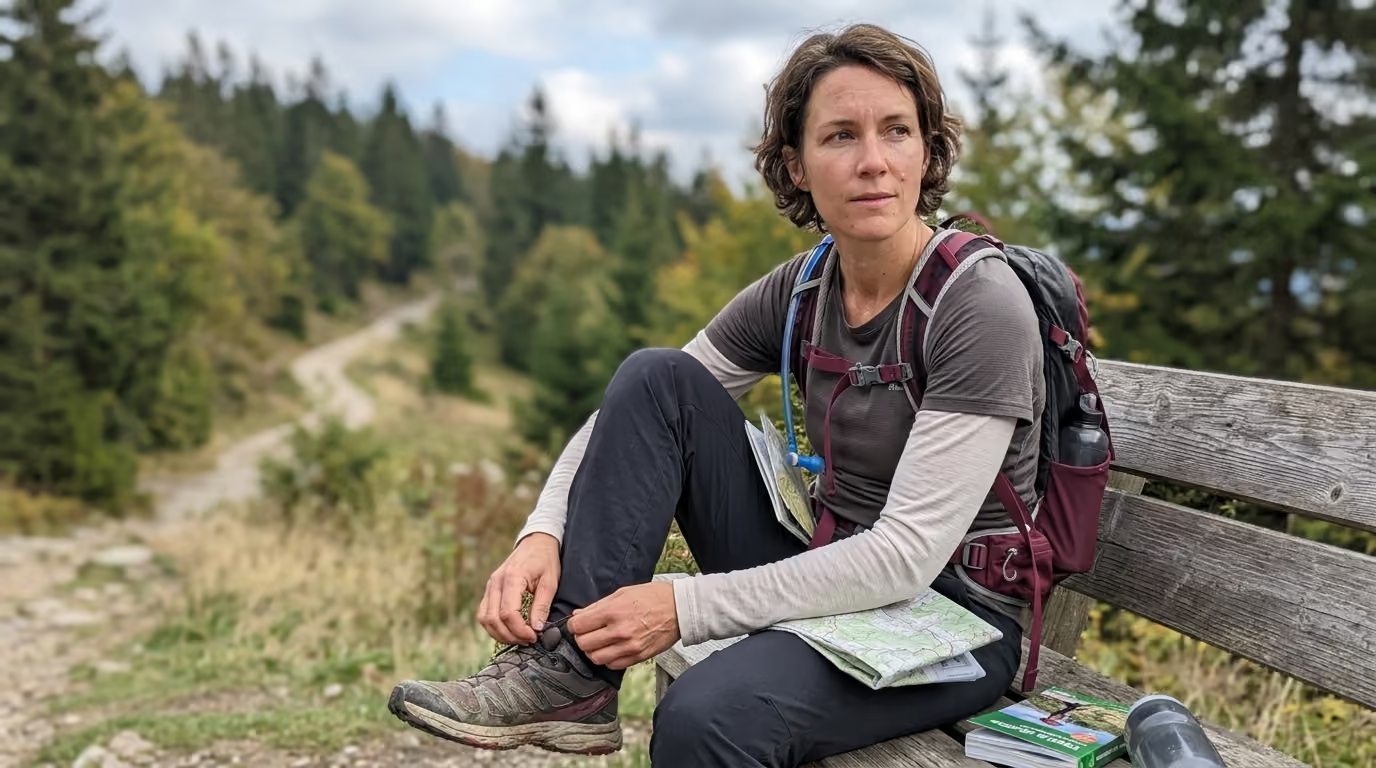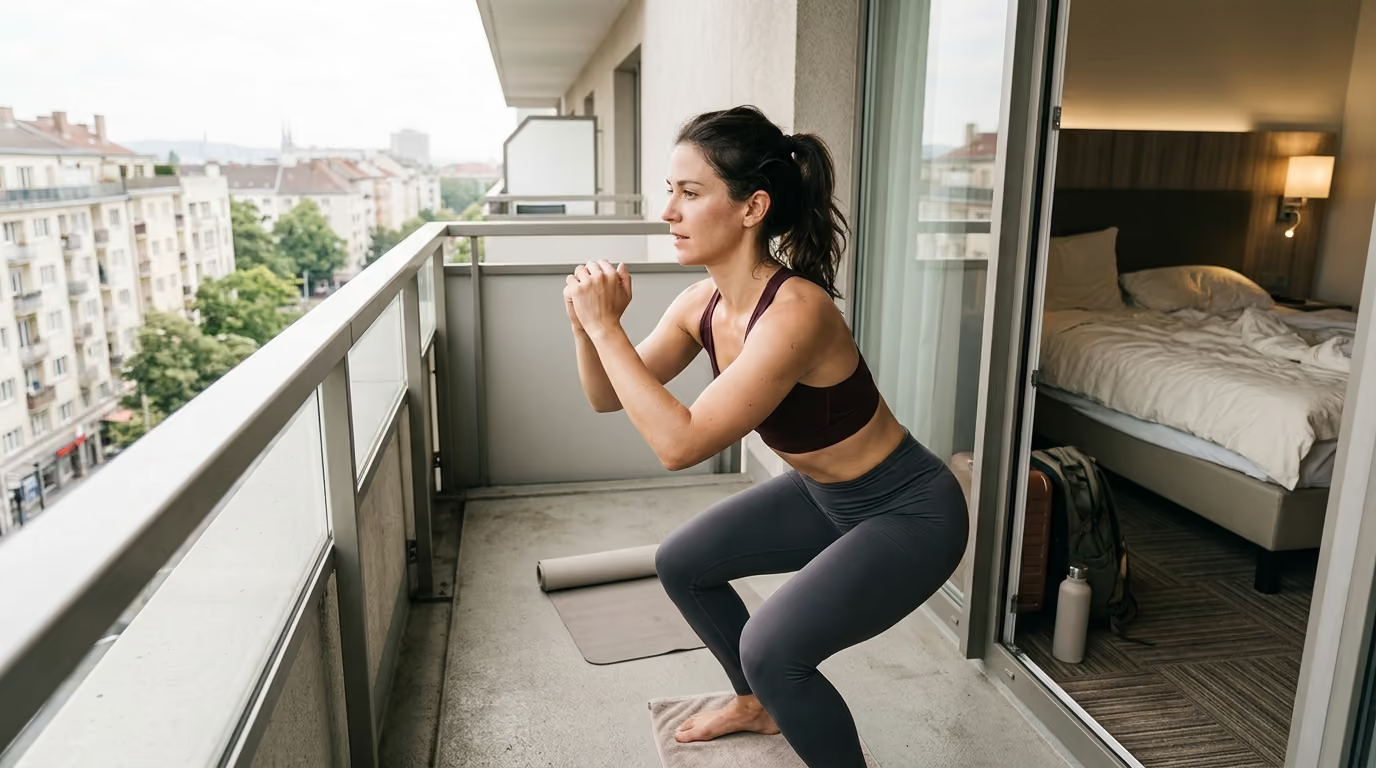

Maintaining physical fitness on the road does not require grueling workouts, relying instead on strategic low-dose training, proper sleep.





Many active adults search for how to maintain fitness while traveling without spending hours in a hotel gym or derailing their itinerary. The typical advice swings between two unhelpful extremes. One approach suggests packing full gym equipment and forcing exhausting workouts on four hours of sleep. The other suggests abandoning physical activity entirely, treating every trip as an inevitable fitness loss.
Neither approach serves travelers who value physical performance, joint health, and worldly experiences. Travel fitness is an adaptation problem rather than a standard training week performed in a different city. Your body must balance physical output against disrupted sleep, altered circadian timing, unfamiliar food, dehydration, prolonged sitting, and changes in altitude or climate.
When you understand the minimum effective dose required to preserve muscle, strength, and aerobic capacity, you can protect your hard-won physical conditioning with minimal effort. This guide provides a practical framework for selecting training, recovery, sleep, and nutrition strategies before, during, and after your journeys. By applying structured decision rules, you can maintain peak capability while enjoying business trips, mountain adventures, or leisurely escapes.
The human body does not instantly lose muscle tissue or aerobic capacity when training volume drops for a short period. Understanding the biology of detraining helps remove the psychological panic that often drives travelers to make poor training decisions. Research by Iñigo Mujika and Sabino Padilla defines short-term detraining as fewer than four weeks of insufficient training stimulus. During this window, your primary goal is maintenance rather than continuous progression.
Maintenance training is the smallest practical training dose that preserves your current physiological adaptations. It differs fundamentally from progressive training. When you are at home with normal sleep and structured routines, your body can handle high training volume and recover effectively. During travel, the combined systemic stress of travel fatigue, novel environments, and schedule disruptions reduces your total recovery capacity.
Maintaining strength and muscle tissue requires significantly less volume than building new capacity. Exposing muscle groups to brief, moderate-to-high intensity efforts once or twice per week provides enough mechanical tension to signal protein retention. For cardiovascular fitness, brief bouts of elevated heart rate preserve blood volume, mitochondrial enzyme activity, and stroke volume.
The primary danger during travel is accumulating an unmanageable recovery debt. Recovery debt refers to the compounded deficit created by short sleep, poor hydration, skipped meals, and environmental stress. If you attempt to force high-volume, high-fatigue training on top of this deficit, you increase your risk of illness, soft tissue strains, and systemic exhaustion. Travel conditioning succeeds by preserving movement quality, maintaining neuromuscular familiarity, and matching training stress to recovery capacity.
Effective travel preparation begins several days before departure. Rather than treating every trip identically, categorize your itinerary using five specific operational parameters. This classification system clarifies whether your trip should focus on performance, minimal maintenance, or active recovery.
The duration of your trip dictates your overall training volume. A four-day business trip requires a different strategy than a three-week international journey across multiple continents. Travel stress accounts for the physical toll of transport, including prolonged sitting in pressurized cabins, luggage management, and airport transfers. The number of time zones crossed determines the degree of circadian disruption you will experience upon arrival.
Environmental factors like heat, humidity, and elevation place an immediate tax on your cardiovascular system. The Centers for Disease Control and Prevention advises that travelers ascending above 8,000 feet should engage only in mild exercise during their first 48 hours to minimize the risk of acute mountain sickness. Finally, knowing your equipment options in advance prevents missed workouts and decision fatigue. You can review our travel and human performance resources to match specific training plans to your destination.
Before departure, establish your daily non-negotiables. These foundational habits include a daily step target, two weekly strength sessions, consistent hydration, and structured protein intake. If you are crossing more than three time zones, you can begin shifting your sleep schedule before departure. According to CDC guidance, shifting your bedtime one or two hours earlier for eastward travel, or one or two hours later for westward travel, can accelerate circadian realignment at your destination.
You do not need an entire fitness center to maintain strength and joint integrity on the road. A compact, lightweight travel kit fits easily into standard carry-on luggage and provides sufficient resistance for full-body workouts.
When hotel gyms lack free weights or functional equipment, rely on movement pattern substitutions. Exercises should preserve movement patterns, joint angles, and mechanical tension rather than matching specific gym machines.
These substitutions preserve muscular recruitment and tendon stiffness without requiring heavy barbells. When performing bodyweight or banded variations, focus on controlled tempos, paused contractions, and full ranges of motion to create sufficient muscular tension.
To maintain physical capabilities while traveling, follow a minimal effective dose approach. The goal is to provide the central nervous system and muscular system with just enough stimulus to prevent atrophy and detraining. The American College of Sports Medicine recommends that adults engage in muscle-strengthening activities at least two days per week. For travelers, distributing these sessions into brief, full-body routines delivers the best return on time invested.
A travel strength workout should last between 20 and 30 minutes. It should target the five primary human movement patterns: squat, hinge, push, pull, and core stability. By training the entire body in a single session, you maintain muscular balance while keeping weekly workout frequency low.
Keep your total training volume low while preserving moderate effort. Reducing the number of sets per exercise by 40 to 60 percent preserves strength while preventing post-workout muscle soreness that could disrupt your itinerary. For more targeted strength routines, consult our strength and physical performance guides.
When structured gym sessions are impossible, use exercise snacks throughout the day. An exercise snack is a brief bout of physical activity lasting between two and five minutes. Examples include climbing several flights of hotel stairs, performing 20 push-ups between business meetings, or completing walking lunges in your hotel room. These brief exposures maintain circulation, stimulate metabolic pathways, and break up prolonged periods of sitting.
Sleep disruption is the most common factor undermining physical performance and recovery during travel. Crossing multiple time zones causes circadian misalignment, where your internal central clock in the hypothalamus falls out of sync with local destination time. The National Sleep Foundation recommends seven to nine hours of nightly sleep for adults aged 18 to 64, and seven to eight hours for adults 65 and older. Meeting these targets while crossing time zones requires proactive management.
The primary environmental cue for shifting your circadian clock is natural sunlight. Upon arrival at your destination, expose your eyes to outdoor sunlight as early in the day as possible. Morning light exposure suppresses melatonin production and signals to your brain that the local day has begun. Conversely, avoid bright outdoor light and blue screen light in the late evening to encourage natural melatonin release.
In our experience, failing to manage in-flight circadian cues leads to multiple days of brain fog and diminished physical performance. After a grueling thirty hour transit to Tokyo, I realized my old strategy of just powering through was no longer working. I felt foggy for three days. I started digging into circadian biology and realized that timing my light exposure and fasting during the flight could completely shift my recovery. Now, our team never boards a long-haul flight without a precise schedule for when to eat and when to put on an eye mask. It is the difference between losing a week of your trip and hitting the ground running.
Use stimulants and sedatives with caution. The CDC advises against consuming caffeine or heavy exercise late in the evening because both elevate core body temperature and delay sleep onset. Similarly, avoid using alcohol as a sleep aid. While alcohol may induce sedation, it fragments sleep architecture, suppresses rapid eye movement sleep, and worsens travel-related dehydration. For comprehensive recovery protocols, explore our recovery and sleep strategies.
To manage fatigue intelligently, follow a practical sleep decision rule:
Dietary habits often deteriorate during travel due to unpredictable dining schedules, airport food options, and social obligations. Rather than attempting a rigid dietary plan, focus on protein intake and targeted hydration. Maintaining adequate protein intake supports muscle tissue preservation, enhances satiety, and stabilizes blood glucose during stressful travel days.
The International Society of Sports Nutrition position stand recommends a daily protein intake of 1.4 to 2.0 grams per kilogram of body weight for exercising individuals. For an 80-kilogram (176-pound) adult, this equals roughly 112 to 160 grams of protein daily. The ISSN also notes that distributing protein in doses of 20 to 40 grams every three to four hours optimizes muscle protein synthesis.
Adjust your carbohydrate intake to your actual daily energy expenditure. On days spent in transit or sitting in meetings, keep carbohydrate portions moderate. On days involving strenuous mountain hikes or long walking tours, increase your carbohydrate intake to fuel muscular glycogen stores. Learn more about fueling strategies in our nutrition and metabolic health articles.
Hydration requires equal attention. Aircraft cabins maintain relative humidity levels below 20 percent, which accelerates fluid loss through respiration. The American College of Sports Medicine recommends that individuals replace fluids lost during exercise while avoiding fluid deficits greater than 2 percent of total body weight. However, drinking excessive amounts of plain water without electrolytes can dilute blood sodium levels, leading to exercise-associated hyponatremia.
Food safety should never be overlooked when traveling internationally. Gastrointestinal illness causes severe dehydration, nutrient malabsorption, and rapid loss of physical conditioning. Follow CDC guidance: consume foods that are served steaming hot, eat fruits you can peel yourself, and drink factory-sealed bottled water when visiting regions with uncertain water infrastructure.
Different travel itineraries present unique physiological challenges. Tailoring your training and recovery to specific travel environments ensures you preserve capacity without missing out on the trip itself.
Corporate travel typically combines tight schedules, sedentary conference rooms, client dinners, and frequent flights. The primary risks are physical inactivity, poor sleep, and excessive alcohol consumption.
Mountain travel introduces hypoxia, cold temperatures, and rugged terrain. The immediate objective is physiological acclimatization rather than standard gym conditioning.
Resort and cruise environments offer abundant recreational activities alongside calorically dense buffets and open bars. The challenge is balancing relaxation with physical activity.
Sightseeing trips through historic cities often accumulate 15,000 to 25,000 daily steps on hard concrete and cobblestone surfaces. Many travelers underestimate this lower-body workload.
For more guidance on tailoring training to your lifestyle, browse our comprehensive performance and fitness section.
Several widespread fitness myths cause active adults to overcomplicate travel conditioning, often leading to fatigue or injury.
Mujika and Padilla demonstrated in their landmark detraining research that trained individuals maintain muscular strength and endurance adaptations during short periods of reduced volume. Your muscles will not waste away during a ten-day journey if you maintain baseline movement and adequate protein intake.
Similarly, forcing a high-intensity interval workout after an international flight does not accelerate your recovery. While easy movement helps circulation and circadian alignment, high-intensity intervals demand significant nervous system recovery. When your nervous system is compromised by travel fatigue, demanding training increases cortisol and prolongs systemic fatigue.
Recognize that daily walking is real physical work. Walking eight to ten miles across hilly terrain constitutes a demanding eccentric training load for the calf muscles, plantar fascia, and quadriceps. If your vacation involves high step counts, reduce your structured lower-body resistance volume to avoid overuse injuries.
The broader scientific community agrees on several principles regarding travel conditioning, sleep preservation, and physiological recovery:
To simplify daily decisions during travel, use a traffic-light evaluation system.
Returning home requires an intelligent transition back to your normal training routine. A common mistake is attempting to make up for missed workouts by immediately doubling training volume. This sudden spike in workload frequently results in severe muscle soreness, joint irritation, and elevated injury risk.
If you developed respiratory symptoms or gastrointestinal illness during travel, delay high-intensity training until all symptoms have resolved for at least 48 hours. Returning to heavy physical stress while fighting a lingering travel infection can prolong illness and delay recovery.
Apply this travel conditioning framework directly to your next journey using this preparation checklist:
Maintaining your fitness while traveling does not require perfection or extreme discipline. By focusing on the minimal effective dose of strength work, walking daily, protecting your sleep, and consuming adequate protein, you can maintain your physical performance while fully enjoying your travels.
Stay connected for research and practical guidance on longevity, strength, recovery, energy and active living. New ideas to help you stay capable, curious and ready for more.


Explore practical guidance on strength, recovery, energy, travel and longevity for a life that stays active.
explore the Blog